

For people living with musculoskeletal (MSK) conditions, navigating the health care system can be as difficult as managing the condition itself.
Treatment can involve primary care, rehabilitation, specialty services, mental health and social supports. Yet these services don't always connect, leaving patients and their caregivers to navigate a system that can feel fragmented.
Mulugeta Bayisa Chala, PhD, researcher at Lawson Research Institute (Lawson) with a background in physiotherapy, is studying how that system could work differently.
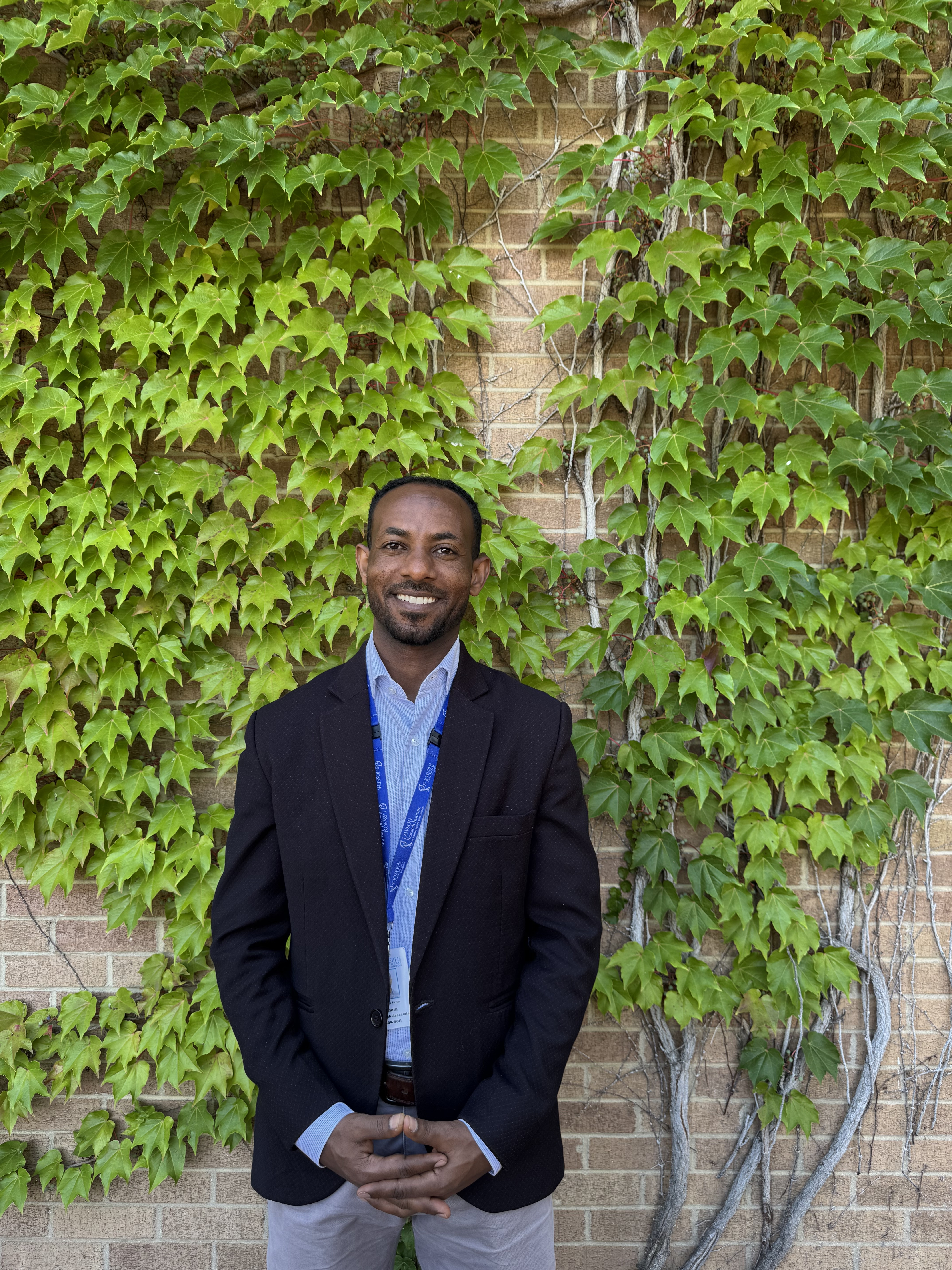
His research focuses on how care is organized and delivered for people living with chronic MSK conditions, with a focus on Southwestern Ontario. Rather than looking at one condition, service or point of care, his work takes a whole-system approach to understanding what people need throughout their care journey.
"Instead of asking, 'Where does this patient fit within our system?' we ask 'What does this person need along their care journey, and how can our system respond?'" says Chala.
Chala was one of the original recipients of the Canadian Institutes of Health Research's Research Excellence, Diversity and Independence (REDI) Early Career Transition Award when the program launched in 2022. The two-phase program supports early career researchers through mentored career development before helping them establish independent research programs.
For Chala, the first phase provided more than just funding.
"REDI Phase 1 has been a period of growth and finding my identity as an independent researcher," he says. "The program provided protected time, structured mentorship, funding and other resources that allowed me to develop a research program focused on improving how care is organized and delivered for people with MSK conditions."
During Phase 1, he also led a collaborative project in Ethiopia focused on mapping and co-designing care pathways for rheumatic and MSK conditions. The experience helped him develop skills in leadership, grant management and administration, while building national and international collaborations.
"These are important skills. You do not always learn them in school," says Chala.
These experiences helped prepare him to establish an independent research program at Lawson.
Chronic MSK conditions can affect much more than a person's physical health. They can influence how someone moves, sleeps, works, cares for family, participates in the community and enjoys the activities that matter to them.
Despite decades of investment in diagnostics, treatments and technologies, Chala says the burden of these conditions remains high. Part of the challenge, he says, is how care is organized.
"That is the gap my research is trying to address," says Chala.
His approach is to work with people who experience and deliver care to design integrated pathways that better connect the services involved. This involves working with people with lived experience, caregivers, health-care providers, researchers and community organizations.
"No single organization, professional program or sector can address the care needs of people with chronic MSK," he says.
A recent qualitative study by Chala's team is helping identify where those connections break down. The team spoke with people living with MSK conditions, caregivers, and health and social care providers across Southwestern Ontario about how care is organized and delivered.
"People with MSK conditions and caregivers are doing their best to manage the conditions and navigate the system," Chala says. "Providers are doing their best to support people with this condition, often under a lot of pressure."
The challenge, he says, is not a lack of effort, but a system that is often siloed. There are programs supporting people with MSK conditions across the region, but they may be focused on particular conditions, programs or organizations rather than connected across the broader system.
"We need to build a system that makes it easier for them to work together," says Chala.
His approach aligns with the broader transformation underway in Ontario's health care system, including the development of Ontario Health Teams, which bring providers and organizations together around shared priorities and more integrated care.
Chala's interest in this challenge began well before his work at Lawson. Earlier in his career, he worked as a physiotherapist in Ethiopia, where he spent years caring for people with MSK conditions. He saw the difficulties patients faced while navigating care, as well as the challenges providers encountered when the system was not designed to support them.
Over time, he came to recognize similar themes across different health care systems.
Now, as he enters Phase 2 of the REDI program, Chala will transition from a Lawson research associate to a scientist and establish his independent research program.
"I am deeply grateful to Lawson leadership and my REDI mentors, whose guidance created the conditions for my transition into an independent scientist role a Lawson," he says.
He plans to continue studying, designing, implementing and evaluating integrated models of MSK care, creating opportunities for people with lived experience, health care providers, researchers, community organizations and other partners to develop and test new approaches in real-world settings.
Lawson's focus on hospital and health-system research provides an environment for that work, while the research allowance and Lawson's matching support from the Workplace Safety and Insurance Board grant and the Gray Centre will provide resources to build a research team, strengthen partnerships and support trainees.
For Chala, the next phase is about building on the research program he has developed and using it to improve how care is delivered.
His long-term goal is straightforward: to help create a system in which MSK services are better connected and care feels seamless, supportive and centred on the person receiving it.
“I believe some of these challenges can be overcome with relentless research and cross-sectoral collaboration,” he says. “But we need to design systems around the needs of people with these conditions."