

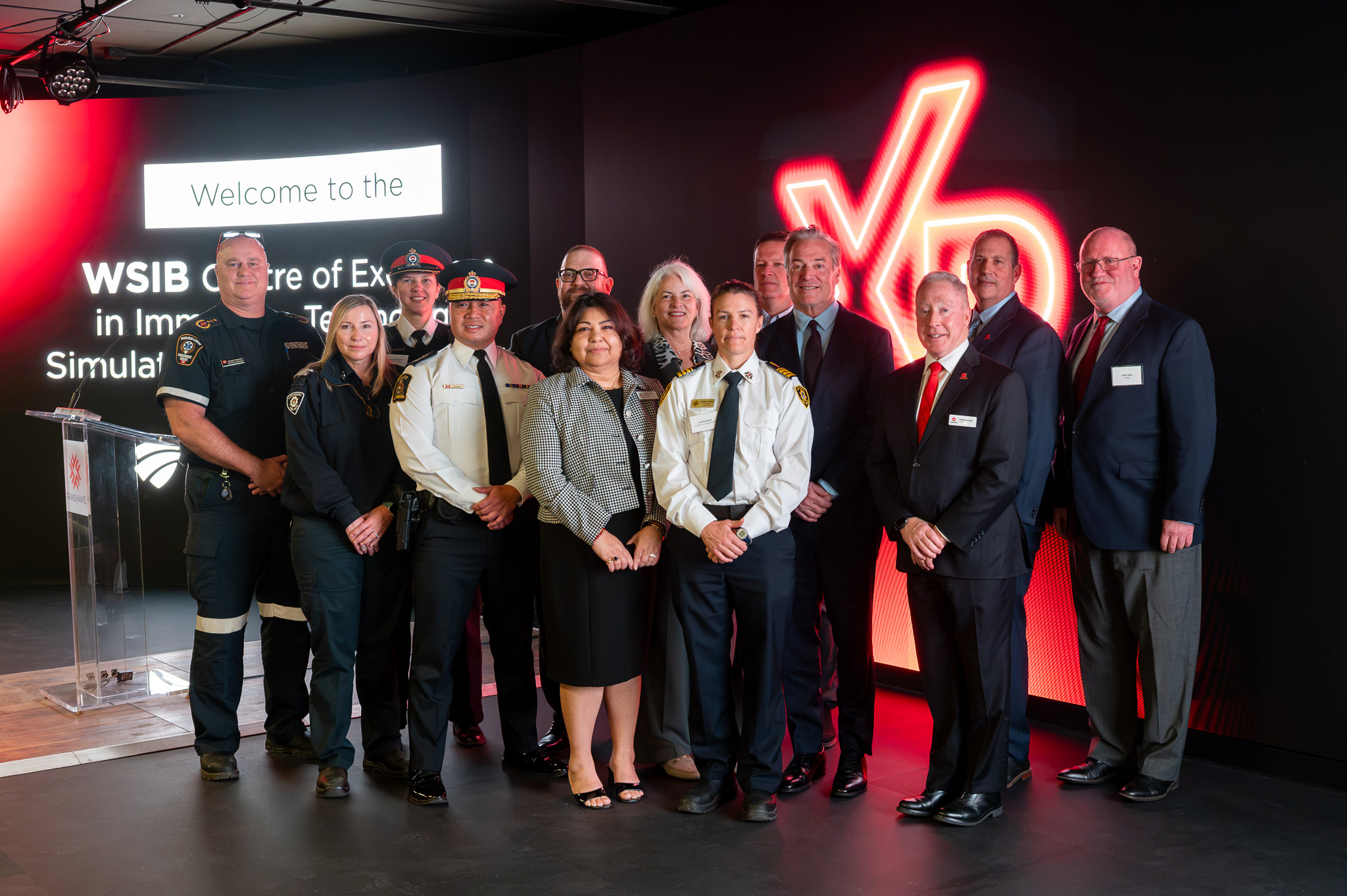
College officially opens the WSIB Centre of Excellence in Immersive Technologies Simulation for Workplace Safety as St. Joseph's and others work to share expertise.
Immersed daily in tragedy and danger, first responders pay a heavy psychological price while in the line of duty. Now a new centre at Fanshawe College aims to help solve and prevent the toll firefighters, police and paramedics too often experience.
The WSIB Centre of Excellence in Immersive Technologies Simulation for Workplace Safety is a virtual space solving a too-real problem.
It uses extended reality (XR) and artificial intelligence (AI) to develop immersive training and therapeutic simulations to help first responders prepare for high-pressure scenarios, strengthen decision-making skills, and support recovery and return-to-work outcomes after a mental stress injury.
"We need to learn to recognize psychological distress when we see it. We also need to relentlessly pursue new and better ways to treat it. And we need to put in place better tools to prevent it in the first place," says Jeff Lang, President and CEO of the Workplace Safety and Insurance Board.
Transformative investment and collaborations
In 2024, Fanshawe announced a $20-million investment from the WSIB to build on the college's teaching and technological expertise in the field.
"At Fanshawe, we believe in applying innovation and technology to help solve real-world challenges," Fanshawe President Peter Devlin said at the Oct. 14 opening.
He lauded the partnerships with industry, first responders, instructors and researchers that make the space - and the transformative work - possible.
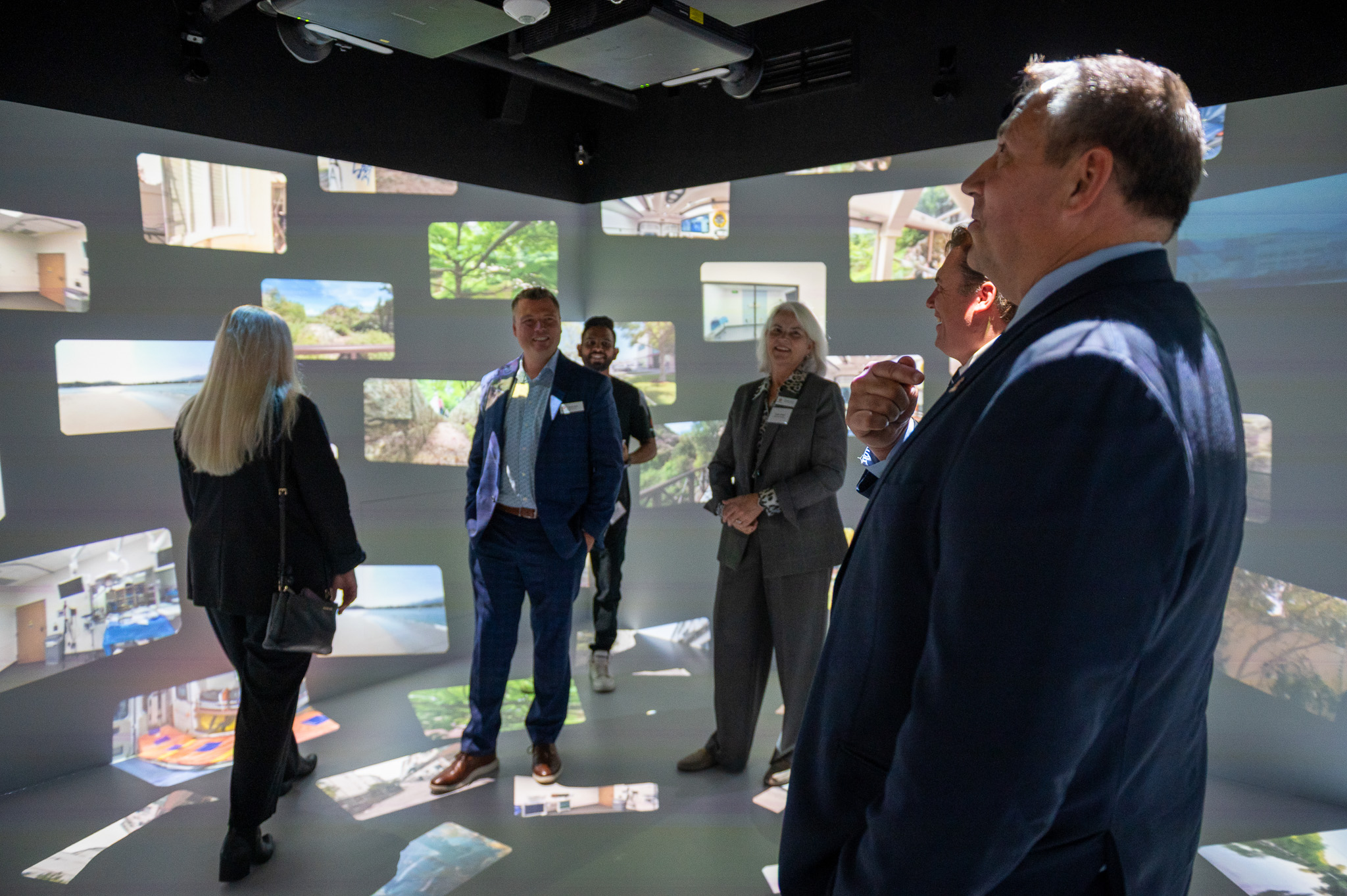
Local partnerships include Lawson Research Institute (Lawson) of St. Joseph's Health Care London, which is also the recipient of $65.75 million in research investment from the WSIB, in partnership with the WorkSafe Ontario Fund.
"These investments are enabling collaborations unlike anything else that's happened before," says Jeremy Burton, Interim VP Research & Scientific Director at Lawson.
"It's quite remarkable, the partnerships and emerging relationships in health research and patient care, in post-secondary innovation and industry expertise - all of us working to address the complex problems of workplace illness and injury," Burton adds.
The investment into Lawson includes the creation of the Workplace Injury Research Network for health research into musculoskeletal injuries, chronic pain and mental health, all related to workplace illness and injury.
Lang said the Fanshawe space "will save lives and change lives, especially for our first responders."
Equipping first responders with resiliency and health
The centre will also help equip professionals who are suffering psychological stress to return to good mental health, for the benefit of themselves, their families, their colleagues and their communities.
Lang added mental stress claims are the fastest growing type of claims at the WSIB, with mental stress injuries among first responders a key drive in the increase.
The numbers bear that out: just 40 per cent of first responders are back to work one year after a psychological injury. After six years, 30 per cent are still unable to work, compared with just two per cent of the rest of the populace.
"That's tragic and that has to change," Lang says. "We need to reduce the impact of mental stress on our first responders, and ultimately on our community as a whole. And that right there is worth every penny of the $20 million the WSIB has committed to this initiative."