

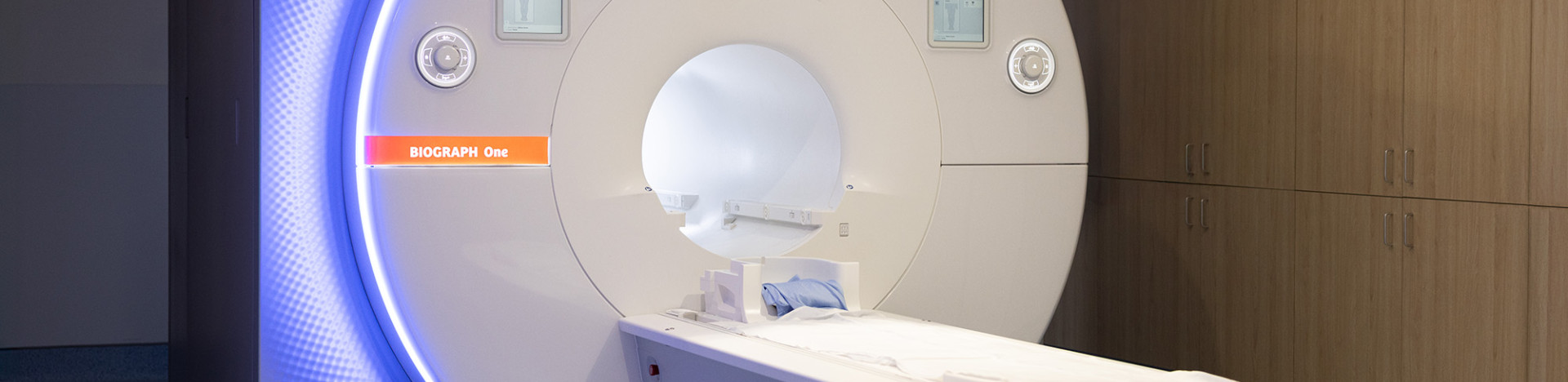
For researchers and trainees: Siemens BIOGRAPH One PET/MRI
What’s new
This research-dedicated BIOGRAPH One is Lawson’s next-generation integrated positron emission tomography / magnetic resonance imaging (PET/MRI) system. It is the first of its kind in Canada and one of the first installations worldwide. This cutting-edge platform delivers true simultaneous PET and MRI, enabling molecular, functional and high-resolution structural and physiological imaging in a single, coordinated acquisition.
Lawson has operated Canada’s longest running PET/MR program, having adopted PET/MR in 2012. With more than a decade of experience as early adopters and leaders in multimodal imaging, the new BIOGRAPH One expands our capability to support advanced, quantitative and translational research across disciplines.
BIOGRAPH One Highlights: Next Generation PET/MR Technology
- 35cm axial PET field of view enabling whole-organ or multi-region studies
- Time-of-flight PET for enhanced sensitivity
- Accelerated 3T MRI supporting high resolution and advanced imaging technique with reduced scan time
- AI-enhanced image reconstruction for consistent, high-quality results
- Next generation RF coil architecture for improved signal and comfort
- Patient-adaptive “Biomatrix” technology reducing motion effects and improving quantification
- Automated scan setup and reconstruction for consistent, efficient imaging workflows
Why simultaneous PET/MR is better
Simultaneous acquisition fundamentally changes what can be measured, improves data quality, and expands that kinds of scientific questions that can be asked.
Time-Matched Biology and Physiology
- PET and MRI signals captures at the same moment enhance interpretation of dynamic processes
- Eliminates timing differences inherent to sequential PET/CT + MRI workflows
Better Quantification, Fewer Confounds
- Improved co-registration due to same-session imaging
- MRI provides superior soft tissue contrast for accurate lesion or region definition
- MR-based motion tracking and correction improves PET data robustness
- Consistent geometry and fewer repositioning steps reduce variability in longitudinal and intervention studies
Richer Endpoints and Enhanced Participant Experience
- Multiple MR contrasts (diffusion, perfusion, spectroscopy, fMRI) acquired in the same session as PET
- Reduced radiation exposure compared to PET/CT
- Single-visit protocols reduce participant burden and improve feasibility
- Non-invasive imaging could replace the need for certain biopsies or invasive measurements
PET/MRI in Research
PET/MRI unlocks study design and endpoints that cannot be achieved with PET/CT or MRI alone.
- Integrated multiparametric protocols combining PET with DWI, DCE, fMRI, MRS
- Whole-body or muti-region acquisitions in a single exam
- Dynamic and quantitative frameworks for mechanistic studies
- Improved sensitivity and efficiency through advanced MR-assisted corrections
Some of its research Applications
Chronic Pain & Musculoskeletal Injury
- Inflammation and metabolic signalling (PET) alongside tissue integrity and biomechanics (MRI)
- Correlate molecular markers with functional adaptations or degeneration
Mental Health & Brain-Behaviour Pathways
- Neurochemical targets with PET paired with connectivity, microstructure and functional measures (fMRI, diffusion, MRS)
- Mechanistic insight into mood, cognition and neural circuitry
Inflammation & Systemic / Neuroinflammation Diseases
- Characterize inflammatory biology with PET while quantifying tissue impact using MRI
- Evaluate disease spread, burden and microstructural changes in a unified framework
Oncology
- Sensitive tumour detection and staging
- Tumour heterogeneity via PET uptake and DWI / DCE features
- Early response biomarkers for treatment trials
Cardiology
- Myocardial inflammation, perfusion and metabolic activity (PET) paired with cardiac function, flow and tissue characterization (MRI)
- Evaluate ischemia, remodelling or microvascular dysfunction through integrated molecular and structural measures within a single coordinated exa
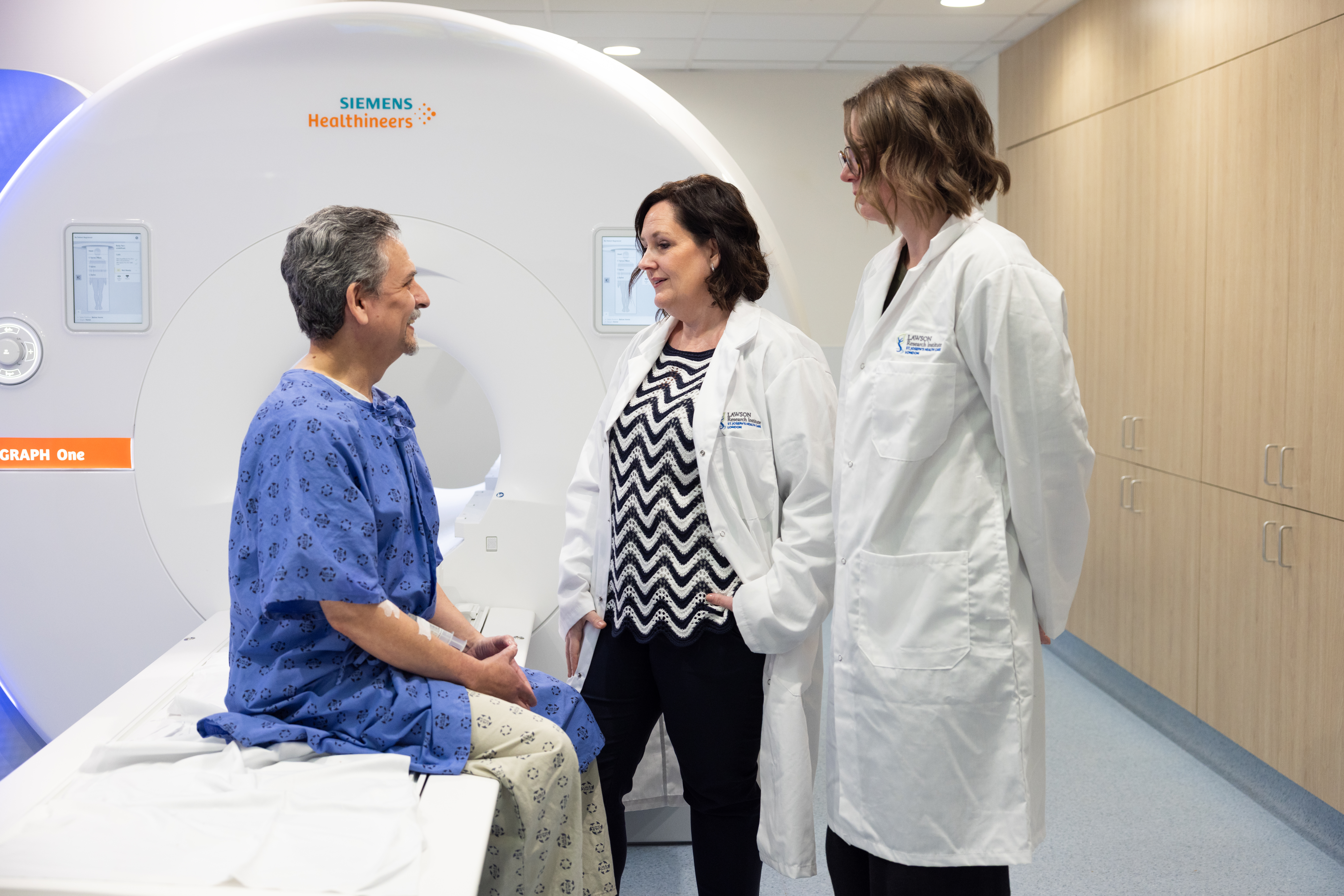 Why partner with us
PET/MR provides compelling, integrated endpoints that can enhance grant competitiveness.
Novel, Mechanism-Anchored Endpoints
- Molecular signalling (PET) plus physiology and tissue characterization (MRI) in one protocol
Increased Rigour and Quantitative Stability
- Reduced misregistration and MR-assisted motion correction mitigate key PET error sources
- Consistent geometry supports reliable longitudinal data
Feasible, Participant-Friendly Study Designs
- Single-visit, standardized acquisitions reduce attrition
- Supports pre/post, dose-response, time-course and intervention studies
Competitive Differentiation
- Access to cutting-edge, integrated imaging elevates methodological strength
- Demonstrates advanced capability to reviewers and partners
Our team has collaborative expertise, from concept to publication:
Study Design & Feasibility
- Endpoint selection, protocol design, workflow optimization; participant tolerability and timing planning
Tracer Strategy & Logistics
- Access to cyclotron / radiochemistry expertise; guidance on tracer availability, regulatory pathways and translation planning
MRI Method Selection
- Tailored sequences (diffusion, perfusion, spectroscopy, fMRI) matched to biological targets; optimization based on time, motion sensitivity and population
Quantification & Analysis Planning
- Reconstruction, motion strategies, co-registration; ROI and voxelwise pipelines; data management and harmonization across timepoints
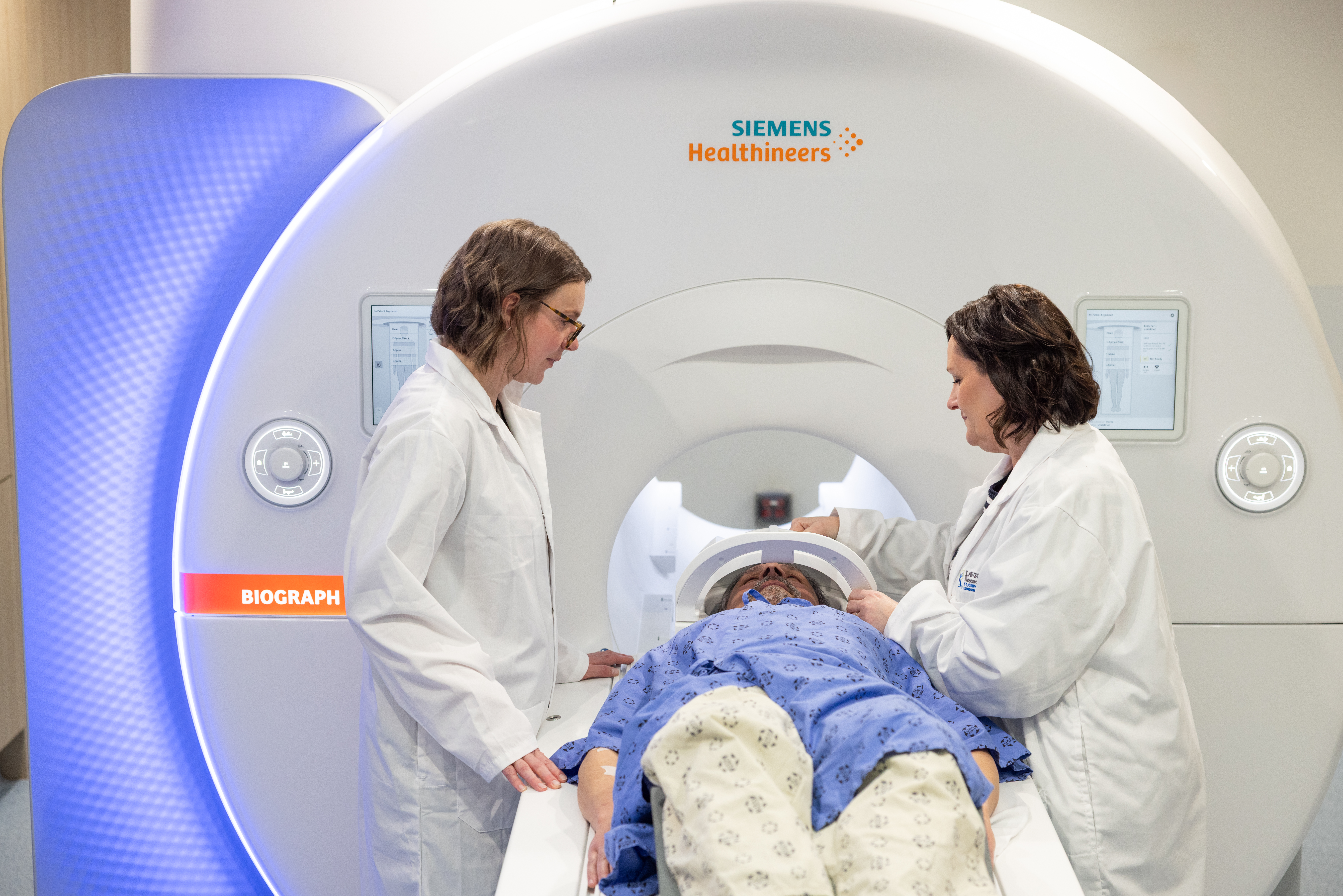 Our infrastructure is second to none, with integrated tools and advanced experimental design
32-Channel Brain RF Array
- High-resolution brain-imaging supporting advanced fMRI, diffusion and spectroscopy
BrainPET Capability
- High‑sensitivity PET imaging optimized for brain research, enabling detailed quantification of neuroreceptor targets, metabolism, inflammation, and neurodegenerative processes
ProPixx + SHIELDPixx
- MRI-compatible visual/auditory brain imaging supporting advanced fMRI, diffusion and spectroscopy
TrackPixx Eye-Tracking
- Real-time gaze monitoring for cognitive, behavioural and compliance-sensitive studies
fORP Response System
- Precise participant input for behavioural and cognitive tasks
PowerLab Physiologic Recording
- Synchronized ECG/respiration acquisition for motion correction and physiologic monitoring
Non-Proton / X-Nuclear MRI (NA-23, F-19)
- Multinuclear MRI using sodium‑23 and fluorine‑19 coils enables metabolic, ion‑transport, and molecular imaging beyond conventional proton MRI
Hyperpolarized Xe-129 MRI
- Cutting-edge gas-exchange and metabolic imaging for pulmonary and systemic disease research, supported by onsite hyperpolarizer
Cyclotron & Radiochemistry Capability
- On‑site cyclotron and radiochemistry labs enable reliable production of established and novel PET tracers, supporting custom radiotracer development and complex molecular imaging studies.
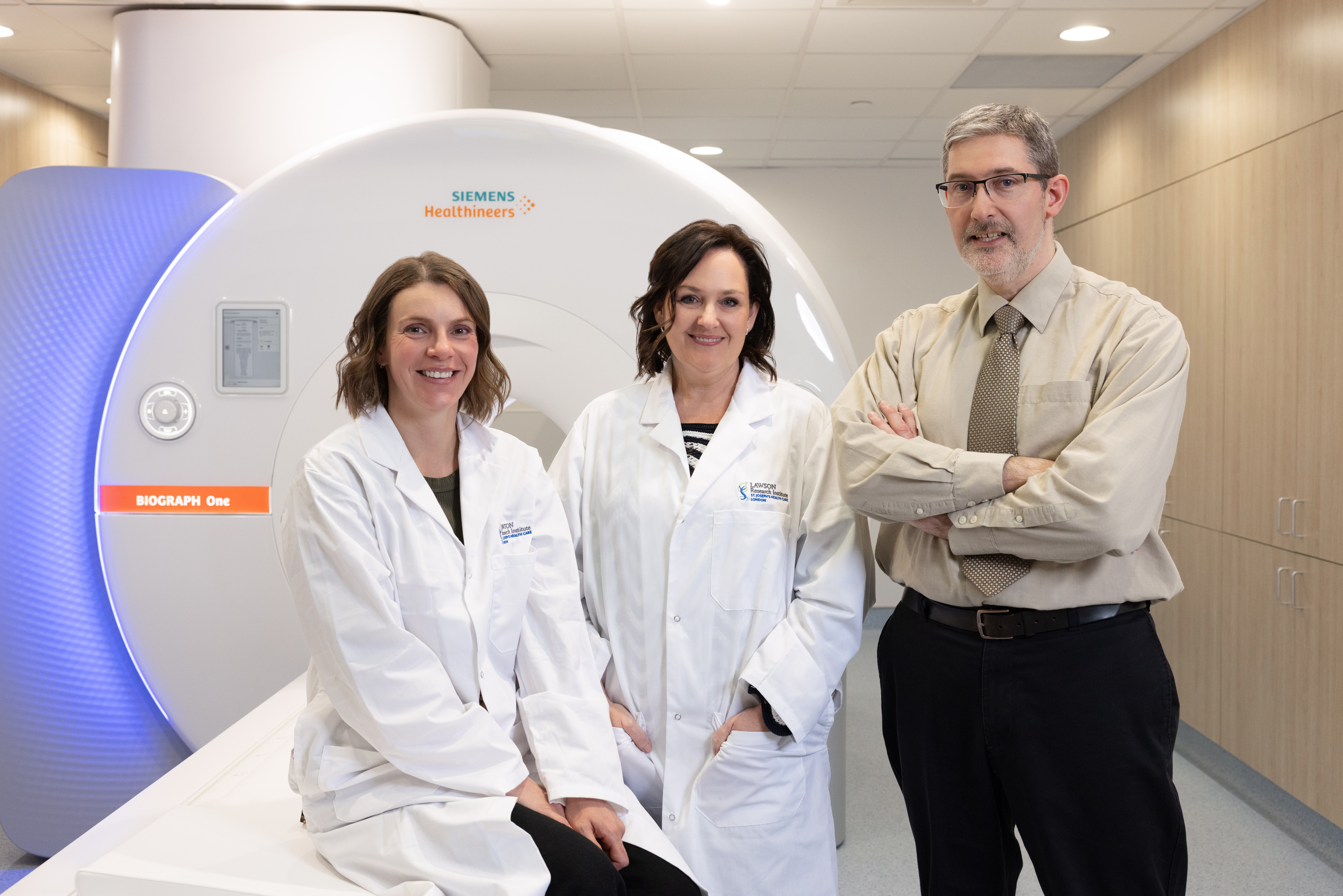
Expert PET/MRI technologist team
Our technologists are dual-certified in PET and MRI with extensive experience in clinical research imaging, protocol development, participant safety, ethics and patient-centred care. Their combined clinical and research expertise ensures high-quality data and a comfortable experience for all participants.
Getting Started
The PET/MRI is available to all peer-reviewed grant-funded scientific investigators with appropriate REB approval. Access is subject to approval by the 3T PET/MRI Operating Advisory Group.
In addition, the PET-MR supports:
- Industry sponsored clinical trials (subject to institutional and regulatory approvals)
- Physician-led clinical research across specialties, including investigator-driven and sponsor-driven studies
- External companies or individual investigators pursuing clinically oriented imaging studies in partnership with LawsonBooking Inquiries
Contact us
Program Lead, Lawson Imaging Research Program
Michael Kovacs, PhD
@email
Director, Lawson PET/MRI Program
Keith St. Lawrence, PhD
@email
PET/MRI Research Lead Technologist
Heather Biernaski, MRT(N)(MR)
@email
MRI Medical Physicist, Safety Officer for Clinical Trials
Jean Théberge, PhD
@email