

A Q&A with one of Lawson's most accomplished researchers
The Canadian Nurses Association (CNA) has honoured Cheryl Forchuk, RN, PhD, with the Sapphire Award to recognize Forchuk's 50 years of significant contributions to nursing and to national and global health care.
"Through innovation, collaboration and advocacy, she has demonstrated the capacity of nursing research to transform health systems and improve the lives of vulnerable populations," the organization says.
Forchuk, a scientist at Lawson Research Institute of St. Joseph's Health Care London and Distinguished University Professor of Nursing at Western University, has secured or contributed to more than $52 million in research funding across 124 projects; written 12 books; written more than 200 peer-reviewed publications; and made hundreds of academic presentations. Her work has shaped policy, informed practice and driven system-level change across Canada and internationally.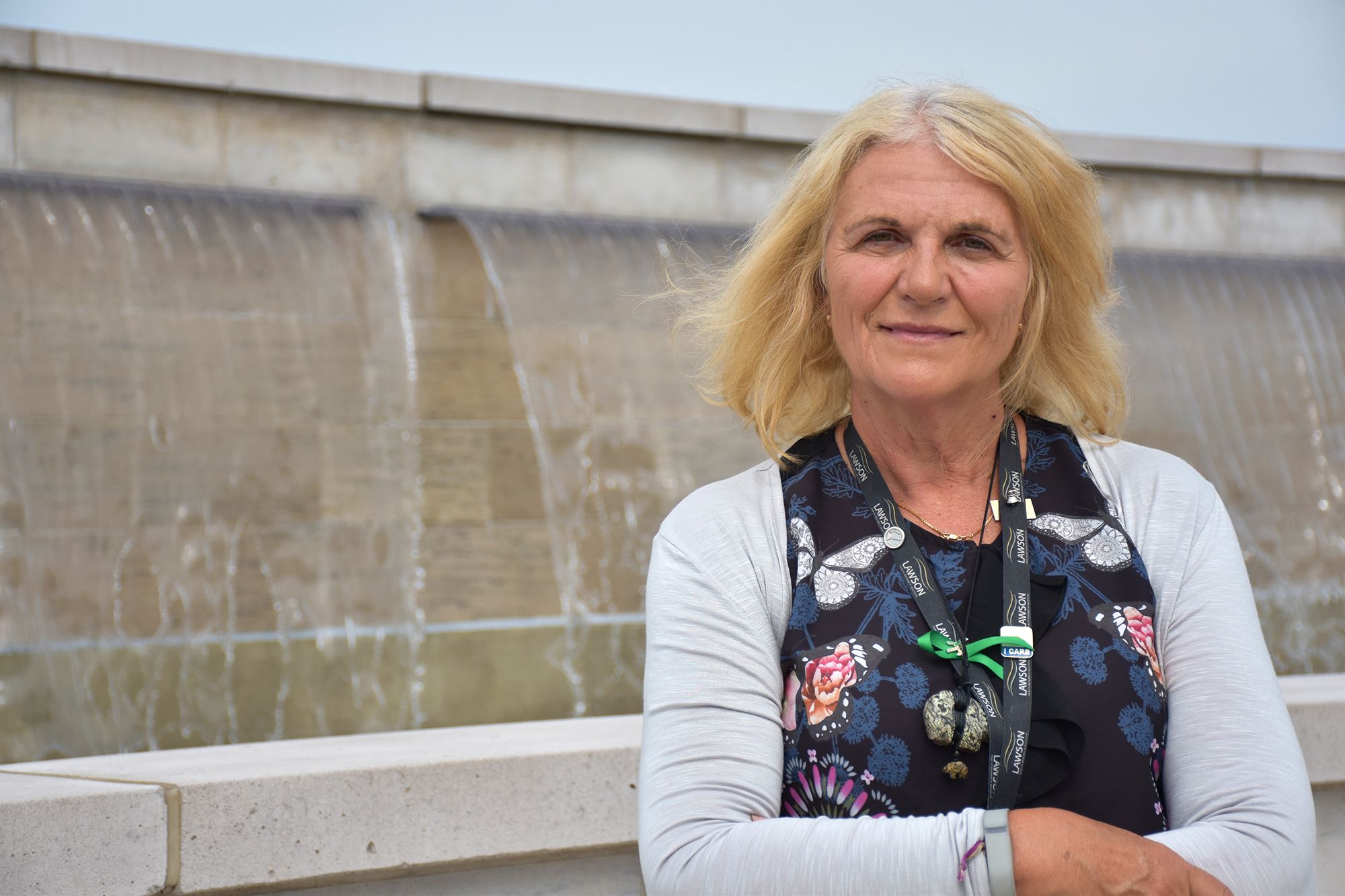
Below, she answers questions about what gives meaning to her past, current and future work:
Q: What would you consider the top two highlights of a 50-year career, so far, in nursing and nurse-led health research?
CHERYL FORCHUK, RN, PhD: I'm proudest of research-backed interventions to promote successful community integration for people with mental health challenges, including the Transitional Discharge Model. A close second would be differentiated interventions to address homelessness across various sub-populations. We have learned that one size fits none.
Q: Why is it important to embed voices of lived experience in your work, especially in mental health and homelessness?
FORCHUK: People generally know the solutions to their problems but often do not have the power to develop and implement them. This is particularly true of people who experience stigma and marginalization. I could never come up with highly effective interventions without the active participation and wisdom of the experts - those who have experienced the problems that need a solution.
Q: What does it mean to you to be just the second person to receive the Sapphire Award from the CNA?
FORCHUK: This is a great honour. It is particularly humbling to have this from my nursing peers. The nomination was made by Mary-Lou Martin, who I worked with for many years at the former Hamilton Psychiatric Hospital. I also had support letters from Western Director of Nursing Vicki Smye and Dalhousie University psychiatrist/ethicist Abraham Rudnick.
Q: What's next in your research?
FORCHUK: We are still researching solutions to address homelessness among Canadian women veterans (a project funded by Infrastructure Canada). We are evaluating an approach to addressing eating disorders among post-secondary students, a project funded by the Western Institute of Neuroscience and co-led with Drs Lindsay Bodell and Robbie Campbell. We are working on several new papers, including harm-reduction practices in hospital, preventing discharge to homelessness and using an algorithm to look at homelessness in relation to multiple health challenges. With nursing faculty Richard Booth and help from research coordinator Sarah Husni, I am writing my thirteenth book, based on our national study on homelessness conducted during the pandemic.