

Research into the biology of Compulsive Sexual Behaviour Disorder (CSBD) is still in its early stages. A first-of-its-kind study presented by Lawson Research Institute scientist Dr. Marco de Tubino Scanavino, at the 11th International Conference on Behavioural Addictions held in Istanbul, Türkiye is helping researchers better understand the condition and explore how this knowledge could improve care, build evidence in this emerging field and show how Lawson research can contribute to global patient care.
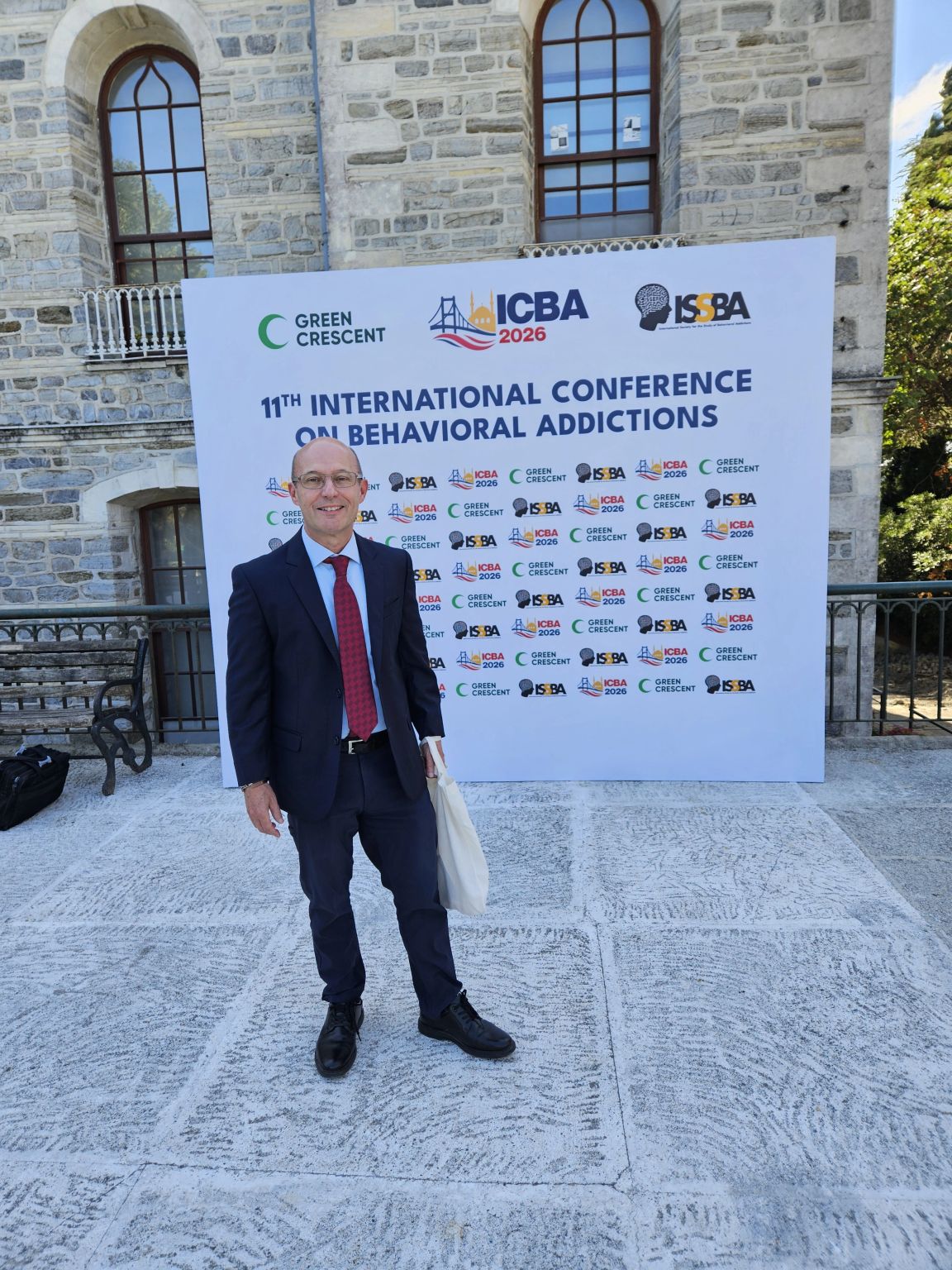
Scanavino's research focuses on CSBD, a condition where repeated sexual urges or behaviours feel difficult to control and begin to affect a person's health, relationships, work or daily life. By studying the biology associated with the disorder, the research aims to strengthen understanding of behavioural addictions and support more informed approaches to care.
The study examined epigenetic patterns in people with CSBD compared with people without the condition. The analysis was able to clearly distinguish people with the disorder from those without it based on their epigenetic profiles. Epigenetics is the study of how experiences, environments and other factors can influence how genes work, without changing a person's genetic code.
The findings broaden early evidence in a limited field and suggest that CSBD has biological features that may help explain its clinical symptoms. That evidence matters because clearer scientific understanding can help shift conversations about behavioural health from judgment to care. It can also give clinicians and researchers new ways to explore diagnosis, treatment and support for people affected by conditions that are often misunderstood.
"Research into the biological pathophysiology of Compulsive Sexual Behavoiur Disorder is still in its infancy," says Scanavino. "This study is particularly notable as the first-of-its-kind conducted outside of Western Europe and North America, having been developed in Brazil. Replicating and expanding these epigenetic findings across different countries, cultures and environments, including here in Canada, is essential to building high-level evidence and improving patient care globally."
The global context is central to the work. The broader perspective strengthens the research by showing why evidence from different countries, cultures and environments are important. Broader evidence can help researchers understand whether biological patterns are consistent across populations and support more informed approaches to care.
The next steps include publishing the findings, sharing the knowledge with communities and expanding the work in Canada to furthers evaluate biomarkers related to CSBD. Biomarkers are measurable signs in the body that can help researchers better understand a health condition and may one day support more objective diagnosis and targeted treatment.
For Lawson and its partners, the work reflects the value of studying complex health issues with scientific rigour, compassion and a focus on improving care. By expanding early findings across countries and cultures, Lawson researchers can help create stronger evidence, reduce stigma and build pathways to earlier recognition and more effective support for people affected by behavioural addictions.
Behind the research:
What is Compulsive Sexual Behaviour Disorder (CSBD) and why is it important to study?
CSBD is characterized by a persistent pattern (typically over at least six months) of intense, repetitive sexual impulses and urges that an individual struggles to control. It often manifests as shifting life priorities - where sexual activities take precedence over personal safety, health, social relationships and work responsibilities - unsuccessful efforts to reduce the behaviour and continuing the behaviour despite significant negative consequences or lack of sexual satisfaction.
What was the main finding of the study?
Despite a small initial sample size (32 individuals with CSBD and 14 controls; 46 total participants), the epigenetic analysis clearly and distinctly differentiated the two groups. The primary findings suggest that individuals with CSBD exhibit epigenetic markers associated with past trauma (impacting cellular integrity and regulation) as well as cell membrane alterations, which support the idea of impaired neurotransmitter reuptake at the neuronal synapses.
Why is it important that people with CSBD can be distinguished by the epigenetic profiles?
CSBD carries a high degree of social stigma and public misunderstanding; people often incorrectly attribute the behaviour to a flaw in character or intentional bad choices. Demonstrating clear biological and epigenetic profile differences provides strong scientific evidence that CSBD has an underlying biological pathophysiology linked to its clinical symptoms. Validating CSBD as a distinct health condition is a critical step toward reducing stigma and fostering a clinical understanding.
How could these findings improve our understanding, diagnosis, or treatment of the condition in the future?
Uncovering the biological pathophysiology allows us to advance diagnostic approaches. By identifying key protein and biomarker alterations, researchers can develop objective tools to support clinical assessments and guide the creation of targeted pharmacological and therapeutic interventions.
What are the next steps for this research?
The team is actively moving forward with publishing these findings and community-focused knowledge translation. Additionally, a new research project is expanding this work to Canada to evaluate CSBD biomarkers and begin exploring biomarkers in paraphilic disorders - both of which carry significant clinical importance due to potential risks like sexual violence.