

Search
Search
3 Search Results:
Artificial intelligence making strides into rehab
Gray Centre hears of AI’s potential to aid patients, practitioners
Imagine trying to determine and share best practice for physical rehabilitation when each therapist conducts and describes their work with different patients in slightly different ways.
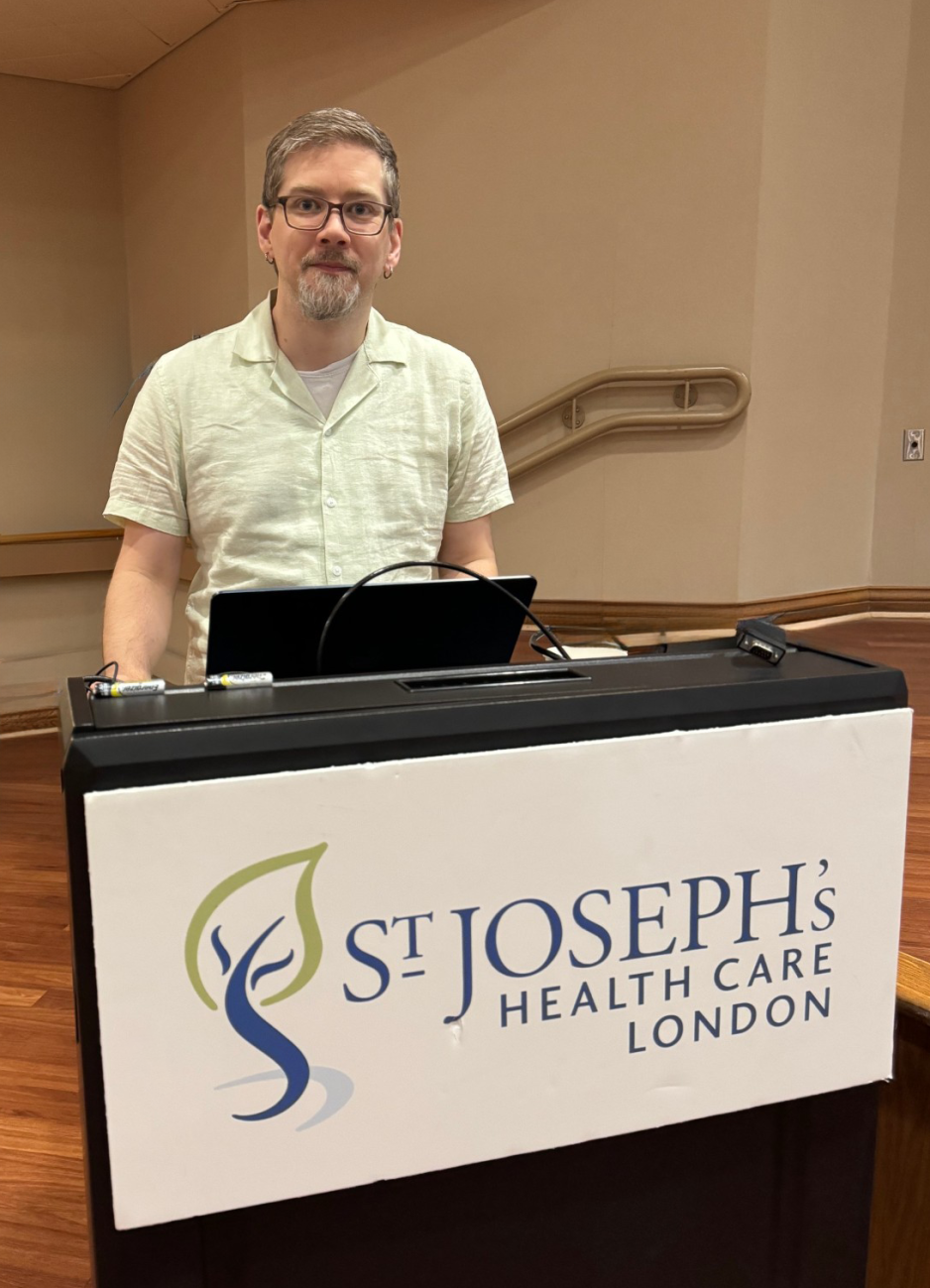
Bringing artificial intelligence (AI) and machine learning to health research and practice is a “transformative shift” that can help close any gaps and ultimately improve patient recovery, participants at a Coffee Lunch hosted by The Gray Centre for Mobility and Activity heard recently during a noon-hour learning session.
AI in general can help explore and describe data, predict outcomes and support better decision-making, says Dan Lizotte, associate professor of computer science and epidemiology and biostatistics at Western University.
“For patient rehabilitation, AI models can interpret past data to find patterns we didn’t know existed, and then build new models for treatment,” Dan told a group of about 45 researchers, scientific staff, clinicians and clinical leaders. health professionals.
The Gray Centre at St. Joseph’s Parkwood Institute is a national leader in developing rehabilitation interventions and treatments through research, teaching and partnership. The group’s weekly Coffee Lunch events are intended to help “unsilo” Parkwood’s research and clinical groups so that they all can benefit from each other’s expertise.
“AI is arguably one of the biggest technological shifts since the internet,” adds Dalton Wolfe, a scientist at Lawson Health Research Institute and leader of the Research 2 Practice (R2P) team based at Parkwood. “We’ve been talking for years about how advanced data collection and analytics can enhance our practice.”
“In health care, it can change our processes and practices, and help develop decision-support and training systems, as well as new ways to generate evidence - all that will enable better research and clinical care. It’s a transformative shift.”
- Dalton Wolfe, a scientist at Lawson Health Research Institute and leader of the Research 2 Practice (R2P) team
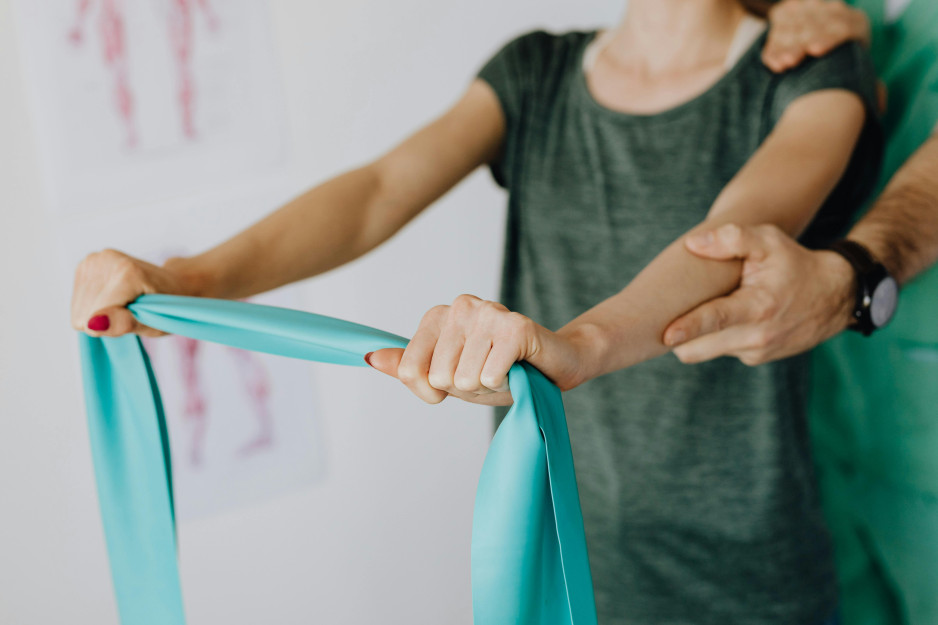
For example, Dan is leading the data science team as part of an ongoing R2P study to collect data on physical therapists’ complex descriptions of rehabilitation activities with patients with spinal cord injuries. To start with they have created videos in which 14 therapists describe 16 different activities to capture standard rehab activities and language. The aim is to generate an AI model that can categorize those descriptions and assess which activities are linked with the best outcomes, and then to improve best practices and lead to better patient recovery, he says.
Dan acknowledges the AI technology is growing quickly, and so are the potential applications for rehabilitation research. “Every week, there are new tools we might use, everything from data collection to final analysis.”
Gray Centre for Mobility and Activity 2024-2025 Impact Report
We’re proud to share the 2024–2025 Impact Report from the Gray Centre for Mobility and Activity. The Gray Centre for Mobility and Activity, located at St. Joseph’s Health Care London's Parkwood Institute - is a leading clinical research hub dedicated to improving mobility and activity for individuals with complex movement challenges. Through partnerships with Western University and support from Lawson Research Institute, the centre brings together clinicians, scientists, and learners to advance collaborative research that translates into meaningful improvements in care and quality of life.
The report highlights milestones - from new partnerships to emerging technologies - and offers a glimpse of what’s ahead as the Gray Centre expands its reach and impact.
Read the full report >
‘Outstanding work’ nets young researcher three awards
If science were a baseball game, Thuvaraha Jeyakumaran’s batting average would rank her an all-star in her first major-league season.
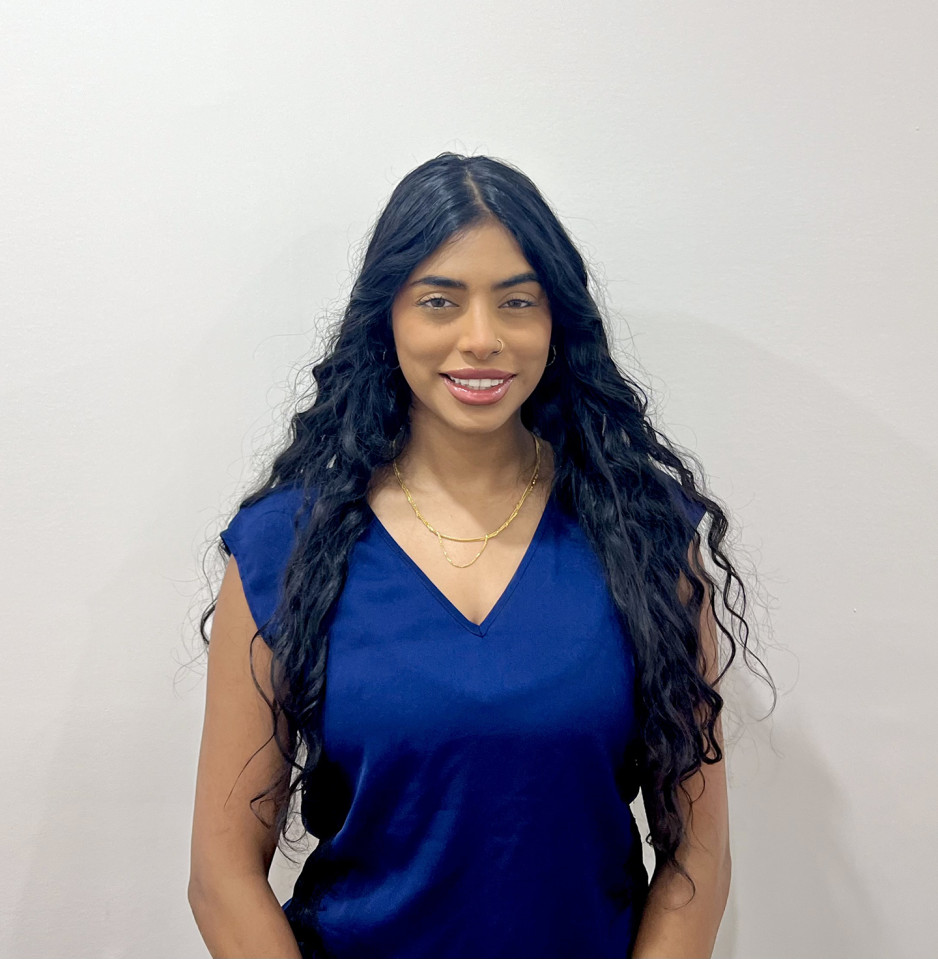
For the third consecutive time, the research coordinator and knowledge-mobilization specialist at St. Joseph’s Parkwood Institute has become an award-winner for three different presentations at three research conferences.
The latest in her three-for-three streak is receiving the early-career scholar award for her poster submission to the International Spinal Cord Society conference, which will take place in September in Belgium. Jeyakumaran’s specialty is intentionally enlisting and embedding the insights of people with lived experience into research studies, from pre-grant planning through to implementation and impact.
“Health equity in research is more than just saying, ‘we’re designing studies for you,’” says the young researcher. “It’s about designing studies with people and asking, ‘Does what we’re researching have meaning for you?’ We’re not asking just because we want to check the lived-experience box, but because they bring new insights and added value to our work.”
For the upcoming conference in Antwerp, Jeyakumaran submitted a poster that outlined how this co-design process helped in planning a clinical trial about the impact of intermittent fasting among people with chronic pain and depression. People with lived experience had an opportunity to plan and identify how to recruit participants, and they helped shape a website and app developed by students in work-study programs at Western University.
“They came up with ideas and questions we would not have thought to ask,” Jeyakumaran says of that study.
Jeyakumaran began working with the Grey Centre for Mobility and Activity as part of a work-study program at Western and was hired on in Sept. 2023 after earning her Master of Management of Applied Science in global health systems.
“Thuvaraha has brought so much to our team in shifting how we do things and make research impact as great as it can be,” says Dalton Wolfe, scientist at Lawson Health Research Institute and leader of the Research 2 Practice team – a team at the Grey Centre for Mobility and Activity bringing innovative research ideas into clinical practice.
Wolfe calls the three-peat honours – from Jeyakumaran’s different poster presentations at conferences in Atlanta and London as well as the upcoming one in Belgium - “an astounding achievement representing outstanding work.”
“We start with the premise that the end game of health research is impact for patients,” he says. “A layperson will say, ‘well, isn’t that the way it’s supposed to work?’ But this approach is different from how some researchers are trained, which is often to start from intellectual curiosity. This requires the researcher to relinquish some control over the questions and the process.”
Jeyakumaran, who is also lead author on a newly published paper about integrated knowledge translation in research, is among hundreds of students whose fresh perspective and experience contributes to a thriving ecosystem of research at St. Joseph’s.