


Search
Search
3 Search Results:
Dr. Dalton L. Wolfe
Research Overview
- Spinal Cord and Acquired Brain Injury Rehabilitation
- Implementation Science
- Activity-based therapies to promote neurorecovery
Biography
Dr. Dalton Wolfe is a Scientist at Parkwood Institute (SJHC London) and the leader of the R2P (Research 2 Practice) team that integrates clinical and research efforts to improve care and clinical outcomes. His primary research interest is in the area of knowledge mobilization and best practice implementation with a focus on physical activity and activity-based therapies in spinal cord injury and brain injury rehabilitation. He co-leads the Ontario SCI Implementation, Evaluation and Quality Care Consortium which focuses on implementation of quality indicators towards the enhancement of care across the 5-academic health centres involved in SCI rehabilitation in the province of Ontario. As part of the Parkwood Rehabilitation Innovations in Mobility Enhancement (PRIME) initiative he is focused on enhancing clinical decision-making to improve locomotor and other movement-related outcomes with activity-based therapies such as robotic, manual and FES-assisted therapies. As with many of the R2P initiatives this involves implementation science and participatory research methods to put in place practice-based research infrastructure that enables iterative knowledge generation as well as implementation. Dr. Wolfe Is currently accepting students at the Masters, Doctoral, and post-doctoral levels.
Latest News: https://www.lawsonresearch.ca/lawsonlink/prime-team
Dr. J Don Richardson
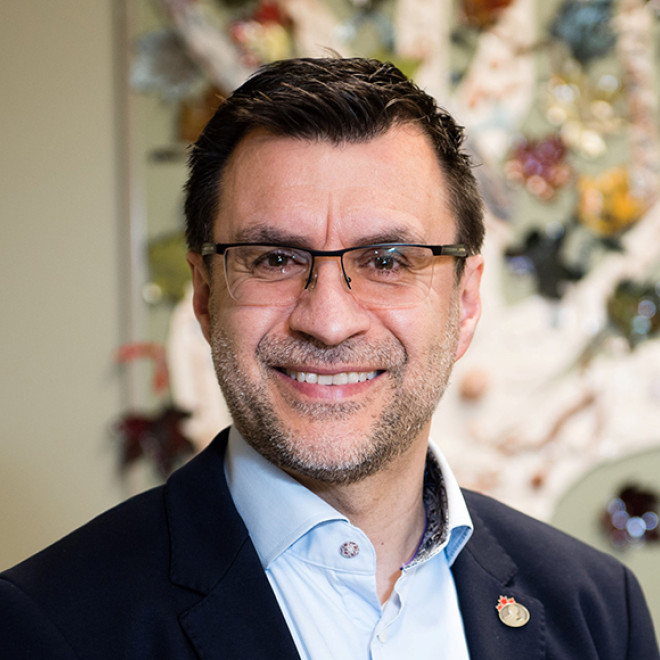
Full Name
Dr. J Don Richardson
Role
Location
Degrees and Qualifications
MD, FRCPC
Research Overview
- Advanced Analytics to Understand Military Related PTSD: Canadian Armed Forces (CAF) members and veterans are at risk of developing PTSD and other mental health conditions resulting from trauma exposure during their military service. The proposed study utilizes natural language processing (NLP) to identify key features related to 1) suicide attempts and 2) moral injury using unstructured data. Additionally, we propose using IBM SPSS Modeler or other technology available through IBM via Southern Ontario Smart Computing Innovative Platform (SOSCIP) to: 1) identify patterns of comorbidity; and 2) predict treatment trajectories amongst a cohort of treatment-seeking CAF members and veterans.
- Develop algorithms that can be utilized in the screening of CAF members and veterans for PTSD, MDD, and suicidal ideation (SI): Research indicates that military personnel are at increased risk of developing PTSD, major depressive disorder, and suicidal ideation as a result of events experienced during their military service. The proposed study utilizes machine learning to develop assistive diagnostic algorithms to aid in the early identification of PTSD and MDD among CAF members and veterans.
- Statistics Canada Canadian Armed Forces Longitudinal Health Survey: In 2018, a follow-up assessment was completed of the large, representative sample of individuals who, 13 year earlier (2002), were employed by CAF and, at that time, participated in the Canadian Forces Supplement of the 1st Canadian Survey of Mental Health & Wellbeing. The plan is to investigate the incidence of new mental health (MH) problems and the persistence of the MH problems identified in 2002. The research will focus determining the incidence rate of new-onset MH problems during the 13 years since 2002 and identify characteristics associated with risk factors and protective factors to developing a new-onset MH outcome.
- Statistics Canada 2013 CAF Mental Health Survey: The 2013 CAF Mental Health Survey is a nationally representative sample of 8180 active CAF members. Using this nationally representative sample the plan is to examine the association between Psychiatric Illness, sleep disturbances and Suicidal Ideation in order to increase our understanding of military-specific factors that are associated with the development of PTSD among CF members who are deployed on combat missions.
- Posttraumatic Stress Disorder and Comorbidity in Treatment Seeking CAF Members and Veterans: The objective of the current study is to retroactively use information provided by former and current CF members presenting to Parkwood Hospital’s Operational Stress Injury Clinic for treatment in order to investigate (1) The relationship between events experienced during deployment and suicidal ideation (i.e., to determine whether certain combat experiences are more related to suicidal ideation than others), (2) The relationship between PTSD symptom clusters and health-related quality of life (i.e., to determine whether certain PTSD symptom clusters have a greater impact on wellbeing), and (3) The relationship between PTSD and comorbid disorders .
- Posttraumatic Stress Disorder (PTSD) and Comorbidity in Canadian Veterans Patients attending the Parkwood Operational Stress Injury Clinic complete a standardized assessment and treatment protocol. The standardized questionnaires at intake include PHQ-9 and GAD-7 for depression and anxiety, the PHQ-15 for somatic symptoms, the Alcohol Use Identification Test (AUDIT) for alcohol use, the PCL-M and PCL-5 for PTSD, the Deployment Experience Questionnaire, and the SF-36 to assess health-related quality-of-life. Prior to being seen for follow-up care, patients complete the PHQ-9, GAD-7, the PCL-5 and the OQ 45. Using a retrospective chart review design, the plan is to examining PTSD and comorbidity as well as examining predictors treatment outcome, including recovery.
Publications:

Biography
Dr. Richardson is consultant psychiatrist and Medical Director of the Parkwood Operational Stress Injury (OSI) Clinic in London, Ontario. He is also the Scientific Director of the MacDonald Franklin OSI research Centre at the Parkwood Institute and a fellow with the Canadian Institute for Military and Veteran Health. He has a Social Work degree from McGill University and completed his medical degree at Queen’s University and his fellowship in psychiatry at the University of Ottawa. He has more than 25 years of experience in the assessment and treatment of Veterans and Canadian forces members with PTSD and other operational stress injuries. Dr. Richardson has more than 50 published articles and book chapters in the area of Military and Veteran Mental Health including risk factors for PTSD and suicidal ideation, sleep disturbances, health care utilization, treatment outcomes and the impact of PTSD on quality-of-life.
Dr. Robert Teasell

Full Name
Dr. Robert Teasell
Role
Location
Degrees and Qualifications
PhD
Contact Information
Phone
519-685-4559
Extension
44559
Email
Administrative Support
Pat Holmes - Pat.Holmes@sjhc.london.on.ca
Research Overview
- Stroke rehabilitation
- Chronic pain
- Whiplash injuries
- Conversion disorders
Biography
Robert Teasell MD FRCPC
Dr. Robert Teasell is Professor, Schulich School of Medicine and Dentistry, Western University, former Chair-Chief and current Research Director of the Department of Physical Medicine and Rehabilitation, Medical Director of the Stroke Rehabilitation Program, Parkwood Institute, St. Joseph’s Health Care London and Clinical Researcher with Lawson Health Research Institute, Parkwood Institute Research.
Dr. Teasell is editor of the internationally acclaimed Stroke Rehabilitation Evidence-Based Review (17 editions), Acquired Brain Injury Evidence-Based Review (12 editions) and co-editor of Spinal Cord Injury Evidence-Based Review (6 editions). He is Co-Chair of the Canadian Best Practice Guidelines Committee in Stroke Rehabilitation. Dr. Teasell has authored 335 peer-reviewed articles, 335 published abstracts, 22 book chapters, over 1,500 (including 700 international or national) posters/presentations and over 10,000 citations on SCOPUS. He has been involved in over $19 million in research funding and has won many awards, most recently the 2018 Lawson Health Research Institute Impact Scientist of the Year Award and the 2018 Post-Acute Stroke Award of Excellence from the American Congress of Rehabilitation Medicine and the National Stroke Association (U.S.).
Research interests include:
- Clinical Application of Best Evidence in Neurorehabilitation utilizing the Evidence-Based Reviews and associated Guidelines
- Stroke Rehabilitation in the Community in association with a model system of stroke outpatients out of Parkwood Institute in conjunction with the Southwestern Ontario Local Integrated Health Network
- The role of Obsessive Personality Traits as in coping with Chronic Pain, Rheumatoid Arthritis, Post Concussion Syndrome and Spinal Cord and Traumatic Brain Injuries and how that influences, anxiety, stress, depression, disability and use of opioid medications.
Partners
Partners include:
Southwestern Ontario Local Integrated Health Network
Dalton Wolfe
Eldon Loh
Laura Allen