


Search
Search
213 Search Results:
… the remaining portion. Once you have received your hospital Corporate ID, please see “A Guide to … tps://intra.lhsc.on.ca/medical-affairs/professional-staff/resources/secretarial-support for more information. Hospital … for all members to engage in MOC. Physicians cannot report directly to CPSO who requires that this information …
Dr. s copy ( Western Schulich School of Medicine & Dentistrys copy ( Department of s copy ( Medical Affairs copy ( THIS LETTER OF OFFER IS ONLY TO BE ISSUED AFTER CONFIRMATION OF THREE SATISFACTORY REFERENCES FOR THE CANDIDATE. Dea...
… the remaining portion. Once you have received your hospital Corporate ID, please see “A Guide to … tps://intra.lhsc.on.ca/medical-affairs/professional-staff/resources/secretarial-support for more information. Hospital … for all members to engage in MOC. Physicians cannot report directly to CPSO who requires that this information …
Dr. s copy Western Schulich School of Medicine & Dentistrys copy Department of s copy Medical Affairs copy THIS LETTER OF OFFER IS ONLY TO BE ISSUED AFTER CONFIRMATION OF THREE SATISFACTORY REFERENCES FOR THE CANDIDATE. Dear Dr.
… the remaining portion. Once you have received your hospital Corporate ID, please see “A Guide to … tps://intra.lhsc.on.ca/medical-affairs/professional-staff/resources/secretarial-support for more information. Hospital … for all members to engage in MOC. Physicians cannot report directly to CPSO who requires that this information …
Dr. s copy ( Western Schulich School of Medicine & Dentistrys copy ( Department of s copy ( Medical Affairs copy ( THIS LETTER OF OFFER IS ONLY TO BE ISSUED AFTER CONFIRMATION OF THREE SATISFACTORY REFERENCES FOR THE CANDIDATE. Dea...
… the remaining portion. Once you have received your hospital Corporate ID, please see “A Guide to … tps://intra.lhsc.on.ca/medical-affairs/professional-staff/resources/secretarial-support for more information. Hospital … for all members to engage in MOC. Physicians cannot report directly to CPSO who requires that this information …
Dr. s copy Western Schulich School of Medicine & Dentistrys copy Department of s copy Medical Affairs copy THIS LETTER OF OFFER IS ONLY TO BE ISSUED AFTER CONFIRMATION OF THREE SATISFACTORY REFERENCES FOR THE CANDIDATE. Dear Dr.
… the remaining portion. Once you have received your hospital Corporate ID, please see “A Guide to … tps://intra.lhsc.on.ca/medical-affairs/professional-staff/resources/secretarial-support for more information. Hospital … for all members to engage in MOC. Physicians cannot report directly to CPSO who requires that this information …
Dr. s copy ( Western Schulich School of Medicine & Dentistrys copy ( Department of s copy ( Medical Affairs copy ( THIS LETTER OF OFFER IS ONLY TO BE ISSUED AFTER CONFIRMATION OF THREE SATISFACTORY REFERENCES FOR THE CANDIDATE. Dea...
… the remaining portion. Once you have received your hospital Corporate ID, please see “A Guide to … St. Joseph’s with instructions and timelines to complete your credentialing requirements for hospital privileges. In … for all members to engage in MOC. Physicians cannot report directly to CPSO who requires that this information …
Dr. s copy ( Western Schulich School of Medicine & Dentistrys copy ( Department of s copy ( Medical Affairs copy ( THIS LETTER OF OFFER IS ONLY TO BE ISSUED AFTER CONFIRMATION OF THREE SATISFACTORY REFERENCES FOR THE CANDIDATE. Dea...
… the remaining portion. Once you have received your hospital Corporate ID, please see “A Guide to … tps://intra.lhsc.on.ca/medical-affairs/professional-staff/resources/secretarial-support for more information. Hospital … for all members to engage in MOC. Physicians cannot report directly to CPSO who requires that this information …
Dr. s copy Western Schulich School of Medicine & Dentistrys copy Department of s copy Medical Affairs copy THIS LETTER OF OFFER IS ONLY TO BE ISSUED AFTER CONFIRMATION OF THREE SATISFACTORY REFERENCES FOR THE CANDIDATE. Dear Dr.
… the remaining portion. Once you have received your hospital Corporate ID, please see “A Guide to … tps://intra.lhsc.on.ca/medical-affairs/professional-staff/resources/secretarial-support for more information. Hospital … for all members to engage in MOC. Physicians cannot report directly to CPSO who requires that this information …
Dr. s copy Western Schulich School of Medicine & Dentistrys copy Department of s copy Medical Affairs copy THIS LETTER OF OFFER IS ONLY TO BE ISSUED AFTER CONFIRMATION OF THREE SATISFACTORY REFERENCES FOR THE CANDIDATE. Dear Dr.
… the remaining portion. Once you have received your hospital Corporate ID, please see “A Guide to … tps://intra.lhsc.on.ca/medical-affairs/professional-staff/resources/secretarial-support for more information. Hospital … for all members to engage in MOC. Physicians cannot report directly to CPSO who requires that this information …
Dr. s copy Western Schulich School of Medicine & Dentistrys copy Department of s copy Medical Affairs copy THIS LETTER OF OFFER IS ONLY TO BE ISSUED AFTER CONFIRMATION OF THREE SATISFACTORY REFERENCES FOR THE CANDIDATE. Dear Dr.
… the remaining portion. Once you have received your hospital Corporate ID, please see “A Guide to … St. Joseph’s with instructions and timelines to complete your credentialing requirements for hospital privileges. In … for all members to engage in CPD. Physicians cannot report directly to CPSO who requires that this information …
Dr. s copy ( Western Schulich School of Medicine & Dentistrys copy ( Department of s copy ( Medical Affairs copy ( THIS LETTER OF OFFER IS ONLY TO BE ISSUED AFTER CONFIRMATION OF THREE SATISFACTORY REFERENCES FOR THE CANDIDATE. Dea...
… Bldg, Room A2-109A/B AGENDA REMINDER: At the forefront of our discussions today, we are to ensure that we consider our … loss and unauthorized access use or disclosure, as well as reporting any suspected breach of confidential information … Executive Officer [R. Butler] (20 mins) (a) St. Joseph’s Annual Report to the Community (link goes live June 21 with …
Regrets to Terri-Lynn Cook 519-646-6100 ext. 64202 or terrilynn.cook@sjhc.london.on.ca P a g e | 1 Meeting of the Board of Directors Wednesday June 21, 2023 12:30 pm start time Parkwood Institute Main Bldg, Room A2-109A/B AGENDA REMINDER: At the forefront of our discussions today, we are to ensure t...
Lawson ranks in top ten of Canada’s research hospitals
LONDON, ON – Lawson Health Research Institute (Lawson) is ranked eighth in the country according to the 2017 edition of “Canada’s Top 40 Research Hospitals List” by Research Infosource. This strong position has been maintained by Lawson for the past four years.
The research institute of London Health Sciences Centre and St. Joseph’s Health Care London, Lawson also posted the highest research intensity (spending per researcher) among large institutions ($562,500 per researcher). “In a challenging funding environment, Lawson and our two hospital partners continue to enable our researchers in their pursuit of scientific knowledge that can be applied directly to patient care,” says Dr. David Hill, Scientific Director, Lawson.
The top 40 list analyzes hospital-based research institutes from across the country on several metrics, including total research income from the previous fiscal year. The ranking looks at funds received from all sources, including both internal and external, to support research at the organization. According to the report, Lawson received $124,304 million in research income in 2016, a 7.3 per cent increase from the previous fiscal year.
Dr. David Hill advocates for increased scientific funding nationally. “Despite our own modest increase in funding in 2016, Canada as a whole requires significant investment in scientific discovery to increase the well-being of Canadians and build a robust economy. Support for health research makes Canada healthier, wealthier and smarter.”
Lawson is a key part of London’s life sciences sector which has a rich history of medical firsts and generates significant economic benefits. At the institute there are over 1,700 people including researchers, support staff, and trainees who work at hospital sites across London. Lawson partners on over 600 research projects annually with approximately 8,000 clinical subjects enrolled in over 2,500 active clinical trials.
In the past year alone, research teams at Lawson have identified a protein that could be used to treat glaucoma; launched a second clinical trial to put type 2 diabetes into remission; demonstrated that walking and talking can be an effective predictor of dementia; and used smart technology to help patients with mental health issues. “One of Lawson’s strengths is the diversity of our research. Our research expands the continuum of life – from birth to death – and people in this region are among the first to benefit from the advances we are making across the health spectrum,” asserts Dr. Hill.
Research Infosource Inc., a division of The Impact Group, is Canada’s source of R&D Intelligence.
-30-
See all Lawson Media Releases
About Lawson Health Research Institute
Lawson Health Research Institute is one of Canada’s top hospital-based research institutes, tackling the most pressing challenges in health care. As the research institute of London Health Sciences Centre and St. Joseph’s Health Care London, our innovation happens where care is delivered. Lawson research teams are at the leading-edge of science with the goal of improving health and the delivery of care for patients. Working in partnership with Western University, our researchers are encouraged to pursue their curiosity, collaborate often and share their discoveries widely. Research conducted through Lawson makes a difference in the lives of patients, families and communities around the world. To learn more, visit www.lawsonresearch.ca.
Media Contacts
Celine Zadorsky
Senior Media Relations Consultant
Communications & Public Engagement
T: 519-685-8500 ext. 73502
Celine.zadorsky@lhsc.on.ca
Lawson Research Institute Commitment to EDI-B
Lawson Research Institute (Lawson) is a research community that strives to embed equity, diversity, inclusion, and belonging (EDI-B) within our research environment. This commitment is underscored in St. Joseph’s Health Care London’s (St. Joseph's) institutional 2022-2025 strategic plan entitled “Earning Complete Confidence,” in which, among other goals, we prioritize leading in health research and innovation.
To achieve our goal, we must first acknowledge that research spaces, participation and practices have included, and still include, numerous barriers that limit the full participation of equity-deserving groups and partners in the research environment. The Canadian Tri-Agency Statement on Equity, Diversity and Inclusion (EDI) (1) has acknowledged such barriers and formulated The Canadian Tri-Agency EDI Action Plan (2018-2025)(2) outlining steps to address these in our research ecosystem.
As a health research institute, we are also guided by the Ontario Hospital Association (OHA) Strategic Plan (2022-2027) (3), which prioritizes safe and progressive practices that will benefit its members, system, and organization. Innovative, impactful and transformational research thrives when guided by equity, incorporating diverse worldviews, methods and perspectives.
In accordance with the OHA Strategic Plan (3), we believe that the key to a thriving research enterprise is to embed the values of humility, discovery and passion in our work. We embrace the philosophy of Ubuntu, which can be defined as the essential human virtues of compassion and humanity, and recognize that members of our research community are part of a larger, and more significant relational, communal, societal, environmental and spiritual world. Our mission is to attend to the wholeness of each person – body, mind and spirit – welcoming every member of our research community as a person with a unique set of strengths, lived experiences, support networks, spirituality, and personal goals.
We want to foster the resiliency, well-being, equity, diversity, inclusion and belonging of all members of our research community and thus enhance a thriving research culture where wellness, diversity and a sense of belonging are fostered and the potential and capacity of everyone is supported. We understand that leading research through an EDI-B lens is necessary to achieve research relevance, success and excellence, and this will benefit everyone in the Canadian and the global research environment. (4,5,6,7)
Lawson Research Institute commits to:
• Reviewing and improving our EDI-B specific strategies, policies and procedures (1) to support equitable research practice, and (2) to promote inclusive hiring and retention of diverse talent at the Lawson Research Institute.
• Providing the training and resources for our researchers to embed EDI-B principles and best practices in their research design and implementation.
• Incorporating EDI-B accountabilities into research design and practice competencies to ensure that our research responds to the health gaps experienced by our diverse communities.
• Convening a community of expert practitioners to learn best EDI-B practices to advance equity in research design and practice.
• Developing and launching awards focused on elevating and making visible researchers who champion and incorporate EDI-B best practices in their research as guided by the federal research funding programs (8).
It is equally vital to acknowledge, honour and include Indigenous Knowledges, which long precede Euro-western centred approaches brought to these lands. In accordance with the Truth and Reconciliation Commission’s Calls to Action 18-24 on Health (9), it is crucial to make space for and emphasize the importance of conducting health research in culturally sensitive ways as part of our collective responsibility in working towards reconciliation. We will work in collaboration with key units at Western University, such as the Office of Indigenous Initiatives, the Associate Vice-President Research (Equity, Diversity, Inclusion and Decolonization), and Western Research to ensure The Four R's – Respect, Relevance, Reciprocity, Responsibility (10) – are at the core of our research ecosystems. In partnership with Western, we will: 1) ensure ethical research engagement with Indigenous communities; 2) recognize colonial practices in, and adopt anti-colonial approaches to, research; and 3) work with partners to advance equity, diversity, inclusion, and decolonization in all joint programs, services, and funding initiatives we support.
Lawson Research Institute, the research institute of St. Joseph’s Health Care London, works in partnership with London Health Sciences Centre Research Institute, the research institute of London Health Sciences Centre (LHSC), and Western University to advance health research. Western and LHSC share our deep commitment to equity, diversity and inclusion in health research. Learn more about Western’s and LHSC’s commitment to EDI on their websites (11).
------
References:
1. Tri-Agency Statement on Equity, Diversity and Inclusion (EDI):
https://www.nserc-crsng.gc.ca/InterAgency-Interorganismes/EDI-EDI/index_eng.asp
2. Tri-Agency EDI Action Plan for 2018–2025: https://www.nserc-crsng.gc.ca/_doc/EDI/EDI-ActionPlan-EN.pdf
3. Ontario Hospitals Association Strategic Plan 2022-2027 https://www.oha.com/strategicplan
4. Hong, L. and Page, S. E. Groups of diverse problem solvers can outperform groups of high-ability problem solvers. Proc. Natl Acad. Sci. 2004;101:16385-89.
5. Hofstra B. et al. The diversity-innovation paradox in science. Proc. Natl. Acad. Sci. 2020;117:9284-91.
6. Nielsen, M. W. et al. Opinion: gender diversity leads to better science. Proc. Natl Acad. Sci. 2017;114: 1740-2.
7. Herring, C. Does diversity pay?: race, gender, and the business case for diversity. Am. Sociol. Rev. 2009;74: 208–224.
8. New Frontiers in Research Fund: Best practices in equity, diversity and inclusion in re-search design. https://www.sshrc-crsh.gc.ca/funding-financement/nfrf-fnfr/edi-eng.aspx
9. Truth and Reconciliation Commission of Canada 2012: Calls to Action
10. Kirkness, V. J. and R. Barnhardt (2001). First Nations and Higher Education: The Four R's - Respect, Relevance, Reciprocity, Responsibility. Knowledge Across Cultures: A Contribution to Dialogue Among Civilizations. R. Hayoe and J. Pan. Hong Kong, Comparative Education Research Centre, The University of Hong Kong.
11. Western EDI: https://www.edi.uwo.ca, LHSC Office of Inclusion: https://www.lhsc.on.ca/doc/lhsc_annual_report_2023/launch-of-office-of-inclusion.html
… the remaining portion. Once you have received your hospital Corporate ID, please see “A Guide to … tps://intra.lhsc.on.ca/medical-affairs/professional-staff/resources/secretarial-support for more information. Hospital … for all members to engage in MOC. Physicians cannot report directly to CPSO who requires that this information …
Dr. s copy Western Schulich School of Medicine & Dentistrys copy Department of s copy Medical Affairs copy THIS LETTER OF OFFER IS ONLY TO BE ISSUED AFTER CONFIRMATION OF THREE SATISFACTORY REFERENCES FOR THE CANDIDATE. Dear Dr.
… 813 v 14.0 1 Table of Contents Getting Started 1 - Set Up Your LibreView Account page 2 Creating a LibreView account … Setting up your account 2 - Creating and Viewing Reports page 6 Connecting your blood glucose device … (QSR) and registers our establishment with the FDA annually. Global Regulatory Representatives Newyu maintains …
2018 Newyu, Inc. | www.libreview.com | Newyu Record 813 v 14.0 1 Table of Contents Getting Started 1 - Set Up Your LibreView Account page 2 Creating a LibreView account Minimum system requirements Setting up your account 2 - Creating and Viewing Reports page 6 Connecting your blood glucose device U...
London Health Research Day highlights importance of science communication
Science communication is a key element of modern health research. From presenting at conferences to sharing research findings with the public, it’s a crucial skill for young researchers to develop.
London Health Research Day (LHRD) provides the opportunity for hundreds of graduate students, trainees, clinical fellows and postdoctoral scholars to practice science communication through the delivery of poster and oral presentations. At the eighth annual LHRD on April 30, more than 400 learners participated from across Lawson Health Research Institute and Western University’s Schulich School of Medicine & Dentistry and Faculty of Health Sciences.
Image
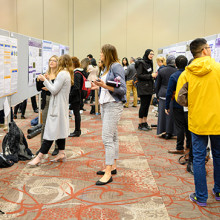
Above: Participants engaging in poster presentations at LHRD 2019
“I love that LHRD brings trainees of all disciplines together to present our work, allowing us to become familiar with the research that is being performed outside of our respective areas. Being recognized with an award for my platform talk made the day even more rewarding,” said Shelby Oke, a PhD candidate working with Dr. Dan Hardy, Scientist at Lawson and Associate Professor at Schulich Medicine & Dentistry. Oke is conducting research to determine how maternal insults during pregnancy, such as a low protein diet, influence fetal growth and development.
This year’s LHRD keynote speaker, Timothy Caulfield, highlighted how science communication is particularly important in the age of misinformation. Caulfield, author of the bestseller Is Gwyneth Paltrow Wrong About Everything ?: When Celebrity Culture and Science Clash and host of the documentary TV series A User’s Guide to Cheating Death, presented as part of The Lucille & Norton Wolf Health Research Lecture Series. His talk, titled “Science vs. Celebrity: A Battle We Must Win,” focused on the important role scientists play in the battle against pseudoscience.
“London Health Research Day is an amazing event. It brings together a unique, engaged and highly interdisciplinary community,” noted Caulfield. “Great energy. Great discussion. Great research. What more do you need? It was an honour to be involved."
Image
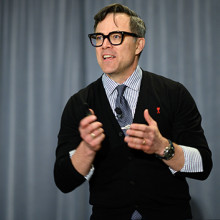
Above: Timothy Caulfield
Caulfield also participated in a panel discussion on science communication alongside local science communicators Ramina Adam, Dr. Lorelei Lingard, Dr. David Palma and Dr. Matthew Teeter. The panel was moderated by Carly Weeks, Health Reporter at The Globe and Mail, and focused on the importance of communicating science effectively and responsibly.
“The panel created an incredible opportunity to discuss science communication. I think that it was a great starting point to encourage trainees to get more involved in outreach efforts,” said Ramina Adam, a PhD candidate at Schulich Medicine & Dentistry. “Having that in-depth discussion about the importance of science outreach was a great follow-up to Timothy Caulfield’s keynote presentation and very encouraging for trainees who are passionate about the topic.”
Image
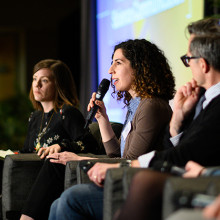
Above: Ramina Adam shares her perspectives as part of the LHRD panel discussion on science communication.
From the presentation of research projects to the panel discussion, LHRD 2019 was an engaging day of networking and professional development that highlighted the scope of health science in London, Ontario.
For a full list of this year’s award recipients and to see the photo gallery, please visit the LHRD website.
… Regional Mental Health Care London and St. Thomas 9th Annual Research Half Day, May 14, 2008 BOOK OF ABSTRACTS & RESEARCH REPORT 2007 by RMHC RESEARCH COMMITTEE 1 Book of Abstracts … Director It has been busy and at times stressful year for our hospital with a major program realignment. However, as …
Regional Mental Health Care London and St. Thomas 9th Annual Research Half Day, May 14, 2008 BOOK OF ABSTRACTS & RESEARCH REPORT 2007 by RMHC RESEARCH COMMITTEE 1 Book of Abstracts RMHC 9th Annual Research Half-Day May 14, 2008 and Research Report 2007 RESEARCH INSIGHTS of the Regional Mental Health...
… Regional Mental Health Care London and St. Thomas 10th Annual Research Half Day, May 13, 2009 BOOK OF ABSTRACTS & RESEARCH REPORT 2008 by RMHC RESEARCH COMMITTEE 1 Book of Abstracts … 2008, the RMHC Research Committee conducted a Research Resources Needs Survey to better understand staff’s interest in …
Regional Mental Health Care London and St. Thomas 10th Annual Research Half Day, May 13, 2009 BOOK OF ABSTRACTS & RESEARCH REPORT 2008 by RMHC RESEARCH COMMITTEE 1 Book of Abstracts RMHC 10th Annual Research Half Day May 13, 2009 and Research Report 2008 RESEARCH INSIGHTS of the Regional Mental Heal...
… MAY 2010 | VOL 7 No.1 BOOK OF ABSTRACTS 11TH ANNUAL RESEARCH HALF DAY MAY 12, 2010 & RESEARCH REPORT 2009 RMHC Research Committee … search.com/v1.0/website/research_themes/Mental%20Health/HTML/our_publications.htm Regional Mental Health Care London and … MAY 2010 | VOL 7 No.1 BOOK OF ABSTRACTS 11TH ANNUAL RESEARCH HALF DAY MAY 12, 2010 & RESEARCH REPORT 2009 …
MAY 2010 | VOL 7 No.1 BOOK OF ABSTRACTS 11TH ANNUAL RESEARCH HALF DAY MAY 12, 2010 & RESEARCH REPORT 2009 RMHC Research Committee http://www.lawsonresearch.com/v1.0/website/research_themes/Mental%20Health/HTML/our_publications.htm Regional Mental Health Care London and St. Thomas 11th Annual Researc...
… Regional Mental Health Care London and St. Thomas 12th Annual Research Half Day, May 11, 2011 BOOK OF ABSTRACTS & RESEARCH REPORT 2010 by RMHC RESEARCH COMMITTEE 1 Book of Abstracts … ultimately publishing high quality research papers. I encourage staff to view this on- line peer-reviewed journal at: …
Regional Mental Health Care London and St. Thomas 12th Annual Research Half Day, May 11, 2011 BOOK OF ABSTRACTS & RESEARCH REPORT 2010 by RMHC RESEARCH COMMITTEE 1 Book of Abstracts 2011 RESEARCH INSIGHTS of the Regional Mental Health Care London and St. Thomas Vol.8, No.1 2011 Message from the Dire...