


Search
Search
1347 Search Results:
… message reaches the brain, it is sent to many different areas. Your brain decides whether you will experience pain. … message reaches the brain, it is sent to many different areas. Your brain decides whether you will experience pain. …
Ontario Chronic Pain Network Chronic Pain Self-Management Adult Resource Booklet 2020 The coordination, development, and design of these resources was led by Dr. Rachael Bosma, Toronto Academic Pain Medicine Institute. INTRO This resource booklet was developed alongside a webinar series. Each topic ...
… focused on less, due to the seemingly ‘more important’ areas of self-care and productivity. Various studies have … practices. In addition, increased interventions in the areas of coping mechanisms and symptom management may improve the individual’s ability to function in all areas, including self-care. 10 Client-Centred Practice: An …
SPECIAL ISSUE CLIENT-CENTRED PRACTICE: AN EXCHANGE OF VIEWS Ask, Listen and Learn: What Clients with a Mental Illness Can Teach You about Client-Centred Practice......................................... 1 Deborah J. Corring, PhD & J. V. Cook, PhD Commentaries Rehabilitation in the 21st Century Part...
… Regulation which prescribes requirements in the following areas; 1. general 2. information and communications 3. … The areas of information and communications and employment will … involves placing the wheelchairs at entrances and other areas where they are frequently needed. Project Status: …
Annual Accessibility Plan April 2011 March 31, 2012 Submitted to the St. Josephs Accessibility Steering Committee, February 15, 2011, St. Josephs Senior Leadership Team, February 25, 2011; and St. Josephs Board of Directors, March 22, 2011 Prepared and Submitted by St. Josephs Accessibility Working...
… B). Investigators reviewed articles corresponding to their areas of expertise, assessed the literature for strengths … of these have concurrent disorders. Other specific areas of interest appear below, with examples of relevant … B). Investigators reviewed articles corresponding to their areas of expertise, assessed the literature for strengths …
Diversion for People with Concurrent Disorders Kathleen Hartford RN, PhD And the Investigative Team of the Diversion-Concurrent Disorders Project Editors Note: This is an edited version of a report commissioned by the Ministry of Health and Long Term Care and submitted on March 30,2007. Minor altera...
Frequently Asked Questions Why am I seeing a doctor at the Osteoporosis and Metabolic Bone Disease clinic? The most common reason why people visit with our doctors is to review their bone health. Your doctor might discuss supplements and exercise that can help your bones, or review your need for med...
… Although physicians may not have expertise in these areas, our colleagues working within our pain clinic do. By … Although physicians may not have expertise in these areas, our colleagues working within our pain clinic do. By …
Our approach to treating chronic pain Dr. Geoff Bellingham, Clinical Director of the Pain Management Program and Dr. Marilyn Hill, psychologist, share their thoughts on treating chronic pain through the Q&A below. Dr. Hill: Dr. Bellingham, if we met on an elevator, and I asked you to describe your w...
… these accomplishments, St. Joseph’s continues to identify areas where we can improve the care and service we provide … leveraging and sharing the strategies of high- performing areas, and continuously removing identified barriers of … complete confidence” in the care we provide. In many areas patient satisfaction is similar to or above average in …
1 Quality Improvement Plan (QIP) Narrative for St. Josephs Health Care London 3/31/2014 2 Overview Being a National Leader in Quality and Patient Safety is a strategic goal for St. Josephs Health Care London (St. Josephs). In pursuit of this goal we are proud to have received the highest Accreditati...
Over $2 million in federal funding to advance discoveries in health research
Last week, the Honourable Kirsty Duncan, Minister of Science and Sport, announced an unprecedented investment of more than $588 million through the Natural Sciences and Engineering Research Council of Canada’s (NSERC) Discovery Grants program.
The successful applications in London include 12 projects funded for Lawson Health Research Institute scientists, through Western University. In total, they will receive $2.3 million in funding over five years.
“The funding demonstrates our strong and enduring commitment to science and researchers. Since taking office, our government has worked hard to bring science and research back to their rightful place and this historic investment in the discoveries of tomorrow is just one example of how we are achieving this goal,” says The Honourable Kirsty Duncan, Minister of Science and Sport.
Across Canada, this funding will go to more than 4,850 researchers and students as they pursue their world-leading discovery work. It also includes support for nearly 500 early-career researchers who will bring a diversity of new voices and new insights to their fields.
Local research highlights
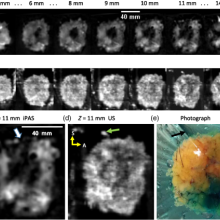
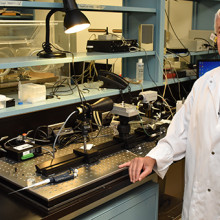
Dr. Jeffrey Carson is exploring the role of photoacoustic imaging as a method for detecting breast cancer. Currently, during the procedure the breast must be submerged in a tank of water to enhance the transmission of photoacoustic waves from the breast to the sensors.
“The water tank is cumbersome and impractical,” notes Dr. Carson. “Our goal is to eliminate the need for the water tank by detecting the photoacoustic waves through the air without making contact with the breast.” Their hope is that the project leads to the development of a non-contact photoacoustic scanner offering women the opportunity to sit or stand comfortably during breast imaging. “This simple improvement could greatly accelerate the adoption of photoacoustic imaging for breast cancer screening.”
Dr. Carson adds that funding like this provides graduate student trainees opportunities to develop knowledge and skills in engineering, mathematics, and biophysics. “They bring innovative new ideas to the Canadian medical device industry through employment and entrepreneurship.”
Image
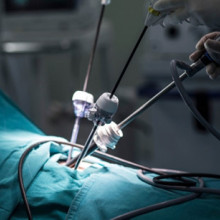
Dr. Rajnikant Patel is developing advanced robotic and intelligent systems for the next generation of systems and devices for minimally invasive surgery and therapy. These reduce trauma and costs while enhancing efficiency and reliability.
“For us, this funding opportunity is unique because it supports a program of research rather than a project,” says Dr. Patel. “We can explore new areas and directions that will lead to research projects and medical applications. A program that investigates novel robotic and AI technologies fits well with NSERC’s mandate.”
Image
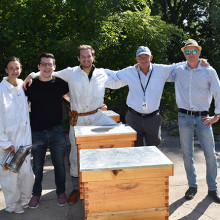
Dr. Gregor Reid is leading a revolutionary project that could save the world’s honeys bees, insects that are vital to human survival.
The intent is to develop an understanding of how lactobacilli strains can counter the most widely used pesticides that are wiping out nature's critically important pollinators. The lactobacilli appear to potentially degrade some of these toxic chemicals and improve the ability of honey bees to fight off early death.
“NSERC funding gives ideas like this a chance and even though the funding amount is relatively small, it allows graduate students to apply for their own awards and work on the project,” explains Dr. Reid. Students Brendan Daisley and Johnny Chmiel have been awarded NSERC scholarships to work on this important research.
Image
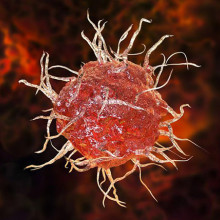
Dr. Xiugen Zheng’s project is investigating the role of circular RNA AEBP in the development and function of dendritic cells which are very important immune cells in the immune system. This will provide insights into new molecular and gene regulators, and their impact on the immune system and overall health.
“NSERC research funding greatly supports us to study the basic scientific questions that are critical for better understanding health problems and developing treatment for diseases,” says Dr. Zheng.
Image
Dr. Rudolf Veldhuizen’s laboratory aims to understand how surfactant performs its function at a molecular and biophysical level. Pulmonary surfactant is a material in the lung that allows people and other mammals to breath with minimal effort. You can see this in babies who are born prematurely and have trouble breathing due to the lack of surfactant.
“Previous work has established a generalized model of how surfactant improves lung function under standardized conditions. This, however, does not explain how surfactant functions in extreme conditions,” says Dr. Veldhuizen. “By exploring conditions in comparative, mechanistic studies we will be able to establish a more universal understanding of surfactant function.”
This funded work provides a foundation for clinically relevant studies to further explore the role of alterations to surfactant in lung injuries and the opportunities for therapeutic interventions.
Image
Dr. Shou Li is developing state-of-the-art machine learning system able to analyze huge amounts of clinical data and provide human level intelligent analysis. This work will enable the prediction of disease onset, progression and prognosis. “It is added value that will lead to more effective and efficient health care,” explains Dr. Li.
He adds that this funding is supporting a multi-disciplinary research program that combines the strength of multiple teams. “We will look at both the fundamental side of machine learning systems and clinical applications. In this way, we connect basic science with clinical science.”
Image
Congratulations to all the Lawson scientists who received funding:
- Dr. Dean Betts for Metabolic reprogramming to enhance the generation of canine induced pluripotent stem cells (Physiology and Pharmacology)
- Dr. Jeffrey Carson for Development of non-contact photoacoustic tomography (Medical Biophysics)
- Dr. Louis Ferreira for Multi-Directional Mechanical Testing of Bone using CTCompatible Loading Mechanisms (Mechanical and Materials Engineering)
- Dr. Shuo Li for Innovative Machine Learning for Medical Data Analytics (Medical Imaging)
- Dr. Penny MacDonald for Investigating cognitive functions mediated by ventral and dorsal striatum (Clinical Neurological Sciences)
- Dr. Charles McKenzie for Fetoplacental Molecular and Metabolic Magnetic Resonance Imaging; instalment (Medical Biophysics)
- Dr. Rajnikant Patel for Design and Control of Robotic Systems and Devices for Medical Applications (Electrical and Computer Engineering)
- Dr. Gregor Reid for Detoxification functionality of lactic acid bacteria (Microbiology and Immunology)
- Dr. Rudolf Veldhuizen for Mechanisms of surface tension reduction by pulmonary surfactant (Physiology and Pharmacology)
- Dr. Aaron Ward for Machine learning-based quantitative image, tissue, and clinical data analysis for lesion detection and characterization on prostate cancer imaging (Medical Biophysics)
- Dr. Eugene Wong for Optimization of spatiotemporal-modulated electric fields and fabrication of organs-on-chips for applications in Medical Physics (Physics and Astronomy)
- Dr. Xiufen Zheng for The role of circular RNA AEBP2 in dendritic cells (Pathology)
Scientist
… Doesn't Apply I was kept well-informed about my progress in areas that were important to me.15. E E E E E E Strongly … Doesn't Apply I was kept well-informed about my progress in areas that were important to me.15. E E E E E E Strongly …
B B B 0060421*001AMD14**001AMD14* *00* CLIENT PERSPECTIVES OF REHABILITATION SERVICES (CPRS) QUESTIONNAIRE Instructions: Please think about your experience as a rehabilitation inpatient. The program staff includes all of the nursing staff, therapists, and physicians working in your inpatient rehabil...
… the workshop schedule on our website www.sjhc.london.on.ca/areas-of- care/pain-management-program/services to see what … for two hours for six weeks. http://www.sjhc.london.on.ca/areas-of-care/pain-management-program/services … http://www.sjhc.london.on.ca/areas-of-care/pain-management-program/services Page 2 of 2; …
Page 1 of 2; December 7, 2020 Pain Management Program - Allied Health Services What is Allied Health? At the Pain Management Program, your allied health team includes occupational therapists, pharmacists, physiotherapists, psychologists, social workers and nurses. All specialize in pain management. ...
… https://www.sjhc.london.on.ca/areas-of-care/pain-management-program □ □ … https://www.sjhc.london.on.ca/areas-of-care/pain-management-program □ □ …
__________________________________________________ __________________________________________________ ____________________________________________ PAIN MANAGEMENT PROGRAM REFERRAL Telephone: 519 646-6000 ex. 61786 Fax: 519 646-6376 Pain Management Website Our program utilizes an interprofessional tr...
… in this process change? The referral processes for these areas are unique: • VCP referrals are managed by the … in this process change? The referral processes for these areas are unique: • VCP referrals are managed by the …
1 Updated: November 26, 2014 Parkwood Access Questions and Answers Parkwood Access is the central referral point at Parkwood Institute for: Inpatient Complex Care: Complex Continuing Care, Long-Term Mechanical Ventilation, Palliative Care and Respite Care Inpatient Rehabilitation: Acquired Brain I...
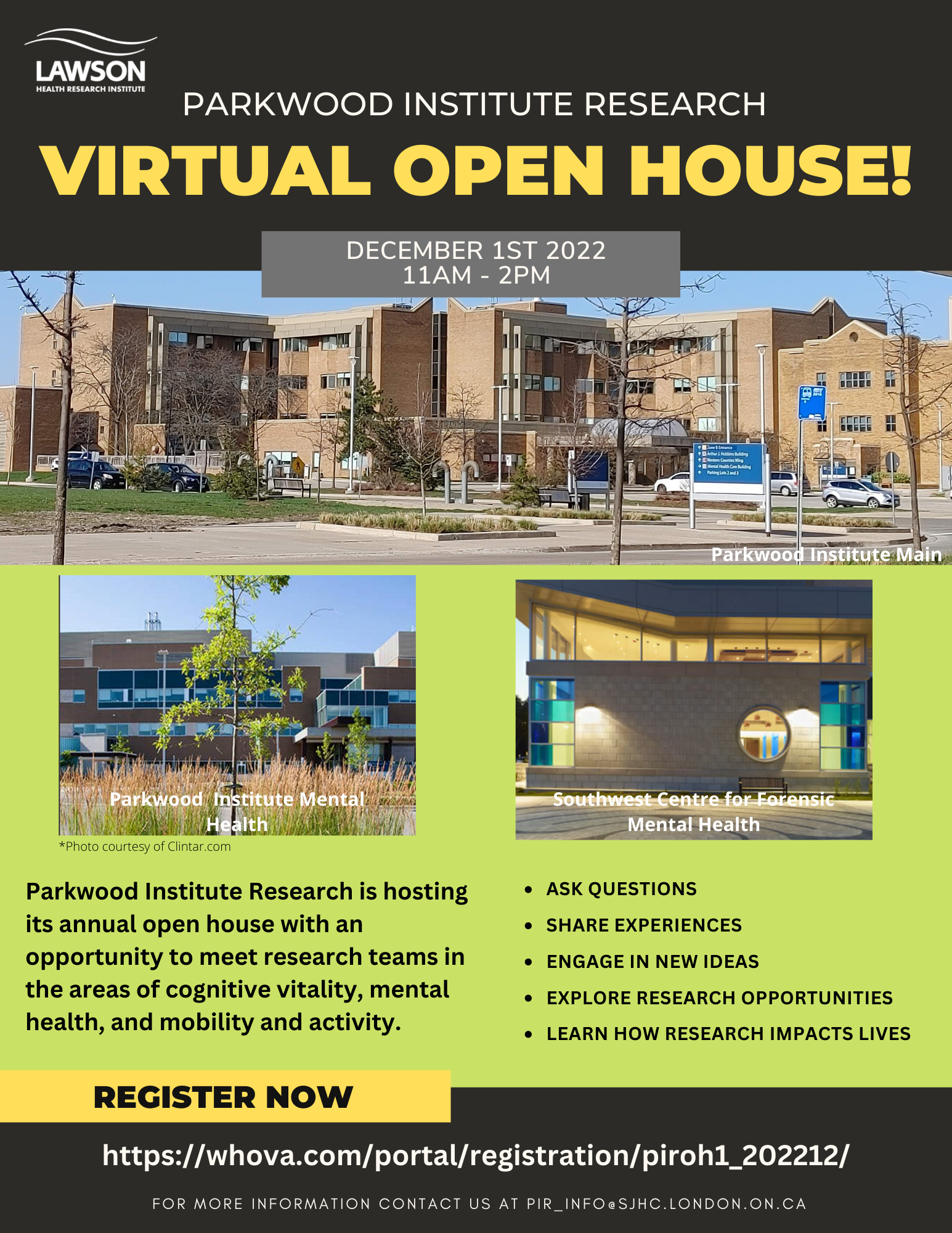
Parkwood Institute Research Open House
11:00am-2:00pm
Join us for the Parkwood Institute Research Open House on Thursday, December 1st, 2022 from 11:00am-2:00pm.
The Parkwood Institute Research (PIR) Open House is your opportunity to virtually meet research teams working in the areas of cognitive vitality and brain health, mobility and activity, and mental health. This is an exciting opportunity to learn about the exciting research that is being done in London, ON Canada.
Your free registration gives you exclusive access to video presentations from our labs. Potential research participant opportunities include live polls, games, Q&A session, surveys, and discussion boards. You’ll also be able to provide feedback on the event. Whova is accessible on phones, tablets or laptops. You do not need a camera or microphone to participate.
Register now: Parkwood Institute Research Open House Registration (whova.com)
Quick link: https://whova.com/portal/registration/piroh1_202212/
Please feel free to share with your circles, everyone is invited to attend.
We hope to see you there!
Dr. Cheryl Forchuk and the PIR Open House Committee
Parkwood Institute Research Open House
6:00pm - 8:00pm
You’re invited to the Parkwood Institute Research Open House
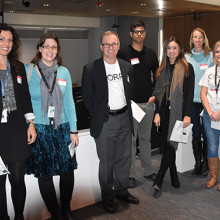
Parkwood Institute Research is hosting its 2nd annual Open House with an opportunity to meet research teams working in the areas of Cognitive Vitality and Brain Health, Mobility and Activity, and Mental Health.
Date: Friday, November 30, 2018
Time: 2:00 pm to 4:00 pm
Image
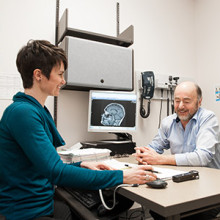
Learn more about this vibrant academic health care community in London. A part of St. Joseph’s Health Care London, Parkwood Institute represents the next era in care, recovery and rehabilitation. Across this site, clinical and research teams are collaborating in new ways across disciplines and specialties.
Parkwood Institute Research groups are conducting studies with the goal of improving care for:
- Patients recovering from stroke, acquired brain injury, spinal cord injury and amputation;
- Those with cognitive issues such as dementia and mental illness; and,
- Patients needing specialized geriatric care, palliative care and veterans care.
This special open house and interactive tour will give guests the opportunity to meet researchers and their teams to learn more about their innovative and meaningful research.
This free event is open to the public including members of London’s vibrant health care and research community.
Image
Location:
Parkwood Institute
550 Wellington Road South
London, Ontario N6C 0A7
Various research spaces within the Parkwood Institute Main Building and the Mental Health Care Building. Greeters will be stationed at the entrances of both buildings to guide visitors to the featured spaces.
Directions and parking maps can be found here.
Parking:
Please see the detailed site map for the location of the visitor parking lots.
The lot rate is $4.00 when you enter. $1 and $2 coins and credit card accepted (press the start button then insert payment)
Refreshments and snacks will be available along your tour. If you have any questions, please contact PIR_Info@sjhc.london.on.ca.
Parkwood Institute Research Open House 2019
6:00pm - 9:00pm
Parkwood Institute Research, a program of Lawson Health Research Institute, is hosting its third annual Open House and interactive tour showcasing research that is making an impact for patients and their families.
A part of St. Joseph’s Health Care London, Parkwood Institute represents the next era in care, recovery and rehabilitation. Across the site, clinical and research teams from across disciplines and specialties work together to bring tested solutions to the people who need them the most.
The special open house with interactive tour gives guests the opportunity to meet researchers and their teams to learn more about their work in the areas of Cognitive Vitality and Brain Health, Mobility and Activity, and Mental Health.
This free event is open to the public including members of London’s vibrant health care and research community.
Image

Event Details
Date: Thursday, November 28, 2019
Time: 2:00 – 5:00 p.m.
Locations: Parkwood Institute Main Building Auditorium (Room B2-109)
*PLUS selected locations throughout the building. Directions to be provided.
Click here for directions to Parkwood Institute and parking maps.
The lot rate is $5.00 when you enter. $1 and $2 coins and credit card accepted (press the start button then insert payment)
Refreshments and snacks will be available along your tour.
If you have any questions, please contact @email
Download the event poster.
Parkwood Institute Research Open House 2020 – VIRTUAL EVENT
6:00pm - 8:00pm
Parkwood Institute Research, a program of Lawson Health Research Institute, is hosting its fourth annual Open House showcasing research that is making an impact for patients and their families.
The special open house this year will move to a VIRTUAL platform making it even easier to connect to the researchers and their teams who work in the areas of Cognitive Vitality and Brain Health, Mobility and Activity, and Mental Health.
Why you should attend:
- See videos, demonstrations and project summaries presented by the different research teams.
- Participate in interactive activities so you can learn more about PIR and why their work matters.
- Ask questions to the research teams LIVE during the online event.
- Learn about ways to get involved with research.
- Have fun with live polls, games, match-making and more!
A part of St. Joseph’s Health Care London, Parkwood Institute represents the next era in care, recovery and rehabilitation. Across the site, clinical and research teams from across disciplines and specialties work together to bring tested solutions to the people who need them the most.
This free virtual event is open to anyone interested in learning more about hospital-based research happening in this region and getting to know members of London’s vibrant health care and research community.
Event Details
Date: Thursday, November 26, 2020
Time: 2:00 – 4:00 p.m.
Location: This is a VIRTUAL event being held on the Whova event and conference app. It can be accessed through a web browser or by downloading the Whova app on your preferred device.
If you have any questions, please contact PIR_Info@sjhc.london.on.ca.
Event poster
Parkwood Institute Research Virtual Open House
3:00pm - 6:00pm
The Parkwood Institute Research Open House is your opportunity to virtually meet research teams working in the areas of Cognitive Vitality and Brain Health, Mobility and Activity, and Mental Health.
Don't miss this opportunity to learn from a host of our dedicated research teams in London, ON Canada, that are making a difference in patient lives everyday.
Registration is now open on Whova: Parkwood Institute Research Open House Registration (whova.com)
Your free registration gives you exclusive access to video presentations from our labs, potential research participant opportunities as well as live polls, games, session Q&A, surveys, and discussion boards. You’ll also be able to provide feedback on the event. Whova is accessible on phones, tablets or laptops. You do not need a camera or microphone to participate.
… Parkwood Hospital The designated smoking areas at Parkwood Hospital are located: 1. South of … Parkwood Hospital The designated smoking areas at Parkwood Hospital are located: 1. South of …
Parkwood Hospital The designated smoking areas at Parkwood Hospital are located: 1. South of Cafeteria 2. Adjacent to WCW patio: 3. Neurobehavioural Rehabilitation Centre = designated smoking area
Council of Academic Hospitals of Ontario (CAHO) 1 Council of Academic Hospitals of Ontario (CAHO) Plan Document Number: G0086936 Plan F: London Health Science Centre - Plan A Employee Name: Certificate Number: Welcome to Your Group Benefit Program Plan Document Effective Date: January 1, 2012 This B...
Partnership with Siemens Healthineers will create a centre of excellence in advanced diagnostic imaging and therapeutics
Continuing to build on the established excellence in medical imaging, London’s academic teaching hospitals, London Health Sciences Centre (LHSC), and St. Joseph’s Health Care London, and Western University’s Schulich School of Medicine & Dentistry announced a partnership with Siemens Healthineers in magnetic resonance imaging (MRI), interventional angiography, cardiology and cardiac surgery that will create a centre of excellence in advanced diagnostic imaging and therapeutics in southwestern Ontario.
This new partnership includes the creation of an education, training and scientific research support fund in the area of advanced diagnostic imaging and therapeutics. Siemens will provide in excess of $1 million in support funding for research, advanced clinical applications, teaching and outcomes analysis.
“This partnership represents another important building block in the incredible foundation of imaging excellence that we have in London,” says Dr. Narinder Paul, Chair/Chief of the Department of Medical Imaging at LHSC, St. Joseph’s, and Schulich Medicine & Dentistry.
“Not only will we become leaders in state-of-the-art imaging and intervention through the centre of excellence, but thanks to the research contribution from Siemens Healthineers, we will also have dedicated funds for critical research in cardiovascular and neurological diseases that will translate to improved services and outcomes for patients in London and the region.”
The research fund will support collaborations between research teams in diagnostic and interventional radiology, cardiology, and cardiac surgery, with imaging scientists at Lawson Health Research Institute, the research institute of LHSC and St. Joseph’s, and Schulich Medicine & Dentistry’s Robarts Research Institute, as well as research teams from across Western. These teams will partner with scientists from Siemens Healthineers to focus on improving both the patient experience and the outcomes in important cardiovascular and neurological diseases. The research funds will be leveraged against provincial and federal research grants to increase the funds available to the research teams.
“Collectively, Western and our partner institutions in London are becoming a global powerhouse, recognized for our expertise and facilities in imaging that drives discovery and innovation across a broad range of disciplines,” says Alan Shepard, President & Vice-Chancellor of Western University. “This partnership with Siemens Healthineers builds on our strengths, increases capacity to enhance patient care, and expands opportunities to integrate education, training and research for the benefit of learners and faculty. It’s a huge win for London and southwestern Ontario.”
“Imaging scientists and clinicians, working on campus and within hospital walls, have positioned London as a leader in non-invasive biomedical imaging, conducting groundbreaking research that impacts health care here and around the world,” adds Dr. David Hill, Lawson Scientific Director and Integrated Vice President, Research for London’s hospitals.
“With strong industry partnerships and working seamlessly with our hospitals and academic partners, we can build on this success. The advancements made here can be quickly translated into care within the very units where the testing is being done, which ultimately improves care for the patients and families that we serve.”
The centre of excellence will provide hands-on training in MRI, diagnostic, and interventional catheter procedures through development of advanced simulation and phantom models. Medical learners and radiologists, cardiologists, cardiac surgeons, neurologists, neurosurgeons, and technologists in London and from across Canada will be able to access this centre to improve their diagnostic and therapeutic skills, which will in-turn improve patient access to skilled clinicians.
As well, LHSC and St. Joseph’s are acquiring six clinical MRIs and six angiogram suites to be used for patient care, which will include the introduction of the first 3T MRI in the region. University Hospital will acquire a 3T/1.5T pair of MRIs, and two biplane angiogram suites. Victoria Hospital will acquire a 3T/1.5T pair of MRIs, a biplane and two single plane angiogram suites. St. Joseph’s will acquire a 3T/1.5T pair of MRIs, and a single plane angiogram suite.
“Investments in capital equipment, such as these new MRI machines and angiogram suites, are incredibly important as they will immediately translate into safer, higher quality care for the patients we serve – in this case it’s by offering the highest resolution images available, in less time, and with improved comfort for patients,” says Dr. Paul Woods, President and CEO, London Health Sciences Centre.
“London has an illustrious history of innovation that has been groundbreaking in shaping the scope and possibilities of medical imaging within the health-care system,” says Dr. Gillian Kernaghan, President and CEO, St. Joseph’s Health Care London. “This exciting partnership ensures our ongoing leadership and expertise in the introduction of leading-edge medical imaging technologies and is a critical step toward new approaches in imaging research and patient care.”
MRI is used to provide critical diagnostic information about the physical structure and the biological processes of the body. MRI scanners differ from other imaging technologies as they use strong magnetic fields, magnetic field gradients, and radio waves, instead of X-rays, to generate images of the organs in the body. MRI is widely used in hospitals to facilitate medical diagnosis and/or the staging of disease without exposing patients to radiation.