


Search
Search
3186 Search Results:
Local COVID-19 research supported by St. Joseph's Health Crisis Fund
St. Joseph’s Health Care London and Lawson Health Research Institute have announced plans to move forward with clinical trials testing a drug that could potentially be used to prevent and treat COVID-19. St. Joseph’s Health Care Foundation will accelerate the creation of the studies by providing seed funding to get the research started through donor support. Based on the immediate need, The St. Joseph’s Health Crisis Fund has been created by St. Joseph’s Health Care Foundation to enable these and other research studies currently in development through Lawson, the research arm of St. Joseph’s.
While supporting urgent COVID-19 clinical trials will be an immediate focus, The St. Joseph’s Health Crisis Fund will also support critical patient care equipment and care and comfort items for healthcare staff and volunteers working on the frontlines of the pandemic across St. Joseph’s.
Led locally by Dr. Michael Silverman, Medical Director of St. Joseph’s Infectious Diseases Care Program, one trial will assess the safety and efficacy of using hydroxychloroquine (HCQ) to prevent COVID-19 in health care workers recently exposed to the virus. This trial will also assess the drug as a treatment for non-hospitalized patients with mild cases of the illness. St. Joseph’s will be one of many participating sites in the trial, which is being led by the Research Institute of the McGill University Health Centre.
“There is much debate surrounding the drug hydroxychloroquine. We do not yet know whether it’s safe or effective, and it should not be routinely recommended until we do,” says Dr. Silverman, also a Lawson Associate Scientist and city-wide Chair/Chief of Infectious Diseases. “We plan to carefully study the drug through a randomized controlled trial and assess whether it can help combat COVID-19.”
Dr. Silverman is also partnering with Dr. Michael Borrie, Geriatrician at St. Joseph’s and Lawson Scientist, on a prevention trial to test the safety and efficacy of the drug for patients and residents at Parkwood Institute who have been exposed to COVID-19. They are at a higher risk of infection, as well as serious complications and potential admission to acute care.
“There are two critical goals with this prophylactic trial,” explains Dr. Borrie. “First, we want to see if the drug, taken for five days, is safe for the participants in the study. We will then look to see whether it is effective to prevent illness or lessen symptoms and complications.”
They are testing whether HCQ may inhibit the coronavirus similar to how the antiviral drug Tamiflu is used to prevent influenza after exposure. The research team will recruit patients and residents who have been accidentally exposed to the virus by a confirmed or presumed case of COVID-19, but who aren’t yet experiencing symptoms. In addition to cardiograms and blood tests for safety, they are collaborating with Dr. Saman Maleki, Lawson Scientist and Immunologist, to analyze the blood for a variety of indicators including the presence of antibodies and immune response. They will collect clinical data and information on common health conditions to gain insights into why some vulnerable individuals get the disease and others don’t.
“We are aware of two small studies that were published rapidly last week, one in France and the other in China, testing the use of chloroquine for potentially treating COVID-19. Further studies are greatly needed,” adds Dr. Borrie. “This study at Parkwood Institute is a good start and we hope to have other Canadian sites join us in recruiting participants so that we can offer statistically significant results as soon as possible.”
Those interested in donating to St. Joseph’s Health Crisis Fund are asked to visit St. Joseph’s Health Care Foundation’s website to learn more at sjhcfoundation.org. Donations can be made online, through direct mail submissions or by calling the Foundation directly at 519-646-6085.
“The Sisters of St. Joseph, who founded our organization, faced contagious diseases and other pandemics at different times in our 150+ year history,” says Michelle Campbell. “Today, it’s a different time, and a new disease. Now, more than ever, we ask our community to help us address the crisis facing us all.”
In the news:
Scientist
Local researchers using artificial intelligence to lead the way in bedside lung imaging
LONDON, ON- A team at Lawson Health Research Institute are testing a new form of artificial intelligence (AI), paired with portable ultrasound machines, to image and identify lung concerns in real time, right at the beside of critically ill patients.
Approximately 100 critical care patients at London Health Sciences Centre (LHSC) will be part of this study which will test whether an AI model can automatically determine the presence of abnormal lung signals. Past studies have suggested that the AI model is very accurate in reading stored images, but this study will evaluate if it retains accuracy when asked to interpret live images being generated at the beside.
The study is made possible through the use of novel hardware created in Waterloo, Ontario by startup tech company, Wavebase.
“The (WaveBase) device attaches to the ultrasound machine and mirrors the ultrasound image in a second screen,” explains Dr. Robert Arntfield, Lawson researcher and Medical Director of the Critical Care Trauma Centre at LHSC. “The AI model searches the images for patterns in real time and predicts whether it is ‘seeing’ normal or abnormal lung tissue.”
Although bedside lung ultrasounds are commonly used in critical care to detect concerns such as infections, pneumonia or a collapsed lung, the pairing with real time diagnostic AI is a research milestone. It could expand the usage of bedside ultrasounds by enabling those with little or no ultrasound training to use the device.
“Bedside lung ultrasounds in critical care can often have a large impact in identifying life-threatening conditions within minutes,” says Dr. Chintan Dave, Critical Care Medicine Fellow at LHSC and Western University. “We would like to see members of the healthcare team, like critical care nurses or respiratory therapists, be able to use AI to accurately determine the health of the lungs rapidly at the bedside. Employing AI into the clinical workflow, could improve access to immediate diagnoses and treatments.”
In order to be certain that the AI’s predictions are accurate, the phase one study will compare its interpretations to a gold standard experts’ interpretation of the same lung ultrasound scans. Once this accuracy is assured, the team will proceed with a second phase to assess the device with non-expert users and customized settings for more in-depth diagnostics.
“We see a bright future for lung ultrasound imaging with AI within the critical care environment,” adds Dr. Arntfield. “We are trying to write the first chapter of this meaningful AI story here at LHSC and Lawson.”
About Lawson Health Research Institute
Lawson Health Research Institute is one of Canada’s top hospital-based research institutes, tackling the most pressing challenges in health care. As the research institute of London Health Sciences Centre and St. Joseph’s Health Care London, our innovation happens where care is delivered. Lawson research teams are at the leading-edge of science with the goal of improving health and the delivery of care for patients. Working in partnership with Western University, our researchers are encouraged to pursue their curiosity, collaborate often and share their discoveries widely. Research conducted through Lawson makes a difference in the lives of patients, families and communities around the world. To learn more, visit www.lawsonresearch.ca.
Media Contacts
Celine Zadorsky
Senior Media Relations Consultant
Communications & Public Engagement
T: 519-685-8500 ext. 73502
Celine.zadorsky@lhsc.on.ca
Local scientists creates novel test that could easily diagnose repetitive blast injury
LONDON, ON- In a world first, researchers at Lawson Health Research Institute, together with scientists from Defence Research and Development Canada, have developed a breath test that could be used to diagnose repetitive blast injury – a mild traumatic brain injury resulting from pressure changes that occur during explosions. The device will soon go through clinical trials to validate its efficacy.
“A pressure wave is sent through the head and brain after an explosion, resulting in effects similar to a concussion,” says Dr. Douglas Fraser, Scientist at Lawson and Professor at Western University’s Schulich School of Medicine and Dentistry. “Examples of individuals who are most at risk of this condition include military personnel, police, individuals in the mining industry and tragically the public, who are currently experiencing this first hand through the war in Ukraine.”
The test leverages findings from a new peer-reviewed study in the Journal, Frontiers in Neurology. The research team examined blood biomarkers in members of the Canadian Armed Forces who have experienced repetitive blasts.
“When we looked at these service personnel there were certain metabolites in their blood that had changed quite dramatically compared to those who had not been exposed to blast injury,” explains Dr. Fraser, who is also a Paediatric Critical Care Physician at London Health Sciences Centre. “What was remarkable about these metabolites is that some of them are expelled in a person’s breath.”
Currently there is no accurate way to diagnose repetitive blast injury other than relying on a patient’s history and symptoms. Using their findings, the research team has identified a combination of metabolites that can be measured in breath as a diagnostic test.
“The individual would blow into what looks like a straw and the breath would go into a device which would measure the metabolites of interest,” adds Dr. Fraser. “The device would then determine if the person is in the danger zone, or if they have been exposed to too many blasts.”
Dr. Vivian McAllister, Director of the Office of Military Academic Medicine at Schulich Medicine & Dentistry says this discovery could be a game changer when it comes to this condition.
“The symptoms of blast injury overlap with other neurological conditions, especially depression, so accurate diagnosis is essential,” says Dr. McAllister. “Early diagnosis allows for interventions that we know to be successful in reducing the symptoms and consequences of mild traumatic brain injury.”
The test has been developed and patented with WORLDiscoveries, the technology transfer and business development office for Lawson and Western, and licensed to Neuroltixs Inc. for development. The next steps will be to confirm the efficacy of the test through upcoming clinical trials.
“We hope to validate the breath aspect of the test, which could then be used as a health surveillance tool,” says Dr. Fraser. “Once validated through clinical trials, this portable device could be easily developed and it will allow us to determine who has been over exposed to blast injuries and how we can protect them in the future.”
About Lawson Health Research Institute
Lawson Health Research Institute is one of Canada’s top hospital-based research institutes, tackling the most pressing challenges in health care. As the research institute of London Health Sciences Centre and St. Joseph’s Health Care London, our innovation happens where care is delivered. Lawson research teams are at the leading-edge of science with the goal of improving health and the delivery of care for patients. Working in partnership with Western University, our researchers are encouraged to pursue their curiosity, collaborate often and share their discoveries widely. Research conducted through Lawson makes a difference in the lives of patients, families and communities around the world. To learn more, visit www.lawsonresearch.ca.
Media Contacts
Celine Zadorsky
Senior Media Relations Consultant
Communications & Public Engagement
T: 519-685-8500 ext. 73502
Celine.zadorsky@lhsc.on.ca
Locally developed test found to increase diagnosis of rare hereditary disorders
LONDON, ON – A clinical trial named “EpiSign-CAN,” led by researchers at Lawson Health Research Institute (Lawson) has been awarded $4.8 million to measure the clinical impact of a new molecular genomics test for diagnosing genetic neurodevelopmental conditions.
Developed at Lawson, the diagnostic test, called EpiSign, uses machine learning to analyze the EpiSign Knowledge Database. This database compiles information on rare genetic diseases using laboratory analyses of the entire genome, referred to as the epigenome, from patients with suspected genetic abnormalities.
A recent paper describes the newly discovered biomarkers for over 50 neurodevelopmental conditions. Dr. Bekim Sadikovic, Lawson Scientist and Head of the Molecular Diagnostics Division at London Health Sciences Centre (LHSC) explains, “before this study, many such conditions required targeted, and often labour intensive and costly assays for a diagnosis, which in many cases provided no conclusive answers. Now, using our EpiSign Knowledge Database which includes the epigenomic information of thousands of patients and controls, we are able to diagnose over 50 conditions with a single test, including in patients where targeted genetic testing was inconclusive.”
The upcoming clinical trial hopes to validate the use of this test in the first-line of diagnosing rare genetic disorders across Canada. “Patients and families typically wait years, and undergo multiple exams and lab tests in search of a definitive diagnosis. With EpiSign, we estimate that we will be able to increase the number of people who receive a diagnoses by five per cent, or more in the future as the database develops” explains Dr. Sadikovic. “Though individual genetic conditions are rare, there are over 4,000 recognized genetic disorders which affect thousands of patients in Canada.”
EpiSign-CAN will study 4,000 patients, who will either receive EpiSign testing as part of the initial diagnostic workup or after classical genetic testing approaches have been exhausted. The goal is to assess the impact of using EpiSign in the first stage of diagnosis vs. after other tests have failed to provide answers in this patient population.
Timely diagnosis will prevent the so called “diagnostic odyssey,” and by doing so has the potential to improve healthcare outcomes for these patients and decrease cost to the health system.
As the EpiSign Knowledge Database continues to grow, researchers are finding correlations between specific episignatures, or molecular DNA markers, and related physiological features across a syndrome.
This research is co-funded through the collaboration of three partners; LHSC, Illumina, and Genome Canada. This is the first time researchers at Lawson have been awarded a Genome Canada Genomic Applications Partnership Program (GAPP) grant. “Genome Canada focuses its resources on new innovation that has a strong likelihood of translating directly to patient care. Their support of our work is extremely meaningful,” says Dr. Sadikovic.
The study describing the most recent advancements in EpiSign technology, “Evaluation of DNA methylation episignatures for diagnosis and phenotype correlations in 42 Mendelian neurodevelopmental disorders,” is published in The American Journal of Human Genetics.
-30-
About Lawson Health Research Institute
Lawson Health Research Institute is one of Canada’s top hospital-based research institutes, tackling the most pressing challenges in health care. As the research institute of London Health Sciences Centre and St. Joseph’s Health Care London, our innovation happens where care is delivered. Lawson research teams are at the leading-edge of science with the goal of improving health and the delivery of care for patients. Working in partnership with Western University, our researchers are encouraged to pursue their curiosity, collaborate often and share their discoveries widely. Research conducted through Lawson makes a difference in the lives of patients, families and communities around the world. To learn more, visit www.lawsonresearch.ca.
Media Contacts
Celine Zadorsky
Senior Media Relations Consultant
Communications & Public Engagement
T: 519-685-8500 ext. 73502
Celine.zadorsky@lhsc.on.ca
… BODY, MIND & SPIRIT SINCE 1869 Renowned for compassionate care, St. Joseph’s is one of the best academic health care organizations in Canada dedicated to helping people … of injury, disease and disability through excellence in care, teaching and research. CARING FOR THE BODY, MIND & …
CARING FOR THE BODY, MIND & SPIRIT SINCE 1869 Renowned for compassionate care, St. Josephs is one of the best academic health care organizations in Canada dedicated to helping people live to their fullest by minimizing the effects of injury, disease and disability through excellence in care, teachin...
… SINCE 1869 sjhc.london.on.ca Renowned for compassionate care, St. Joseph’s is one of the best academic health care organizations in Canada dedicated to helping people … of injury, disease and disability through excellence in care, teaching and research. … SINCE 1869 sjhc.london.on.ca Renowned for compassionate care, St. Joseph’s is one of the best academic health care …
Parkwood Institute Locomotor Training Program CARING FOR THE BODY, MIND & SPIRIT SINCE 1869 There is nothing you cant do, if you set your mind to it. Anything is possible - Rick Hansen Has a spinal cord injury, brain injury or other neurological injury left you unable to stand or walk? Do you fatigu...
… Study London Health Sciences Centre and St. Joseph’s Health Care continue to make advances to their electronic health … use the health record as a tool for providing patient care. As other hospitals move forward with advancing their … at London Health Sciences Centre and St. Joseph’s Health Care on July 1, 2017 are eligible to participate in this …
Page 1 of 3 Letter of Information Residents Project Title: Evaluating an Orientation Program for Residents in the Use of the Electronic Health Record Principal Investigators: Dr. Tom Janzen, CMIO London Health Sciences Centre, tom.janzen@sjhc.london.on.ca Dr. Isha DeCoito, PhD, Faculty of Education...
London comes in eighth place in Canada’s Top 40 for hospital-based research
Lawson Health Research Institute has ranked eighth in the country for the 2021 edition of Canada’s Top 40 Research Hospitals List by Re$earch Infosource. This is the eighth consecutive year that Lawson has maintained this strong national position, which puts the institute within the top five in Ontario.
Lawson, the research institute of London Health Sciences Centre (LHSC) and St. Joseph’s Health Care London, has also maintained the top ranking for research intensity among the large tier institutions with a little more than $600,000 of research spending per researcher.
“This is a validation of the extensive support from LHSC and St. Joseph’s, our hospital foundations, Western University and our staff and physicians,” says Lawson’s Scientific Director Dr. David Hill. “These strong partnerships make the hospital environment in London a nationally recognized centre of discovery and knowledge translation.”
Hospital-based researchers belong to a health system at the forefront of the ongoing COVID-19 pandemic. With close proximity to patients and access to samples, they have mobilized to address COVID-19 in many different ways, and are making a difference around the world when it comes to advances and discoveries.
“The Province of Ontario designated health research as an essential service early in the pandemic,” explains Dr. Hill. “They understood that only science can get us through this, be it through vaccine development, surveillance and testing, evaluating new drugs to help patients in ICU survive, or studying the long-term health impacts. We have made substantial contributions of new knowledge through Lawson.”
The top 40 list analyzes hospital-based research institutes from across the country on several metrics, including total research income from the previous fiscal year. According to the report, Lawson received $121,888 million in research income in 2021.The ranking looks at funds received from all sources, including both internal and external, to support research at LHSC and St. Joseph’s.
Quick summary of Lawson’s ranking
- Rank in Top 40 Research Hospitals 2021: 8 (same as 2020)
- FY2020 research spending: $121.888 million
- Percentage change 2019-2020: 2.6%
- Research intensity: $618,700 per researcher
- Research intensity - percentage of total hospital spending: 7.0%
London expands approach to prevent discharge from hospital to homelessness
LONDON, ON - During a virtual event for Londoners hosted by Lawson Health Research Institute and the City of London, a multi-sectoral research team announced two projects representing a collaborative approach to preventing homelessness from within hospital walls.
Built on the unique and successful No Fixed Address (NFA) strategy, these projects are being tested as a potential best practice for preventing hospital discharge to homelessness. NFA seeks to stop the cycle between hospital admissions and homelessness by providing timely and accessible supports to patients who would otherwise be discharged into homelessness. It brings housing and financial supports into the health-care system, starting as soon as upon admission, to assist in finding appropriate housing and supports or avoiding a potential eviction.
“Canada lacks a validated and coordinated service model to address the issue of hospital stay to no fixed address, which can often be the beginning of an individual’s experience with homelessness,” explains Dr. Cheryl Forchuk, Beryl and Richard Ivey Research Chair in Aging, Mental Health, Rehabilitation and Recovery, and Assistant Scientific Director at Lawson. “There are multiple factors that cause people to be discharged into homelessness - systemic, organizational and personal. We need a collaborative and coordinated approach that honours housing as a basic human right.”
Several departments at London Health Sciences Centre (LHSC) and St. Joseph’s Health Care London collaborate with staff from the City of London, Canadian Mental Health Association (CMHA) Elgin-Middlesex, Youth Opportunities Unlimited (YOU), Salvation Army’s Housing Stability Bank and Ontario Works in the City of London to provide direct, on-site (or virtual) support for patients at risk of homelessness.
“Implementing a coordinated approach to addressing homelessness allows our staff to actively work alongside our partners in health care to prevent and divert individuals and families from an experience of homelessness by assessing their needs and connecting them to the housing supports.,” says John D’Oria, Coordinated Access Manager, City of London. “Whether it’s financial, social service or mental health support, this partnership and approach allows for a holistic approach to client care at the right time.”
Patients discharged from hospital to homelessness in Canada face many challenges that make recovery more difficult. They often experience higher readmission rates and emergency department visits. This is particularly concerning for youth, who have been found to be the fastest growing segment of the homeless population.
NFA was initially tested with strong success for mental health patients across the city and the second version of the project was extended to medical units at LHSC’s University and Victoria Hospitals.
PROJECT 1: Collaboration to Address Homelessness - Health, Housing and Income (H2I)
This research study will evaluate the City of London’s Coordinated Access Outreach program at hospital sites. A Coordinated Access Outreach worker will support individuals at risk of homelessness to maintain or obtain housing. Ontario Works will assist with the provision of income and employment supports and the Salvation Army Housing Stability Bank may be accessed for needed financial resources to secure or maintain housing.
Over two years, 106 participants will be interviewed in hospital and again six months post-discharge. Focus groups with participants, health care providers and community partners will provide further insight into the effectiveness of NFA. This project is funded by the Canada Mortgage and Housing Corporation (CMHC)’s National Housing Strategy.
PROJECT 2: Preventing discharge to No Fixed Address – Youth (NFA-Y)
This research study will customize, implement and evaluate the NFA strategy for vulnerable youth ages 16-24. The unique health and housing needs of youth at-risk will be explored by streamlining housing and financial support into a coordinated system of care, with additional support provided by Youth Opportunities Unlimited and Children’s Aid Society London and Middlesex.
Over 3-4 years, data to be collected from 93 youth at three time points. Focus groups with youth participants, health care providers, and community agency partners will help enhance the NFA strategy to meet the unique needs of youth. This project is funded by the National Centres of Excellence (NCE) Making the Shift (MtS) Youth Social Innovation Lab.
-30-
About Lawson Health Research Institute
Lawson Health Research Institute is one of Canada’s top hospital-based research institutes, tackling the most pressing challenges in health care. As the research institute of London Health Sciences Centre and St. Joseph’s Health Care London, our innovation happens where care is delivered. Lawson research teams are at the leading-edge of science with the goal of improving health and the delivery of care for patients. Working in partnership with Western University, our researchers are encouraged to pursue their curiosity, collaborate often and share their discoveries widely. Research conducted through Lawson makes a difference in the lives of patients, families and communities around the world. To learn more, visit www.lawsonresearch.ca.
Media Contacts
Celine Zadorsky
Senior Media Relations Consultant
Communications & Public Engagement
T: 519-685-8500 ext. 73502
Celine.zadorsky@lhsc.on.ca
London expands approach to prevent discharge from hospital to homelessness
During a virtual event for Londoners hosted by Lawson Health Research Institute and the City of London, a multi-sectoral research team announced two projects representing a collaborative approach to preventing homelessness from within hospital walls.
Built on the unique and successful No Fixed Address (NFA) strategy, these projects are being tested as a potential best practice for preventing hospital discharge to homelessness.
Led by Dr. Cheryl Forchuk, Beryl and Richard Ivey Research Chair in Aging, Mental Health, Rehabilitation and Recovery, and Assistant Scientific Director at Lawson, NFA seeks to stop the cycle between hospital admissions and homelessness by providing timely and accessible supports to patients who would otherwise be discharged into homelessness. It brings housing and financial supports into the health-care system, starting as soon as upon admission, to assist in finding appropriate housing and supports or avoiding a potential eviction.
Several departments at London Health Sciences Centre (LHSC) and St. Joseph’s Health Care London collaborate with staff from the City of London, Canadian Mental Health Association (CMHA) Elgin-Middlesex, Youth Opportunities Unlimited (YOU), Salvation Army’s Housing Stability Bank and Ontario Works in the City of London to provide direct, on-site (or virtual) support for patients at risk of homelessness.
Patients discharged from hospital to homelessness in Canada face many challenges that make recovery more difficult. They often experience higher readmission rates and emergency department visits. This is particularly concerning for youth, who have been found to be the fastest growing segment of the homeless population.
NFA was initially tested with strong success for mental health patients across the city and the second version of the project was extended to medical units at LHSC’s University and Victoria Hospitals.
PROJECT 1: Collaboration to Address Homelessness - Health, Housing and Income (H2I)
This research study will evaluate the City of London’s Coordinated Access Outreach program at hospital sites. A Coordinated Access Outreach worker will support individuals at risk of homelessness to maintain or obtain housing. Ontario Works will assist with the provision of income and employment supports and the Salvation Army Housing Stability Bank may be accessed for needed financial resources to secure or maintain housing.
Over two years, 106 participants will be interviewed in hospital and again six months post-discharge. Focus groups with participants, health care providers and community partners will provide further insight into the effectiveness of NFA. This project is funded by the Canada Mortgage and Housing Corporation (CMHC)’s National Housing Strategy.
PROJECT 2: Preventing discharge to No Fixed Address – Youth (NFA-Y)
This research study will customize, implement and evaluate the NFA strategy for vulnerable youth agSwitch to plain text editores 16-24. The unique health and housing needs of youth at-risk will be explored by streamlining housing and financial support into a coordinated system of care, with additional support provided by Youth Opportunities Unlimited and Children’s Aid Society London and Middlesex.
Over 3-4 years, data to be collected from 93 youth at three time points. Focus groups with youth participants, health care providers, and community agency partners will help enhance the NFA strategy to meet the unique needs of youth. This project is funded by the National Centres of Excellence (NCE) Making the Shift (MtS) Youth Social Innovation Lab.
Media Coverage
- Could this project keep discharged hospital patients from homelessness? - London Free Press
- London, Ont., expands work to prevent homelessness after hospital stays - Global News
- London expands strategy to curb homelessness after hospital stays - Blackburn News
- What happens to people who are discharged from hospital if they have nowhere to go? - CBC London
Learn more about No Fixed Address
Scientist
London experts will discuss the health effects of vaping at community event
LONDON, ON – In 2019, a spate of vaping-related lung injuries occurred across North America, dominating headlines. While one in four high school students have tried vaping in the past 30 days, the full extent of the health effects are still being studied by clinicians and researchers.
On March 10, 2020, Lawson Health Research Institute and Western University’s Schulich School of Medicine & Dentistry are inviting the community to hear the latest about vaping research and policy from a panel of experts and to join the conversation about the health effects of vaping.
Lawson and Schulich Medicine & Dentistry experts are at the forefront of research into the effects of vaping and are actively contributing to the scientific and clinical knowledge around vaping-related lung injury.
This community event includes a series of small presentations followed by a panel discussion.
Panelists include:
- Dr. Karen Bosma was part of the team that published the first reported case of vaping-related lung injury in Canada. She is a Critical Care Specialist at London Health Sciences Centre, an Associate Scientist at Lawson Health Research Institute and an Associate Professor at Schulich Medicine & Dentistry.
- Dr. Constance Mackenzie was part of the team that published the first reported case of vaping-related lung injury in Canada. She is an Assistant Professor at Schulich Medicine & Dentistry, a Respirologist and Toxicologist at St. Joseph’s Health Care London and the Assistant Medical Director at Ontario/Manitoba/Nunavut Poison Centre.
- Dr. Grace Parraga is a Professor at Schulich Medicine & Dentistry, Western University, Tier 1 Canada Research Chair in Lung Imaging, and a Scientist at Robarts Research Institute.
- Suraj Paul, Aliana Manji, and Morgan Seabrook are high school students who are part of the Human Environments Analysis Laboratory Youth Advisory Council (HEALYAC) at Western. This group of young people used existing research and their own personal experience to inform a position paper on vaping that called for strict marketing rules and new safeguards on the online purchase of vaping products for anyone under the age of 19.
- Carly Weeks is a Health Reporter for The Globe and Mail who has extensively reported on the cases of vaping-related injury across North America. She’ll bring background and will moderate the panel discussion.
Event Details:
- Date: Tuesday, March 10, 2020, 7:00 – 8:30 p.m. (doors open at 6 p.m.)
- Location: Lecture Theatre, Museum London, London, Ontario
The event is completely full to capacity. Members of the media are welcome to attend the panel discussion, but must contact Crystal Mackay to confirm attendance and to request interviews.
-30-
About Western
Western delivers an academic experience second to none. Since 1878, The Western Experience has combined academic excellence with life-long opportunities for intellectual, social and cultural growth in order to better serve our communities. Our research excellence expands knowledge and drives discovery with real-world application. Western attracts individuals with a broad worldview, seeking to study, influence and lead in the international community.
About The Schulich School of Medicine & Dentistry
The Schulich School of Medicine & Dentistry at Western University is one of Canada’s preeminent medical and dental schools. Established in 1881, it was one of the founding schools of Western University and is known for being the birthplace of family medicine in Canada. For more than 130 years, the School has demonstrated a commitment to academic excellence and a passion for scientific discovery.
About Lawson Health Research Institute
Lawson Health Research Institute is one of Canada’s top hospital-based research institutes, tackling the most pressing challenges in health care. As the research institute of London Health Sciences Centre and St. Joseph’s Health Care London, our innovation happens where care is delivered. Lawson research teams are at the leading-edge of science with the goal of improving health and the delivery of care for patients. Working in partnership with Western University, our researchers are encouraged to pursue their curiosity, collaborate often and share their discoveries widely. Research conducted through Lawson makes a difference in the lives of patients, families and communities around the world. To learn more, visit www.lawsonresearch.ca.
Media Contacts
Celine Zadorsky
Senior Media Relations Consultant
Communications & Public Engagement
T: 519-685-8500 ext. 73502
Celine.zadorsky@lhsc.on.ca
London Health Research Day 2021 - VIRTUAL
2:00pm
Discover London's health research community by joining learners and researchers virtually at the 2021 London Health Research Day scheduled for May 11.
London Health Research Day is an opportunity to learn about research happening in labs and clinics across the city while engaging in scientific discussion.
LHRD 2021 is going virtual, offering a wide range of workshops, a keynote lecture, and several days dedicated to research presentations.
Registration
Register now for an opportunity to review research presentations or to take part in the workshops or keynote lecture. Due to a limited attendance capacity, pre-registration is required. Don’t miss your opportunity to take part in LHRD 2021!
Please note: If you are a poster presenter, you will receive an email from Janelle Pritchard with instruction on your pre-registration. Please follow directions as outlined in her communication for registration and to sign up for the sessions taking place on May 11.
Registration deadline is May 5, 2021.
Event Day Agenda
View the full event schedule here.
Morning Workshops
10:15 – 11:45 a.m. – Workshop options:
Science to Business Network Presents (S2BN): Insights into Industry- Exploring Careers for Graduate Students
Hosted by S2BN London, this workshop features a panel of esteemed industry professionals who will discuss their unique career journeys, the skills and knowledge needed to excel in their positions, and steps graduate students can take to enter these industries and succeed. This 90-min session will consist of a panel discussion moderated by Dr. Bruce Seet, Director of Medical Affairs at Sanofi Pasteur and President of S2BN. The panel discussion will be followed by an opportunity to network and interact with the panelists.
Reforming Equity, Diversity and Inclusion in Academic and Professional Health Settings: Fundamentals, Gaps and Accountability
In this 90-minute interactive workshop, learn directly from advisors, experts, and trainees on how to adopt equity, diversity, and inclusion practices in academic and health research health settings.
The Lucille & Norton Wolf Health Research Lecture Series – featuring Andrew Au
12:00 – 1:30 p.m.
Image

Afternoon Workshops
1:30 – 3:30 p.m. - Workshop options:
Knowledge Mobilization via The Conversation Canada
The Conversation Canada is a daily independent online publication, delivering analysis and explanatory journalism from the academic and research community directly to the public. Deputy Editor Hannah Hoag and Editor-in-Chief Scott White will explain the mission of The Conversation Canada, offer some background on how it helps academics with knowledge mobilization and give some tips on how to pitch a really great story idea. This is an interactive workshop where participants are encouraged to bring story ideas to discuss.
Interview Skills/Strategies for Academic and Non-academic Positions
This workshop consists of two concurrent sessions focused on interview skills/strategies needed for academic and non-academic job positions. During the workshop, a panel of speakers who have vast proficiency in the recruitment process will share their experiences with attendees.
Academic Program for Learners
Abstract submissions:
LHRD) showcases the incredible work done by learners — graduate students, trainees, clinical fellows and postdoctoral scholars. Abstract submission is now closed.
Go to the LHRD website for more information for participants.
The Lucille & Norton Wolf London Health Research Day Trainee Publication Awards:
Thanks to the personal generosity of Lucille and Norton Wolf, we are pleased to issue a call for The Lucille & Norton Wolf London Health Research Day Trainee Publication Awards.
Learn more about the eligibility criteria and how to apply.
London Health Research Day is presented in partnership by Lawson Health Research Institute and the Schulich School of Medicine & Dentistry.
London Health Research Day 2024
All Day
The 2024 London Health Research Day will take place on Tuesday, May 7 at the Mustang Lounge on Western University Campus.
If you are a learner or trainee doing research at Lawson Health Research Institute, Western’s Schulich School of Medicine & Dentistry or the Faculty of Health Sciences, please save the date so you can share your projects with your peers, researchers, faculty and mentors.
Researchers, faculty and staff are also encouraged to attend to support our learners and trainees as they showcase their groundbreaking health research.
Add event to calendar
Apple • Google • Office 365 • Outlook Web • Outlook
London Health Research Day is presented in partnership with Lawson Health Research Institute and the Schulich School of Medicine & Dentistry.
Keynote Address
London Health Research Day (LHRD) 2024’s distinguished keynote speaker is Laura Rosella, PhD, Canada Research Chair in Population Health Analytics at the University of Toronto.
When: 12:15 p.m. – 1:15 p.m. | May 7, 2024
Where: McKellar Room – University Community Centre (UCC) 2nd Floor
Topic: The AI Tipping Point: Future Directions for the Applications of AI for Health
How can we navigate the complex landscape of artificial intelligence (AI) in the health sector? What are the myths, the debates and the skepticism surrounding the role of AI in health care? This keynote addresses these burning questions, outlining a proposed direction, ranging from discovery to clinical and public health applications.
Data and analytics have never been more important in society, particularly for informing health decisions. There has been a rapid change in the nature of data used in health and epidemiologic research and an increased focus on using AI in analyzing those emerging data sources.
There are many conflicting points of view on the utility of AI in an epidemiologic context and a lack of clarity on the implications for medicine and public health.
The keynote will include insights on regulatory considerations required to move these discoveries into practice as well as implications for bias, equity, surveillance, and causal inference. We will conclude by summarizing the implications for epidemiology research and training.
Speaker Biography:
Laura C. Rosella, PhD, is the Stephen Family Research Chair in Community Health at the Institute for Better Health. She is also an epidemiology professor at the Dalla Lana School of Public Health at the University of Toronto. In addition to this, she holds the Canada Research Chair in Population Health Analytics.
Rosella is the Education Lead for the Temerty Centre for Artificial Intelligence Research and Education in Medicine. She is also the Associate Director of Education at the Data Science Institute. Rosella is leading the AI for Public Health Research Training Platform (AI4PH). The platform focuses on building an AI workforce specifically for public health.
She has authored over 260 peer-reviewed publications and has received various accolades, including being named one of Canada’s Top 40 Under 40 and being inducted into the Royal Society of Canada’s (RSC) College of New Scholars.
Register to attend the keynote here.
Public Lecture
Mark Daley, PhD, Chief AI Officer at Western.
When: 6:00 p.m. – 7:15 p.m. | May 6, 2024
Where: Labatt Health Sciences Building - Room 40
Topic: How will AI change us? Two ways. Gradually, then suddenly.
Mark is the Chief AI Officer at Western University and a full professor in the Department of Computer Science with cross-appointments in five other departments, The Rotman Institute of Philosophy, and The Western Institute for Neuroscience. He is also a faculty affiliate of Toronto's Vector Institute for Artificial Intelligence.
Mark has previously served as the Vice-President (Research) at the Canadian Institute for Advanced Research (CIFAR), and Chief Digital Information Officer, Special Advisor to the President, and Associate Vice-President (Research) at Western.
Mark is the past chair of Compute Ontario and serves on a number of other boards.
London Health Research Day 2024 highlights innovation and spotlights the future of AI in health care
Over 400 learners, faculty and researchers from across London Health Sciences Centre (LHSC), St. Joseph’s Health Care London (St. Joseph’s) and Western University gathered for London Health Research Day (LHRD) on May 7, 2024.
LHRD is one of southwestern Ontario’s largest cross-disciplinary health research conferences, and is presented in partnership by Lawson Health Research Institute (the research institute of LHSC and St. Joseph’s) and Western’s Schulich School of Medicine & Dentistry and Faculty of Health Sciences. It is an opportunity for students to share innovative research on a wide variety of health topics, practice science communication, network, and learn from an insightful keynote presentation and informative workshops.
“There is an amazing diversity of health research being conducted in London, Ontario right now, all represented at this event,” says Dr. David Hill, Interim Research Executive and Scientific Director for London Health Sciences Centre (LHSC). “Looking at all these presentations, the future of health research is bright.”
More than 420 guests, 340 poster presenters, 50 volunteer judges and 24 symposia speakers registered to attend the event held at Western University.
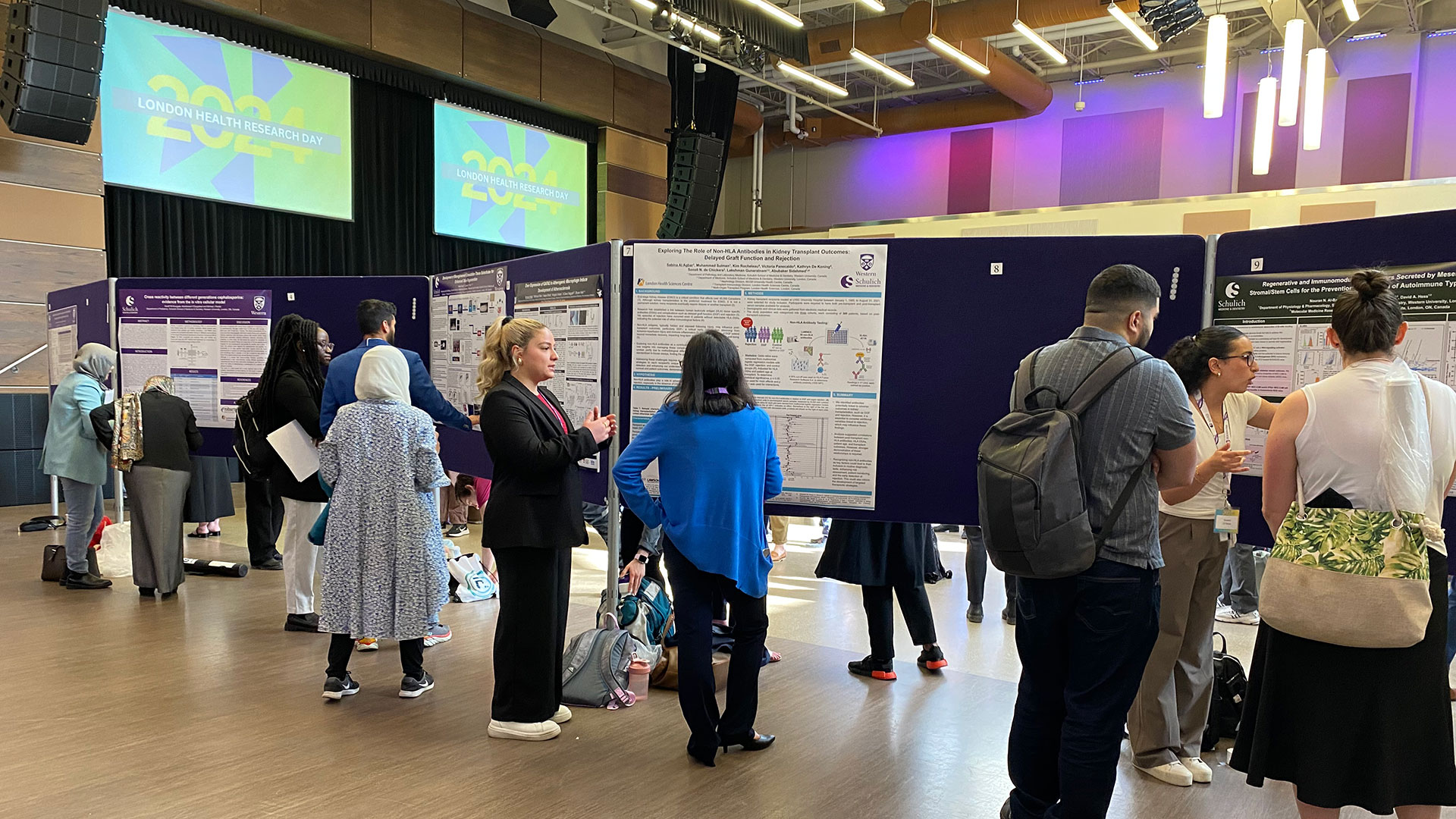
“An event like this, focused on health research by learners, provides an outstanding opportunity for our trainees to showcase their research and network with peers and leaders in the field,” says Susanne Schmid, Vice Dean of Basic Medical Sciences at Schulich Medicine & Dentistry. “As one of the largest health research gatherings in our city, London Health Research Day not only highlights the amazing work being done at Western, LHSC and St. Joseph’s, but also underscores the powerful collaborations that drive our success.”
Dr. Lisa Porter, Vice President, Research and Scientific Director at St. Joseph’s, was also on-hand to speak with presenters and learn more about ongoing research.
“I am so proud of the great research happening in London,” says Dr. Porter. “This event is a wonderful opportunity to explore the fabulous research and see what the future holds for health care.”
The event was preceded on May 6 with a public lecture by Dr. Mark Daley, Chief AI Officer at Western University, who addressed how artificial intelligence (AI) has the potential to change the future of health research and the lives of Canadians. The potential of AI to address ongoing challenges in health care, was echoed by keynote speaker Dr. Laura Rosella, Canada Research Chair in Population Health Analytics at the University of Toronto.
The impact of technology on health research was already visible in many of the projects presented by learners, highlighting the rapid advancement of health research in London, Ontario.
Media Contact
Amanda Taccone
Communications Consultant & External Relations
Lawson Health Research Institute
T: 519-685-8500 ext. ext. 64059
C: 226-919-4748
@email
London holds 8th place ranking in Canada's Top 40 for hospital-based research
Lawson Health Research Institute is again ranked eighth in the country according to the 2020 edition of “Canada’s Top 40 Research Hospitals List” by Re$earch Infosource. This strong national position has been maintained by Lawson for the past seven consecutive years and keeps the Institute within the top five in Ontario.
Lawson, the research institute of London Health Sciences Centre and St. Joseph’s Health Care London, has also maintained the top ranking for research intensity among the large tier institutions with $600,000 of research spending per researcher.
“Now, more than ever, people are understanding the critical importance of hospital-based research and its impact on health care,” says Dr. David Hill, Lawson Scientific Director and VP, Research for London Health Sciences Centre and St. Joseph’s Health Care London.
“We have remarkable people right here in London working on solutions for health challenges that have a worldwide impact. Their knowledge, creativity and dedication never fail to astound.”
The top 40 list analyzes hospital-based research institutes from across the country on several metrics, including total research income from the previous fiscal year. The ranking looks at funds received from all sources, including both internal and external, to support research at the organization. According to the report, Lawson received $118,796 million in research income in 2019. Despite representing a 4.0 per cent drop from the previous fiscal year, Lawson has maintained its rankings on the national list.
Hospital-based researchers belong to a health system at the forefront of the COVID-19 pandemic. With close proximity to patients and access to samples, they have mobilized to address COVID-19. Many Lawson research teams are implementing pre-clinical, clinical observational and clinical trial studies to prevent or soften the worst effects for patients with COVID-19. They are also studying the long-term and mental health impacts related to the pandemic.
“The COVID-19 pandemic is proving to be one of the most pressing health challenges of our time,” notes Dr. Hill. “Lawson excels in rapid response research and is uniquely positioned to tackle health problems from within hospital walls.”
Quick summary of Lawson's ranking
-
Rank in Top 40 Research Hospitals 2020: 8 (same as 2019)
-
FY2019 research spending: $118,776 million
-
FY2018 research spending: $123,790 million
-
Percentage change 2018-2019: -4.0%
-
Research intensity: $600,000 per researcher
-
Research intensity - percentage of total hospital spending: 7.0%
London ranks in the top 10 for hospital-based research
Lawson Health Research Institute is ranked eighth in the country according to the 2019 edition of “Canada’s Top 40 Research Hospitals List” by Re$earch Infosource. This strong national position has been maintained by Lawson for the past six years and also keeps the institute within the top five in Ontario.
The results
The research institute of London Health Sciences Centre and St. Joseph’s Health Care London (St. Joseph’s), Lawson has also maintained the top ranking for research intensity among the large tier institutions with $612,800 of research spending per researcher.
“As a hospital-based research institute, our innovation happens where care is delivered,” says Dr. David Hill, Lawson Scientific Director. “Every day, teams of researchers are working directly with clinicians and patients to improve treatments or create entirely new ones. They also find innovative methods of delivering services that drive efficiency and reduce costs.”
Image

Dr. David Hill, Lawson Scientific Director.
The top 40 list analyzes hospital-based research institutes from across the country on several metrics, including total research income from the previous fiscal year. The ranking looks at funds received from all sources, including both internal and external, to support research at the organization. According to the report, Lawson received $123,790 million in research income in 2018, which represents 0.4 per cent in growth from the previous fiscal year.
“We are known across the country and around the world for our high level of research activity and success, despite our size. London punches well above our weight when it comes to health research,” adds Dr. Hill.
“Our position as a leading research institute is the foundation for brilliant research and worldwide partnerships tackling the most pressing challenges in health care.”
What does this mean for London, Ontario?
There are millions of dollars every year coming in London from elsewhere in Canada and in the world. Approximately 60 per cent of that is spent on jobs. Lawson employs over 2,000 people in hospital-based research. This is a major source of quality employment for Londoners and people in the surrounding region. Dr. Hill notes that this is one of the real benefits of having a strong biomedical industry associated with the city.
“Another real benefit of having research directly in the hospitals is that our researchers focus on gaining knowledge that advances our ability to treat patients and find solutions to wicked problems that have been around for a long time.”
For example, Lawson researchers have been tackling the issue of homelessness from within hospital walls. The No Fixed Address (NFA) strategy reaches and supports patients during the crucial transitional period when they are being discharged from the hospital and re-integrated into the community. Learn more about this successful research initiative.
Image
Dr. Cheryl Forchuk, Lawson Scientist leading the NFA strategy in London hospitals.
How are we adapting to the current funding environment?
While federal funding for research in Canada is slowly starting to increase, this sector experienced over a decade of decreasing funding that placed the country far behind other nations in terms of investing in health research.
“We have become better at what we do in competing for grants and other funding sources, in particular from the government,” explains Dr. Hill.
Also, “Lawson has been diversifying our sources of funding. We’ve have engaged in more partnerships with industry and joint research and development projects with companies. Not only does that have the advantage of providing additional resources, but also is often a more practical way of directly delivering our knowledge into salable products”
Strong partnerships
This year, Re$earch Infosource is showcasing “Building Bridges: Pathways to Building Research Capacity and Discovery through Collaboration.” Health researchers in London have collaborations across many sectors that result in big impacts for the people in this region and beyond.
As just one example, a group of scientists from Lawson, Brescia University College and Schulich School of Medicine & Dentistry at Western University provide academic support to London’s Fermented Foods Project that brings together industry partners, the agricultural sector, academic and health institutions, the City of London and the London Economic Development Corporation.
The goals of this group, funded by the Weston Family Microbiome Initiative, are to support new product development and batch production, enhance customer confidence, quantify health benefits and establish a competitive advantage.
Image
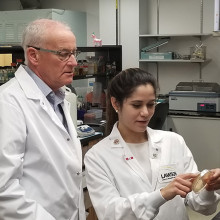
Dr. Gregor Reid, left, is one of the researchers for London's Fermented Foods Project.
Scientist
London ranks in top ten of Canada’s research hospitals
MEDIA RELEASE
For immediate release
January 18th, 2022
LONDON, ON – Lawson Health Research Institute has ranked eighth in the country for the 2021 edition of Canada’s Top 40 Research Hospitals List by Re$earch Infosource. This is the eighth consecutive year that Lawson has maintained this strong national position, which puts the institute within the top five in Ontario.
Lawson, the research institute of London Health Sciences Centre (LHSC) and St. Joseph’s Health Care London, has also maintained the top ranking for research intensity among the large tier institutions with a little more than $600,000 of research spending per researcher.
“This is a validation of the extensive support from LHSC and St. Joseph’s, our hospital foundations, Western University and our staff and physicians,” says Lawson’s Scientific Director Dr. David Hill. “These strong partnerships make the hospital environment in London a nationally recognized centre of discovery and knowledge translation.”
Hospital-based researchers belong to a health system at the forefront of the ongoing COVID-19 pandemic. With close proximity to patients and access to samples, they have mobilized to address COVID-19 in many different ways, and are making a difference around the world when it comes to advances and discoveries.
“The Province of Ontario designated health research as an essential service early in the pandemic,” explains Dr. Hill. “They understood that only science can get us through this, be it through vaccine development, surveillance and testing, evaluating new drugs to help patients in ICU survive, or studying the long-term health impacts. We have made substantial contributions of new knowledge through Lawson.”
The top 40 list analyzes hospital-based research institutes from across the country on several metrics, including total research income from the previous fiscal year. According to the report, Lawson received $121,888 million in research income in 2021.The ranking looks at funds received from all sources, including both internal and external, to support research at LHSC and St. Joseph’s.
Quick summary of Lawson’s ranking
- Rank in Top 40 Research Hospitals 2021: 8 (same as 2020)
- FY2020 research spending: $121,888 million
- Percentage change 2019-2020: 2.6%
- Research intensity: $618,700 thousand per researcher
- Research intensity - percentage of total hospital spending: 7.0%
-30-
About Lawson Health Research Institute: Lawson Health Research Institute is one of Canada’s top hospital-based research institutes, tackling the most pressing challenges in health care. As the research institute of London Health Sciences Centre and St. Joseph’s Health Care London, our innovation happens where care is delivered. Lawson research teams are at the leading-edge of science with the goal of improving health and the delivery of care for patients. Working in partnership with Western University, our researchers are encouraged to pursue their curiosity, collaborate often and share their discoveries widely. Research conducted through Lawson makes a difference in the lives of patients, families and communities around the world. To learn more, visit www.lawsonresearch.ca.
For more information, please contact:
Celine Zadorsky
Communications & External Relations
Lawson Health Research Institute
T: 519-685-8500 ext. 75664
C: 519-619-3872
@email
www.lawsonresearch.ca/news-events
Media Contacts
Celine Zadorsky
Senior Media Relations Consultant
Communications & Public Engagement
T: 519-685-8500 ext. 73502
Celine.zadorsky@lhsc.on.ca
London researchers adapt MRI technology to image salt within the kidneys
LONDON, ON – In a newly published study, scientists at Lawson Health Research Institute have adapted PET/MRI technology to accurately image salt within the kidneys of patients with kidney disease.
“Salt is very difficult to image in an MRI because the signal is much weaker than water,” explains Dr. Christopher McIntyre, Lawson Scientist and Nephrologist at London Health Sciences Centre (LHSC). “We wanted to find a way to look at the fundamental role of the kidney in getting rid of salt and water by using a functional MRI.”
Imaging salt within the kidneys has never been accurately accomplished in patients with kidney disease, but Dr. McIntyre and his team developed new technology and software that was adaptable to a PET/MRI machine at St. Joseph’s Health Care London. The new technology allowed the machine to image salt and water levels within the kidney.
“Salt within the kidneys have only been imaged in pre-clinical models, and low weight, healthy volunteers,” says Dr. McIntyre. “Since the kidney is further away from the MRI coils, and the organ moves when a person breathes, it is definitely very hard to image.”
This was the first study to use MRI to look at salt within the kidneys with a wide range of participant with different body types (10 healthy volunteers), as well as patients with kidney disease (five patients). The research team also imaged patients who had a combination of kidney disease and heart failure, because it is especially important for those patients specifically to be able to release salt and water as part of their treatments.
Currently clinicians rely on kidney biopsies to measure salt levels, but Dr. McIntyre says that method isn’t as accurate or effective as it could be.
“The problem is that the biopsies are painful, they have risks, and because it is a small sample of the kidney, we don’t get an accurate perspective of the kidney as a whole,” Dr. McIntyre explains.
The study, which is published in Radiology has now opened the door to new possibilities when it comes to clinical care for patients with kidney disease.
“Salt is very toxic in patients with kidney failure,” adds Dr. McIntyre. “This will now allow us to diagnose and manage both chronic and acute kidney disease. It is a significant step forward.”
The next steps for the research team will be to compare salt MRI’s to biopsies, while also examining potential new therapy developments.
“We are hoping we will have a higher degree of certainty moving forward to predict what will happen within the kidneys of these patients, with the possibility of using new targeted and effective treatments in the future,” notes Dr. McIntyre.
About Lawson Health Research Institute
Lawson Health Research Institute is one of Canada’s top hospital-based research institutes, tackling the most pressing challenges in health care. As the research institute of London Health Sciences Centre and St. Joseph’s Health Care London, our innovation happens where care is delivered. Lawson research teams are at the leading-edge of science with the goal of improving health and the delivery of care for patients. Working in partnership with Western University, our researchers are encouraged to pursue their curiosity, collaborate often and share their discoveries widely. Research conducted through Lawson makes a difference in the lives of patients, families and communities around the world. To learn more, visit www.lawsonresearch.ca.
Media Contacts
Celine Zadorsky
Senior Media Relations Consultant
Communications & Public Engagement
T: 519-685-8500 ext. 73502
Celine.zadorsky@lhsc.on.ca
London researchers discover novel method to diagnose long COVID
Study found unique blood biomarkers in patients with post-COVID-19 condition
LONDON, ON – Published this week in Molecular Medicine, researchers at Lawson Health Research Institute have found that patients with post-COVID-19 condition (long COVID) have unique biomarkers in their blood. The team is now working on developing a first of its kind blood test that could be used to diagnose long COVID. The discovery could also lead to new therapeutics for this condition.
Long COVID occurs when someone experiences symptoms like fatigue, cognitive issues, shortness of breath and gastrointestinal issues after an initial COVID-19 diagnosis. It can sometimes take up to 12 months for the condition to occur.
“It’s estimated that 30 to 40 per cent of patients with COVID-19 will develop long COVID,” says Dr. Douglas Fraser, Lawson Scientist and Critical Care Physician at London Health Sciences Centre (LHSC). “Physicians currently rely on symptoms alone to diagnose the condition, but our research offers a unique profile of blood biomarkers that could be used in a clinical test.”
The researchers studied 140 blood samples from participants at LHSC and St. Joseph’s Health Care London, including St. Joseph’s Post-Acute COVID-19 Program. Participants were those with presumed long COVID, hospital inpatients with acute COVID-19 infection and healthy control subjects.
“We chose to study blood vessels that link all the body systems together to look for changes after an acute infection,” explains Dr. Fraser, who is also a Professor at Western University’s Schulich School of Medicine & Dentistry.
The team found that blood vessels of those with presumed long COVID were changing rapidly after a confirmed COVID-19 infection. They also found that patients with long COVID had 14 elevated blood biomarkers associate with blood vessels. With the help of machine learning, they discovered that two biomarkers called ANG-1 and P-SEL could be used to classify long COVID with 96 per cent accuracy.
“Long COVID is a relatively new condition and we have much to learn about it,” says Dr. Michael Nicholson, Associate Scientist at Lawson, Respirologist at St. Joseph’s and Associate Professor at Schulich Medicine & Dentistry. “This research advances our understanding of long COVID with the potential to improve diagnosis and patient care.”
The advantage of biomarkers is that they not only help diagnose a disease but also provide insight into potential treatments. The team is now focused on using their findings to create a clinical diagnostic test with a goal of also exploring therapeutics.
“With a point-of-care diagnostic test, we could confidently diagnose long COVID and eventually develop targeted therapeutics against these blood vessel changes that we have discovered,” says Dr. Fraser. “The ultimate goal is to improve patient outcomes following a long COVID diagnosis.”
This research was supported by funding from London Health Sciences Foundation, London Community Foundation and the AMOSO Innovation Fund. It builds on a growing body of COVID-19 research from scientists at Lawson Health Research Institute.
About Lawson Health Research Institute
Lawson Health Research Institute is one of Canada’s top hospital-based research institutes, tackling the most pressing challenges in health care. As the research institute of London Health Sciences Centre and St. Joseph’s Health Care London, our innovation happens where care is delivered. Lawson research teams are at the leading-edge of science with the goal of improving health and the delivery of care for patients. Working in partnership with Western University, our researchers are encouraged to pursue their curiosity, collaborate often and share their discoveries widely. Research conducted through Lawson makes a difference in the lives of patients, families and communities around the world. To learn more, visit www.lawsonresearch.ca.
Media Contacts
Celine Zadorsky
Senior Media Relations Consultant
Communications & Public Engagement
T: 519-685-8500 ext. 73502
Celine.zadorsky@lhsc.on.ca