


Search
Search
3185 Search Results:
… or breastfeeding women is limited. Speak with your health care provider if this situation applies to you. What are the … form. • Once Xeomin® is reconstituted by a health care provider with sodium chloride 0.9% (normal saline), it … or breastfeeding women is limited. Speak with your health care provider if this situation applies to you. What are the …
July 12, 2022; Page 1 of 2 Incobotulinumtoxin A (Xeomin) for Cervical Dystonia/Spasmodic Torticollis What is cervical dystonia and how is it typically treated? Cervical dystonia is a rare neurological disorder involving involuntary muscle contractions in the neck that cause the head to twist or turn...
… YOur guide to Breast assessment Breast Care Program St. Joseph’s Hospital 268 Grosvenor St. London, ON N6A 4V2 THE BEST IN BREAST CARE The Breast Care Program at St. Joseph’s Health Care London provides a … YOur guide to Breast assessment Breast Care Program St. Joseph’s Hospital 268 Grosvenor St. London, …
YOur guide to Breast assessment Breast Care Program St. Josephs Hospital 268 Grosvenor St. London, ON N6A 4V2 THE BEST IN BREAST CARE The Breast Care Program at St. Josephs Health Care London provides a confidential, coordinated, specialized breast assessment service. The goal of the program is to m...
… is, why we are making this change and how it affects your care. What are ENFitTM feeding tubes? ENFitTM feeding tubes … going home with a new feeding tube, your dietitian and homecare supports will help set up the supplies you need at … ENFitTM supplies can be purchased from the same home healthcare or medical supply store where you bought your other …
Your New ENFitTM Feeding Tube Your feeding tube is being changed to an ENFitTM feeding tube. Please read the Q&A below to learn more about what an ENFitTM feeding tube is, why we are making this change and how it affects your care. What are ENFitTM feeding tubes? ENFitTM feeding tubes have a special...
Youth expectations of mental health care differ significantly from reality of care, study finds
In a recent study, researchers at Lawson Health Research Institute and Western University examined the expectations of young adults entering psychiatric treatment at an early intervention program and how those expectations differ from the reality of care. The research team found that young adults hold incorrect assumptions about the mental health care environment, relationships with care providers and the trajectory of psychiatric care.
The study included 20 patients from the First Episode Mood and Anxiety Program (FEMAP) at London Health Sciences Centre (LHSC), a novel outpatient mental health program that combines medication management and talk therapy, generally delivered by the same clinician, to help older teens and young adults with emotional concerns that fall into the categories of mood and anxiety symptoms. The vast majority of patients in the study described feelings of apprehension before entering treatment.
“Expectations and assumptions impact the way youth engage in psychiatric treatment, and their success and satisfaction with treatment,” said Dr. Sarah Armstrong, the study’s first author, a clinician-researcher at Lawson, assistant professor at Western’s Schulich School of Medicine & Dentistry and psychiatrist at FEMAP. “It’s critical that we understand the myths around mental health care so we can work to dispel them.”
The study identified three major misconceptions of patients entering care at FEMAP. The first is that patients expected a cold and unwelcoming care environment. “I thought it was umm…like you go to a psych ward and they like tie you up because they think you’re crazy,” one participant noted. Many patients acknowledged that this myth, a caricature of psychiatric care, was strongly influenced by portrayals in popular culture. In reality, they found care providers, staff members and the physical environment at FEMAP to be warm and welcoming which helped to relieve the anxiety around psychiatric care.
Patients also expected an authoritarian approach to care where they would play a passive role. This differed from the reality of care at FEMAP where patients found treatment was a collaborative effort between themselves and their care providers. Patients felt like they had a voice, that their opinions were respected and even felt comfortable disagreeing. They realized they could work towards making effective change for themselves by learning different ways of coping with symptoms and achieving personal goals.
Finally, patients expected quick treatment with an immediate recovery. The reality of treatment was more complicated, more time consuming and required more work than patients originally anticipated. For example, there was often an element of trial and error by using different treatment methods or different medications. Patients found treatment was not straight forward and it took more time than anticipated to see changes in their mental health.
“Ultimately, youth found that treatment at FEMAP was much more complex than they anticipated. However, they experienced a positive change in mindset with a strengthening of personal agency,” said Dr. Armstrong. “Their treatment fears were relieved and they valued their active role in their own care.”
The team hopes this study will be a first step in identifying myths and better preparing youth for the work involved in effective psychiatric care.
“Belief in a positive outcome often leads to better outcomes,” said Dr. Elizabeth Osuch, a clinician-scientist at Lawson, associate professor at Schulich Medicine & Dentistry and medical director at FEMAP. “Young adults are often reluctant to seek mental health care. Expectations can influence whether youth seek help to begin with. These results could help inform educational outreach about psychiatric care, helping to better align expectations with reality. But just as important, this study helps identify what youth value in the treatment provided at FEMAP and what principals would be beneficial to guide health care delivery models for emerging adults.”
The study, “Expectations vs. Reality: The Expectations and Experiences of Psychiatric Treatment Reported by Young Adults at a Mood and Anxiety Outpatient Mental Health Program,” is published in Early Intervention in Psychiatry.
Scientist
Youth report improved wellbeing as result of tailored mental health services, study finds
In a new study from Lawson Health Research Institute and Western University, researchers partnered with youth receiving care at the First Episode Mood and Anxiety Program (FEMAP) at London Health Sciences Centre (LHSC) to better understand personal perspectives on care and treatment outcomes. The study found that patients experienced lasting improvements in managing their symptoms and improvements in academics, work performance and relationships, and they reported that these benefits involved being empowered by feelings of self-acceptance.
The study included 22 patients from FEMAP, a novel outpatient mental health program at LHSC that provides treatment to ‘emerging adults,’ ages 16 to 25, with emotional concerns that fall into the categories of mood and anxiety symptoms. Treatment at FEMAP takes a patient-centred approach and the research involved looking at what is meaningful and valuable to patients during their care journey.
“The transition from adolescence to adulthood is challenging. FEMAP employs an innovative model of care tailored to the needs of this complex population,” said Dr. Elizabeth Osuch, a clinician-scientist at Lawson, associate professor at Western University’s Schulich School of Medicine & Dentistry and medical director at FEMAP. “By engaging patients in a reflection of their experience, we can learn how effective the program is from the patient perspective.”
Participants shared their experiences through open-ended interviews with Dr. Osuch’s research team. Interview transcripts were collected and analyzed to determine common themes around treatment and outcomes. These themes were then presented back to the research participants for validation.
The study found that treatment led to development of coping strategies to better manage symptoms. Research participants credited these strategies for better functioning in academics, careers and personal relationships. Challenges in these areas are common among emerging adults and are often stressors that lead to youth seeking mental health care.
Participants characterized their treatment at FEMAP as an important investment in their mental health and wellbeing, and credited a collaborative partnership with their care provider for keeping them engaged in treatment. They appreciated the ease of accessing treatment at FEMAP where they could receive care from a psychiatrist, social worker, addictions counsellor, family counsellor and a psychologist, depending on their needs.
The research found that the complexities of treatment were initially frustrating to patients as they were seeking an “easy fix” to their mental health concerns, but they ultimately appreciated that mental health recovery is a journey. They valued that care providers partnered with them to set long-term treatment goals, choose the best treatment options and provide support both during and between appointments.
“Patients may prefer FEMAP over other mental health services because the care is tailored to emerging adults,” said Justin Arcaro, first author on the study and a former MSc candidate at Schulich Medicine & Dentistry and research associate at FEMAP. “There’s an important balance between recognizing emerging adults’ personal autonomy and their need for comprehensive support.”
Study results demonstrated that through treatment at FEMAP, patients realized they are not alone in their mental health journey which led to improved self-acceptance and self-compassion. Participants reported feeling empowered to create meaningful changes in their lives.
Participants also discussed the decision to seek mental health care in the first place. Many struggled with the decision of whether or not treatment was needed. “This shows a need for targeted campaigns to help emerging adults distinguish between normative feelings and those that indicate a need for help,” said Dr. Osuch.
This study also aligns with other research projects at FEMAP that suggest a need for targeted education campaigns about mental health care as a process with solutions that are not necessarily quick or easy. The research team highlights the importance of these findings in informing future funding decisions and policy around mental health care for emerging adults. The findings emphasize the need for quick engagement with a trusted care provider and an integrated treatment team that can partner with patients to support them while enhancing independent growth and self-acceptance.
The study, “Emerging adults’ evaluation of their treatment in an outpatient mood and anxiety disorders program,” is published in Emerging Adulthood.
Image
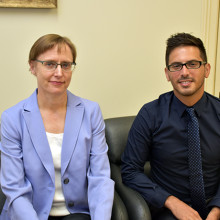
Above: Dr. Elizabeth Osuch and Justin Arcaro
Scientist