


Search
Search
3185 Search Results:
… years of restructuring behind us, and our new mental health care facilities and redevelopment of St. Joseph’s Hospital … of investments in our Parkwood Institute Mental Health Care Building, Southwest Centre for Forensic Mental Health Care and the redevelopment of St. Joseph’s Hospital last …
CARING FOR THE BODY, MIND & SPIRIT SINCE 1869 Page 1 Treasurers Report The new St. Josephs With many years of restructuring behind us, and our new mental health care facilities and redevelopment of St. Josephs Hospital complete, 2015/16 was the year we fully became a new St. Josephs for all patients...
Archive: Lawson Link Magazine
Lawson Link is an annual magazine showcasing the quality and impact of Lawson research, the breadth of areas where we are making a difference in patient care, and the contributions we have made to London’s knowledge economy.
Past Issues of Lawson Link Magazine
Are you passionate about population health?
Applications are being accepted for the ICES Faculty Scholars Program’s fourth training cycle, 2019-2021. It is a two-year, part-time learning opportunity for Ontario-based academic faculty who wish to develop their skills in population health research.
The program provides access to linkable health administrative databases housed at ICES and fosters the development of interdisciplinary research collaborations among peers and experts across the ICES network.
"The Faculty Scholars Program through ICES gives individuals passionate about population health and health services research the data and expertise to make better policy and stronger health care for healthier people,” says Dr. Amit Garg, Lawson Scientist and ICES Western Site Director and Program Lead.
“Past Scholars have made many meaningful contributions and helped feature London as a Canadian leader in today's knowledge-based economy. We can’t wait to see what the new Scholars come up with during their time with the program."
Since 2013, over 40 researchers have been trained from a variety of clinical and non-clinical backgrounds including anaesthesia and perioperative medicine, clinical neurological sciences, epidemiology and biostatistics, family medicine, medicine, nursing, obstetrics and gynaecology, oncology, otolaryngology, paediatrics, psychiatry and surgery. They have won national awards and have published a number of peer-reviewed journal articles as first authors.
To be considered for the 2019-2021 cycle of the Faculty Scholars Program, you must hold an appointment of assistant professor or higher at a recognized Ontario university, a master’s or doctoral degree with a focus on quantitative research methods, and a strong desire to become an ICES Scientist.
Applications for the 2019–2021 program will be accepted until January 18, 2019. Any questions regarding the program, applications or eligibility can be directed to facultyscholars@ices.on.ca.
Go to the ICES website for more information on the ICES Faculty Scholars Program.
ICES is a not-for-profit research institute encompassing a community of research, data and clinical experts. With its growing network across the province, ICES researchers are able to access a vast and secure array of health-related data to evaluate health care delivery and outcomes. Learn more about ICES Western.
… St. Joseph’s Health Care London Renowned for compassionate care, St. Joseph’s is one of the best academic health care organizations in Canada dedicated to helping people … St. Joseph’s Health Care London Renowned for compassionate care, St. Joseph’s is one of the best academic health care …
St. Josephs Health Care London Renowned for compassionate care, St. Josephs is one of the best academic health care organizations in Canada dedicated to helping people live to their fullest by minimizing the effects of injury, disease and disability. FACTS & FIGURES Staff 3,970 Physicians* 1,095 Res...
… can understand and participate in their own medical care Accessibility Report Filename: … can understand and participate in their own medical care Accessibility Report Filename: …
ASPIRIN DESENSITIZATION INTRODUCTION Aspirin desensitization therapy is a treatment option for Aspirin Exacerbated Respiratory Disease (AERD). The disease requires having a diagnosis of three specific conditions. It is therefore commonly referred to as Samters Triad. (See Sinusitis and Asthma) The t...
Assessing neurofeedback in stroke survivors
Researchers are testing whether a specialized form of imaging can help in stroke rehab.
A new study aims to assess the use of functional near-infrared spectroscopy (fNIRS), a type of imaging, to provide neurofeedback during stroke rehabilitation with a goal of eventually improving patient outcomes.
fNIRS is used to detect changes in brain oxygen levels using light. More recently it has also been used to develop brain-computer interfaces (BCIs), which allow patients with brain injuries to control devices like robotic arms with their thoughts.
Dr. Sue Peters, a Scientist at Lawson Health Research Institute and Director of the Neurorehabilitation Physiology Lab at St. Joseph Health Care London’s Parkwood Institute, was one of the recipients of the Spring 2022 Lawson Internal Research Fund (IRF) Awards.
The funds will go towards a new study to assess whether fNIRS can be used to direct neurofeedback in stroke survivors – helping them with rehabilitation.
“Currently, there's no real measure of brain activity that is used in stroke rehabilitation to help make clinical decisions,” says Dr. Peters, who is also a Professor at Western University.
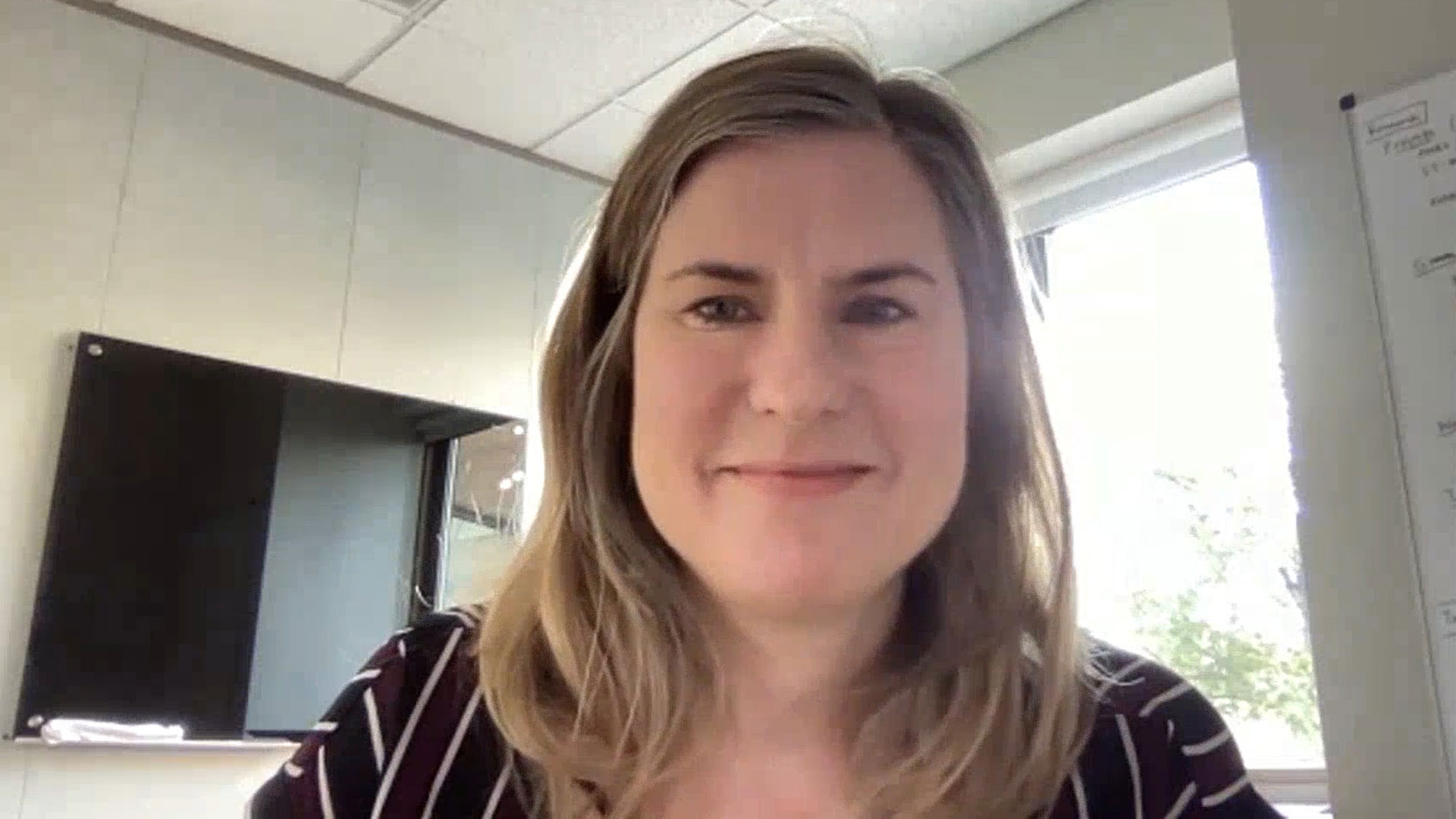
Over 400,000 Canadians live with the effects of a stroke, according to the Heart and Stroke Foundation, and there’s hope that fNIRS could make a big difference by eventually improving movement and independence.
“We're going to use the device in some common tasks that people might do with their arm and determine whether we can use this device reliably and accurately in a stroke-related context,” Dr. Peters explains.
Participants in the study will imagine moving while remaining still. This activates very similar parts of the brain to when people actually move. If done correctly, patients will see a visual cue generated through measurement using fNIRS.
“We know from MRI studies that when I move my right hand, the left side of my brain is activated,” notes Dr. Peters. “We think we can use this concept in stroke rehab.”
Dr. Peters is recruiting 40 people from the community who are at least six months post stroke and 40 healthy adults of all ages. They will first participate in motor assessment with a physiotherapist and then wear an fNIRS cap while thinking about moving their wrist to measure brain activity.
Previously, there were a lack of methods to image the brain during real-life movement.
“The hope is to eventually conduct a clinical trial where we're testing motor interventions to see whether some things are more effective than others at activating the regions of the brain that were impacted by the stroke.”
Dr. Peters believes the study has the potential to have a big impact on the future of rehabilitation for stroke patients, leading to lasting changes in quality of life.
Assessing neurofeedback in stroke survivors
A new study aims to assess the use of functional near-infrared spectroscopy (fNIRS), a type of imaging, to provide neurofeedback during stroke rehabilitation with a goal of eventually improving patient outcomes.
fNIRS is used to detect changes in brain oxygen levels using light. More recently it has also been used to develop brain-computer interfaces (BCIs), which allow patients with brain injuries to control devices like robotic arms with their thoughts.
Dr. Sue Peters, a Scientist at Lawson Health Research Institute and Director of the Neurorehabilitation Physiology Lab at St. Joseph Health Care London’s Parkwood Institute, was one of the recipients of the Spring 2022 Lawson Internal Research Fund (IRF) Awards.
The funds will go towards a new study to assess whether fNIRS can be used to direct neurofeedback in stroke survivors – helping them with rehabilitation.
“Currently, there's no real measure of brain activity that is used in stroke rehabilitation to help make clinical decisions,” says Dr. Peters, who is also a Professor at Western University.
Over 400,000 Canadians live with the effects of a stroke, according to the Heart and Stroke Foundation, and there’s hope that fNIRS could make a big difference by eventually improving movement and independence.
“We're going to use the device in some common tasks that people might do with their arm and determine whether we can use this device reliably and accurately in a stroke-related context,” Dr. Peters explains.
Participants in the study will imagine moving while remaining still. This activates very similar parts of the brain to when people actually move. If done correctly, patients will see a visual cue generated through measurement using fNIRS.
“We know from MRI studies that when I move my right hand, the left side of my brain is activated,” notes Dr. Peters. “We think we can use this concept in stroke rehab.”
Dr. Peters is recruiting 40 people from the community who are at least six months post stroke and 40 healthy adults of all ages. They will first participate in motor assessment with a physiotherapist and then wear an fNIRS cap while thinking about moving their wrist to measure brain activity.
Previously, there were a lack of methods to image the brain during real-life movement.
“The hope is to eventually conduct a clinical trial where we're testing motor interventions to see whether some things are more effective than others at activating the regions of the brain that were impacted by the stroke.”
Dr. Peters believes the study has the potential to have a big impact on the future of rehabilitation for stroke patients, leading to lasting changes in quality of life.
Media Contact
Amanda Taccone
Communications Consultant & External Relations
Lawson Health Research Institute
T: 519-685-8500 ext. ext. 64059
C: 226-919-4748
@email
… in people with diabetes Recommendation 1 Health-care providers should perform foot examinations to identify … at high risk of developing foot ulcers should receive foot care education (including counseling to avoid foot trauma … When foot complications occur, early referral to a health-care professional trained in foot care is recommended (Grade …
Assessing risk and preventing foot complications in people with diabetes Recommendation 1 Health-care providers should perform foot examinations to identify people with diabetes at risk for ulcers and lower- extremity amputation (Grade C, Level3) at least annually and at more frequent intervals in h...
Assessing the pandemic's impact on Canadian Veterans and their spouses
Multiple studies are reporting the pandemic’s impact on the mental health of Canadians, but what effect is it having on our nation’s Veterans and their spouses?
“With concerns about COVID-19 infection and drastic changes to everyday life, the pandemic is taking a toll on the health of Canadians,” explains Dr. Don Richardson, Associate Scientist at Lawson Health Research Institute and Director of the MacDonald Franklin Operational Stress Injury (OSI) Research Centre, located at St. Joseph's Health Care London's Parkwood Institute. “And it may be particularly distressing for those vulnerable to mental illness.”
Population studies show that Veterans are at double the risk of mental illness when compared to the rest of the population. They experience higher rates of depression, anxiety and loneliness. Spouses of Canadian Veterans are also at higher risk of distress, as they may sometimes undertake significant caregiving responsibilities that that require significant emotional and time investments.
“It’s currently unknown how the pandemic will impact Veterans and their spouses, but it could result in particularly serious outcomes,” says Dr. Anthony Nazarov, Associate Scientist at Lawson and the MacDonald Franklin OSI Research Centre.
In a new project from Lawson and the Centre of Excellence on Post-Traumatic Stress Disorder (PTSD), researchers will seek answers to these questions by partnering with up to 1,000 Canadian Veterans and 250 spouses of Canadian Veterans. Through online surveys, the project will hear directly from Veterans and their spouses to assess the pandemic’s effects on their well-being over time. The team hopes results can be used by health care workers and policy-makers to support Veterans and their families during both the current pandemic and future public health emergencies.
“We want to hear from all Canadian Veterans and their spouses, whether they’re doing well or not and whether they’re seeking care or not,” explains Dr. Nazarov.
Image

From left: Drs. Don Richardson and Anthony Nazarov
Participants will complete online surveys, available in both English and French, once every three months for a total of 18 months. They will be asked questions about their psychological, social, family-related and physical well-being, and any relevant changes to their lifestyle and health care treatment.
“Veterans who regularly access health care services could encounter significant changes, including a move to virtual care appointments. This could lead to increased caregiving responsibilities for spouses,” says Dr. Nazarov. “Given the uncertainty surrounding the pandemic, these changes may persist well into the future, mandating a thorough assessment of patient satisfaction and treatment outcomes.”
The team hopes results can be used to support the wellness of Veterans and their families during public health emergencies. This includes providing health care professionals and policy-makers with information to guide emergency preparedness policies and health care delivery models. They hope results can also be used to recognize early signs of distress in order to target with early interventions.
“We are seeking to understand the impact of COVID-19 on Veterans and their families to identify if this global pandemic is leading to psychological distress or triggering historical traumas,” says Dr. Patrick Smith, CEO of the Centre of Excellence on PTSD. “The Centre’s primary goal is to increase Canadian expertise related to military and Veteran mental health, suicide prevention and substance use disorders. This study can help us understand if the pandemic is having debilitating and life-altering effects, and help us address a potential mental health crisis.”
Interested Canadian Veterans and spouses of Canadian Veterans can learn more about the study at www.veteransurvey.ca.
Image
Dr. Patrick Smith
Scientist
Atrial Fibrillation Support Group to help patients with physical and psychological wellbeing
The Cardiac Rehabilitation and Secondary Prevention program at St. Joseph’s Health Care London, in collaboration with London Health Sciences Centre’s Cardiac Care Program is launching a new initiative to increase the engagement of patients with common heart rhythm conditions.
The Atrial Fibrillation Support Group provides an opportunity for patients living with the heart disorder known as Atrial Fibrillation to attend educational and support sessions delivered by expert healthcare providers. Attendees will also be able to engage in group discussions led by an experienced facilitator. This new initiative aims to improve patient’s understanding of the available treatments as well as their ability to minimize the impact of Atrial Fibrillation on their physical and psychological wellbeing.
Education meetings will begin in early September and will be held monthly at St. Joseph’s Hospital. Informal group meetings may also be held monthly. Patients are encouraged to bring an interested family member or close caregiver.
In addition to the support group’s general activities, the Cardiac Rehabilitation and Secondary Prevention program at St. Joseph’s is conducting a research study which evaluates the benefit of the Atrial Fibrillation support group to patients. If you are not interested in being a research participant, you are still welcome to attend the Atrial Fibrillation Patient Support Group.
For more information on the Atrial Fibrillation Support Group, please visit the group's Facebook page or contact the group at 519-646-6100 ext. 64051 or @email.
Scientist
… You will have a locker for small items. St. Joseph’s Health Care is not responsible for lost or stolen items. Preparing … when you return home. • Your surgeon may review specific care instructions such as avoiding heavy lifting while … online at Ivey Eye Institute | St. Joseph's Health Care London. You can also visit: www.sjhc.london.on.ca and …
August 2023 Page 1 of 3 EYE MEASUREMENT APPOINTMENT: Date and time: _____________________________________________ Location: Ivey Eye Institute, St. Josephs Hospital, Zone B, Level 1, Room B1-050 SURGERY APPOINTMENT: Date and arrival time: _______________________________________ Location: Cataract S...
… can understand and participate in their own medical care Accessibility Report Filename: … can understand and participate in their own medical care Accessibility Report Filename: …
BALLOON SINUPLASTY INTRODUCTION The sinuses are hollow spaces in the skull that produce mucus. The mucus helps filter debris or germs in the air we breathe. Each sinus has a narrow opening that allows mucus to drain. Sinusitis is one of the most common diseases in the world (See Adult Sinusitis). It...
… publication, or other information about St. Joseph’s Health Care, London or St. Joseph’s Health Care Foundation, please call 519-646-6034. St. JoSeph’S Because of St. Joseph’s... Care and research across our region our people I love my … publication, or other information about St. Joseph’s Health Care, London or St. Joseph’s Health Care Foundation, please …
For additional copies of this publication, or other information about St. Josephs Health Care, London or St. Josephs Health Care Foundation, please call 519-646-6034. St. JoSephS Because of St. Josephs... Care and research across our region our people I love my work our SucceSSeS My baby is alive Su...
Benchmarking the evaluation process for living kidney donation to improve outcomes
LONDON, ONTARIO - Living kidney donation rates have remained stagnant over the last decade, and many potential living donors find the evaluation process to be lengthy and difficult to navigate. Researchers from Lawson Health Research Institute and Western University have published results identifying indicators to monitor and improve the performance of transplant centres in how efficiently they evaluate individuals interested in becoming living kidney donors. The findings appear in the current issue of CJASN.
In 2019, there were 219 living donor kidney transplants in Ontario. There are several advantages to kidney transplantation from a living donor compared to deceased. However, many living donor candidates drop out of the evaluation process for a variety of reasons.
“From speaking with living donors, we know that some people find the evaluation process frustrating and cumbersome,” says Dr. Amit Garg, Professor at Western’s Schulich School of Medicine & Dentistry and Scientist at Lawson. “To ensure living donation is safe for both the donor and the recipient, a thorough evaluation is needed looking at medical, physical and psychosocial considerations.” Dr. Garg is also Director of the Living Kidney Donor Program at London Health Sciences Centre (LHSC).
Marian Reich started the journey of living kidney donation 11 years ago, giving the gift of life to her sister-in-law, Susan. “The evaluation process took one full year to complete, and in that time Susan lost the option of a pre-emptive transplant and started dialysis. I wasn’t fully aware that I had to be the driver of the process, and how to do that.”
Reich believes living donor evaluation should be consistent across the country, with a clearer process outlined for potential living donors and recipients. “Research studies like this one bring forth best practice and evidence-based information that includes the perspective of those with lived experiences.”
The research team, which included Patient Partners such as Reich who co-authored the paper, surveyed 77 participants who were kidney transplant recipients and recipient candidates, living kidney donors and donor candidates, or health care providers and administrators.
Out-of-pocket cost incurred by donors is one of the most significant barriers to donation. Another challenge is the lack of reliable information about the expectations and requirements of the donation process. For example, the time commitment, nature of the testing and reasons for the tests performed.
The evaluation process takes on average 10 months to complete, requiring multiple visits to the transplant centre. The intended recipient’s health may deteriorate during this wait to the point they may no longer receive a transplant. “By improving the efficiency of the process, more living donor candidates could complete the evaluation and more transplants performed,” adds Dr. Garg.
The study found a diverse set of quality indicators to measure the evaluation process, focusing on efficiency and safety to improve patient outcomes. They also identified a single measure tracking the costs of living donor evaluation from a health system perspective to assist with planning and budgeting.
“This is an important first step towards system monitoring, benchmarking and accountability in living kidney donor evaluation,” explains Dr. Steven Habbous, co-lead investigator and PhD graduate with Lawson and Western’s Schulich School of Medicine & Dentistry. “In other areas of the health care system, there are reported metrics that hospitals and funders use to compare performance between similar hospitals and track changes over time. We need to measure what we value, and value what we measure.”
The team will present the data to the Canadian National Living Kidney Donation Advisory Committee to help develop national guidelines. Potential improvement strategies are to evaluate multiple living donor candidates concurrently for the same recipient or offer some aspects of the evaluation virtually.
The study was funded by the Can-SOLVE CKD Network, a Canada-wide initiative to enhance kidney disease research and care in partnership with patients. The Ontario-based team led by Dr. Garg is one of 18 Can-SOLVE CKD research groups across the country investigating issues such as earlier diagnosis, better treatments, and innovative care – all based on priorities identified by patients.
-30-
Downloadable Media
Click image for larger version
Image

Dr. Amit Garg, study co-lead investigator, Professor at Western’s Schulich School of Medicine & Dentistry, and Scientist at Lawson. Dr. Garg is also Director of the Living Kidney Donor Program at LHSC.
Image
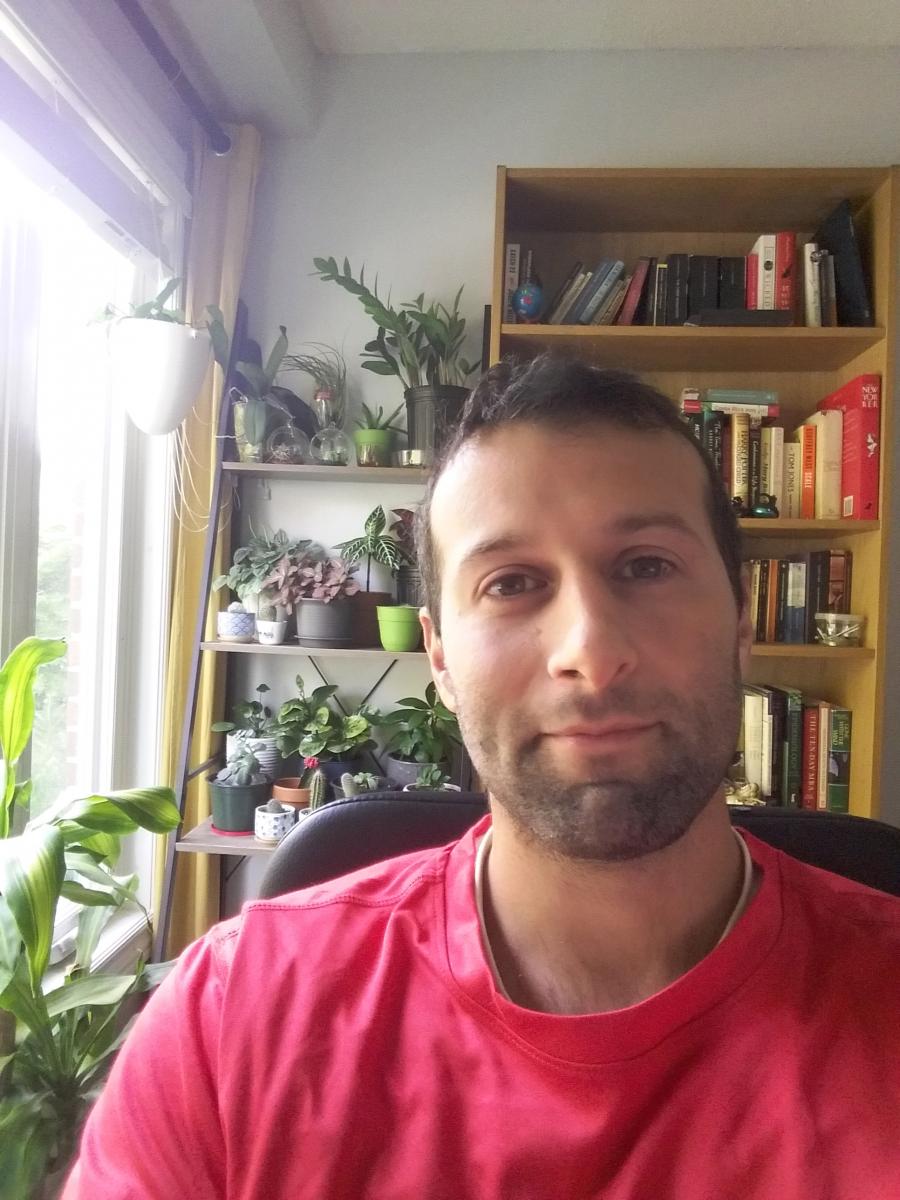
Dr. Steven Habbous, study co-lead investigator and PhD graduate with Lawson and Western’s Schulich School of Medicine & Dentistry
Image

Marian Reich, study co-author, Patient Partner and living kidney donor
About Lawson Health Research Institute
Lawson Health Research Institute is one of Canada’s top hospital-based research institutes, tackling the most pressing challenges in health care. As the research institute of London Health Sciences Centre and St. Joseph’s Health Care London, our innovation happens where care is delivered. Lawson research teams are at the leading-edge of science with the goal of improving health and the delivery of care for patients. Working in partnership with Western University, our researchers are encouraged to pursue their curiosity, collaborate often and share their discoveries widely. Research conducted through Lawson makes a difference in the lives of patients, families and communities around the world. To learn more, visit www.lawsonresearch.ca.
About The Schulich School of Medicine & Dentistry
The Schulich School of Medicine & Dentistry at Western University is one of Canada’s preeminent medical and dental schools. Established in 1881, it was one of the founding schools of Western University and is known for being the birthplace of family medicine in Canada. For more than 130 years, the School has demonstrated a commitment to academic excellence and a passion for scientific discovery.
Media Contacts
Celine Zadorsky
Senior Media Relations Consultant
Communications & Public Engagement
T: 519-685-8500 ext. 73502
Celine.zadorsky@lhsc.on.ca
… YES NO Okay to send text messages: YES NO Has a Primary Care Provider (e.g. Family doctor, Nurse Practitioner): YES … Contact’s Home Address: Please list below any other care providers that are supporting the applicant (If … Number: undefined_5: Off undefined_6: Off Has a Primary Care Provider eg Family doctor Nurse Practitioner: Off Has a …
'~ SIJOS PHs HEALTH CAR LONDON ' AT LOH SA FAM I LY HEA LING SERVICES I Biigajiiskaan: Indigenous Pathways to Mental Wellness Referral Form (Applicant Information be completed by staff ) Referral Date: Applicants First Name: Applicants Last Name: Preferred First Name (If d...
… L , Fl Fl Fl E i El El El L , Fl Fl Fl St. Joseph’s Health Care, London Governance Structure June 2019 London Diocese St. Joseph’s Health Care Society St. Joseph’s Hospice of London … Centre of Sarnia Lambton St. Joseph’s Health Care London Board of Directors Lawson Health Research …
.... V )L L J Z l:~ 0 ~ u ~ r T ) J: Q ~ t- ...J V )~ 0~ ~ r-" I V ) ~ ~:;::~:::~ \ \ \ \ \ \ \ \ \ \ \ \ \ \ \ \ \ \ I ~-,-~ Fl Fl rnr E i El El El L , Fl Fl Fl E i El El El L , Fl Fl Fl St. Josephs Health Care, London Governance Structure June 2019 LondonDiocese St.JosephsHealthCareSociety ...
… surgeries and emergency rooms Increase access to primary care Expand enrollment in health care education Easier for Canadian and Internationally … • $110M to connect 328,000 more people to primary care teams 400 new primary care providers 78 new or … surgeries and emergency rooms Increase access to primary care Expand enrollment in health care education Easier …
Meeting of the Board of Directors Monday, February 26, 2024 3:30 pm start time St. Josephs Hospital Adams Boardroom A2-041 and via MS Teams video- conference MINUTES Call to Order Nawaz Tahir The reflection was provided by Karen Perkin. 1. Full Agenda / Consent Agenda 1.1 Adoption of Full Agenda I...
… we hear stories about clients who experienced harm during care • As individual members, we need better feedback about … of partnership between St. Joseph’s, Lawson and GE Healthcare for theranostics. R. Butler thanked senior leaders D. … that following the annual meeting of St. Joseph's Health Care Society, the annual report to the community will be …
P a g e | 1 Meeting of the Board of Directors Wednesday, June 21, 2023 12:00 pm start time Parkwood Institute Main Bldg Room A2-109A/B MINUTES Call to Order Jonathan Batch The reflection was provided by J. Batch. 1. Full Agenda / Consent Agenda 1.1 Adoption of Full Agenda Addition of governance fu...
… arose: • There is more talk about a Campus of Care model for long term care; • What St. Joseph’s offers as compared to private long term care facilities is its focus on caring for the most … arose: • There is more talk about a Campus of Care model for long term care; • What St. Joseph’s offers as …
Meeting of the Board of Directors Monday, March 25, 2024 3:30 pm start time St. Josephs Hospital Adams Boardroom A2-041 and via MS Teams video- conference MINUTES Call to Order Nawaz Tahir The reflection was provided by Brandon de Vries. Education Session Capital Master Plan, Part 1: Clinical Serv...
… Overview and Update was presented by S Jansen, V.P. Patient Care and Risk. The history of how the local group became … (OHT) are local to their region and manage the delivery of care where the Ontario Health West oversees the … creating Ontario Health at Home which will develop a home care readiness plan for the eventual delivery of home care. …
P a g e | 1 Meeting of the Board of Directors Monday, November 27, 2023 3:30 pm start time St. Josephs Hospital Adams Boardroom A2-041 Via MS Teams video-conference MINUTES Minutes to be ratified next meeting Call to Order Nawaz Tahir The reflection was provided by Robert Raymond. Education Sessio...