


Search
Search
3186 Search Results:
Canadian team first in world to treat COVID-19 with specialized dialysis
LONDON, ON - As part of a randomized controlled trial, a team from Lawson Health Research Institute is the first in the world to treat a patient with COVID-19 using a modified dialysis device. The device gently removes a patient’s blood, modifies white blood cells and returns them to fight hyperinflammation. It is being tested with critically ill patients at London Health Sciences Centre (LHSC).
Evidence suggests that COVID-19 causes a heightened immune response, termed a ‘cytokine storm,’ in the most severely ill patients. Treatment options to address this hyperinflammatory state are currently limited and there are concerns about global drug shortages.
“Working in the intensive care unit (ICU), I was aware that more treatment options were needed in the fight against COVID-19,” says Dr. Chris McIntyre, lead researcher, Lawson Scientist and LHSC Nephrologist. “This led to the idea of treating a patient’s blood outside of the body. We could reprogram white blood cells associated with inflammation to alter the immune response.”
The research uses a modified version of a standard dialyzer called an extracorporeal leukocyte modifying device. It gently removes blood in a much slower circuit than standard dialysis. Through a process using specific levels of biochemical components, it targets and transforms white blood cells associated with inflammation before releasing them back into circulation. The hope is that these ‘reprogrammed’ cells will now fight hyperinflammation - rather than promoting it - in affected organs like the lungs.
The clinical trial will include up to 40 critically ill patients with COVID-19 at LHSC’s Victoria Hospital and University Hospital. Research participants will be randomized to receive either standard supportive care or standard supportive care in combination with this novel treatment. The research team will compare patient outcomes to determine if the treatment is effective.
“The ultimate goal is to improve patient survival and lessen their dependency on oxygen and ventilation,” explains Dr. McIntyre. “If effective, it’s possible that this treatment could be combined with other therapies. For example, this could be used to modulate inflammatory consequences while an antiviral drug is used to reduce the viral load.”
Led by Lawson’s Kidney Clinical Research Unit, this new trial was accelerated from initial conception to treatment of the first patient in only 40 days. It represents an important research collaboration with a multidisciplinary team. The trial is leveraging insights gained from another local study led by Dr. Douglas Fraser which is analyzing blood samples from COVID-19 patients at LHSC to better understand the cytokine storm.
“We’re identifying which cytokines or biomarkers are important to the hyperinflammatory response seen in COVID-19 patients,” says Dr. Fraser, Scientist at Lawson and Paediatric Critical Care Physician at LHSC. “With the knowledge we’re gaining, we can study a patient’s blood to determine whether this extracorporeal treatment is making a difference.”
If successful, the treatment also has potential to be used with other conditions like sepsis.
-30-
DOWNLOADABLE MEDIA
Image

Image

This modified dialysis device gently removes a patient’s blood, 'reprograms' white blood cells and returns them to fight hyperinflammation.
Image

Image

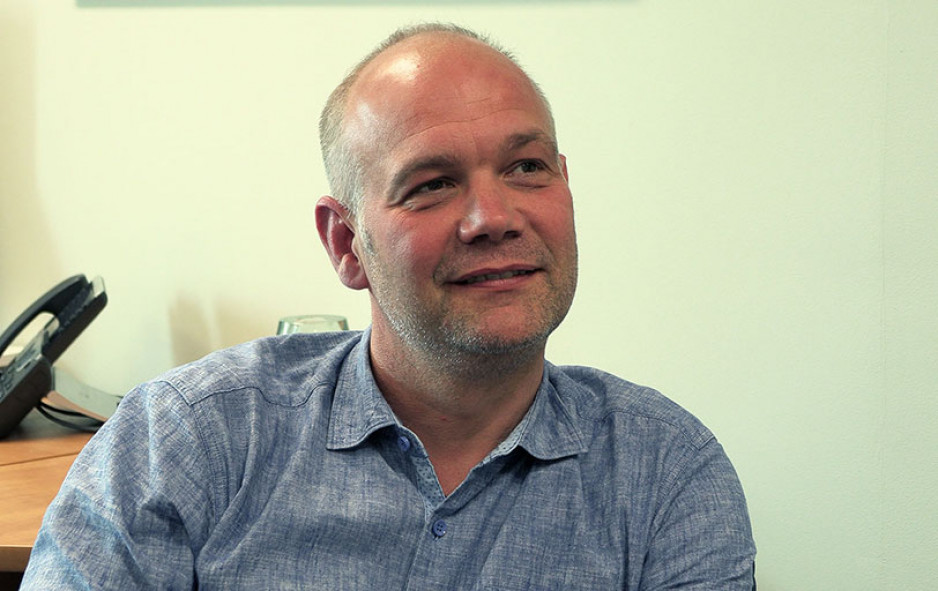
Dr. Chris McIntyre, Scientist at Lawson Health Research Institute, is the first in the world to treat a patient with COVID-19 using a modified dialysis device.
About Lawson Health Research Institute
Lawson Health Research Institute is one of Canada’s top hospital-based research institutes, tackling the most pressing challenges in health care. As the research institute of London Health Sciences Centre and St. Joseph’s Health Care London, our innovation happens where care is delivered. Lawson research teams are at the leading-edge of science with the goal of improving health and the delivery of care for patients. Working in partnership with Western University, our researchers are encouraged to pursue their curiosity, collaborate often and share their discoveries widely. Research conducted through Lawson makes a difference in the lives of patients, families and communities around the world. To learn more, visit www.lawsonresearch.ca.
Media Contacts
Celine Zadorsky
Senior Media Relations Consultant
Communications & Public Engagement
T: 519-685-8500 ext. 73502
Celine.zadorsky@lhsc.on.ca
… other topical products (including cosmetic and skin care products) to areas treated with capsaicin. • If using a … available in Canada are safe to use. Remember, your health care team recommended this medication because the benefit to … other topical products (including cosmetic and skin care products) to areas treated with capsaicin. • If using a …
August 2, 2022; Page 1 of 2 Capsaicin What is capsaicin and why is this medication prescribed? Capsaicin is the ingredient in chili peppers that makes them hot. Capsaicin is also used topically to help relieve pain, particularly nerve pain. Capsaicin helps reduce the amount of a pain-related chemi...
Capturing bacteria’s grand ballet
In a world first, scientists at Lawson Research Institute are leveraging imaging technology to see and track microbes and provide an unprecedented glimpse of the human microbiome.
Within each of us is a world populated by a bustling metropolis of microorganisms – a tapestry of trillions in a delicate dance to balance health, well-being and vitality.
Far outnumbering human cells, this dynamic ecosystem of busy bacteria, industrious fungi and elusive viruses is the body’s microbiome. This invisible hive of ceaseless activity is so intrinsic to human health, its explorers say it should perhaps be considered an organ in its own right.
Now, in a world first, Lawson Health Research scientists studying this microcosmic underworld are making the invisible visible – in real time.
The team of Jeremy Burton, PhD, Research Chair of Human Microbiome and Probiotics and Director of the Canadian Centre for Human Microbiome and Probiotic Research at St. Joseph’s Health Care London (St. Joseph’s), is using imaging technology to see and track microbes, providing a perspective never before achieved.
“Typically, we track microbes by analyzing samples from patients after treatment to improve their gut health with probiotics or microbiota transplantation (FMT),” explains Burton, whose endowed research chair is funded through St. Joseph’s Health Care Foundation. “While we can get detailed information through DNA sequencing techniques, this often takes many months and relies on collecting fecal samples and other samples that may not be easily obtained. It also doesn’t provide all the information we need, like exactly where the microbes have travelled and how long they live.”
'Fantastic insight'
Imaging the microbes allows the Lawson team “to see things in real-time and not worry about clinical samples,” he adds.
Donna Goldhawk, PhD, molecular imaging scientist with Lawson’s Imaging Research Program, explains that imaging is done by attaching a radioactive tracer to cells, such as bacteria, that can be ingested and visualized in the body with positron emission tomography-magnetic resonance imaging (PET/MRI).
Imagine it as a biological version of an AirTag that tracks specific microbes.
“Lawson's environment has been a catalyst for new ideas, collaborations and many Canadian firsts.” - Michael Kovacs, Program Lead, Lawson’s Imaging Research Program, and Lead, Cyclotron & PET Radiochemistry Facility
“It’s through this pipeline that we gain fantastic insight into how the microbiome supports human health,” she says.
As an example, tracking microbes allows the scientists to see if they are close to or crossing over the gut cell wall.
“This is critical information because the proximity of microbes to the cell wall will likely determine if the probiotic or FMT therapy is effective or not,” says Burton. “We can now potentially track microbes that we administer to people in real-time and, in the future, be able to tell how sick people are and if they have a dysfunctional microbiota. Eventually, this information will be linked to their other health information for a complete picture.”

Uniquely St. Joseph’s
He notes the work “could only happen here” at St. Joseph’s, with its leading-edge imaging, production of novel tracers (isotopes) within Lawson’s Cyclotron & PET Radiochemistry Facility, and with world-class collaborative expertise – all fueled by the generosity of donors.
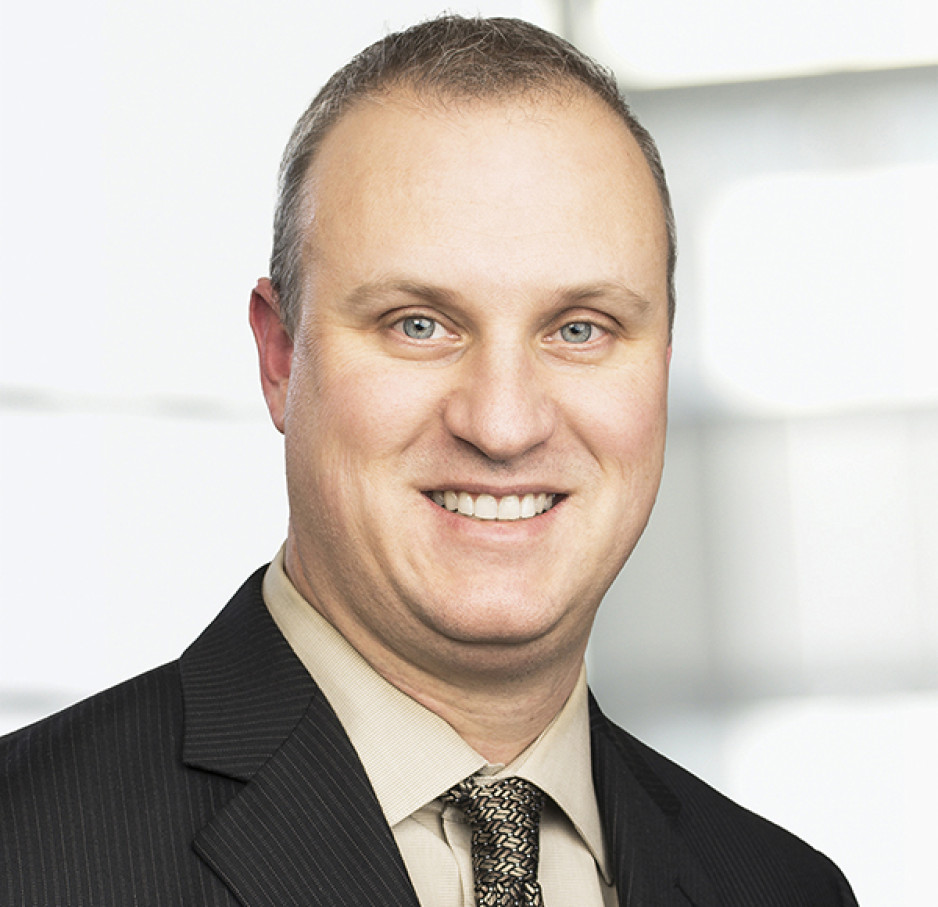
Working with Burton and Goldhawk are Lawson scientists, Michael Kovacs, PhD, Frank Prato, PhD, Dr. Michael Silverman, Seema Nair Parvathy, PhD, and Neil Gelman, PhD.
“This exciting work illustrates how innovative technologies can emerge when diverse groups collaborate closely in a multi-disciplinary approach to research within a hospital setting,” says Michael Kovacs, Program Lead, Lawson’s Imaging Research Program, and Lead, Cyclotron & PET Radiochemistry Facility. “Lawson's environment has been a catalyst for new ideas, collaborations and many Canadian firsts.”
The potential impact cannot be over-stated, adds Burton.
“This is the pathway to revolutionizing the way we understand the microbiome in people,” he says. “We’ve spent so long trying to eradicate microbes and studying the ones that cause ill health. Only relatively recently have we begun to study the ones that cause good health. That’s a dramatic shift in approach and, while we’ve come a long way, we’re really only getting started.”
… BODY, MIND & SPIRIT SINCE 1869 Renowned for compassionate care, St. Joseph's is one of the best academic health care organizations in Canada dedicated to helping people … of injury, disease and disability through excellence in care, teaching and research. \~ SIJOSEPHs H EALT H CA RE …
CARING FOR THE BODY, MIND & SPIRIT SINCE 1869 Renowned for compassionate care, St. Joseph's is one of the best academic health care organizations in Canada dedicated to helping people live to their fullest by minimizing the effects of injury, disease and disability through excellence in care, teachi...
… • • • • • • • • • •• • • • •• • • • • • t~ STJOSEPHs HEALTH CARE LONDON Cardiac Rehabilitation and Secondary Prevention … BODY, MIND & SPIRIT SINCE 1869 Renowned for compassionate care, St. Joseph’s is one of the best academic health care organizations in Canada dedicated to he lping people …
t~ STJOSEPHs HEALTH CARE LONDON Cardiac Rehabilitation and Secondary Prevention Program Patient Education Guide CARING FOR THE BODY, MIND & SPIRIT SINCE 1869 Renowned for compassionate care, St. Josephs is one of the best academic health care organizations in Canada ...
… BODY, MIND & SPIRIT SINCE 1869 Renowned for compassionate care, St. Joseph͛s is one of the best academic health care organizations in Canada dedicated to he lping people … of injury, disease and disability through excellence in care, teaching and research. sjhc.london.on.ca …
Cardiac Rehabilitation and Secondary Prevention Program Lifestyle Change and Self-Management Workbook CARING FOR THE BODY, MIND & SPIRIT SINCE 1869 Renowned for compassionate care, St. Josephs is one of the best academic health care organizations in Canada dedicated to he lping people live to their ...
… has been designated by the Ministry of Health and Long-term Care as a Coordinating site for cardiac rehabilitation … This initiative will place patients at the center of care, increasing awareness of their treatment needs and providing feedback on care management. It has the potential to increase medication …
Guide for Referring Physicians The Cardiac Rehabilitation and Secondary Prevention Program (CRSP) is an out-patient, multidisciplinary program for cardiac surgical and medical patients. Physician referral is required with no fee for service. During the six-month program, patients receive medical man...
… PLEASE FAX YOUR REFERRAL TO: □ St. Joseph’s Health Care London 519-667-6532 □ Windsor Regional Hospital … PLEASE FAX YOUR REFERRAL TO: □ St. Joseph’s Health Care London 519-667-6532 □ Windsor Regional Hospital …
Referral form Cardiac Rehabilitation and Secondary Prevention Ontario Health West Region Patient Name: Address: City: Telephone: D.O.B.: (YYYY/MM/DD) Health Card Number: REFERRING PHYSICIAN INFORMATION: Name (please print): Address: Physician Signature: ___________________________________ Phone Numb...
… Referral Event Date (YYYY/MM/DD): c St. Joseph’s Health Care London 519-667-6532 c Alexandra Hospital c Bluewater … Referral Event Date (YYYY/MM/DD): c St. Joseph’s Health Care London 519-667-6532 c Alexandra Hospital c Bluewater …
Referral to: CARDIAC REHABILITATION & SECONDARY PREVENTION PROGRAM 268 Grosvenor Street, Room B3-689, London, ON N6A 4V2 Telephone: 519-667-6704 / Fax: 519-667-6532 POINT OF REFERRAL: REFERRING CLINICIAN: REFERRAL EVENT: PLEASE INDICATE THE CARDIAC REHABILITATION SITE: 200675 (2013/03/27) NAME: ADDR...
… you of an exciting initiative being led by the Cardiac Care Program and Information Technology Services at London Health Sciences Centre and St. Joseph's Health Care London. This project is part of the Diagnostic eOrders … information to be available to those within the circle of care immediately upon report completion. Once the echo order …
Cardiology eOrders & eReports Implementation Communication April 20, 2012 1 | P a g e This communication is to inform you of an exciting initiative being led by the Cardiac Care Program and Information Technology Services at London Health Sciences Centre and St. Joseph's Health Care London. This pro...
… Care after breast biopsy …
… Care for the Caregiver: Reading the signs …
… INSTALL GUIDE NEW CareLink ™ Personal uploader Upload to CareLink to more easily partner with your Health Care team. Please visit our CareLink Personal website at … INSTALL GUIDE NEW CareLink ™ Personal uploader Upload to CareLink to more easily partner with your Health Care team. …
INSTALL GUIDE NEW CareLink Personal uploader Upload to CareLink to more easily partner with your Health Care team. Please visit our CareLink Personal website at www.carelink.minimed.eu* UPLOAD YOUR PUMP DATA IN ADVANCE TO IMPROVE YOUR DIABETES VISIT. Collaborate with your Health Care team. NEW simp...
Caring for our health care system
8:30pm - 11:00pm
LAWSON PRESENTS CAFÉ SCIENTIFIQUE
Caring for our health care system:
Why we should give a darn about medical research
What does health care mean to Canadians? What about those of us who have experienced a care journey first-hand, either as a patient or family member? Health care is a point of pride in this country, but many Canadians worry that our system is falling behind.
Every day, health researchers are working with patients, industry and other partners to find real and sustainable solutions. Despite recent investments in medical research on a national level after years of underfunding, there is still much work to do.
Join Lawson Health Research Institute for our next Café Scientifique event to hear a panel of researchers talk about what they do and why medical research matters for all of us.
- Dr. Amer Burhan, Geriatric Neuropsychiatrist and Clinician Scientist
- Dr. Kelly Vogt, Trauma and General Surgeon and Clinician Scientist
- MODERATOR – Dr. Cheryl Forchuk, Beryl and Richard Ivey Research Chair in Aging, Mental Health, Rehabilitation and Recovery
Event Details
- Date: Monday, October 7, 2019
- Time: 5-7 pm (doors open at 4:30 pm).
This is NEW timing so that guests are free to watch the English-language leaders’ debate! - Location: Best Western Plus Lamplighter Inn & Conference Centre, 591 Wellington Rd, London, ON N6C 4R3
Map and directions - Parking: Free on-site parking
This is a free event and online registration is REQUIRED.
Click here to register.
Image
Parkwood Institute Acquired Brain Injury Outpatient Program Tip sheet Recognizing and managing anger Anger Anger has many different faces and comes in different shapes, colours and forms. There are at least 10 different stages of anger, ranging from annoyance to being like the Incredible Hulk big, g...
Parkwood Institute Acquired Brain Injury Outpatient Program Tip sheet Light sensitivity What is light and visual motion sensitivity and how can it impact you? Sensitivity to light is a very common symptom after a brain injury/concussion. People often find bright indoor or outdoor light is uncomforta...
Parkwood Institute Acquired Brain Injury Outpatient Program Tip sheet Mindfulness What is mindfulness? The practice of mindfulness involves directing your attention to and maintaining an awareness of the present moment. In simple terms, mindfulness is paying attention to how you feel, what you are t...
Parkwood Institute Acquired Brain Injury Outpatient Program Tip sheet Managing Noise Sensitivity Key points 1. Its very common after a brain injury to find it difficult to be in noisy environments. 2. Being surrounded by sound may bring on your symptoms, perhaps causing you to avoid places and event...
… minor bleeding, swelling and bruising. You will need to care for your wound so that the area heals well. What do I … in seven to ten days by your family doctor or surgeon. Sun care You will need to apply SFP 60 sunscreen to the area on … minor bleeding, swelling and bruising. You will need to care for your wound so that the area heals well. What do I …
Caring for your Wound after Surgery After surgery, you may notice some minor bleeding, swelling and bruising. You will need to care for your wound so that the area heals well. What do I need to do? Keep the area open to air as much as possible. If necessary, the clinic nurse will show you how to a...
Case report describes suspected new type of vaping-related lung injury
A team of authors from Lawson Health Research Institute and University Health Network (UHN) have released details on Canada’s first published case of suspected vaping-related lung injury. Published today in CMAJ, the case study may be the first to describe a new type of injury from vaping products.
The case differs from those described in the recent rise of vaping-related lung injuries called EVALI (e-cigarette or vaping product use associated lung injury), which are characterized by a specific type of damage called alveolar injury. This case instead represents a lung injury that appears similar to “popcorn lung,” a condition seen in microwave popcorn factory workers exposed to the chemical diacetyl. The condition causes bronchiolitis where the small airways in the lungs become inflamed and damaged.
The authors describe a case of life-threatening bronchiolitis in a 17-year-old Ontario male who initially sought care after a week of persistent cough. He was eventually hospitalized needing life support in the intensive care unit. After ruling out other causes in the previously healthy teen, the authors suspected flavoured e-liquids as the culprit. The patient had been vaping daily using a variety of flavoured cartridges and tetrahydrocannabinol (THC).
“This case of life-threatening bronchiolitis was challenging. The damage appeared similar to that seen in factory workers exposed to diacetyl,” explains lead author Dr. Karen Bosma, Associate Scientist at Lawson and Critical Care Specialist at London Health Sciences Centre (LHSC). “Given the patient’s vaping activity and the absence of other causes, we suspect his lungs became damaged from vaping compounds.”
The youth narrowly avoided the need for a double lung transplant. He spent a total of 47 days in hospital and suffered chronic damage to his airways. He is currently recovering from his lengthy intensive care unit stay and is abstaining from e-cigarettes, marijuana and tobacco.
"This case highlights significant harm that could come from vaping. This risk is particularly specific to teens and young people who are the largest users of these products," says Dr. Inderdeep Dhaliwal, Respirologist at LHSC. "Now with awareness, we hope this work stimulates further research on the mechanisms and causation of vaping-associated lung injury."
Earlier this fall, the Middlesex-London Health Unit reported on the youth’s condition as the first case of vaping-related lung injury in Canada as an early warning. This research case study provides detailed medical information on the extent and type of injury, as well as treatment. Emerging reports indicate that e-cigarettes are causing a variety of lung illnesses and injuries. According to a 2017 report, e-cigarettes are the most commonly used nicotine products by Canadian youth with an estimated 272,000 reporting use within the last 30 days.
“E-liquids expose users to several potentially harmful chemicals. While we can’t be sure of the exact mechanism in this case, it was reported to Health Canada for further investigation,” says Dr. Constance Mackenzie, Respirologist and Toxicologist at LHSC and St. Joseph’s Health Care London. “It highlights the need for further research into the safety and toxicity of e-liquid compounds, and awareness of the various types of lung injury that can result from vaping.”
"We want the medical community to be aware that vaping-related lung injury may present in many different ways, and to report any cases to Health Canada for further investigation," says Dr. Simon Landman, Medical Fellow at LHSC. "We are urging patients and their families to take vaping-related lung injury seriously, and recognize that vaping may cause both short- and long-term injury to the lungs."
Image
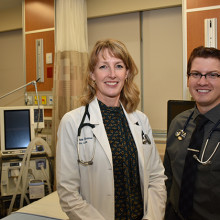
Above: Dr. Karen Bosma, lead author on the paper, and Dr. Simon Landman, first author on the paper