


Search
Search
249 Search Results:
Dear Student, Welcome to the interprofessional practice community at St. Josephs Health Care London! We are delighted that a learning experience at St. Josephs will be part of your professional education. The following information introduces you to: our care and professional practice structures; the...
Student innovators showcase work at London Health Research Day 2025

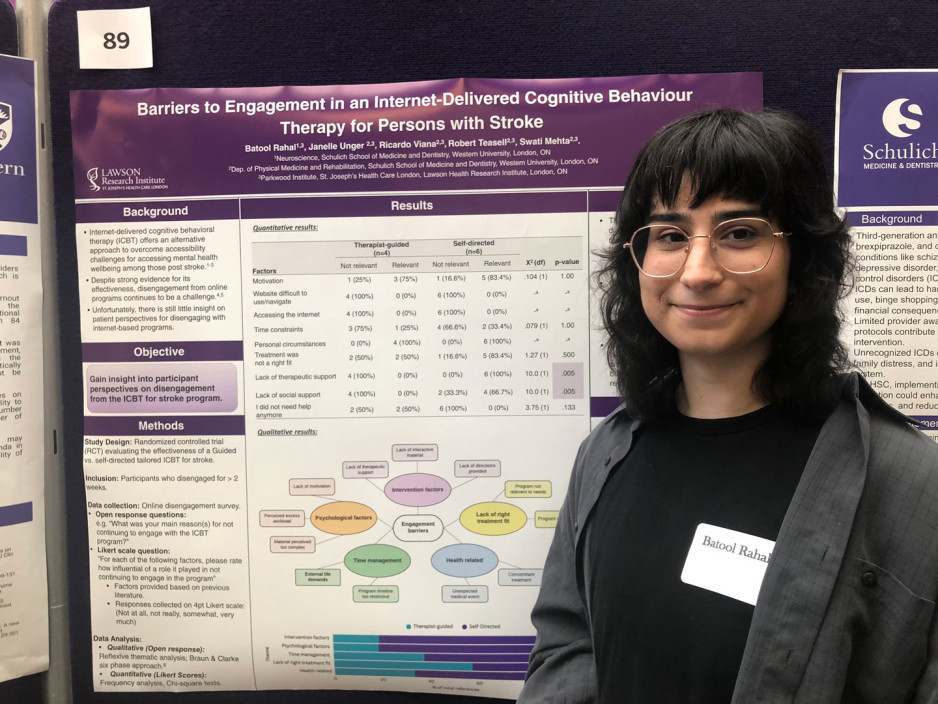
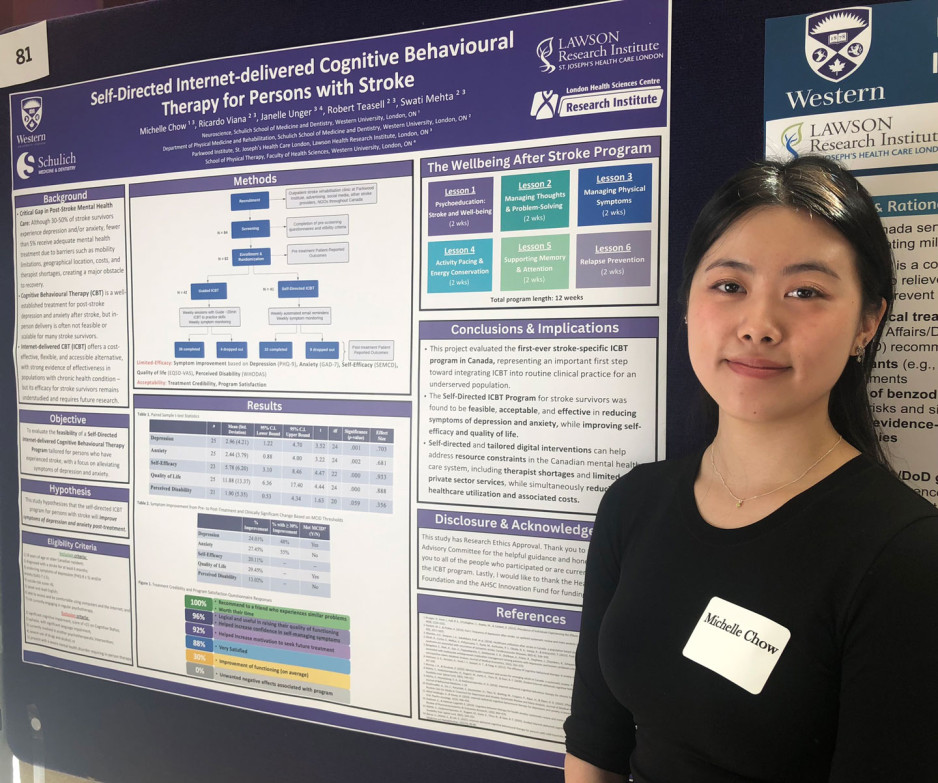
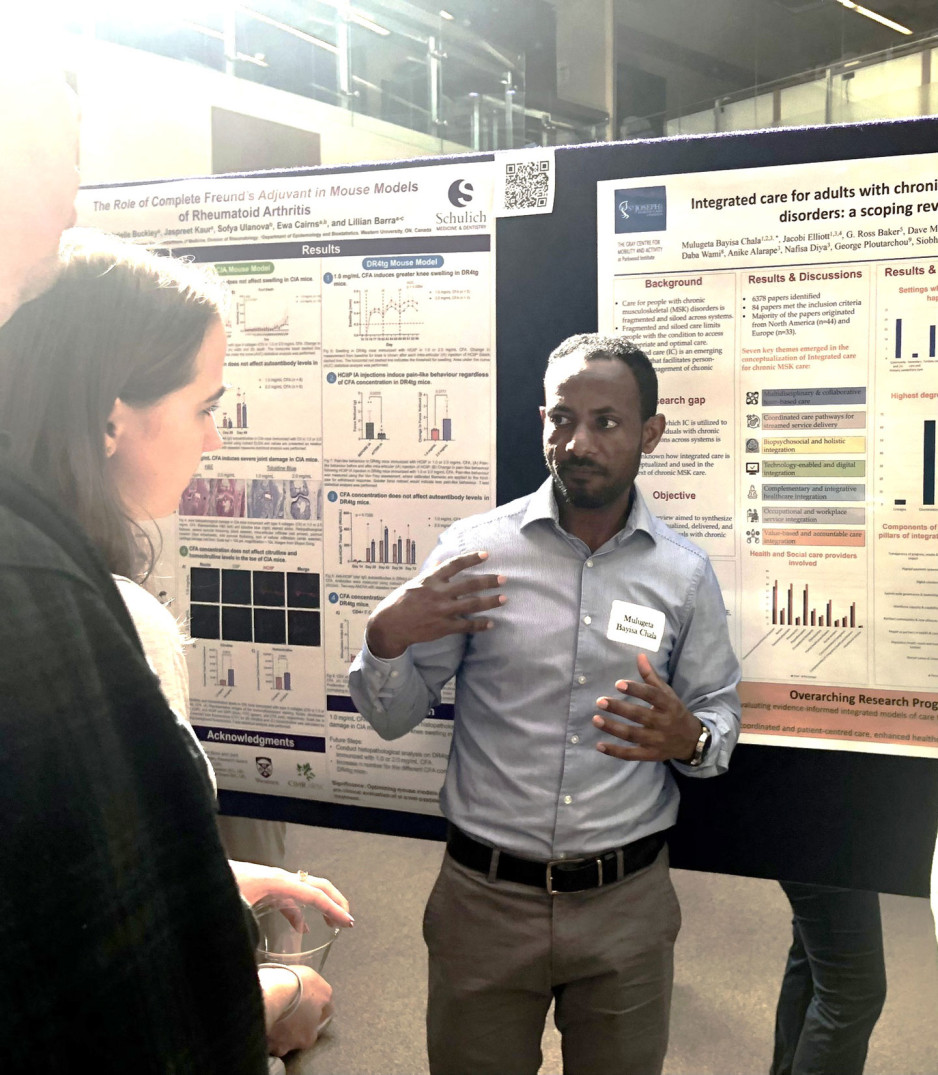
The region’s largest celebration of emerging researchers’ work, London Health Research Day featured oral and poster presentations from undergraduates, grad students, postgraduates and trainees.
They shared their work with peers and globally renowned scientists in an array of specialized health and medical fields.
Their projects were as diverse as concussion treatment for children; large-language models to evaluate cancer diagnoses; brain imaging in people with dementia; and health system change to reduce surgical wait times.
Dozens of projects had Lawson Research Institute connections, included chronic pain’s impact on the brain; self-directed cognitive behavioural therapy for people recovering from stroke; and triaging care for people with shoulder injury.
Participants were also treated to a keynote address by Professor Francesca Ciccarelli, PhD, a global leader in cancer genomics who shared groundbreaking insights into the future of cancer research and precision medicine.
Her presentation was part of the Lucille and Norton Wolf Health Research Lecture Series through the generosity of the Bernard and Norton Wolf Family Foundation.
All told, about 500 people took in the day’s events, including several professional- and career-development workshops.
Partners
Student innovators showcase work at London Health Research Day 2025
The region’s largest celebration of emerging researchers’ work, London Health Research Day featured oral and poster presentations from undergraduates, grad students, postgraduates and trainees.
They shared their work with peers and globally renowned scientists in an array of specialized health and medical fields.
Their projects were as diverse as concussion treatment for children; large-language models to evaluate cancer diagnoses; brain imaging in people with dementia; and health system change to reduce surgical wait times.
Dozens of projects had Lawson Research Institute connections, included chronic pain’s impact on the brain; self-directed cognitive behavioural therapy for people recovering from stroke; and triaging care for people with shoulder injury.
Participants were also treated to a keynote address by Professor Francesca Ciccarelli, PhD, a global leader in cancer genomics who shared groundbreaking insights into the future of cancer research and precision medicine.
Her presentation was part of the Lucille and Norton Wolf Health Research Lecture Series through the generosity of the Bernard and Norton Wolf Family Foundation.
London Health Research Day is a shared project of Western’s Schulich School of Medicine & Dentistry, the Faculty of Health Sciences, Lawson Research Institute of St. Joseph's Health Care London and London Health Sciences Centre Research Institute.
All told, about 500 people took in the day’s events, including several professional- and career-development workshops.
Study will use 3D bio-artificial tissue model to improve understanding of wound healing after glaucoma surgery
James Armstrong, an MD/PhD student at Western University’s Schulich School of Medicine & Dentistry conducting research at Lawson Health Research Institute, is creating a 3D bio-artificial tissue model to study wound healing following glaucoma surgery.
There are currently no curative treatments for glaucoma, the leading cause of irreversible blindness world-wide. The only therapy that can delay the progression of the disease is the reduction of intra-ocular pressure, which can be accomplished by taking drugs or undergoing surgery. Surgery is usually a last resort if pharmacological treatment is unsuccessful as many of these surgeries fail due to excessive healing of the surgical wound. A dense, scar-like tissue can develop at the surgical site, which blocks the pressure-lowering effect and leads to surgical failure, revision and even blindness.
Armstrong will identify risk factors for fibrotic glaucoma surgery failure through reviews of electronic patient records and literature. Using the constructed model of the ocular tissue involved in glaucoma surgery, he will simulate the surgical wound to study the physiology of how the tissue heals and test potential drugs designed to modulate the wound healing process.
The project has been awarded a Lawson Internal Research Fund (IRF) Studentship, and is supervised by Lawson scientist and St. Joseph’s Health Care London physician Dr. Cindy Hutnik.
“Right now there is a shift happening towards earlier surgical interventions for glaucoma so an understanding of the wound healing response is critical to ensure safe and successful outcomes for patients,” Armstrong says. “Future work in this area could include developing a diagnostic test to inform physicians of a patients’ likelihood of excessive healing before the patient even sets foot in the operating room. This will allow surgeons to ‘customize’ how they pre-treat each individual patient with wound healing modulating drugs.”
Although this study is focused on wound healing within the eye, the same processes are at work in many other diseases. Understanding and having the ability to manipulate wound healing mechanisms could have widespread applicability, not only for glaucoma, but also for other diseases such as atherosclerosis, interstitial pulmonary fibrosis, hepatic fibrosis, systemic sclerosis or muscular dystrophy, as well as heart, kidney or liver failure.
“The IRF has given me the opportunity to pursue research in an area where any progress could impact a significant portion of the population,” Armstrong says. “It’s a great way for researchers who are early in their career to get a foot in the door. It allows them to collect the amount of data necessary to receive funding from larger granting agencies.”
The IRF is designed to provide Lawson scientists and students the opportunity to obtain start-up funds for new projects with the potential to obtain larger funding, be published in a high-impact journal, or provide a clinical benefit to patients. Funding is provided by the clinical departments of London Health Sciences Centre and St. Joseph’s Health Care London, as well as the hospital foundations (London Health Sciences Foundation and St. Joseph's Health Care Foundation).
Image
Scientist
Tomorrow’s scientists tour Lawson research facilities
A group of senior chemistry students from H.B. Beal Secondary School visited Lawson Health Research Institute (Lawson) facilities at St. Joseph’s Hospital on Wednesday, November 8. In addition to learning about Lawson’s world-renowned imaging research, the group toured the Cyclotron and PET Radiochemistry Facility and Dr. Alexandre Legros’ brain stimulation lab.
The students first learned about Lawson’s simultaneous PET/MRI – the first in Canada – and its associated research. Led by Dr. Jonathan Thiessen, Lawson imaging scientist, the presentation focused on the benefits of combining Positron Emission Tomography (PET) with Magnetic Resonance Imaging (MRI) across multiple disciplines.
Image
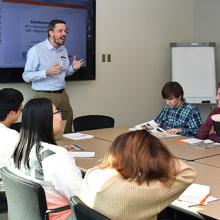
Above: Dr. Jonathan Thiessen discusses Lawson's simultaneous PET/MRI
Benjamin Wilk, a PhD candidate working under Dr. Thiessen’s supervision, presented on his research which is focused on developing methods to image the heart after myocardial infarction, or heart attack, using PET/MRI. Qi Qi, another of Dr. Thiessen’s PhD candidates, discussed his research that looks at multimodal imaging to evaluate tumour perfusion and glycolysis in brain tumours.
"It is an incredible opportunity to present our work to high school students,” said Dr. Thiessen. “By seeing examples of the research happening in their own community, my hope is that some of them will be inspired and work hard to become the scientists and healthcare professionals of tomorrow."
The students were then split into two tour groups. The first group toured Lawson’s Nordal Cyclotron and PET Radiochemistry Facility with the facility’s director, Dr. Michael Kovacs; Jeff Corsaut, engineer; and Dr. Justin Hicks, Lawson imaging scientist.
Image
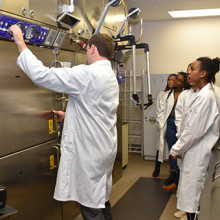
Above: Dr. Justin Hicks provides a tour of The Cyclotron and PET Radiochemistry Facility
The Cyclotron and PET Radiochemistry Facility is used to produce positron-emitting radiopharmaceuticals (PERs). PERs are injected into patients undergoing a positron emission tomography (PET) scan. The half-life of the radioactive isotopes in PERs is short, which necessitates generating them with a cyclotron that is in close proximity to the clinic where they are used.
The students learned how PERs are produced in the Cyclotron and research being conducted with PERs to advance imaging of complex diseases.
The second group toured Dr. Alexandre Legros’ brain stimulation lab which is part of the Bioelectromagnetics and Human Threshold Research Group at Lawson. Dr. Legros’ research focuses on the effects of specific electromagnetic stimuli - from deep brain stimulation to power-frequency magnetic fields - on human brain processing, motor control and cognitive functions. The students were guided by lab manager, Michael Corbacio, and postdoctoral scholar, Dr. Sebastien Villard.
Image
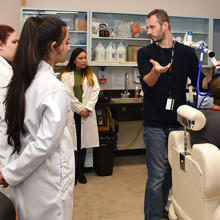
Above: Dr. Sebastien Villard (second from right) and Michael Corbacio (far right) provide a demonstration of research being conducted in Dr. Alexandre Legros' Bioelectromagnetics and Human Threshold Research Group
The two groups of students then traded places, touring the facility they had not yet visited.
“The H.B Beal senior chemistry class was impressed and grateful with the opportunity to visit the facilities at Lawson Health Research Institute,” said Andrew Holmes, the class’ teacher and head of science at H.B. Beal. “The presentations, cyclotron tour and research lab gave students some valuable insight into some of the roads available to them with a scientific path in education. Students were particularly impressed with how enthusiastic and excited the researchers were in talking about their work at Lawson, and came away with a very positive view of scientific career paths.”
Scientist
Two Lawson researchers each receive $400K CIHR grants to improve kidney care
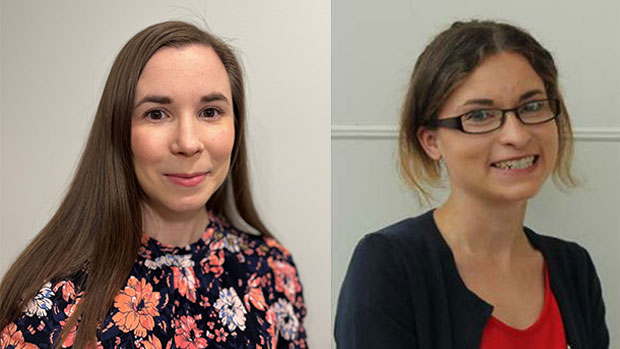
Two researchers at Lawson Health Research Institute have each been awarded $400,000 as part of the Canadian Institute of Health Research’s (CIHR) new Health System Impact Embedded Early Career Researcher Awards.
The funding will see the researchers apply their skills to find and implement solutions to improve kidney care by focusing on challenges in the health-care system.
Dr. Kyla Naylor and Dr. Danielle Nash will each spend four years working with provincial organizations. Dr. Naylor will work with the Trillium Gift of Life Network -Ontario Health, which is the organization responsible for coordinating provincial organ and tissue donation and transplant services. Dr. Nash will work with the Ontario Renal Network - Ontario Health, which is the organization responsible for managing delivery of advanced kidney services in the province.
“The treatment options for kidney failure is either a kidney transplant or dialysis. The majority of Canadians who have kidney failure receive dialysis,” says Dr. Naylor, who is an Associate Scientist at Lawson and an Adjunct Scientist at ICES. “However, a kidney transplant compared to dialysis can improve a patients’ quality of life, can give on average 10 more years of survival, and when compared to dialysis, can save the health-care system millions of dollars.”
In her research program, Dr. Naylor will begin by developing a kidney transplant measurement framework that will enable continuous performance monitoring and increase equitable access to transplant.
“The first goal of this project will allow kidney transplant centres and regional renal programs to evaluate their performance and set goals towards improvement,” Dr. Naylor says. “The second is to improve kidney transplant education materials to provide patients with the information to make an informed decision about kidney transplant, and the third is to address geographical barriers to transplantation.”
Dr. Naylor will be using ICES data, which includes administrative health-care data for Ontario’s 14.5 million residents, with the goal of eventually making access to kidney transplantation more equitable for the thousands of Canadians living with kidney failure.
The goal of Dr. Nash’s research program is to use a learning health system model to better understand patient-identified gaps in kidney care across Ontario, and to develop solutions to fill these gaps in collaboration with the Ontario Renal Network and patient partners.
“Chronic kidney disease is a serious illness that can lead to kidney failure. The best way to prevent kidney failure is to detect chronic kidney disease early and provide optimal care during this time,” explains Dr. Nash, who is also an Epidemiologist and Scientist with London Health Science Centre’s (LHSC) Kidney Dialysis and Transplantation Program. “Since many patients do not have symptoms, it can go unnoticed for a long time. However, it can be detected using simple blood and urine tests.”
Province-wide data from ICES Ontario and the Ontario Renal Network will be used for the research data.
As part of both studies, the researchers will also be interviewing health-care providers and patients to assess additional barriers to treatment.
“One in four patients do not see a nephrologist in a timely manner and 60 per cent are not receiving adequate time in multidisciplinary kidney care clinics before initiating dialysis,” says Dr. Nash. “Education on treatment options (typically dialysis or a kidney transplant) needs to happen early for patients who are at high risk for kidney failure, so they can make an informed decision about treatment.”
Partners
Media Contact
Amanda Taccone
Communications Consultant & External Relations
Lawson Health Research Institute
T: 519-685-8500 ext. ext. 64059
C: 226-919-4748
@email
Understanding the vaginal microbiome essential to human health
There are trillions of microorganisms inhabiting your body. The majority of these are positive and essential to your health. They include those microorganisms found in the female reproductive system – a highly diverse environment that is crucial to human survival.
Understanding the microorganisms that inhabit the vagina, also known as the vaginal microbiome, is extremely important for women, their offspring and sexual partners. Dr. Gregor Reid recognizes this importance through his research into lactobacilli, the dominant organisms present in the healthy vagina of most women.
Dr. Reid is a Lawson microbiome and probiotics scientist and director of the Canadian Research and Development Centre for Probiotics. His interest in the vaginal microbiome began over 33 years ago.
“In the human gut, the microbiome differs with diet. But there is a global similarity to the vaginal microbiome,” said Dr. Reid. “From early in my career, I suspected a connection between this uniformity and the female’s critical role in reproduction.”
Harmful bacteria, also known as pathogens, can invade the vaginal microbiome to produce a more highly diverse state. This leads to the displacement of lactobacilli. It can also lead to bacterial vaginosis (BV) and the easier contraction of urinary tract infections (UTIs). These two ailments account for numerous physician visits each year and a reduction in a woman’s quality of life.
Mediating pregnancy and infant development
Research suggests that lactobacilli mediate complex changes that occur during pregnancy. If harmful pathogens invade and persist, inflammation and premature delivery can occur during pregnancy.
“The mechanisms behind the displacement of lactobacilli are not clear,” says Dr. Reid. “However, a number of factors can increase risk of BV. These include douching, sexual intercourse, lower estrogen levels and aging. It’s crucial that we conduct further research into these processes.”
Studies also suggest that the human fetus is exposed to the mother’s lactobacilli prior to birth, in addition to exposure during vaginal birthing. Again, understanding of this process and its significance is limited but warrants further investigation, says Reid. We need to further understand how exposure affects an infant’s immunity, metabolism and behavior in both early and later life.
“We’re seeing a dramatic rise in C-sections and a drop in breastfeeding,” says Reid. “If a developing child is not fully exposed to the mother’s lactobacilli, does this provide an opportunity for harmful bacteria to proliferate? This may cause repercussions to the offspring’s own future reproductive health.”
The role of probiotics
As research begins to focus on restoring a lactobacilli-dominant state, probiotics have been explored. However, attempts have presented challenges. “When probiotics are administered vaginally in a dried form, the lactobacilli fail to colonize long-term,” says Dr. Reid. “A study introducing lactobacilli in more natural form may lead to successful colonization. This has been the case in other areas like fecal transplantation.”
Challenges and opportunities
There are a number of other challenges when it comes to the study of the vaginal microbiome. This includes the lack of suitable animal models. While there have been recent developments that may lead to better recreations of a female microbiome, Dr. Reid explains that it will be difficult to mimic the many complexities of the female reproduction system. These include the menstrual cycle, immune responses, the use of douches, sexual intercourse and more.
“To fully understand female health, reproduction and infant development, we need to better understand lactobacilli,” said Dr. Reid. “We know that lactobacilli may help to combat herpes and environmental toxins, improve sperm motility, and even self-cure episodes of UTI and/or BV. What we are slowly uncovering is an understanding of the processes behind these interactions.”
Dr. Reid recently published a paper on this subject, "Cervicovaginal Microbiomes–Threats and Possibilities", in the publication Trends in Endocrinology & Metabolism. Dr. Reid’s own research is currently focused on compounds with the capacity to expand the proportion of lactobacilli at the expense of pathogens. The goal of this research is to improve the health of women across Canada and around the world.
Scientist
Work with Us: Scientist Opportunities
Current Scientist Opportunities
Find other career opportunities with Lawson Research Institute posted in St. Joseph's Careers portal.
Youth report improved wellbeing as result of tailored mental health services, study finds
In a new study from Lawson Health Research Institute and Western University, researchers partnered with youth receiving care at the First Episode Mood and Anxiety Program (FEMAP) at London Health Sciences Centre (LHSC) to better understand personal perspectives on care and treatment outcomes. The study found that patients experienced lasting improvements in managing their symptoms and improvements in academics, work performance and relationships, and they reported that these benefits involved being empowered by feelings of self-acceptance.
The study included 22 patients from FEMAP, a novel outpatient mental health program at LHSC that provides treatment to ‘emerging adults,’ ages 16 to 25, with emotional concerns that fall into the categories of mood and anxiety symptoms. Treatment at FEMAP takes a patient-centred approach and the research involved looking at what is meaningful and valuable to patients during their care journey.
“The transition from adolescence to adulthood is challenging. FEMAP employs an innovative model of care tailored to the needs of this complex population,” said Dr. Elizabeth Osuch, a clinician-scientist at Lawson, associate professor at Western University’s Schulich School of Medicine & Dentistry and medical director at FEMAP. “By engaging patients in a reflection of their experience, we can learn how effective the program is from the patient perspective.”
Participants shared their experiences through open-ended interviews with Dr. Osuch’s research team. Interview transcripts were collected and analyzed to determine common themes around treatment and outcomes. These themes were then presented back to the research participants for validation.
The study found that treatment led to development of coping strategies to better manage symptoms. Research participants credited these strategies for better functioning in academics, careers and personal relationships. Challenges in these areas are common among emerging adults and are often stressors that lead to youth seeking mental health care.
Participants characterized their treatment at FEMAP as an important investment in their mental health and wellbeing, and credited a collaborative partnership with their care provider for keeping them engaged in treatment. They appreciated the ease of accessing treatment at FEMAP where they could receive care from a psychiatrist, social worker, addictions counsellor, family counsellor and a psychologist, depending on their needs.
The research found that the complexities of treatment were initially frustrating to patients as they were seeking an “easy fix” to their mental health concerns, but they ultimately appreciated that mental health recovery is a journey. They valued that care providers partnered with them to set long-term treatment goals, choose the best treatment options and provide support both during and between appointments.
“Patients may prefer FEMAP over other mental health services because the care is tailored to emerging adults,” said Justin Arcaro, first author on the study and a former MSc candidate at Schulich Medicine & Dentistry and research associate at FEMAP. “There’s an important balance between recognizing emerging adults’ personal autonomy and their need for comprehensive support.”
Study results demonstrated that through treatment at FEMAP, patients realized they are not alone in their mental health journey which led to improved self-acceptance and self-compassion. Participants reported feeling empowered to create meaningful changes in their lives.
Participants also discussed the decision to seek mental health care in the first place. Many struggled with the decision of whether or not treatment was needed. “This shows a need for targeted campaigns to help emerging adults distinguish between normative feelings and those that indicate a need for help,” said Dr. Osuch.
This study also aligns with other research projects at FEMAP that suggest a need for targeted education campaigns about mental health care as a process with solutions that are not necessarily quick or easy. The research team highlights the importance of these findings in informing future funding decisions and policy around mental health care for emerging adults. The findings emphasize the need for quick engagement with a trusted care provider and an integrated treatment team that can partner with patients to support them while enhancing independent growth and self-acceptance.
The study, “Emerging adults’ evaluation of their treatment in an outpatient mood and anxiety disorders program,” is published in Emerging Adulthood.
Image
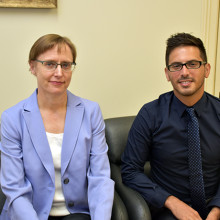
Above: Dr. Elizabeth Osuch and Justin Arcaro
Scientist