


Search
Search
1863 Search Results:
Canadian researchers will test a promising new fecal microbiota treatment on patients to cure advanced melanoma
The Canadian Cancer Society (CCS) is uniting with a team of 12 researchers and collaborators to lead one of the world’s largest randomized controlled clinical trials using fecal microbiota transplantation (FMT) to improve the effectiveness of the standard of care for advanced melanoma. This phase II trial is made possible by investments of $1 million each from CCS and the Weston Family Foundation and will be overseen by the Canadian Cancer Trials Group.
An estimated 11,300 Canadians are expected to be diagnosed with melanoma in 2024. The current standard of care for patients with advanced melanoma is a type of immunotherapy called immune checkpoint blockade (ICB) and while it plays an important role in treatment, more than half of patients will still experience disease progression and unfortunately die of the disease. Finding a path to make this treatment effective for more people would have enormous impact on patient care and significantly improve the odds of surviving advanced melanoma.
The funding from CCS and the Weston Family Foundation supports all translational research and part of the trial costs (study ME17). The study is being co-led by researchers from Université de Montréal's affiliated hospital research centre (CRCHUM) and Lawson Health Research Institute, alongside collaborators and close to 130 patients with advanced melanoma who will be recruited throughout Canada to participate in this study.
The phase II trial builds on previous research that also received funding support from CCS. Those studies showed the safety and therapeutic potential of using healthy donors’ stool to influence a patient’s gut microbiota and make treatment for advanced melanoma more effective. The study will administer fecal microbiota transplants using specially-prepared oral capsules produced and pioneered at Lawson Health Research Institute, which have been a game changer in patient acceptance and ease of use.
For the past five years, the Weston Family Foundation has supported Canadian researchers working to leverage the microbiome to improve cancer diagnostics, therapy and patient care.
The biggest and most critical issues related to cancer, such as improving treatment effectiveness for people living with melanoma, are issues that require collaboration. From researchers to clinical trial leaders, to academic and scientific institutions, to caring funders and generous donors, it takes a society to transform cancer. To support cancer research and clinical trials, visit cancer.ca.
Quotes
“What saved me was trusting the scientists who knew what they were doing and the promising results of the clinical trial. To someone who is diagnosed, I would say that if you are offered this treatment, it may sound strange, but it is to help you. Thank you to the partners and the CRCHUM team for their support and for the treatments that went wonderfully well and saved my life." - Louise-Hélène Giroux, diagnosed in 2021 with stage 4 melanoma, first patient in the phase I clinical trial in Quebec to try FMT treatment
“Because of the generosity of our donors, we are able to invest in world-leading cancer research and clinical trials like this trial focused on advanced melanoma. In 2020, together with the Lotte and John Hecht Memorial Foundation, we committed nearly $1.5M into this research through an Impact Grant. Today, we are joining with the Weston Family Foundation to double down on our original investment through this clinical trial because we believe this work will transform the future of melanoma, saving lives and bringing hope to thousands of people facing the disease every year in this country.” – Dr. Stuart Edmonds, Executive Vice President, Mission, Research and Advocacy, Canadian Cancer Society
“The Weston Family Foundation is thrilled to support this pioneering research into the role of the microbiome in the fight against cancer, which has real potential to transform treatments and care for this devastating disease. It's a bold step forward in our mission to invest in innovation that delivers measurable impacts to the well-being of Canadians. Working alongside forward-thinking researchers and partners like the Canadian Cancer Society will make way for advancements that help to bring hope to patients and families affected by melanoma.” – Garfield Mitchell, Chair, Weston Family Foundation
“We are aiming to safely change the patient’s gut microbiota to improve the benefit of immunotherapy in several cancers, including melanoma. This experimental treatment consists of transplanting stool from healthy donors using a Health Canada-approved process - known as fecal microbiota transplantation (FMT). With this investment, we can pursue our randomized trial, with the goal of improving the lives of patients with advanced melanoma. We are optimistic that we will see promising results.” – Dr. Arielle Elkrief, principal investigator, Clinician-Scientist, Université de Montréal-affiliated hospital research centre (CRCHUM)
“Our early research has shown the safety of combining FMT with immunotherapy and that it may improve outcomes for patients with melanoma. Through this new trial, we hope to demonstrate that the combination is more effective than immunotherapy alone. A positive result would lead to a phase III trial with the potential to make FMT with immunotherapy the new standard of care.” - Dr. John Lenehan, Medical Oncologist at the Verspeeten Family Cancer Centre at London Health Sciences Centre and Associate Scientist at Lawson Health Research Institute, Co-chair of ME17 trial
The researchers and collaborators
The phase II clinical trial, known as the ME17 Fecal microbiota transplantation (FMT) in combination with immune checkpoint blockade in patients with advanced melanoma: A randomized phase II trial, involves several highly collaborative experts who will be working with the Canadian Cancer Trials Group (CCTG) who will administer the trial nationally. For the translational research associated with the trial, the project team includes:
Co-Principal Investigators:
Dr. Janet Dancey, Medical Oncologist and Professor, Queen’s University, Director of the Canadian Cancer Trials Group
Dr. Arielle Elkrief, Clinician-Scientist and Assistant Professor, Université de Montréal-affiliated hospital research centre (CRCHUM)
Dr. John Lenehan, Medical Oncologist at LHSC’s Verspeeten Family Cancer Centre, Associate Scientist, Lawson Health Research Institute
Dr. Bertrand Routy, Clinician-Scientist and Associate Professor, Université de Montréal-affiliated hospital research centre (CRCHUM)
Dr. Saman Maleki, Scientist, Lawson Health Research Institute, London Health Sciences Centre's (LHSC) Verspeeten Family Cancer Centre and Ontario Institute of Cancer Research (OICR)
Dr. Michael Silverman, Scientist, Lawson Health Research Institute, Medical Director of the Infectious Disease Care Program at St. Joseph’s Health Care London
Collaborators:
Dr. Seema Parvathy, Lawson Health Research Institute
Dr. Marcus Butler, Leader of the CCTG Melanoma Disease Site Committee, Princess Margaret Cancer Center
Dr. Rahima Jamal, hemato-oncologist, researcher and medical director at the Unit for Innovative Therapies (Phase I-II Unit), Université de Montréal-affiliated hospital research centre (CRCHUM)
Dr. Ian Watson, Associate Professor and Co-chair CCTG Melanoma Disease Committee, McGill University
Dr. Bingshu Chen, Professor, Queen’s University
Dr. Meriem Messaoudene, Research Associate, Université de Montréal-affiliated hospital research centre (CRCHUM)
About the Canadian Cancer Society
The Canadian Cancer Society works tirelessly to save and improve lives. We raise funds to fuel the brightest minds in cancer research. We provide a compassionate support system for all those affected by cancer, across Canada and for all types of cancer. Together with patients, supporters, donors and volunteers, we work to create a healthier future for everyone. Because to take on cancer, it takes all of us. It takes a society. Help us make a difference. Call 1-888-939-3333 or visit cancer.ca today.
About the Weston Family Foundation
At the Weston Family Foundation (formerly The W. Garfield Weston Foundation), more than 60 years of philanthropy have taught us that there’s a relationship between healthy landscapes and healthy people. That’s why we champion world-class health research and innovation with the same passion that we support initiatives to protect and restore biodiversity on our unique landscapes. We take a collaborative approach to philanthropy, working alongside forward-thinking partners to advance Canada and create lasting impacts. We aspire to do more than provide funding; we want to enable others to find transformational ways to improve the well-being of Canadians.
Research Area
Scientist
… be completed and request form submitted by Department to Medical Affairs for the Joint Professional Staff Human … at this stage. JPSHRC approves position for Recruitment. Medical Affairs sends notification to department to proceed … and sends them, along with the three references, to the Medical Affairs Human Resource Planning and Credentialing …
Canadian Trained Professional Staff in an Academic Appointment New positions requires that Part A of the Position/Candidate Impact Summary Form be completed and request form submitted by Department to Medical Affairs for the Joint Professional Staff Human Resource Committee (JPSHRC) to Review. The A...
… The 8% capsaicin patch available in Europe requiring medical supervision for application is NOT available in … The 8% capsaicin patch available in Europe requiring medical supervision for application is NOT available in …
August 2, 2022; Page 1 of 2 Capsaicin What is capsaicin and why is this medication prescribed? Capsaicin is the ingredient in chili peppers that makes them hot. Capsaicin is also used topically to help relieve pain, particularly nerve pain. Capsaicin helps reduce the amount of a pain-related chemi...
CARING FOR THE BODY, MIND & SPIRIT SINCE 1869 Renowned for compassionate care, St. Joseph's is one of the best academic health care organizations in Canada dedicated to helping people live to their fullest by minimizing the effects of injury, disease and disability through excellence in care, teachi...
t~ STJOSEPHs HEALTH CARE LONDON Cardiac Rehabilitation and Secondary Prevention Program Patient Education Guide CARING FOR THE BODY, MIND & SPIRIT SINCE 1869 Renowned for compassionate care, St. Josephs is one of the best academic health care organizations in Canada ...
… II you 113,e pain other 1han simple siiWness or an e:dll°' medical condlUon (indudl,_ pregnanq) ii Is essfflial 10 … you notify the rehab trainers if you: o Have had any medical issue that may affect your ability to exercise … II you 113,e pain other 1han simple siiWness or an e:dll°' medical condlUon (indudl,_ pregnanq) ii Is essfflial 10 …
Cardiac Rehabilitation and Secondary Prevention Program Lifestyle Change and Self-Management Workbook CARING FOR THE BODY, MIND & SPIRIT SINCE 1869 Renowned for compassionate care, St. Josephs is one of the best academic health care organizations in Canada dedicated to he lping people live to their ...
… multidisciplinary program for cardiac surgical and medical patients. Physician referral is required with no fee … for service. During the six-month program, patients receive medical management, an exercise program and cardiac risk … partnership with the London YMCA. Program Highlights Medical assessment (including exercise stress testing) …
Guide for Referring Physicians The Cardiac Rehabilitation and Secondary Prevention Program (CRSP) is an out-patient, multidisciplinary program for cardiac surgical and medical patients. Physician referral is required with no fee for service. During the six-month program, patients receive medical man...
Caring for our health care system
8:30pm - 11:00pm
LAWSON PRESENTS CAFÉ SCIENTIFIQUE
Caring for our health care system:
Why we should give a darn about medical research
What does health care mean to Canadians? What about those of us who have experienced a care journey first-hand, either as a patient or family member? Health care is a point of pride in this country, but many Canadians worry that our system is falling behind.
Every day, health researchers are working with patients, industry and other partners to find real and sustainable solutions. Despite recent investments in medical research on a national level after years of underfunding, there is still much work to do.
Join Lawson Health Research Institute for our next Café Scientifique event to hear a panel of researchers talk about what they do and why medical research matters for all of us.
- Dr. Amer Burhan, Geriatric Neuropsychiatrist and Clinician Scientist
- Dr. Kelly Vogt, Trauma and General Surgeon and Clinician Scientist
- MODERATOR – Dr. Cheryl Forchuk, Beryl and Richard Ivey Research Chair in Aging, Mental Health, Rehabilitation and Recovery
Event Details
- Date: Monday, October 7, 2019
- Time: 5-7 pm (doors open at 4:30 pm).
This is NEW timing so that guests are free to watch the English-language leaders’ debate! - Location: Best Western Plus Lamplighter Inn & Conference Centre, 591 Wellington Rd, London, ON N6C 4R3
Map and directions - Parking: Free on-site parking
This is a free event and online registration is REQUIRED.
Click here to register.
Image
… is in transitional parts of the day, such as between medical appointments, between meetings, before your kids … is in transitional parts of the day, such as between medical appointments, between meetings, before your kids …
Parkwood Institute Acquired Brain Injury Outpatient Program Tip sheet Mindfulness What is mindfulness? The practice of mindfulness involves directing your attention to and maintaining an awareness of the present moment. In simple terms, mindfulness is paying attention to how you feel, what you are t...
Case report describes suspected new type of vaping-related lung injury
A team of authors from Lawson Health Research Institute and University Health Network (UHN) have released details on Canada’s first published case of suspected vaping-related lung injury. Published today in CMAJ, the case study may be the first to describe a new type of injury from vaping products.
The case differs from those described in the recent rise of vaping-related lung injuries called EVALI (e-cigarette or vaping product use associated lung injury), which are characterized by a specific type of damage called alveolar injury. This case instead represents a lung injury that appears similar to “popcorn lung,” a condition seen in microwave popcorn factory workers exposed to the chemical diacetyl. The condition causes bronchiolitis where the small airways in the lungs become inflamed and damaged.
The authors describe a case of life-threatening bronchiolitis in a 17-year-old Ontario male who initially sought care after a week of persistent cough. He was eventually hospitalized needing life support in the intensive care unit. After ruling out other causes in the previously healthy teen, the authors suspected flavoured e-liquids as the culprit. The patient had been vaping daily using a variety of flavoured cartridges and tetrahydrocannabinol (THC).
“This case of life-threatening bronchiolitis was challenging. The damage appeared similar to that seen in factory workers exposed to diacetyl,” explains lead author Dr. Karen Bosma, Associate Scientist at Lawson and Critical Care Specialist at London Health Sciences Centre (LHSC). “Given the patient’s vaping activity and the absence of other causes, we suspect his lungs became damaged from vaping compounds.”
The youth narrowly avoided the need for a double lung transplant. He spent a total of 47 days in hospital and suffered chronic damage to his airways. He is currently recovering from his lengthy intensive care unit stay and is abstaining from e-cigarettes, marijuana and tobacco.
"This case highlights significant harm that could come from vaping. This risk is particularly specific to teens and young people who are the largest users of these products," says Dr. Inderdeep Dhaliwal, Respirologist at LHSC. "Now with awareness, we hope this work stimulates further research on the mechanisms and causation of vaping-associated lung injury."
Earlier this fall, the Middlesex-London Health Unit reported on the youth’s condition as the first case of vaping-related lung injury in Canada as an early warning. This research case study provides detailed medical information on the extent and type of injury, as well as treatment. Emerging reports indicate that e-cigarettes are causing a variety of lung illnesses and injuries. According to a 2017 report, e-cigarettes are the most commonly used nicotine products by Canadian youth with an estimated 272,000 reporting use within the last 30 days.
“E-liquids expose users to several potentially harmful chemicals. While we can’t be sure of the exact mechanism in this case, it was reported to Health Canada for further investigation,” says Dr. Constance Mackenzie, Respirologist and Toxicologist at LHSC and St. Joseph’s Health Care London. “It highlights the need for further research into the safety and toxicity of e-liquid compounds, and awareness of the various types of lung injury that can result from vaping.”
"We want the medical community to be aware that vaping-related lung injury may present in many different ways, and to report any cases to Health Canada for further investigation," says Dr. Simon Landman, Medical Fellow at LHSC. "We are urging patients and their families to take vaping-related lung injury seriously, and recognize that vaping may cause both short- and long-term injury to the lungs."
Image
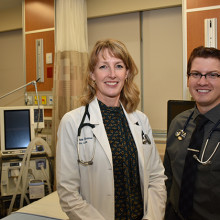
Above: Dr. Karen Bosma, lead author on the paper, and Dr. Simon Landman, first author on the paper
August 2023 Page 1 of 3 EYE MEASUREMENT APPOINTMENT: Date and time: _____________________________________________ Location: Ivey Eye Institute, St. Josephs Hospital, Zone B, Level 1, Room B1-050 SURGERY APPOINTMENT: Date and arrival time: _______________________________________ Location: Cataract S...
… Signature: Date: FOR INTERNAL USE ONLY Ophthalmologist: FOR MEDICAL SPECIALIST OFFICE STAFF USE ONLY Ophthalmologist … Signature: Date: FOR INTERNAL USE ONLY Ophthalmologist: FOR MEDICAL SPECIALIST OFFICE STAFF USE ONLY Ophthalmologist …
Erie St. Clair and SW Ontario Cataract Central Intake Referral Form Cataract Central Intake Fax Number: 519-646-6368 Telephone Number: 519-646-6100 ext.61680 Email: SJHCCataractCentralIntake@sjhc.london.on.ca ** Central Intake will only accept non-urgent referrals for Cataract Surgery ** Last Name: ...
Catecholamine Testing What is a catecholamine testing? Catecholamines are a group of similar substances released into the blood in response to physical or emotional stress. The primary catecholamines are dopamine, epinephrine (adrenaline), and norepinephrine (noradrenaline). They make you breathe fa...
Celebrating Clinical Trials Day
Clinical trials are the gold standard in medical research, used to test new treatments and medical devices to ensure they are safe and improve patient outcomes.
Each year on May 20, Clinical Trials Day aims to raise awareness about the importance of clinical trials. At Lawson Health Research Institute, our researchers, research staff and learners across London Health Sciences Centre (LHSC) and St. Joseph’s Health Care London (St. Joseph’s) are working daily to advance clinical trials for some of the most pressing health challenges.
“If you look at many areas of medicine, like cancer and cardiovascular disease, part of why those conditions have had dramatic improvements in outcomes over the last several decades is because of clinical trials,” says Dr. Amit Garg, Scientist at Lawson, Lead for the Kidney, Dialysis & Transplantation Research Program at ICES Western, and a Nephrologist at LHSC.
Clinical trials can also provide patient participants with new treatment options and can demonstrate when existing treatments have applications for other diseases.
“We could not conduct clinical trials without patients participating in them,” adds Dr. David Palma, Associate Scientist at Lawson and Radiation Oncologist at LHSC. “A clinical trial is a very rigorous process where we carefully define a treatment and follow patients very closely with extra interventions and tests to see not only how the disease is responding to treatment, but also any effects on a patient’s quality of life.”
It also takes a team to make clinical trials a success, including the critical work of research coordinators, associates and assistants, adds Dr. Swati Mehta, Lawson Scientist based at St. Joseph’s Parkwood Institute.
Dr. Palma also notes that while clinical trials require investment to conduct them, they can ultimately lead to savings in the health system.
“While the primary goal of a clinical trial is to improve or save lives, they often lead to cost savings down the road. Improving cure rates means people don’t need as much treatment and that can save the initial investment many, many times over,” Palma says.
Looking ahead, work is ongoing to make clinical trials more efficient and equitable.
“Eliminating specialized infrastructure would help make trials more equitable, so they are available in smaller communities and at distant sites that otherwise would not have access. Making study materials available in multiple languages and to anyone with accessibility issues can also help,” Garg adds.
“Future clinical trials will need to follow more pragmatic, adaptive study designs that allow us to evaluate therapies or interventions in a more realistic setting,” Dr. Mehta says. “These would also allow us to follow-up with patients that were potentially underrepresented in past research.”
According to researchers at Lawson, the future of clinical trials is bright with hundreds of trials currently underway at LHSC and St. Joseph’s with the goal of improving patient outcomes.