


Search
Search
1863 Search Results:
June 16, 2020; Page 1 of 3 Venlafaxine XR (Effexor) Why is this medication prescribed? Venlafaxine works by increasing the brain levels of 2 chemical messengers, norepinephrine and serotonin, that help to lessen the intensity of incoming pain signals. Venlafaxine treats pain from damaged nerves. I...
… costs include accommodation, all meals, medications, medical supplies, nursing care, specialized therapy (as … at the time of application. Will I have a physician? Medical care is provided by a group of family physicians … costs include accommodation, all meals, medications, medical supplies, nursing care, specialized therapy (as …
Veterans Care: Frequently Asked Questions Who is eligible for admission to Veterans Care at Parkwood Institute? Veterans and members of certain civilian groups who have overseas service in one of the following: World War II, the Korean War, or received a Veterans Affairs Pension for an illness or in...
… prophylaxis given. DVT prophylaxis- anticoagulant/ medical devices. Essential imaging displayed. … prophylaxis given. DVT prophylaxis- anticoagulant/ medical devices. Essential imaging displayed. …
Patient information confirmed: Identity Consent(s) Site and procedure Side and level marked (as applicable) Anesthesia confirmed equipment safety check complete. Anesthesia confirmed medication check complete. Pre-op anesthesia questionnaire reviewed? Does the patient have a: Known allergy? Difficul...
… or has occurred. If you discover a person suffering a medical emergency, alert a staff member and if qualified and … or has occurred. If you discover a person suffering a medical emergency, alert a staff member and if qualified and …
St. Josephs Health Care London - EMERGENCY RESPONSE COLOUR CODE WHAT DOES IT MEAN? WHAT SHOULD YOU DO? Code Green A horizontal, vertical, or full building evacuation (the cause could be a fire, bomb threat, etc.). An order is required to evacuate, unless persons are in immediate or imminent danger. ...
… Campus • Dr. William Sischek, Integrated Vice President Medical & Academic Affairs • Dr. Michelle Marlborough, … • Jennifer Joyce, Professional Staff Relations Specialist, Medical Affairs • Bela Ferreira, Educational Developer, PGME … CEO, LHSC • Dr. William Sischek, Integrated Vice President, Medical & Academic Affairs, LHSC and St Joseph’s Health Care …
OWL VIRTUAL ACCESS: Begins June 6, 2022 @ 9:00am LIVE WELCOME ADDRESS: Wednesday, June 30, 2021 @ 8:30am RESIDENT ORIENTATION ACCESS INFORMATION: Online Orientation Access: begins June 6th OWL Access- Residents receive an email to your western email address (access & log in) OWL - PGME-2022 tab: 1...
… Campus • Dr. William Sischek, Integrated Vice President Medical & Academic Affairs • Dr. Michelle Marlborough, … • Jennifer Joyce, Professional Staff Relations Specialist, Medical Affairs • Bela Ferreira, Educational Developer, PGME … CEO, LHSC • Dr. William Sischek, Integrated Vice President, Medical & Academic Affairs, LHSC and St Joseph’s Health Care …
OWL VIRTUAL ACCESS: Begins June 6, 2022 @ 9:00am LIVE WELCOME ADDRESS: Wednesday, June 30, 2021 @ 8:30am RESIDENT ORIENTATION ACCESS INFORMATION: Online Orientation Access: begins June 6th OWL Access- Residents receive an email to your western email address (access & log in) OWL - PGME-2022 tab: 1...
… often adding key details about a patient/resident’s medical history or situation; and - your presence can reduce … often adding key details about a patient/resident’s medical history or situation; and - your presence can reduce …
Family Presence at St. Josephs Health Care London Who is a family caregiver? A family caregiver is someone a family member, friend or neighbour who provides important personal, social, psychological and physical support, assistance or care for an individual. Family Caregivers are welcomed as partn...
… psychiatry patients when the assessors were blind to a medical evaluation of their competency. Participants: A … one third of the total sample had no serious on-going medical problems, whereas two thirds reported some serious medical problems. The most frequent medical conditions, …
A Financial Assessment & Capacity Test (FACT) For A Psychogeriatric Population: Development and Concurrent Validity Edward L. Black, PhD, CPsych1,2 , Tom J. Ross, B.A.1, Tobi Flanagan, BScOT1, Kiran Rabheru, MD, FRCPC3, Hans J. Breiter, PhD, CPsych2 Key Words: Money Management Skills Assessment, Ins...
… a health care setting, which helps them better decide if a medical career is the right choice for them. Our care area … exam.” - Joanne, Clinical Coordinator, Department of Medical Imaging, St. Joseph’s Hospital “Volunteers at Mount … a health care setting, which helps them better decide if a medical career is the right choice for them. Our care area …
pg 2 | JANUARY - FEBRUARY 2019 Every day, volunteers at St. Josephs Health Care London (St. Josephs) improve the lives of patients, residents, visitors and staff by contributing an immeasurable amount of time supporting various areas across the organization. During 2018/2019, approximately 908 volu...
Water Deprivation Test What is a water deprivation test? This test is ordered for people who are suspected of having a condition called diabetes insipidus, which causes a very high urine output, day and night, that does not stop, even if the individual stops drinking. With this test, your endocrinol...
… your rehabilitation journey. • If there is a change in your medical condition, you may need to be transferred to an … your rehabilitation journey. • If there is a change in your medical condition, you may need to be transferred to an …
4AN, Parkwood lnstitute 550 Wellington Rd. S London, ON N6C 0A7 Phone #: (519) 685-4002 (Nursing Station) Stroke/Neurological Rehabilitation Program - Welcome to Rehab What do I need to know to prepare for rehabilitation? What should I expect from rehabilitation? Inpatient Rehabilitation works with...
… www.communicationhealth.ca Dysphagia (dis-fay-juh) is the medical term for a swallowing disorder, meaning a difficulty … www.communicationhealth.ca Dysphagia (dis-fay-juh) is the medical term for a swallowing disorder, meaning a difficulty …
DYSPHAGIA Speech-Language Pathologists Can Help. Identifying and Treating Dysphagia Dysphagia is often caused by damage to the brain or muscles of the head, neck and mouth. These structures are also important for speaking. With their extensive knowledge of the anatomy involved in swallowing and spea...
What is ICES Western? Q&A with Dr. Amit Garg
As ICES Western recruits a new Site Director, Dr. Amit Garg, who currently holds the position, sat down to talk about the importance of the work being done. Dr. Garg is also a Scientist at Lawson Health Research Institute, Nephrologist at London Health Sciences Centre (LHSC) and Professor at Western University’s Schulich School of Medicine & Dentistry.

What is your role with ICES Western?
Starting in 2009, I supervised the team responsible for the ICES Western build over an approximately three-year period. Since then, I have spent the last decade serving as the inaugural Site Director for ICES Western.
Can you briefly describe the work that ICES Western does?
For those people who don't know, ICES is a province-wide non-profit research institute, founded in 1992, that is focused on translating data into trusted evidence. Our community is comprised of world-class research, data and clinical experts who evaluate health care delivery and population outcomes.
ICES scientists and staff (currently about 570 in Ontario) and trainees (currently about 700) access a vast and secure array of Ontario’s demographic and administrative health-related data. ICES currently has 108 linked data holdings (with over one trillion data points), and the amount of data that ICES has available for use in research grows each year. The linked data include vital statistics, hospital services, physician claims, drug benefits, laboratory results, biosamples and immigration records. Our research, including 1,200 active investigator-initiated projects, is focused on making health policy and health care better, and people healthier.
ICES Western is physically located at LHSC’s Victoria Hospital and is one of seven ICES satellite sites across Ontario. The site’s development is an ongoing partnership between LHSC, St. Joseph’s Health Care London, Lawson, the Academic Medical Organization of Southwestern Ontario (AMOSO) and Western.
How does ICES’ work impact research being done in Ontario and across Canada?
ICES Western is a core facility that researchers use for research, training and decision support. Organizations such as our local hospitals and public health agencies make requests for decision support through a procedural mechanism called Applied Health Research Questions.
Over the last two years, our researchers have conducted a great deal of COVID-19 research. Several projects at ICES Western have examined vaccine effectiveness and spread of the virus. Investigators have used a data-driven approach to help protect people experiencing homelessness in Ontario. Another study quantified the impact of COVID infections on physicians, including how many of them became ill, were hospitalized and received care in the intensive care unit.
Research done through ICES Western has led to important changes in health care. For example, Health Canada instituted labeling requirement changes based on drug safety studies done through ICES.
Why is this work so important?
We all want better health outcomes for citizens, both in Ontario and throughout the world. Ideally, we want people to live longer, healthier lives without needing many health care resources, and we want that to be done in an equitable fashion. There is a substantial amount of research needed in multiple areas to achieve this goal. ICES provides a cutting edge infrastructure to enable this work.
What kind of researchers are involved with ICES?
At ICES Western we support a whole host of individuals and entities as they conduct research. Health care delivery organizations and health agencies including LHSC, the Ontario Renal Network and Trillium Gift of Life Network use knowledge received through reports completed at ICES. Our typical individual investigators include both basic science and clinical investigators. We also support trainees in the areas of epidemiology and statistics, as well as many other fields of study, such as computer science and geography. These are all students who have an interest in working with ‘big’ data. Finally, we have personnel that work with privacy, data, analysis, epidemiology and more.
What do you see in the future for the organization?
We've made a lot of progress in the last 10 years and I can't wait to see what's going to happen in the future. We're still just scratching the surface in terms of what's possible. While what we have done in building this site and supporting important research is impressive, in terms of the possibilities – the sky's the limit. There is so much opportunity around new research and trial methodologies, new insights and new evaluation techniques. I expect ICES Western will continue to develop, enabling a growing number of people to make a large impact. I see ICES continuing to contribute to a world where people live longer, healthier lives.
What is the most important thing people should know about ICES?
How enabling it is. It's time well spent to really understand what is and is not possible with ICES data and research expertise. Once you invest in it – really spend your time and energy to understand the potential– you start realizing all of these opportunities that would not be possible otherwise. With more than a thousand research studies underway across all ICES sites, we have great discoveries ahead to shape the future of health care in Ontario.
Media Contact
Amanda Taccone
Communications Consultant & External Relations
Lawson Health Research Institute
T: 519-685-8500 ext. ext. 64059
C: 226-919-4748
@email
… Condition of Current Wheelchair/Seating change in medical/functional condition need for alternative way to … Condition of Current Wheelchair/Seating change in medical/functional condition need for alternative way to …
1 Office Use Only St. Josephs Health Care London Appointment Date Hospital Chart No. Parkwood Seating Program PO Box 5777, STN B, London ON N6A 4V2 Page 1 of 2 (519) 685-4292, ext. 42199 FAX (519) 685-4560 Referral Source Service Avenue Parkwood Seating Program Pre-Assessment Form Date Reviewed: ___...
When connections break down
In Ontario alone, an estimated 285,000 individuals currently live with some form of neurodegenerative disorder. This includes Alzheimer’s Disease, Parkinson’s Disease, mild cognitive impairment, dementia and movement disorders.
The experiences and symptoms for each person vary, but they share a progressive decline in their cognitive and motor function. It can affect their ability to work, socialize and live independently.
As our population ages, there is an urgent need to understand markers that will predict decline and identify targets for therapy that might improve long-term function and outcomes.
This is where hospital-based research can make a real difference.
On June 21, 2018, Lawson Health Research Institute hosted Café Scientifique, a community event highlighting the groundbreaking and specialized research on neurodegenerative diseases happening right here in London.
Moderated by Lawson researcher Dr. Arlene MacDougall, a panel of three expert Lawson scientists shared their unique perspectives as both clinicians and researchers, and how the knowledge we are gaining is being applied to improve health and health care for people here and around the world.
Watch the video from the event featuring the three talks from our experts.
Café Talks
Back to the beginning: Targeting early markers for Alzheimer’s Disease
By Dr. Jennie Wells
Time stamp: 5 minutes
Dr. Wells is the Medical Care Coordinator for Geriatric Rehabilitation at St. Joseph's Health Care London's Parkwood Institute, and Chair of the Division of Geriatric Medicine and associate professor in the Department of Medicine at Western Univeristy’s Schulich School of Medicine. Her clinical and research interests are Alzheimer’s Disease and Geriatric Rehabilitation. She has particular interest in Mild Cognitive Impairment (MCI) and the potential for non-drug interventions, such as exercise and nutrition to slow progression of dementia. She is a principal site investigator in randomized controlled trials of new drugs to treat dementia, MCI, and Subjective Cognitive Impairment (SCI).
Highlights:
- What causes dementia?
- How early do changes happen in the brain before symptoms even appear?
- What is the single best diet approach for a healthy body and mind?
- How does exercise keep your brain healthy?
Image

Neuroinflammation and dementia: The old and the new
By Dr. Elizabeth Finger
Time stamp: 24 minutes
Dr. Finger, a neurologist at St. Joseph's Parkwood Institute, received her MD from Cornell University. She completed an internship in Internal Medicine at Massachusetts General Hospital, followed by residency in Neurology at Massachusetts General Hospital and Brigham and Women's Hospital in Boston. Her research focuses on understanding the cognitive, neural, and genetic substrates of abnormal decision-making, emotion and social behavior. Using a variety of different diagnostic techniques and modalities, the research program investigates the cognitive and neural systems affected in patients with Frontotemporal Dementia, related disorders and their at-risk family members.
Highlights:
- Do anti-inflammatory medications reduce the risk of dementia or slow the rate of decline?
- How do genes related to the immune system increase the risk of developing dementia and Alzheimer’s Disease?
- What about the effects from dysfunction of the brain’s own immune system?
- Do conditions or events causing systematic inflammation (surgery, infection, auto-immune diseases) also increase neuroinflammation which can lead to dementia?
Image
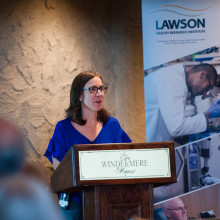
New Frontiers in the Treatment of Parkinson’s Disease: Addressing the unmet needs
By Dr. Mandar Jog
Time stamp: 45 minutes
Dr. Jog is a Lawson researcher, Director of the National Parkinson Foundation Centre of Excellence at LHSC, Director of the Movement Disorders Centre in London and Professor of Neurology at Western University. His research interests include topics such as motor control, neurophysiology and computational modeling, multichannel recording and web-based teaching of movement disorders. Dr. Jog has a passion for clinical and scientific innovation and holds numerous patents that are reaching commercialization with strong collaboration with university technology transfer and industry partners.
Highlights:
- How do clinician researchers take questions from the bedside and solve them at the bench using technology in order to treat movement disorders?
- How can wearable technology be used to detect movement disorders and monitor for optimized treatment – remotely from anywhere in the world?
- How can we use machine-guided sensors for personal diagnostics and therapy for essential tremors and Parkinson’s Disease?
- How can spinal cord stimulators improve movement and gait for patients, including those previously using wheelchairs and scooters?
Image
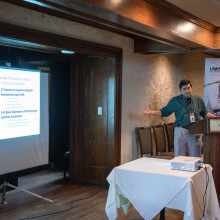
Did you miss the event? Add your email address to our Café Scientifique invite list so that you’ll be the first to know when the next event takes place.
Sign up here.
Go to Lawson’s Facebook page to see photos from the event.
Scientist
Wide range of research showcased at Parkwood Institute Research's 2017 Spring Update
Lawson researchers at Parkwood Institute, part of the St. Joseph’s Health Care London family, work to improve both physical and mental health care based on the understanding that conditions of the body and mind are integrally linked. From studies on mobility after brain and spinal cord injury to treatment-resistant depression, a range of different research areas were highlighted on April 21, 2017 at Parkwood Institute Research’s 2017 Spring Update Half-Day event.
Parkwood Institute Research is a Lawson program that represents inter-disciplinary clinical research. At the second annual Spring Update event celebrating this work, attendees learned about research from across Parkwood Institute’s three core research themes: Cognitive Vitality & Brain Health, Mobility & Activity, and Mental Health Care. New this year was the addition of poster presentations, which provided another opportunity for researchers and trainees to promote and share their work.
Learn more about the work Lawson scientists at Parkwood Institute presented at the event:
Cognitive Vitality & Brain Health
Dr. Stephen Pasternak was one of the presenters in the Cognitive Vitality & Brain Health theme. Dr. Pasternak and his team are conducting a phase 2 randomized controlled trial looking at whether a European over-the-counter cough medicine, Ambroxol, could also treat Parkinson’s Disease Dementia (PDD).
“There are currently no effective treatments for cognitive impairment experienced by PDD patients. Existing treatments only treat the symptoms of Parkinson’s disease, but do not stop the disease process itself,” says Dr. Pasternak.
Parkinson’s disease is believed to be caused by the buildup of a protein called alpha-synuclein in the brain. Ambroxol increases the levels of an enzyme called β-Glucocerebrosidase (GCase), which has been shown to reduce the buildup of alpha-synuclein in animal and cell cultures models, suggesting that this could be used as a treatment for PDD.
This trial is well underway and the first participants have completed the first year of treatment. If successful, this trial will be the first to demonstrate that it is possible to change the underlying cause of PDD.
Mobility & Activity
As part of the Mobility & Activity themed presentations, Dr. Dalton Wolfe discussed an initiative supported by the St. Joseph’s Health Care Foundation and Ontario Neurotrauma Foundation to help improve mobility in patients with acquired brain and spinal cord injuries.
Called the Parkwood Program for Rehabilitation Innovations in Movement Enhancement (PRIME), a key goal of this initiative is to develop and implement a clinical decision support system that integrates approaches to activity-based therapy. Clinicians, researchers, administrators and IT specialists have combined their efforts to initiate development on this system.
“PRIME will provide recommendations for treatment based on patients’ injury level and type, and clinical characteristics,” says Dr. Wolfe. “It will also have suggestions for what to monitor for each patient to challenge them to optimize recovery, as well as to reduce risk of injury or secondary complications.”
This system will also enable electronic tracking of practices and outcomes, moving away from the current paper-based model and creating a practice-based research platform.
Mental Health Care
Dr. Amer Burhan presented his research on Transcranial Magnetic Stimulation (TMS) in the Mental Health Care portion of the presentations. TMS is a non-invasive method that uses magnetic fields to stimulate nerve cells in the brain. An electromagnetic coil is held against the head and short magnetic pulses are administered, causing a change in activity level in specific targeted areas and allowing for a study of the function and interconnectivity of the brain. The method has been approved to treat depression resistant to medications and has potential to be used to treat other mental and neurological disorders.
Dr. Burhan’s talk focused on the effectiveness of a certain type of TMS, bilateral theta-burst stimulation, in treating patients with depression who are not responsive to medication. This is a new method of TMS that is designed to facilitate change in brain activity and connectivity more efficiently. He presented preliminary results on the first 60 patients treated with this method. So far the treatment has resulted in significant improvement in over half of the patients.
“More studies are planned to understand predictors of response and facilitate individualized selection of treatment for patients struggling with this very disabling illness,” says Dr. Burhan.
Scientist
… as a result of personal injuries, illness, or other medical conditions preventing employees from fulfilling … as a result of personal injuries, illness, or other medical conditions preventing employees from fulfilling …
Personal Information Bank (PIB) Details Title: Workers' Compensation Location of Record: Human Resources, Occupational Health and Safety Services Description: Records relating to monitoring claims for compensation as a result of personal injuries, illness, or other medical conditions preventing empl...
World first discoveries allow researchers to accurately diagnose prenatal exposure syndromes and birth disorders
Researchers at London Health Sciences Centre (LHSC) and Lawson Health Research Institute are using advanced technology and artificial intelligence (AI) to diagnose rare diseases and prenatal exposure-related birth abnormalities in two studies published today in American Journal of Human Genetics and Genetics in Medicine.
The research uses technology called EpiSign™, which was developed by Dr. Bekim Sadikovic, Lawson Scientist at LHSC. EpiSign leverages AI to measure a patient’s epigenome – a unique chemical fingerprint that every person has on top of their DNA that is responsible for turning genes on or off. EpiSign can currently be used to help diagnose more than 100 genetic diseases that were previously difficult to diagnose.
In one of two newly published studies, Dr. Sadikovic’s team has found that EpiSign can be used to accurately identify patients affected by birth disorders called recurrent constellation of embryonic malformations (RCEMs). Since their discovery more than 70 years ago, attempts to identify the cause and specific diagnostic markers for RCEMs have been unsuccessful, making it challenging to provide patients and families with accurate diagnoses. EpiSign can now be used to accurately identify RCEMs for the first time using a blood test.
“Reaching an early and accurate diagnosis can be lifechanging. This is a major breakthrough that allows physicians to provide earlier and more accurate diagnosis, resulting in improved disease management,” said Dr. Sadikovic, who is also Research Chair in Clinical Genomics and Epigenomics at the Archie and Irene Verspeeten Clinical Genome Centre at LHSC. “It also has the potential to lead to health system cost savings since many patients spend years and even decades being tested to rule out other potential diseases with similar symptoms.”
In a second study, Dr. Sadikovic’s team used EpiSign technology for the first time to develop an accurate biomarker for a group of disorders called fetal valproate syndrome, which is caused by prenatal exposure to toxic levels of medication that may be used to treat bipolar disorder and migraines, or to control seizures in the treatment of epilepsy. It can result in neurodevelopmental disorders in infants, including learning, communication and motor disorders, autism, and intellectual disabilities.
“This is a significant breakthrough as it’s the first time the technology has been used to aid in diagnosis of a disease caused by environmental factors rather than genetics,” explained Dr. Sadikovic. “It highlights how epigenetics can be influenced by environmental and lifestyle factors, including diet, exercise and exposure to toxins.”
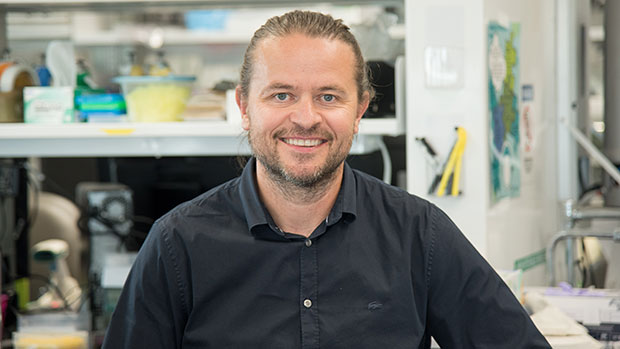
The research is ongoing as Dr. Sadikovic and his team, in collaboration with the global EpiSign Discovery Research network, are currently studying and developing biomarkers for more than 700 rare disorders. He noted the potential of this research is endless, showing promise for use in the diagnosis, prognosis and treatment of many other diseases and disorders, including cancer.
“One in 20 people have a rare disease that could present at any point in their lives and can be caused by genes, environmental exposures, or their combined effects,” he noted. “We can help diagnose a growing number of genetic diseases and, now for the first time, we can look beyond the genome and accurately measure the impact of the environment.”
These studies are a collaborative effort involving multidisciplinary teams in Canada, the United States, the United Kingdom and Europe. The first study, titled “Identification of a DNA methylation episignature biomarker for recurrent constellations of embryonic malformations,” is published in American Journal of Human Genetics. The second study, titled “Discovery of DNA methylation signature of teratogenic exposure to valproic acid,” is published in Genetics in Medicine. Funding for the research was provided by Genome Canada and Ontario Genomics, as well as in-kind support from EpiSign Inc.
About Lawson Health Research Institute
Lawson Health Research Institute is one of Canada’s top hospital-based research institutes, tackling the most pressing challenges in health care. As the research institute of London Health Sciences Centre and St. Joseph’s Health Care London, our innovation happens where care is delivered. Lawson research teams are at the leading-edge of science with the goal of improving health and the delivery of care for patients. Working in partnership with Western University, our researchers are encouraged to pursue their curiosity, collaborate often and share their discoveries widely. Research conducted through Lawson makes a difference in the lives of patients, families and communities around the world. To learn more, visit www.lawsonresearch.ca.
Media Contacts
Celine Zadorsky
Senior Media Relations Consultant
Communications & Public Engagement
T: 519-685-8500 ext. 73502
Celine.zadorsky@lhsc.on.ca
… the administration of Xeomin®, please seek immediate medical attention. Drug cost/coverage • If you are an … the administration of Xeomin®, please seek immediate medical attention. Drug cost/coverage • If you are an …
July 12, 2022; Page 1 of 2 Incobotulinumtoxin A (Xeomin) for Cervical Dystonia/Spasmodic Torticollis What is cervical dystonia and how is it typically treated? Cervical dystonia is a rare neurological disorder involving involuntary muscle contractions in the neck that cause the head to twist or turn...
… range of skills and experience: • Surgeons • Radiologists • Medical radiation technologists • Ultrasound technologists • … test of the breast tissue performed by a specially trained Medical Radiation Technologist (MRT). During a mammogram … might also ask you some questions about your symptoms and medical history. What Can I Expect? • An ultrasound can take …
YOur guide to Breast assessment Breast Care Program St. Josephs Hospital 268 Grosvenor St. London, ON N6A 4V2 THE BEST IN BREAST CARE The Breast Care Program at St. Josephs Health Care London provides a confidential, coordinated, specialized breast assessment service. The goal of the program is to m...