


Search
Search
1080 Search Results:
… Throughout the fall, the committee watched as governmental committees were formed to assist in drafting … of the weekly Continuing Professional Development series in mental health, members of the Mental Health Ethics Education and Consultation Committee … Throughout the fall, the committee watched as governmental committees were formed to assist in drafting …
Leadership in Mission Report on Mission, Spiritual Care and Health Care Ethics 2015/2016 Report on Governance and Leadership As we approached 2015/16 we knew the year would provide opportunities and challenges. We would fi nally be through all our restructuring and construction and would have the op...
… Throughout the fall, the committee watched as governmental committees were formed to assist in drafting … of the weekly Continuing Professional Development series in mental health, members of the Mental Health Ethics Education and Consultation Committee … Throughout the fall, the committee watched as governmental committees were formed to assist in drafting …
Leadership in Mission Report on Mission, Spiritual Care and Health Care Ethics 2015/2016 Report on Governance and Leadership As we approached 2015/16 we knew the year would provide opportunities and challenges. We would fi nally be through all our restructuring and construction and would have the op...
… shows the important intersection between physical health, mental health and social factors. * Five of the top 10 … in good times and in challenging times. He was instrumental in leading a team of dedicated ophthalmologists and … to receive initial PCOP funding for additional forensic mental health beds as well as additional funding for …
Leadership in Mission Report on Mission, Spiritual Care and Health Care Ethics St. Josephs Health Care London 2013/2014 Report to St. Josephs Health Care Society 2 Contents Page 3 Report on Governance and Leadership Page 8 Report on Heath Care Ethics Page 13 Report on Spiritual Care Page 18 Living o...
… 10. Expressions through art 11. Shared care approach to mental health 12. Branching out to meet our mission and … veterans 23. Being the best you can be 24. Easier access to mental health care 4 Welcome to this year’s Annual Report to … Surgical Centre and Diagnostic Imaging Centre. At Regional Mental Health Care London and St. Thomas, we have created …
ST. JOSEPHS HEALTH CARE LONDON | ANNUAL REPORT TO THE COMMUNITY | 2002/2003 2 Dedication This years Annual Report to the Community is dedicated to the St. Josephs Health Care, London staff members and volunteers who continue to give so much of themselves to help manage SARS restrictions. Thank you t...
… in rehabilitation, acute/ambulatory care, specialized mental health care, long-term care, specialized geriatric … last year. Shown here are five who joined our Regional Mental Health Care sites. Left to right – Dr. Adrian Hynes, … psychiatrist at Stratford General Hospital, join Regional Mental Health Care (RHMC) one day a week to support the …
St. Josephs Health Care London Annual Report 1 care 2 3 At St. Josephs Health Care, London, there are so many ways to care, all stemming from one vision to be a respected source of excellent health care. Uniting an organization of such diversity, embodying programs in rehabilitation, acute/ambulato...
… X X X Oxygen - 15 Gas Radiation Safety Quiz PowerChart Fundamentals for Allied Health Professionals Certification X X X … X X X X X X X X X X X X X X X X X X X PowerChart Fundamentals for Inpatient Nursing X (to be completed by students … Venipuncture Technique Level 2 If your placement is at a mental health care site, you MUST also complete the …
Assigned Learning Student Affairs Learning Modules Advanced Law Enforcement Anesthesia Assistant Clinical Nutrition/ Dietitics Clinical Science Wound Healing (Masters) Clinical Trials Dental Hygiene Development Services Worker ECG Technician Echo Technician Ethics Food & Nutrition Management Healthc...
… X X X Oxygen - 15 Gas Radiation Safety Quiz PowerChart Fundamentals for Allied Health Professionals Certification X X X … X X X X X X X X X X X X X X X X X X X PowerChart Fundamentals for Inpatient Nursing X (to be completed by students … Venipuncture Technique Level 2 If your placement is at a mental health care site, you MUST also complete the …
Student Affairs Learning Modules Advanced Law Enforcement Anesthesia Assistant Clinical Nutrition/ Dietitics Clinical Science Wound Healing (Masters) Clinical Trials Dental Hygiene Development Services Worker ECG Technician Echo Technician Ethics Food & Nutrition Management Healthcare/ Medical Admin...
… X X X Oxygen - 15 Gas Radiation Safety Quiz PowerChart Fundamentals for Allied Health Professionals Certification X X X … X X X X X X X X X X X X X X X X X X X PowerChart Fundamentals for Inpatient Nursing X (to be completed by students … Venipuncture Technique Level 2 If your placement is at a mental health care site, you MUST also complete the …
Student Affairs Learning Modules Advanced Law Enforcement Anesthesia Assistant Clinical Nutrition/ Dietitics Clinical Science Wound Healing (Masters) Clinical Trials Dental Hygiene Development Services Worker ECG Technician Echo Technician Ethics Food & Nutrition Management Healthcare/ Medical Admin...
… reviews, case studies and research articles authored by the mental health professionals of Parkwood Institute and Southwest Centre for Forensic Mental Health Care of St. Joseph’s Health Care London (which … required by the subject matter. Parkwood Institute Mental Health Care Building Research and Education Unit 550 …
ISSN 2368-6294 (Print) ISSN 2368-6308 (Online) DECEMBER 2014 | VOL 11 No. 2 Editor J. D. Mendonca PhD CPsych ACADEMIC DETAILING AS A FOCUSED, ENGAGING AND FEASIBLE METHOD OF QUALITY IMPROVEMENT AMONG PSYCHIATRISTS: A pilot Ontario study Kamini Vasudev, Joel Lamoure, Michael Beyaert, Varinder Dua, Da...
… reviews, case studies and research articles authored by the mental health professionals of Parkwood Institute and Southwest Centre for Forensic Mental Health Care of St. Joseph’s Health Care London (which … required by the subject matter. Parkwood Institute Mental Health Care Building Research and Education Unit 550 …
ISSN 2368-6294 (Print) ISSN 2368-6308 (Online) MAY 2015 | VOL 12 No. 1 Editor J. D. Mendonca, PhD CPsych BRIEF REPORTS The Flip-Side To Readmission: Focussed After-Care Research Insights is a peer-reviewed journal designed to publish reviews, case studies and research articles authored by the mental...
Research shared and celebrated at 17th Annual Mental Health Research Half Day
From falls prevention to depression therapies, scientists at Lawson Health Research Institute are conducting important mental health studies. Held on Thursday, September 15, the 17th Annual Mental Health Research Half Day at the Parkwood Institute Mental Health Program was a chance to share and celebrate this research.
The Mental Health Research Half Day featured poster and oral presentations, as well as the 12th Annual Tony Cerenzia Research Lecture. Clinical, administrative and research staff attended to learn more about research happening at Parkwood Institute and the Southwest Centre for Forensic Mental Health Care, part of the St. Joseph’s Health Care London family.
“The Mental Health Research Half Day provides an opportunity for researchers at Parkwood Institute and the Southwest Centre for Forensic Mental Health Care to present their research findings to clinical and administrative staff,” said Dr. Richard O’Reilly, Director of Psychiatric Research at Parkwood Institute & Southwest Centre and a Scientist at Lawson. “It is important that all clinical staff, who may not be directly involved in research, know what studies are being conducted and their impact on patient care.”
The 12th Annual Tony Cerenzia Research Lecture was delivered by Dr. Nathan Herrmann, Associate Scientist, Evaluative Clinical Sciences, Hurvitz Brain Sciences Research Program, Sunnybrook Research Institute and Head of the Division of Geriatric Psychiatry at Sunnybrook Health Sciences Centre. Dr. Herrmann delivered an engaging lecture titled “Managing Neuropsychiatric Symptoms in Dementia: An Evidence-Based Approach”.
Attendees were engaged not only by this highly informative lecture but also by the poster and oral presentations which covered a broad range of research topics. Presenters were also enthusiastic about the day and the opportunities it provided.
“The Mental Health Research Half Day is a great event which provides networking opportunities here at Parkwood Institute. It allows staff from across St. Joseph’s to learn about different research happening across program areas,” said Erin Finley, an Occupational Therapist (OT) in Geriatric Psychology at Parkwood Institute.
Finley and her colleagues were one of seven poster presentations. Their research project, titled “Fall prevention initiative in geriatric psychiatry”, aimed to reduce the rate of falls with injury among patients with dementia in a behavioural health unit. Within an 18-bed unit, they were able to significantly reduce falls with injury with zero incidences in the last two months of their data collection period.
Scientist
Researchers investigate a new method of sedation for paediatric patients
Scientists at Children’s Health Research Institute (a program of Lawson Health Research Institute), Sunnybrook Research Institute and The Hospital for Sick Children (SickKids) are working together to study the potential benefits of inhaled sedation as an alternative to keep critically ill children sedated and comfortable.
“Many sick children need support from a ventilator and other life-saving treatments, and may require intravenous (IV) sedatives to tolerate these uncomfortable therapies,” says Dr. Rishi Ganesan, Lawson Associate Scientist and Paediatric Neurocritical Care Physician at Children’s Hospital at London Health Sciences Centre (LHSC). “However, our current sedation options may contribute to a complication called delirium. We are interested in evaluating if delirium and long-term neurological complications are lower in children receiving inhaled sedation compared to those receiving IV sedation, which is the current standard of care.”
Delirium is an acute change in mental state that children in critical care can sometimes develop as a result of their critical illness and the medications and therapies they receive during their hospital stay. Delirium presents as confusion, disorientation, agitation, excessive drowsiness or poor attention. Dr. Marat Slessarev, Lawson Scientist and Critical Care Physician at LHSC, has been researching and comparing inhaled sedation to IV sedation in adults since the pandemic hit in 2020 in a collaborative trial called SAVE-ICU with Dr. Angela Jerath, Anesthesiologist and Scientist at Sunnybrook.
“One of the challenges with IV sedation is that we do not have a way to measure the level of sedatives in the blood,” explains Dr. Slessarev. “Critically ill patients that are sedated can sometimes develop issues with the kidney and liver, which are both important in eliminating the sedatives from the blood stream.”
Through this novel collaborative research, the team is now looking at the potential benefits of inhaled sedation in paediatric patients.
“Inhaled sedatives are an alternative to currently used IV sedatives, and they may reduce delirium and accelerate brain recovery. Inhaled sedatives are used safely every day in operating rooms, widely available and inexpensive,” explains Dr. Jerath. “In contrast to IV sedatives, they do not accumulate in the body, are rapidly eliminated via the lungs, promote faster awakening and discharge from a ventilator, and reduce inflammation – which may be a contributing factor to delirium.”
Enrollment for the ABOVE trial is beginning at Children’s Hospital at LHSC and SickKids. The pilot study will enroll 60 critically ill paediatric patients who will be randomized into two groups; one group will receive inhaled sedation while the other will get standard IV sedation. Once the pilot phase of the trial is complete, the team hopes to expand this trial across the country with more paediatric intensive care units (ICUs) joining the larger trial.
“The field of critical care has made significant strides in life-saving technologies and therapies in recent years, but now we are focused on finding ways to ensure our patients continue to do well after leaving the hospital,” says Dr. Nicole McKinnon, Critical Care Physician and lead investigator at SickKids and a Scientist Track Investigator at SickKids Research Insitute. “This trial is a first step in better understanding the effects of sedative and pain medications on children’s longer-term neurocognitive development. Our research will be key to providing critically ill children with the greatest chance to flourish at home.”
“This has the potential to change how critically ill children are cared for in paediatric ICUs across Canada and the world,” adds Dr. Ganesan. “We hope that inhaled sedation makes a difference in children’s long-term functional outcomes, so they can thrive and achieve their full potential.”
The ABOVE Trial recently received funding through a Canadian Institute for Health Research (CIHR) grant.
About Sunnybrook Research Institute: Sunnybrook Research Institute (SRI) is the research arm of Sunnybrook Health Sciences Centre, an internationally recognized academic health sciences centre fully affiliated with the University of Toronto. With well-established programs in basic and applied sciences which span across three scientific platforms and ten clinical programs, SRI is developing innovations in care for the more than 1.3 million patients the hospital cares for annually. To learn more, visit www.sunnybrook.ca/research
About The Hospital for Sick Children: The Hospital for Sick Children (SickKids) is recognized as one of the world’s foremost paediatric health-care institutions and is Canada’s leading centre dedicated to advancing children’s health through the integration of patient care, research and education. Founded in 1875 and affiliated with the University of Toronto, SickKids is one of Canada’s most research-intensive hospitals and has generated discoveries that have helped children globally. Its mission is to provide the best in complex and specialized family-centred care; pioneer scientific and clinical advancements; share expertise; foster an academic environment that nurtures health-care professionals; and champion an accessible, comprehensive and sustainable child health system. SickKids is a founding member of Kids Health Alliance, a network of partners working to create a high quality, consistent and coordinated approach to paediatric health care that is centred around children, youth and their families. SickKids is proud of its vision for Healthier Children. A Better World.
About Lawson Health Research Institute
Lawson Health Research Institute is one of Canada’s top hospital-based research institutes, tackling the most pressing challenges in health care. As the research institute of London Health Sciences Centre and St. Joseph’s Health Care London, our innovation happens where care is delivered. Lawson research teams are at the leading-edge of science with the goal of improving health and the delivery of care for patients. Working in partnership with Western University, our researchers are encouraged to pursue their curiosity, collaborate often and share their discoveries widely. Research conducted through Lawson makes a difference in the lives of patients, families and communities around the world. To learn more, visit www.lawsonresearch.ca.
Media Contacts
Amanda Taccone
Communications Consultant & External Relations
Lawson Health Research Institute
T: 519-685-8500 ext. ext. 64059
C: 226-919-4748
@email
Researchers receive over $40,000 to study role of personality and resiliency in Veteran mental health
LONDON, ON – The unique and challenging experiences faced by Canadian Armed Forces (CAF) Veterans puts this group at high risk for developing symptoms of mental health disorders, such as Post traumatic stress disorder (PTSD), depression, and anxiety. Researchers at Lawson Health Research Institute (Lawson) have been awarded over $40,000 from Veterans Affairs Canada to study various risk and protective factors associated with mental health disorders in CAF Veterans.
The study aims to learn whether an individual’s personality traits serve as risk or protective factors for Veterans developing mental health problems. The traits that will be examined include openness, agreeableness, emotionality, honesty-humility, conscientiousness, extraversion, and resiliency. For example, someone who is high in openness and resiliency may have a lower risk of developing mental health symptoms.
“Veterans and military members experience uniquely challenging events when compared to the general population,” explains Dr. Rachel Plouffe, study co-lead and Postdoctoral Associate at Lawson. “Past research has identified some risk factors, including history of childhood trauma, age, gender, and education. However, no one to date has investigated the role that personality traits might play in Veterans’ symptoms of mental health conditions.”
The research team will look at the relationship between these personality traits, exposure to stressful experiences during military operations, and mental health outcomes through survey data provided by 500 treatment-seeking and non-treatment seeking Veterans. This information will be used to assess whether the individual’s expression of these personality traits can predict levels of depression, anxiety and PTSD.
They also hope to determine whether the association between combat exposure and PTSD is stronger for those higher in traits such as emotionality, which reflects those who tend to be anxious and fearful. On the other hand, this association will likely be weaker for those higher in more “positive” traits, such as agreeableness, as these individuals tend to be cooperative and forgiving toward others.
Plouffe notes that personalities are not completely stagnant. Certain traits can often change over time, and individuals can work to increase their levels of resiliency.
“Ultimately, our hope is to help improve the ability of CAF members and Veterans to thrive even in the face of great adversity. With the findings from our research, military organizations and mental health treatment centres could use the information from this study to predict which patients may be at greater risk of developing mental health disorders, and provide tailored treatment for these individuals,” she explains.
“This research is needed for military organizations to improve and implement strategies that enhance the well-being of Veterans and active service members,” says Dr. Don Richardson, study co-lead and Director of the MacDonald Franklin OSI Research Centre at Lawson. “Our Veterans give a lot to serve and protect, so it is our duty as researchers and clinicians to find ways that we can better serve them.”
-30-
About Lawson Health Research Institute
Lawson Health Research Institute is one of Canada’s top hospital-based research institutes, tackling the most pressing challenges in health care. As the research institute of London Health Sciences Centre and St. Joseph’s Health Care London, our innovation happens where care is delivered. Lawson research teams are at the leading-edge of science with the goal of improving health and the delivery of care for patients. Working in partnership with Western University, our researchers are encouraged to pursue their curiosity, collaborate often and share their discoveries widely. Research conducted through Lawson makes a difference in the lives of patients, families and communities around the world. To learn more, visit www.lawsonresearch.ca.
Media Contacts
Celine Zadorsky
Senior Media Relations Consultant
Communications & Public Engagement
T: 519-685-8500 ext. 73502
Celine.zadorsky@lhsc.on.ca
Researchers receive over $40,000 to study role of personality and resiliency in Veteran mental health
The unique and challenging experiences faced by Canadian Armed Forces (CAF) Veterans puts this group at high risk for developing symptoms of mental health disorders, such as Post traumatic stress disorder (PTSD), depression, and anxiety. Researchers at Lawson Health Research Institute (Lawson) have been awarded over $40,000 from Veterans Affairs Canada to study various risk and protective factors associated with mental health disorders in CAF Veterans.
The study aims to learn whether an individual’s personality traits serve as risk or protective factors for Veterans developing mental health problems. The traits that will be examined include openness, agreeableness, emotionality, honesty-humility, conscientiousness, extraversion, and resiliency. For example, someone who is high in openness and resiliency may have a lower risk of developing mental health symptoms.
“Veterans and military members experience uniquely challenging events when compared to the general population,” explains Dr. Rachel Plouffe, study co-lead and Postdoctoral Associate at Lawson. “Past research has identified some risk factors, including history of childhood trauma, age, gender, and education. However, no one to date has investigated the role that personality traits might play in Veterans’ symptoms of mental health conditions.”
The research team will look at the relationship between these personality traits, exposure to stressful experiences during military operations, and mental health outcomes through survey data provided by 500 treatment-seeking and non-treatment seeking Veterans. This information will be used to assess whether the individual’s expression of these personality traits can predict levels of depression, anxiety and PTSD.
They also hope to determine whether the association between combat exposure and PTSD is stronger for those higher in traits such as emotionality, which reflects those who tend to be anxious and fearful. On the other hand, this association will likely be weaker for those higher in more “positive” traits, such as agreeableness, as these individuals tend to be cooperative and forgiving toward others.
Plouffe notes that personalities are not completely stagnant. Certain traits can often change over time, and individuals can work to increase their levels of resiliency.
“Ultimately, our hope is to help improve the ability of CAF members and Veterans to thrive even in the face of great adversity. With the findings from our research, military organizations and mental health treatment centres could use the information from this study to predict which patients may be at greater risk of developing mental health disorders, and provide tailored treatment for these individuals,” she explains.
“This research is needed for military organizations to improve and implement strategies that enhance the well-being of Veterans and active service members,” says Dr. Don Richardson, study co-lead and Director of the MacDonald Franklin OSI Research Centre at Lawson. “Our Veterans give a lot to serve and protect, so it is our duty as researchers and clinicians to find ways that we can better serve them.”
Scientist
Researchers seek Canadian health care workers for study on moral distress during COVID-19 pandemic
LONDON, ON - A team from Lawson Health Research Institute is seeking 500 Canadian health care workers to participate in a study on moral distress and psychological wellbeing during the COVID-19 pandemic. Participants will complete online surveys once every three months for a total of 18 months. The goal is to better understand the pandemic’s impact on health care workers in order to minimize moral distress and support wellbeing during future pandemic events.
Moral distress is a form of psychological distress that occurs following an event that conflicts with a person’s moral values or standards. Through previous research with military populations, moral distress has been linked to an increased risk of post-traumatic stress disorder (PTSD) and depression.
“Health care workers are facing unprecedented demands as a result of the pandemic and many may be working under extreme physical and psychological stress,” says Dr. Don Richardson, Lawson Associate Scientist and Director of the MacDonald Franklin Operational Stress Injury (OSI) Research Centre. “Health care workers may face difficult moral-ethical decisions including those around patient care and shortages of personal protective equipment (PPE), which could lead to moral distress.”
The study will consist of a series of surveys to assess moral distress during the pandemic. Participating health care workers will answer questions about moral-ethical dilemmas and symptoms of depression, PTSD, general anxiety, and burnout.
“Moral-ethical dilemmas must be considered in the context of other difficulties faced by health care workers during the pandemic, such as increased workloads, reduced social activities, and evolving work environments and health care delivery models,” explains Dr. Anthony Nazarov, Associate Scientist at Lawson and the MacDonald Franklin OSI Research Centre.
The team hopes that results can be used to cultivate wellness at the outset of future pandemics. This might include guiding emergency preparedness policies and moral-ethical decision-making training modules. They hope that by tracking psychological outcomes over time, they can identify early warning signs of distress that can be targeted with early interventions.
The researchers will also ask questions that explore how the pandemic is impacting health care delivery, such as increased reliance on virtual care appointments, and whether health care workers are satisfied with these changes.
“It is necessary to provide a voice to health care workers during this pandemic,” adds Dr. Richardson. “This is the first study to measure the moral-ethical dilemmas faced in a pandemic and the impacts of such dilemmas on moral distress. It is also the first to measure health care worker perceptions on the virtual migration of patient care.”
This project is in partnership with the Centre of Excellence on PTSD and Related Mental Health Conditions. The focus of the Centre of Excellence is to create knowledge networks across Canada to increase expertise and create the best possible supports and services for Veterans, first responders and their families.
Interested Canadian health care workers can learn more about the study and access the survey at https://participaid.co/studies/bYE4Ob.
-30-
About Lawson Health Research Institute
Lawson Health Research Institute is one of Canada’s top hospital-based research institutes, tackling the most pressing challenges in health care. As the research institute of London Health Sciences Centre and St. Joseph’s Health Care London, our innovation happens where care is delivered. Lawson research teams are at the leading-edge of science with the goal of improving health and the delivery of care for patients. Working in partnership with Western University, our researchers are encouraged to pursue their curiosity, collaborate often and share their discoveries widely. Research conducted through Lawson makes a difference in the lives of patients, families and communities around the world. To learn more, visit www.lawsonresearch.ca.
Media Contacts
Celine Zadorsky
Senior Media Relations Consultant
Communications & Public Engagement
T: 519-685-8500 ext. 73502
Celine.zadorsky@lhsc.on.ca
Researchers seek Canadian health care workers for study on moral distress during COVID-19 pandemic
Researchers from Lawson Health Research Institute and the Centre of Excellence on PTSD and Related Mental Health Conditions are seeking 500 Canadian health care workers to participate in a study on moral distress and psychological wellbeing during the COVID-19 pandemic. Participants will complete online surveys once every three months for a total of 18 months. The goal is to better understand the pandemic’s impact on health care workers in order to minimize moral distress and support wellbeing during future pandemic events.
Moral distress is a form of psychological distress that occurs following an event that conflicts with a person’s moral values or standards. Through previous research with military populations, moral distress has been linked to an increased risk of post-traumatic stress disorder (PTSD) and depression.
“Health care workers are facing unprecedented demands as a result of the pandemic and many may be working under extreme physical and psychological stress,” says Dr. Don Richardson, Lawson Associate Scientist and Director of the MacDonald Franklin Operational Stress Injury (OSI) Research Centre. “Health care workers may face difficult moral-ethical decisions including those around patient care and shortages of personal protective equipment (PPE), which could lead to moral distress.”
The study will consist of a series of surveys to assess moral distress during the pandemic. Participating health care workers will answer questions about moral-ethical dilemmas and symptoms of depression, PTSD, general anxiety, and burnout.
“Moral-ethical dilemmas must be considered in the context of other difficulties faced by health care workers during the pandemic, such as increased workloads, reduced social activities, and evolving work environments and health care delivery models,” explains Dr. Anthony Nazarov, Associate Scientist at Lawson and the MacDonald Franklin OSI Research Centre.
The team hopes that results can be used to cultivate wellness at the outset of future pandemics. This might include guiding emergency preparedness policies and moral-ethical decision-making training modules. They hope that by tracking psychological outcomes over time, they can identify early warning signs of distress that can be targeted with early interventions.
The researchers will also ask questions that explore how the pandemic is impacting health care delivery, such as increased reliance on virtual care appointments, and whether health care workers are satisfied with these changes.
“It is necessary to provide a voice to health care workers during this pandemic,” adds Dr. Richardson. “This is the first study to measure the moral-ethical dilemmas faced in a pandemic and the impacts of such dilemmas on moral distress. It is also the first to measure health care worker perceptions on the virtual migration of patient care.”
Interested Canadian health care workers can learn more about the study and access the survey at https://participaid.co/studies/bYE4Ob.
Scientist
Researchers using MRI scans to pinpoint moral injury effects in health care workers
Mental health concerns have been on the rise amongst health care workers during this ongoing pandemic. With long hours, fears of the unknown, and the pressure of keeping themselves and their families safe, some health care workers have suffered a moral injury.
Moral injury refers to an injury to an individual’s moral conscious, which can produce profound emotional guilt and shame. Recognizing this is a growing concern, a London research team from Lawson Health Research Institute and Western University’s Schulich School of Medicine & Dentistry is examining moral injury amongst health care workers by imaging the effects on the brain.
“We are trying to look closely at what happens in the brain when a person recalls a moral injury event,” says Dr. Ruth Lanius, Associate Scientist at Lawson and Professor at Schulich Medicine & Dentistry. “By understanding the changes happening in the brain, we may be better able to treat individuals suffering from moral injury.”
Image
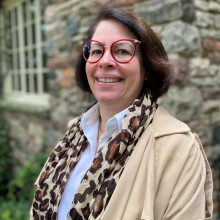
Dr. Ruth Lanius, Lawson Associate Scientist/Professor Schulich School of Medicine & Dentistry
During this ongoing pandemic, some health care workers have experienced emotionally difficult situations that resulted in moral injury. “Those suffering from moral injury have a cognitive or thinking component which may include repeated thoughts that they didn’t provide the best care for example, or that they let their family down due to their intense work schedule or need to self-isolated,” explains Dr. Lanius, who is also a psychiatrist at London Health Sciences Centre (LHSC).
“These thoughts are coupled with intense visceral distress, a gnawing sensation in the stomach or the feeling like one is being eaten up inside. I think once we help resolve the visceral distress, we will also see the negative thinking patterns settle down.”
The new study will involve around 60 health care workers. These research participants will undergo a functional MRI scan at St. Joseph's Health Care London at the beginning of the study and have the option to receive eight weeks of treatment. Then, another MRI scan will be done to see if and how the moral injury changes and possibly resolves within the brain. “This can be very validating for the health care workers since brain scans can make the invisible wound of moral injury visible,” adds Dr. Lanius.
The research team’s goal is to better understand what networks of the brain are activated with moral injury. Dr. Lanius hopes this would help establish more neuroscientifically guided treatments. “We have to help our health care workers heal from the tremendous hardships they often endure.”
Health care workers are still being recruited for this study. Interested participants can contact Research Coordinator Suzy Southwell 519-685-8500 ext. 35186 or @email.
… Wellington Road, London, ON ● Parkwood Institute - Regional Mental Health Care 550 Wellington Road, London ON ● Southwest Centre for Forensic Mental Health (SWCFMH) 467 Sunset Drive, St. Thomas, ON ● … may be interested in becoming a MAID assessor or provider. Mental Health and Addiction Nurses Mental Health and …
The Resident & Fellow Handbook This handbook is the property of: Dr. _____________________________ Resident / Clinical Fellow in the Department of: ________________________________ If found, please return to the Security office or notify me by email at: ________________________________ Preface Th...
… Regional 7,136 hours 6,779 hours 6,422 hours 6,893 hours 0% Mental Health Care London and Southwest (average of Centre for Forensic Mental Health Care Q1-Q3) (Average quarterly total hours of … Regional 7,136 hours 6,779 hours 6,422 hours 6,893 hours 0% Mental Health Care London and Southwest (average of Centre …
June 10, 2015 Roy Butler Vice President Patient Care and Quality Personal and Confidential Dear Roy: Office of the President 268 Grosvenor Street, PO Box 5777 London, ON N6A 4V2 T: 519 646-6100 ext. 64200 F: 519 646-6054 www.sjhc.london.on.ca The purpose of this letter is to share the results of the...
June 9, 2016 Roy Butler Vice President Patient Care and Risk Management Personal and Confidential Dear Roy: Office of the President 268 Grosvenor Street, PO Box 5777 London, ON N6A 4V2 T: 519 646-6100 ext. 64200 F: 519 646-6054 www.sjhc.london.on.ca The purpose of th is letter is to share the result...