


Search
Search
1883 Search Results:
London Health Research Day 2024
All Day
The 2024 London Health Research Day will take place on Tuesday, May 7 at the Mustang Lounge on Western University Campus.
If you are a learner or trainee doing research at Lawson Health Research Institute, Western’s Schulich School of Medicine & Dentistry or the Faculty of Health Sciences, please save the date so you can share your projects with your peers, researchers, faculty and mentors.
Researchers, faculty and staff are also encouraged to attend to support our learners and trainees as they showcase their groundbreaking health research.
Add event to calendar
Apple • Google • Office 365 • Outlook Web • Outlook
London Health Research Day is presented in partnership with Lawson Health Research Institute and the Schulich School of Medicine & Dentistry.
Keynote Address
London Health Research Day (LHRD) 2024’s distinguished keynote speaker is Laura Rosella, PhD, Canada Research Chair in Population Health Analytics at the University of Toronto.
When: 12:15 p.m. – 1:15 p.m. | May 7, 2024
Where: McKellar Room – University Community Centre (UCC) 2nd Floor
Topic: The AI Tipping Point: Future Directions for the Applications of AI for Health
How can we navigate the complex landscape of artificial intelligence (AI) in the health sector? What are the myths, the debates and the skepticism surrounding the role of AI in health care? This keynote addresses these burning questions, outlining a proposed direction, ranging from discovery to clinical and public health applications.
Data and analytics have never been more important in society, particularly for informing health decisions. There has been a rapid change in the nature of data used in health and epidemiologic research and an increased focus on using AI in analyzing those emerging data sources.
There are many conflicting points of view on the utility of AI in an epidemiologic context and a lack of clarity on the implications for medicine and public health.
The keynote will include insights on regulatory considerations required to move these discoveries into practice as well as implications for bias, equity, surveillance, and causal inference. We will conclude by summarizing the implications for epidemiology research and training.
Speaker Biography:
Laura C. Rosella, PhD, is the Stephen Family Research Chair in Community Health at the Institute for Better Health. She is also an epidemiology professor at the Dalla Lana School of Public Health at the University of Toronto. In addition to this, she holds the Canada Research Chair in Population Health Analytics.
Rosella is the Education Lead for the Temerty Centre for Artificial Intelligence Research and Education in Medicine. She is also the Associate Director of Education at the Data Science Institute. Rosella is leading the AI for Public Health Research Training Platform (AI4PH). The platform focuses on building an AI workforce specifically for public health.
She has authored over 260 peer-reviewed publications and has received various accolades, including being named one of Canada’s Top 40 Under 40 and being inducted into the Royal Society of Canada’s (RSC) College of New Scholars.
Register to attend the keynote here.
Public Lecture
Mark Daley, PhD, Chief AI Officer at Western.
When: 6:00 p.m. – 7:15 p.m. | May 6, 2024
Where: Labatt Health Sciences Building - Room 40
Topic: How will AI change us? Two ways. Gradually, then suddenly.
Mark is the Chief AI Officer at Western University and a full professor in the Department of Computer Science with cross-appointments in five other departments, The Rotman Institute of Philosophy, and The Western Institute for Neuroscience. He is also a faculty affiliate of Toronto's Vector Institute for Artificial Intelligence.
Mark has previously served as the Vice-President (Research) at the Canadian Institute for Advanced Research (CIFAR), and Chief Digital Information Officer, Special Advisor to the President, and Associate Vice-President (Research) at Western.
Mark is the past chair of Compute Ontario and serves on a number of other boards.
London Health Research Day 2024 highlights innovation and spotlights the future of AI in health care
Over 400 learners, faculty and researchers from across London Health Sciences Centre (LHSC), St. Joseph’s Health Care London (St. Joseph’s) and Western University gathered for London Health Research Day (LHRD) on May 7, 2024.
LHRD is one of southwestern Ontario’s largest cross-disciplinary health research conferences, and is presented in partnership by Lawson Health Research Institute (the research institute of LHSC and St. Joseph’s) and Western’s Schulich School of Medicine & Dentistry and Faculty of Health Sciences. It is an opportunity for students to share innovative research on a wide variety of health topics, practice science communication, network, and learn from an insightful keynote presentation and informative workshops.
“There is an amazing diversity of health research being conducted in London, Ontario right now, all represented at this event,” says Dr. David Hill, Interim Research Executive and Scientific Director for London Health Sciences Centre (LHSC). “Looking at all these presentations, the future of health research is bright.”
More than 420 guests, 340 poster presenters, 50 volunteer judges and 24 symposia speakers registered to attend the event held at Western University.
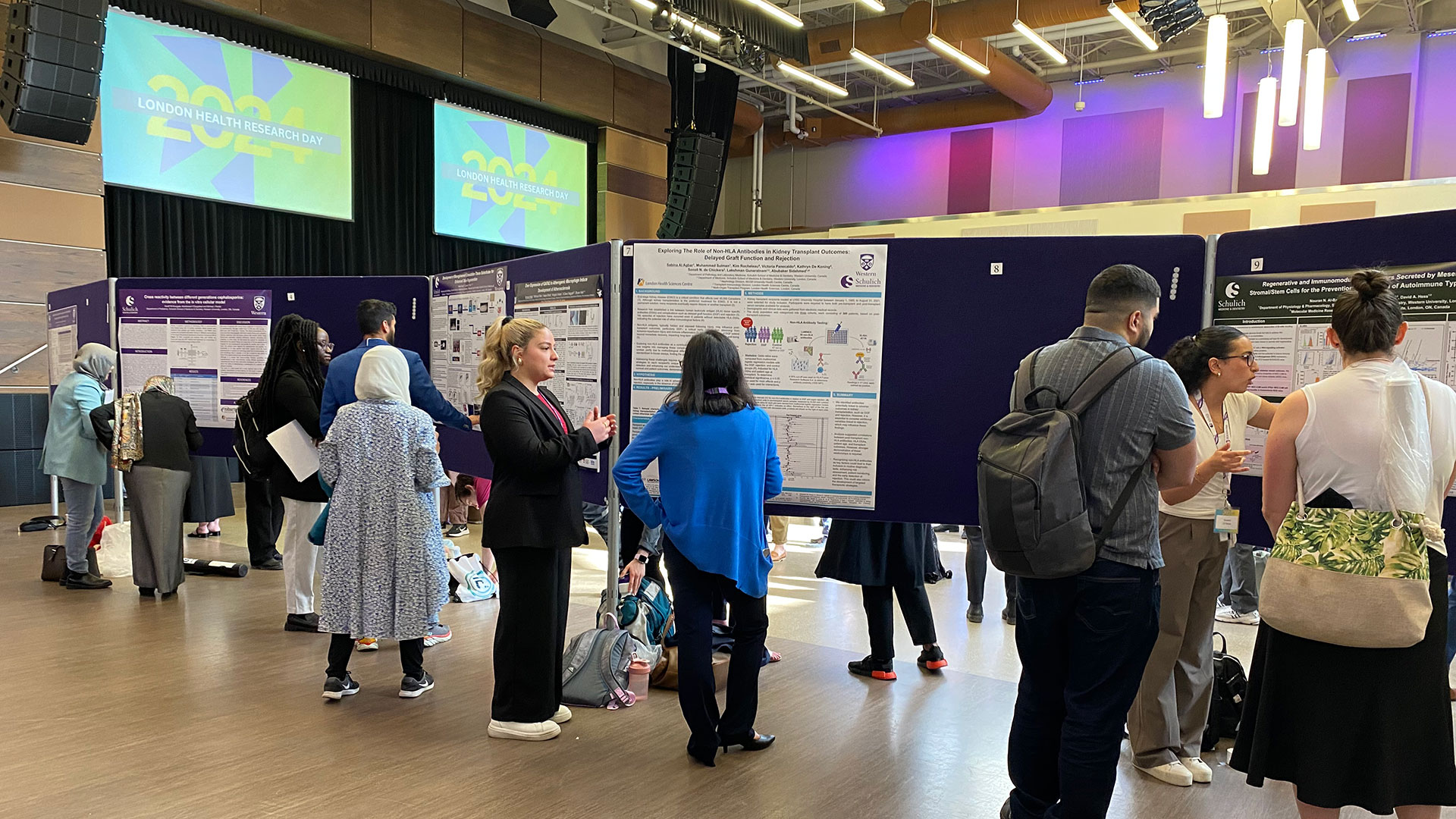
“An event like this, focused on health research by learners, provides an outstanding opportunity for our trainees to showcase their research and network with peers and leaders in the field,” says Susanne Schmid, Vice Dean of Basic Medical Sciences at Schulich Medicine & Dentistry. “As one of the largest health research gatherings in our city, London Health Research Day not only highlights the amazing work being done at Western, LHSC and St. Joseph’s, but also underscores the powerful collaborations that drive our success.”
Dr. Lisa Porter, Vice President, Research and Scientific Director at St. Joseph’s, was also on-hand to speak with presenters and learn more about ongoing research.
“I am so proud of the great research happening in London,” says Dr. Porter. “This event is a wonderful opportunity to explore the fabulous research and see what the future holds for health care.”
The event was preceded on May 6 with a public lecture by Dr. Mark Daley, Chief AI Officer at Western University, who addressed how artificial intelligence (AI) has the potential to change the future of health research and the lives of Canadians. The potential of AI to address ongoing challenges in health care, was echoed by keynote speaker Dr. Laura Rosella, Canada Research Chair in Population Health Analytics at the University of Toronto.
The impact of technology on health research was already visible in many of the projects presented by learners, highlighting the rapid advancement of health research in London, Ontario.
Media Contact
Amanda Taccone
Communications Consultant & External Relations
Lawson Health Research Institute
T: 519-685-8500 ext. ext. 64059
C: 226-919-4748
@email
London Health Research Day highlights importance of science communication
Science communication is a key element of modern health research. From presenting at conferences to sharing research findings with the public, it’s a crucial skill for young researchers to develop.
London Health Research Day (LHRD) provides the opportunity for hundreds of graduate students, trainees, clinical fellows and postdoctoral scholars to practice science communication through the delivery of poster and oral presentations. At the eighth annual LHRD on April 30, more than 400 learners participated from across Lawson Health Research Institute and Western University’s Schulich School of Medicine & Dentistry and Faculty of Health Sciences.
Image
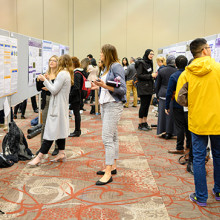
Above: Participants engaging in poster presentations at LHRD 2019
“I love that LHRD brings trainees of all disciplines together to present our work, allowing us to become familiar with the research that is being performed outside of our respective areas. Being recognized with an award for my platform talk made the day even more rewarding,” said Shelby Oke, a PhD candidate working with Dr. Dan Hardy, Scientist at Lawson and Associate Professor at Schulich Medicine & Dentistry. Oke is conducting research to determine how maternal insults during pregnancy, such as a low protein diet, influence fetal growth and development.
This year’s LHRD keynote speaker, Timothy Caulfield, highlighted how science communication is particularly important in the age of misinformation. Caulfield, author of the bestseller Is Gwyneth Paltrow Wrong About Everything ?: When Celebrity Culture and Science Clash and host of the documentary TV series A User’s Guide to Cheating Death, presented as part of The Lucille & Norton Wolf Health Research Lecture Series. His talk, titled “Science vs. Celebrity: A Battle We Must Win,” focused on the important role scientists play in the battle against pseudoscience.
“London Health Research Day is an amazing event. It brings together a unique, engaged and highly interdisciplinary community,” noted Caulfield. “Great energy. Great discussion. Great research. What more do you need? It was an honour to be involved."
Image

Above: Timothy Caulfield
Caulfield also participated in a panel discussion on science communication alongside local science communicators Ramina Adam, Dr. Lorelei Lingard, Dr. David Palma and Dr. Matthew Teeter. The panel was moderated by Carly Weeks, Health Reporter at The Globe and Mail, and focused on the importance of communicating science effectively and responsibly.
“The panel created an incredible opportunity to discuss science communication. I think that it was a great starting point to encourage trainees to get more involved in outreach efforts,” said Ramina Adam, a PhD candidate at Schulich Medicine & Dentistry. “Having that in-depth discussion about the importance of science outreach was a great follow-up to Timothy Caulfield’s keynote presentation and very encouraging for trainees who are passionate about the topic.”
Image

Above: Ramina Adam shares her perspectives as part of the LHRD panel discussion on science communication.
From the presentation of research projects to the panel discussion, LHRD 2019 was an engaging day of networking and professional development that highlighted the scope of health science in London, Ontario.
For a full list of this year’s award recipients and to see the photo gallery, please visit the LHRD website.
London holds 8th place ranking in Canada's Top 40 for hospital-based research
Lawson Health Research Institute is again ranked eighth in the country according to the 2020 edition of “Canada’s Top 40 Research Hospitals List” by Re$earch Infosource. This strong national position has been maintained by Lawson for the past seven consecutive years and keeps the Institute within the top five in Ontario.
Lawson, the research institute of London Health Sciences Centre and St. Joseph’s Health Care London, has also maintained the top ranking for research intensity among the large tier institutions with $600,000 of research spending per researcher.
“Now, more than ever, people are understanding the critical importance of hospital-based research and its impact on health care,” says Dr. David Hill, Lawson Scientific Director and VP, Research for London Health Sciences Centre and St. Joseph’s Health Care London.
“We have remarkable people right here in London working on solutions for health challenges that have a worldwide impact. Their knowledge, creativity and dedication never fail to astound.”
The top 40 list analyzes hospital-based research institutes from across the country on several metrics, including total research income from the previous fiscal year. The ranking looks at funds received from all sources, including both internal and external, to support research at the organization. According to the report, Lawson received $118,796 million in research income in 2019. Despite representing a 4.0 per cent drop from the previous fiscal year, Lawson has maintained its rankings on the national list.
Hospital-based researchers belong to a health system at the forefront of the COVID-19 pandemic. With close proximity to patients and access to samples, they have mobilized to address COVID-19. Many Lawson research teams are implementing pre-clinical, clinical observational and clinical trial studies to prevent or soften the worst effects for patients with COVID-19. They are also studying the long-term and mental health impacts related to the pandemic.
“The COVID-19 pandemic is proving to be one of the most pressing health challenges of our time,” notes Dr. Hill. “Lawson excels in rapid response research and is uniquely positioned to tackle health problems from within hospital walls.”
Quick summary of Lawson's ranking
-
Rank in Top 40 Research Hospitals 2020: 8 (same as 2019)
-
FY2019 research spending: $118,776 million
-
FY2018 research spending: $123,790 million
-
Percentage change 2018-2019: -4.0%
-
Research intensity: $600,000 per researcher
-
Research intensity - percentage of total hospital spending: 7.0%
London Imaging Discovery Day 2017
12:00pm
Tuesday June 27, 2017 will mark the 12th annual London Imaging Discovery Day, an event showcasing the best and brightest residents, fellows, and scientists Schulich Medicine & Dentistry, Medical Imaging has to offer. This year, the venue will be at The Sumner Auditorium, London Health Sciences Centre, Victoria Hospital.
The objectives of the event are as follows:
- To provide a forum for trainees, residents, and graduate students
- To enable residents and graduate students to learn and experience presenting to an audience
- To facilitate a congregation of knowledge with an extensive poster exhibition of research with the department
- To invite Keynote speakers on education and research to showcase their expertise
- To further develop the CANMEDS roles of Communicator and Collaborator through the focus on leadership development and relationship building
The event is free, open to all, and is a great opportunity to review the research at hand, enjoy refreshments and good company, and celebrate our successes over the past year. Our Keynote Speaker this year will be Dr. Chris Watling, Associate Dean , Postgraduate Medical Education, Schulich School of Medicine & Dentistry, Western University. He will be speaking about Building the Foundation: Observation and Feedback in CBME.
London ranks in the top 10 for hospital-based research
Lawson Health Research Institute is ranked eighth in the country according to the 2019 edition of “Canada’s Top 40 Research Hospitals List” by Re$earch Infosource. This strong national position has been maintained by Lawson for the past six years and also keeps the institute within the top five in Ontario.
The results
The research institute of London Health Sciences Centre and St. Joseph’s Health Care London (St. Joseph’s), Lawson has also maintained the top ranking for research intensity among the large tier institutions with $612,800 of research spending per researcher.
“As a hospital-based research institute, our innovation happens where care is delivered,” says Dr. David Hill, Lawson Scientific Director. “Every day, teams of researchers are working directly with clinicians and patients to improve treatments or create entirely new ones. They also find innovative methods of delivering services that drive efficiency and reduce costs.”
Image
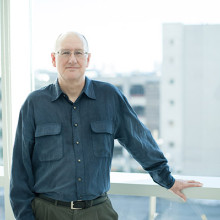
Dr. David Hill, Lawson Scientific Director.
The top 40 list analyzes hospital-based research institutes from across the country on several metrics, including total research income from the previous fiscal year. The ranking looks at funds received from all sources, including both internal and external, to support research at the organization. According to the report, Lawson received $123,790 million in research income in 2018, which represents 0.4 per cent in growth from the previous fiscal year.
“We are known across the country and around the world for our high level of research activity and success, despite our size. London punches well above our weight when it comes to health research,” adds Dr. Hill.
“Our position as a leading research institute is the foundation for brilliant research and worldwide partnerships tackling the most pressing challenges in health care.”
What does this mean for London, Ontario?
There are millions of dollars every year coming in London from elsewhere in Canada and in the world. Approximately 60 per cent of that is spent on jobs. Lawson employs over 2,000 people in hospital-based research. This is a major source of quality employment for Londoners and people in the surrounding region. Dr. Hill notes that this is one of the real benefits of having a strong biomedical industry associated with the city.
“Another real benefit of having research directly in the hospitals is that our researchers focus on gaining knowledge that advances our ability to treat patients and find solutions to wicked problems that have been around for a long time.”
For example, Lawson researchers have been tackling the issue of homelessness from within hospital walls. The No Fixed Address (NFA) strategy reaches and supports patients during the crucial transitional period when they are being discharged from the hospital and re-integrated into the community. Learn more about this successful research initiative.
Image
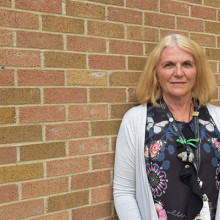
Dr. Cheryl Forchuk, Lawson Scientist leading the NFA strategy in London hospitals.
How are we adapting to the current funding environment?
While federal funding for research in Canada is slowly starting to increase, this sector experienced over a decade of decreasing funding that placed the country far behind other nations in terms of investing in health research.
“We have become better at what we do in competing for grants and other funding sources, in particular from the government,” explains Dr. Hill.
Also, “Lawson has been diversifying our sources of funding. We’ve have engaged in more partnerships with industry and joint research and development projects with companies. Not only does that have the advantage of providing additional resources, but also is often a more practical way of directly delivering our knowledge into salable products”
Strong partnerships
This year, Re$earch Infosource is showcasing “Building Bridges: Pathways to Building Research Capacity and Discovery through Collaboration.” Health researchers in London have collaborations across many sectors that result in big impacts for the people in this region and beyond.
As just one example, a group of scientists from Lawson, Brescia University College and Schulich School of Medicine & Dentistry at Western University provide academic support to London’s Fermented Foods Project that brings together industry partners, the agricultural sector, academic and health institutions, the City of London and the London Economic Development Corporation.
The goals of this group, funded by the Weston Family Microbiome Initiative, are to support new product development and batch production, enhance customer confidence, quantify health benefits and establish a competitive advantage.
Image
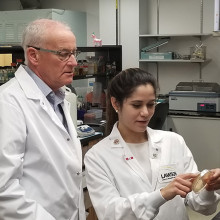
Dr. Gregor Reid, left, is one of the researchers for London's Fermented Foods Project.
Scientist
London ranks in top ten of Canada’s research hospitals
MEDIA RELEASE
For immediate release
January 18th, 2022
LONDON, ON – Lawson Health Research Institute has ranked eighth in the country for the 2021 edition of Canada’s Top 40 Research Hospitals List by Re$earch Infosource. This is the eighth consecutive year that Lawson has maintained this strong national position, which puts the institute within the top five in Ontario.
Lawson, the research institute of London Health Sciences Centre (LHSC) and St. Joseph’s Health Care London, has also maintained the top ranking for research intensity among the large tier institutions with a little more than $600,000 of research spending per researcher.
“This is a validation of the extensive support from LHSC and St. Joseph’s, our hospital foundations, Western University and our staff and physicians,” says Lawson’s Scientific Director Dr. David Hill. “These strong partnerships make the hospital environment in London a nationally recognized centre of discovery and knowledge translation.”
Hospital-based researchers belong to a health system at the forefront of the ongoing COVID-19 pandemic. With close proximity to patients and access to samples, they have mobilized to address COVID-19 in many different ways, and are making a difference around the world when it comes to advances and discoveries.
“The Province of Ontario designated health research as an essential service early in the pandemic,” explains Dr. Hill. “They understood that only science can get us through this, be it through vaccine development, surveillance and testing, evaluating new drugs to help patients in ICU survive, or studying the long-term health impacts. We have made substantial contributions of new knowledge through Lawson.”
The top 40 list analyzes hospital-based research institutes from across the country on several metrics, including total research income from the previous fiscal year. According to the report, Lawson received $121,888 million in research income in 2021.The ranking looks at funds received from all sources, including both internal and external, to support research at LHSC and St. Joseph’s.
Quick summary of Lawson’s ranking
- Rank in Top 40 Research Hospitals 2021: 8 (same as 2020)
- FY2020 research spending: $121,888 million
- Percentage change 2019-2020: 2.6%
- Research intensity: $618,700 thousand per researcher
- Research intensity - percentage of total hospital spending: 7.0%
-30-
About Lawson Health Research Institute: Lawson Health Research Institute is one of Canada’s top hospital-based research institutes, tackling the most pressing challenges in health care. As the research institute of London Health Sciences Centre and St. Joseph’s Health Care London, our innovation happens where care is delivered. Lawson research teams are at the leading-edge of science with the goal of improving health and the delivery of care for patients. Working in partnership with Western University, our researchers are encouraged to pursue their curiosity, collaborate often and share their discoveries widely. Research conducted through Lawson makes a difference in the lives of patients, families and communities around the world. To learn more, visit www.lawsonresearch.ca.
For more information, please contact:
Celine Zadorsky
Communications & External Relations
Lawson Health Research Institute
T: 519-685-8500 ext. 75664
C: 519-619-3872
@email
www.lawsonresearch.ca/news-events
Media Contacts
Celine Zadorsky
Senior Media Relations Consultant
Communications & Public Engagement
T: 519-685-8500 ext. 73502
Celine.zadorsky@lhsc.on.ca
London researchers discover novel method to diagnose long COVID
Study found unique blood biomarkers in patients with post-COVID-19 condition
LONDON, ON – Published this week in Molecular Medicine, researchers at Lawson Health Research Institute have found that patients with post-COVID-19 condition (long COVID) have unique biomarkers in their blood. The team is now working on developing a first of its kind blood test that could be used to diagnose long COVID. The discovery could also lead to new therapeutics for this condition.
Long COVID occurs when someone experiences symptoms like fatigue, cognitive issues, shortness of breath and gastrointestinal issues after an initial COVID-19 diagnosis. It can sometimes take up to 12 months for the condition to occur.
“It’s estimated that 30 to 40 per cent of patients with COVID-19 will develop long COVID,” says Dr. Douglas Fraser, Lawson Scientist and Critical Care Physician at London Health Sciences Centre (LHSC). “Physicians currently rely on symptoms alone to diagnose the condition, but our research offers a unique profile of blood biomarkers that could be used in a clinical test.”
The researchers studied 140 blood samples from participants at LHSC and St. Joseph’s Health Care London, including St. Joseph’s Post-Acute COVID-19 Program. Participants were those with presumed long COVID, hospital inpatients with acute COVID-19 infection and healthy control subjects.
“We chose to study blood vessels that link all the body systems together to look for changes after an acute infection,” explains Dr. Fraser, who is also a Professor at Western University’s Schulich School of Medicine & Dentistry.
The team found that blood vessels of those with presumed long COVID were changing rapidly after a confirmed COVID-19 infection. They also found that patients with long COVID had 14 elevated blood biomarkers associate with blood vessels. With the help of machine learning, they discovered that two biomarkers called ANG-1 and P-SEL could be used to classify long COVID with 96 per cent accuracy.
“Long COVID is a relatively new condition and we have much to learn about it,” says Dr. Michael Nicholson, Associate Scientist at Lawson, Respirologist at St. Joseph’s and Associate Professor at Schulich Medicine & Dentistry. “This research advances our understanding of long COVID with the potential to improve diagnosis and patient care.”
The advantage of biomarkers is that they not only help diagnose a disease but also provide insight into potential treatments. The team is now focused on using their findings to create a clinical diagnostic test with a goal of also exploring therapeutics.
“With a point-of-care diagnostic test, we could confidently diagnose long COVID and eventually develop targeted therapeutics against these blood vessel changes that we have discovered,” says Dr. Fraser. “The ultimate goal is to improve patient outcomes following a long COVID diagnosis.”
This research was supported by funding from London Health Sciences Foundation, London Community Foundation and the AMOSO Innovation Fund. It builds on a growing body of COVID-19 research from scientists at Lawson Health Research Institute.
About Lawson Health Research Institute
Lawson Health Research Institute is one of Canada’s top hospital-based research institutes, tackling the most pressing challenges in health care. As the research institute of London Health Sciences Centre and St. Joseph’s Health Care London, our innovation happens where care is delivered. Lawson research teams are at the leading-edge of science with the goal of improving health and the delivery of care for patients. Working in partnership with Western University, our researchers are encouraged to pursue their curiosity, collaborate often and share their discoveries widely. Research conducted through Lawson makes a difference in the lives of patients, families and communities around the world. To learn more, visit www.lawsonresearch.ca.
Media Contacts
Celine Zadorsky
Senior Media Relations Consultant
Communications & Public Engagement
T: 519-685-8500 ext. 73502
Celine.zadorsky@lhsc.on.ca
London researchers discover novel method to diagnose long COVID
Study found unique blood biomarkers in patients with post-COVID-19 condition
Published this week in Molecular Medicine, researchers at Lawson Health Research Institute have found that patients with post-COVID-19 condition (long COVID) have unique biomarkers in their blood. The team is now working on developing a first of its kind blood test that could be used to diagnose long COVID. The discovery could also lead to new therapeutics for this condition.
Long COVID occurs when someone experiences symptoms like fatigue, cognitive issues, shortness of breath and gastrointestinal issues after an initial COVID-19 diagnosis. It can sometimes take up to 12 months for the condition to occur.
“It’s estimated that 30 to 40 per cent of patients with COVID-19 will develop long COVID,” says Dr. Douglas Fraser, Lawson Scientist and Critical Care Physician at London Health Sciences Centre (LHSC). “Physicians currently rely on symptoms alone to diagnose the condition, but our research offers a unique profile of blood biomarkers that could be used in a clinical test.”
The researchers studied 140 blood samples from participants at LHSC and St. Joseph’s Health Care London, including St. Joseph’s Post-Acute COVID-19 Program. Participants were those with presumed long COVID, hospital inpatients with acute COVID-19 infection and healthy control subjects.
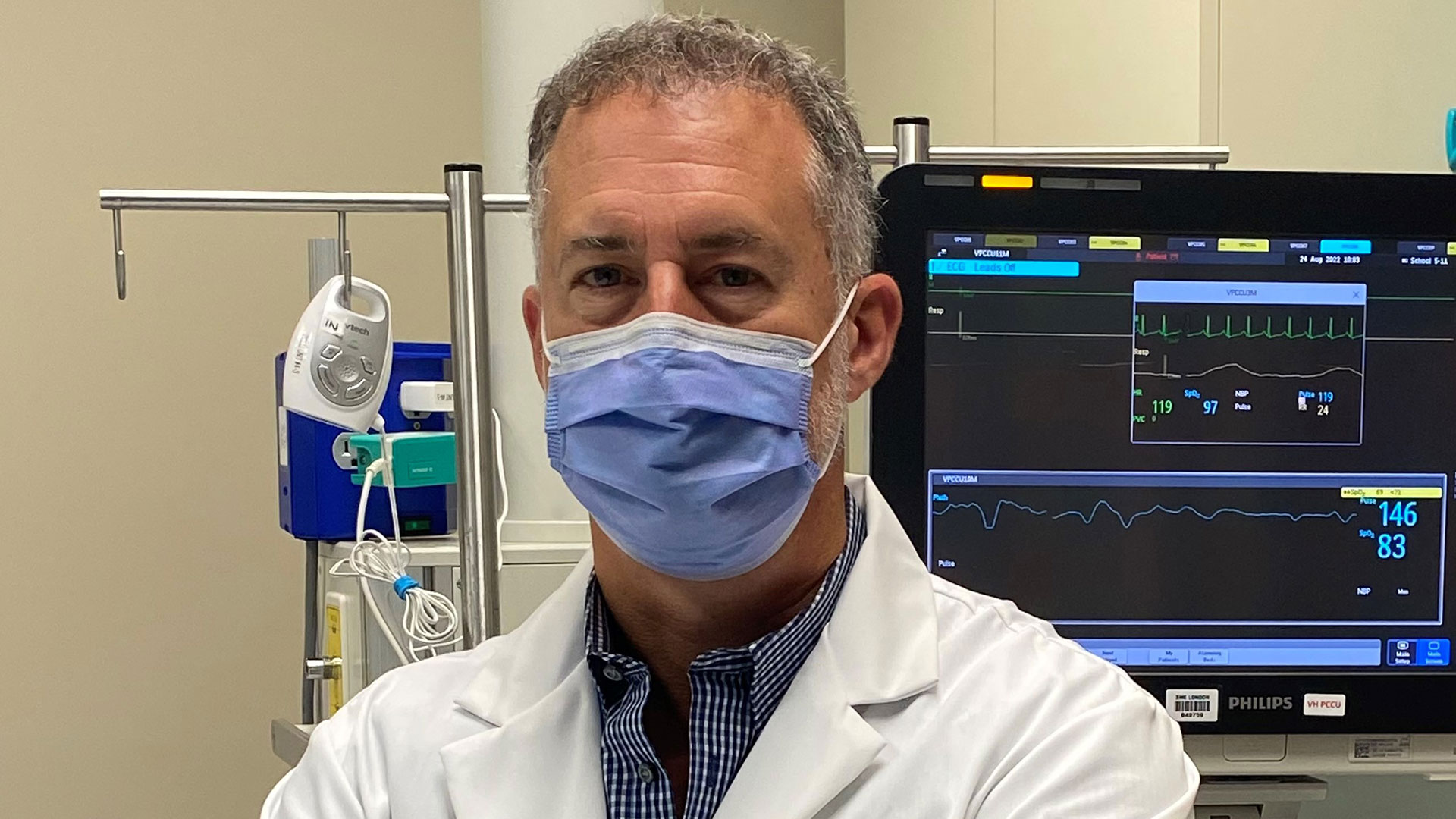
“We chose to study blood vessels that link all the body systems together to look for changes after an acute infection,” explains Dr. Fraser, who is also a Professor at Western University’s Schulich School of Medicine & Dentistry.
The team found that blood vessels of those with presumed long COVID were changing rapidly after a confirmed COVID-19 infection. They also found that patients with long COVID had 14 elevated blood biomarkers associate with blood vessels. With the help of machine learning, they discovered that two biomarkers called ANG-1 and P-SEL could be used to classify long COVID with 96 per cent accuracy.
“Long COVID is a relatively new condition and we have much to learn about it,” says Dr. Michael Nicholson, Associate Scientist at Lawson, Respirologist at St. Joseph’s and Associate Professor at Schulich Medicine & Dentistry. “This research advances our understanding of long COVID with the potential to improve diagnosis and patient care.”
The advantage of biomarkers is that they not only help diagnose a disease but also provide insight into potential treatments. The team is now focused on using their findings to create a clinical diagnostic test with a goal of also exploring therapeutics.
“With a point-of-care diagnostic test, we could confidently diagnose long COVID and eventually develop targeted therapeutics against these blood vessel changes that we have discovered,” says Dr. Fraser. “The ultimate goal is to improve patient outcomes following a long COVID diagnosis.”
This research was supported by funding from London Health Sciences Foundation, London Community Foundation and the AMOSO Innovation Fund. It builds on a growing body of COVID-19 research from scientists at Lawson Health Research Institute.
The study’s first author Maitray Patel, is a MD/PhD candidate from Western’s Schulich Medicine & Dentistry. Patel worked on blood analysis under the supervision of Drs. Doug Fraser and Mark Daley.
Media Contact
Celine Zadorsky
Senior Media Relations Consultant
Communications & Public Engagement
T: 519-685-8500 ext. 73502
Celine.zadorsky@lhsc.on.ca
London researchers get $2.8 million in funding to support mental health and wellbeing of Canadian health care workers
The COVID-19 pandemic has had a tangible impact on the mental health and wellbeing of Canadian health care workers, who have faced challenges that include increased workloads, resource constraints and fears of exposure to COVID-19.

Announced today, researchers out of Lawson Health Research Institute's MacDonald Franklin OSI Research Centre, have received $2.8 million in funding from the Public Health Agency of Canada (PHAC) to launch a project that will support the mental health and wellbeing of Canadian health care workers. The project is titled “Promoting Resilience and Mental Health: Adapting Canada’s Department of National Defence Road to Mental Readiness (R2MR) Program to Support Canadian Health Care Workers.”
The project will adapt the current Road to Mental Readiness Program, created for the Canadian Military. The aim is to identify mental health and wellness barriers in health care institutions, and create a streamlined framework that will build and promote supportive environments within institutions across the nation.
“This program has been a personalized approach with the military, and we are now adapting it to focus on Canadian health care workers,” explains Dr. Anthony Nazarov, Associate Scientist at Lawson and the MacDonald Franklin OSI Research Centre at St. Joseph’s Health Care London. “We want to educate institutions to create an environment that supports wellness not just at the individual level, but at the institutional level as well.”
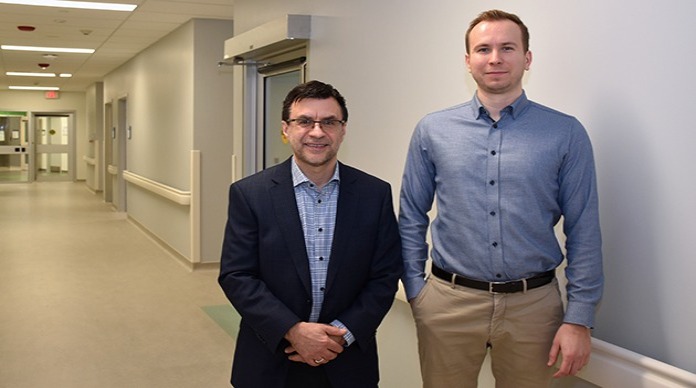
The project, which will span 14 months, will assist in the planning, adaptation and testing of the health care focused Road to Mental Readiness Program.
“One of the main reasons we felt this was necessary stems from a recent study our team conducted that focused on moral distress and the mental health of Canadian health care workers,” says Dr. Don Richardson, Lawson Scientist and Director of the MacDonald Franklin OSI Research Centre at St. Joseph’s. “Our preliminary study results found that many Canadian health care workers have been negatively impacted by the pandemic with conditions such as; posttraumatic stress disorder, stress and depression.”
Once the research team has adapted the current Road to Mental Readiness Program, they will test it with health care workers to confirm its efficacy.
“We hope to have this type of resiliency program adopted by health care organizations across the country,” explains Dr. Richardson. “If proven effective, this would provide additional tools to health care workers to help them cope, improve their resiliency and hopefully mitigate future staff shortages.”
The funding is part of the federal 2021 budget which has committed an investment of $50 million over two years to support projects that address posttraumatic stress disorder and trauma in frontline and essential workers, and others affected by the pandemic. The nine projects announced, totaling an investment of $28.2 million, is the first round of projects being supported through this Budget 2021 commitment.
Scientist
Partners
Media Contact
Celine Zadorsky
Senior Media Relations Consultant
Communications & Public Engagement
T: 519-685-8500 ext. 73502
Celine.zadorsky@lhsc.on.ca
London researchers get $2.8 million in funding to support mental health and wellbeing of Canadian health care workers
LONDON, ON - The COVID-19 pandemic has had a tangible impact on the mental health and wellbeing of Canadian health care workers, who have faced challenges that include increased workloads, resource constraints and fears of exposure to COVID-19.
Announced today, researchers out of Lawson Health Research Institute's MacDonald Franklin OSI Research Centre, have received $2.8 million in funding from the Public Health Agency of Canada (PHAC) to launch a project that will support the mental health and wellbeing of Canadian health care workers. The project is titled “Promoting Resilience and Mental Health: Adapting Canada’s Department of National Defence Road to Mental Readiness (R2MR) Program to Support Canadian Health Care Workers.”
The project will adapt the current Road to Mental Readiness Program, created for the Canadian Military. The aim is to identify mental health and wellness barriers in health care institutions, and create a streamlined framework that will build and promote supportive environments within institutions across the nation.
“This program has been a personalized approach with the military, and we are now adapting it to focus on Canadian health care workers,” explains Dr. Anthony Nazarov, Associate Scientist at Lawson and the MacDonald Franklin OSI Research Centre at St. Joseph’s Health Care London. “We want to educate institutions to create an environment that supports wellness not just at the individual level, but at the institutional level as well.”
The project, which will span 14 months, will assist in the planning, adaptation and testing of the health care focused Road to Mental Readiness Program.
“One of the main reasons we felt this was necessary stems from a recent study our team conducted that focused on moral distress and the mental health of Canadian health care workers,” says Dr. Don Richardson, Lawson Scientist and Director of the MacDonald Franklin OSI Research Centre at St. Joseph’s. “Our preliminary study results found that many Canadian health care workers have been negatively impacted by the pandemic with conditions such as; posttraumatic stress disorder, stress and depression.”
Once the research team has adapted the current Road to Mental Readiness Program, they will test it with health care workers to confirm its efficacy.
“We hope to have this type of resiliency program adopted by health care organizations across the country,” explains Dr. Richardson. “If proven effective, this would provide additional tools to health care workers to help them cope, improve their resiliency and hopefully mitigate future staff shortages.”
The funding is part of the federal 2021 budget which has committed an investment of $50 million over two years to support projects that address posttraumatic stress disorder and trauma in frontline and essential workers, and others affected by the pandemic. The nine projects announced, totaling an investment of $28.2 million, is the first round of projects being supported through this Budget 2021 commitment.
About Lawson Health Research Institute
Lawson Health Research Institute is one of Canada’s top hospital-based research institutes, tackling the most pressing challenges in health care. As the research institute of London Health Sciences Centre and St. Joseph’s Health Care London, our innovation happens where care is delivered. Lawson research teams are at the leading-edge of science with the goal of improving health and the delivery of care for patients. Working in partnership with Western University, our researchers are encouraged to pursue their curiosity, collaborate often and share their discoveries widely. Research conducted through Lawson makes a difference in the lives of patients, families and communities around the world. To learn more, visit www.lawsonresearch.ca.
Media Contacts
Celine Zadorsky
Senior Media Relations Consultant
Communications & Public Engagement
T: 519-685-8500 ext. 73502
Celine.zadorsky@lhsc.on.ca
London researchers join global initiative to study loss of smell in COVID-19 patients
LONDON, ON – As part of an initiative called the Global Consortium for Chemosensory Research (GCCR), scientists at Lawson Health Research Institute and Western University are studying the sudden loss of smell in COVID-19 patients. They are asking individuals with confirmed or presumptive cases of COVID-19 worldwide to participate in a survey to better understand this symptom.
A sudden loss of smell, called anosmia, has been widely reported as a marker of COVID-19. More research is needed but emerging evidence suggests that more than 60 per cent of COVID-19 patients experience anosmia and that it is often the first symptom of the disease.
“While a sudden loss of smell is relatively rare, it is most commonly caused by an upper respiratory tract infection. It therefore stands to reason that COVID-19 could be causing anosmia,” says Dr. Leigh Sowerby, Associate Scientist at Lawson and Associate Professor at Western University’s Schulich School of Medicine & Dentistry. “Colleagues in the United Kingdom first made note of this with a surge of patients presenting with sudden loss of smell and many of these patients went on to develop COVID-19.”
In the new study, patients with loss of smell will answer questions through a publicly accessible survey. They will be asked about their experiences with COVID-19 and other respiratory illnesses. An immediate goal is to better understand the association between anosmia and COVID-19, and determine if loss of smell is the same in symptomatic and asymptomatic patients. The team also hopes to determine if loss of smell happens before other symptoms of COVID-19 as it could allow for earlier self-isolation advice.
“As a sinus surgeon, I see many patients who have lost their sense of smell. It really is the forgotten sense; we don’t appreciate smell until it’s gone,” explains Dr. Sowerby, who is also an Otolaryngologist at St. Joseph’s Health Care London. “Smell is a very important part of taste. Imagine if all food tasted like cardboard, and all you could do was make that cardboard taste spicy, salty, sweet or bitter. It can also be a safety concern if you cannot smell a gas leak, burning food or smoke.”
While there are existing therapies that can aid in regaining a sense of smell, it’s currently unknown whether they are effective for COVID-19 patients.
“We don’t yet know the long-term consequences of anosmia in COVID-19 patients and that’s why this research is important,” adds Dr. Sowerby. “I encourage anyone who has been diagnosed with COVID-19 or another respiratory illness to complete our survey if able.”
The GCCR survey is currently available in 10 languages at www.covidandsmell.com.
-30-
DOWNLOADABLE MEDIA
Image
About Lawson Health Research Institute
Lawson Health Research Institute is one of Canada’s top hospital-based research institutes, tackling the most pressing challenges in health care. As the research institute of London Health Sciences Centre and St. Joseph’s Health Care London, our innovation happens where care is delivered. Lawson research teams are at the leading-edge of science with the goal of improving health and the delivery of care for patients. Working in partnership with Western University, our researchers are encouraged to pursue their curiosity, collaborate often and share their discoveries widely. Research conducted through Lawson makes a difference in the lives of patients, families and communities around the world. To learn more, visit www.lawsonresearch.ca.
About Western
Western delivers an academic experience second to none. Since 1878, The Western Experience has combined academic excellence with life-long opportunities for intellectual, social and cultural growth in order to better serve our communities. Our research excellence expands knowledge and drives discovery with real-world application. Western attracts individuals with a broad worldview, seeking to study, influence and lead in the international community.
About Global Consortium for Chemosensory Research
The Global Consortium for Chemosensory Research (GCCR) is a group of global transdisciplinary scientists, clinicians, and patient advocates founded in response to the COVID-19 pandemic. With more than 500 members in 30 countries, the GCCR will harness their reach to conduct and analyze worldwide evidence-based research to combat the spread of COVID-19.
Media Contacts
Celine Zadorsky
Senior Media Relations Consultant
Communications & Public Engagement
T: 519-685-8500 ext. 73502
Celine.zadorsky@lhsc.on.ca
London researchers join global initiative to study loss of smell in COVID-19 patients
As part of an initiative called the Global Consortium for Chemosensory Research (GCCR), scientists at Lawson Health Research Institute and Western University are studying the sudden loss of smell in COVID-19 patients. They are asking individuals with confirmed or presumptive cases of COVID-19 worldwide to participate in a survey to better understand this symptom.
A sudden loss of smell, called anosmia, has been widely reported as a marker of COVID-19. More research is needed but emerging evidence suggests that more than 60 per cent of COVID-19 patients experience anosmia and that it is often the first symptom of the disease.
“While a sudden loss of smell is relatively rare, it is most commonly caused by an upper respiratory tract infection. It therefore stands to reason that COVID-19 could be causing anosmia,” says Dr. Leigh Sowerby, Associate Scientist at Lawson and Associate Professor at Western University’s Schulich School of Medicine & Dentistry. “Colleagues in the United Kingdom first made note of this with a surge of patients presenting with sudden loss of smell and many of these patients went on to develop COVID-19.”
In the new study, patients with loss of smell will answer questions through a publicly accessible survey. They will be asked about their experiences with COVID-19 and other respiratory illnesses. An immediate goal is to better understand the association between anosmia and COVID-19, and determine if loss of smell is the same in symptomatic and asymptomatic patients. The team also hopes to determine if loss of smell happens before other symptoms of COVID-19 as it could allow for earlier self-isolation advice.
“As a sinus surgeon, I see many patients who have lost their sense of smell. It really is the forgotten sense; we don’t appreciate smell until it’s gone,” explains Dr. Sowerby, who is also an Otolaryngologist at St. Joseph’s Health Care London. “Smell is a very important part of taste. Imagine if all food tasted like cardboard, and all you could do was make that cardboard taste spicy, salty, sweet or bitter. It can also be a safety concern if you cannot smell a gas leak, burning food or smoke.”
While there are existing therapies that can aid in regaining a sense of smell, it’s currently unknown whether they are effective for COVID-19 patients.
“We don’t yet know the long-term consequences of anosmia in COVID-19 patients and that’s why this research is important,” adds Dr. Sowerby. “I encourage anyone who has been diagnosed with COVID-19 or another respiratory illness to complete our survey if able.”
The GCCR survey is currently available in 10 languages at www.covidandsmell.com.
Scientist
London researchers team up with Diagnostics Biochem Canada to study COVID-19
LONDON, ON – Researchers at Lawson Health Research Institute (Lawson) and Western University have teamed up with local biotech company, Diagnostics Biochem Canada Inc. (DBC), to help us better understand COVID-19 and the body’s immune response to the infection.
A recently published study followed 28 critically ill patients at London Health Sciences Centre (LHSC); 14 who tested positive for COVID-19 and 14 who tested negative. They also followed 14 mildly ill non-hospitalized patients with COVID-19 and 14 healthy controls. The researchers tracked their body’s immune responses and found that all COVID-19 positive patients had a robust antibody response to the infection, even those with poorer outcomes.
“Our previous research showed that in severe cases of COVID-19, the body produces what’s called a cytokine storm, or an intense, initial immune response. However, in this new study, we observed that after a few days and weeks in critical care, the body produced a later, humoral antibody response that is equivalent to what we would expect with any similar infection,” explains Dr. Douglas Fraser, lead researcher and Critical Care Physician at LHSC.
Patients with COVID-19 reacted to the infection and produced ample anti-SARS-CoV-2 antibodies, including those who passed away. This finding suggests that blunted immune responses – when there is a lack of antibody production - did not contribute to mortality. Dr. Fraser says that based on their data, the focus of treatment should shift to combatting the viral load a person receives, and the body’s more immediate reaction to the infection.
This research was made possible through a collaboration between Lawson, Western and DBC, with DBC providing the serological testing kits.
“DBC was the first Canadian company to launch Health Canada-authorized serological tests for COVID-19 and we are happy that our scientists have been working with Lawson on this important study. We look forward to continuing this collaboration and supplying Canadian labs with much needed serological tests,” says Manon Hogue, CEO at DBC.
Analyzing serum antibody levels using a blood test could help improve patient outcomes by allowing early identification of who may require certain treatments, and guide decisions around patient cohorting. In addition, serological testing allows for viral surveillance and its immunity in the community.
London West MP, Kate Young adds, “London is once again showing the world that we are leading the way in scientific research into our most pressing health issues. It’s great to see a local business, Diagnostics Biochem Canada Inc., team up with the Lawson Health Research Institute to help better understand Covid-19. Working together they will help us unlock the keys to how Covid-19 impacts the body’s immune system.”
The study, “Critically Ill COVID-19 Patients Exhibit Anti-SARS-CoV-2 Serological Responses,” is published in the journal Pathophysiology.
-30-
About Lawson Health Research Institute
Lawson Health Research Institute is one of Canada’s top hospital-based research institutes, tackling the most pressing challenges in health care. As the research institute of London Health Sciences Centre and St. Joseph’s Health Care London, our innovation happens where care is delivered. Lawson research teams are at the leading-edge of science with the goal of improving health and the delivery of care for patients. Working in partnership with Western University, our researchers are encouraged to pursue their curiosity, collaborate often and share their discoveries widely. Research conducted through Lawson makes a difference in the lives of patients, families and communities around the world. To learn more, visit www.lawsonresearch.ca.
About Diagnostics Biochem Canada Inc.
We have been exporting our products around the globe for over 47 years. As a leader in the industry, it has always been our goal to offer a wide range of test kits and continually introduce new and unique products to the marketplace. It is our strong commitment to research, development, and manufacture that has enabled us to offer our customers ongoing, unique, and quality products.
About The Schulich School of Medicine & Dentistry
The Schulich School of Medicine & Dentistry at Western University is one of Canada’s preeminent medical and dental schools. Established in 1881, it was one of the founding schools of Western University and is known for being the birthplace of family medicine in Canada. For more than 130 years, the School has demonstrated a commitment to academic excellence and a passion for scientific discovery.
Media Contacts
Celine Zadorsky
Senior Media Relations Consultant
Communications & Public Engagement
T: 519-685-8500 ext. 73502
Celine.zadorsky@lhsc.on.ca
London researchers working on a proactive approach to inclusiveness in the classroom
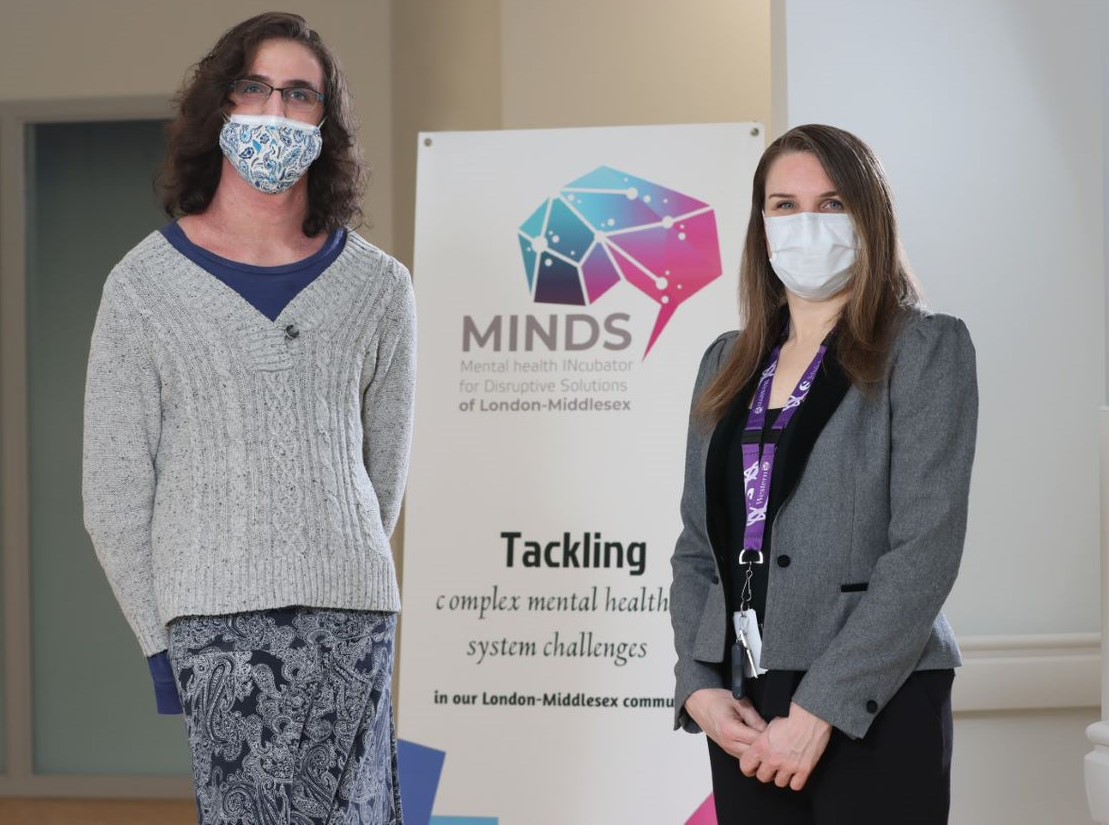
LONDON, ON – Researchers at Lawson Health Research Institute have launched a pilot study and pilot project called Queer in the Classroom, to examine the benefits of a proactive, inclusive approach within the education system for those who are part of the 2SLBTGQIA+ student community.
“The Queer in the Classroom initiative is so important because when we look at the data, youth in the 2SLGBTQIA+ community are 14 times more likely to die by suicide,” says Dr. Arlene MacDougall, Lawson Scientist, Director of MINDS and Psychiatrist at St. Joseph’s Health Care London. “We need to be focusing on this population who are also experiencing a higher degree of isolation, stigma and substance use.”
The pilot project focuses on professional development for teachers and staff to help create an environment that is tailored to best support 2SLGBTQIA+ students through the additional stress they face as a minority group.
“This project is about connecting with school boards and teachers to help develop the knowledge and skills to create spaces that go beyond tolerating differences,” explains MacDougall. “The focus is to create an environment that is more affirming, that is more responsive and more proactive rather than reactive.”
The foundation for the pilot project came from a scoping review of existing research on this topic conducted by the research team through the Mental Health INcubator for Disruptive Solutions (MINDS), that looked extensively at how teachers themselves can create a classroom that embraces all students.
“We further conducted our own research based on a series of interviews of 2SLGBTQIA+ students at both elementary and secondary schools in Ontario, and their parents and teachers. We focused on not only their safety in school, but also being celebrated for who they are,” says Iylah Neves, Lawson Research Assistant through MINDS. “We drew on all of this research to best inform the practices we are using with the Queer in the Classroom initiative.”
Currently the Queer in the Classroom project is being rolled out on a ‘by-request’ basis. However, the research team is working with a couple of school boards within Ontario to discuss the possibility of wider implementation.
“Queer in the Classroom has been driven by the voices of students with personal experiences who feel there is a deep need for this type of innovation,” says Neves. “It is our responsibility to make those changes so that students can access a safe, inclusive and nurturing environment.”
About Lawson Health Research Institute
Lawson Health Research Institute is one of Canada’s top hospital-based research institutes, tackling the most pressing challenges in health care. As the research institute of London Health Sciences Centre and St. Joseph’s Health Care London, our innovation happens where care is delivered. Lawson research teams are at the leading-edge of science with the goal of improving health and the delivery of care for patients. Working in partnership with Western University, our researchers are encouraged to pursue their curiosity, collaborate often and share their discoveries widely. Research conducted through Lawson makes a difference in the lives of patients, families and communities around the world. To learn more, visit www.lawsonresearch.ca.
Media Contacts
Celine Zadorsky
Senior Media Relations Consultant
Communications & Public Engagement
T: 519-685-8500 ext. 73502
Celine.zadorsky@lhsc.on.ca
London researchers working on a proactive approach to inclusiveness in the classroom
Researchers at Lawson Health Research Institute have launched a pilot study and pilot project called Queer in the Classroom, to examine the benefits of a proactive, inclusive approach within the education system for those who are part of the 2SLBTGQIA+ student community.
“The Queer in the Classroom initiative is so important because when we look at the data, youth in the 2SLGBTQIA+ community are 14 times more likely to die by suicide,” says Dr. Arlene MacDougall, Lawson Scientist, Director of MINDS and Psychiatrist at St. Joseph’s Health Care London. “We need to be focusing on this population who are also experiencing a higher degree of isolation, stigma and substance use.”
The pilot project focuses on professional development for teachers and staff to help create an environment that is tailored to best support 2SLGBTQIA+ students through the additional stress they face as a minority group.
“This project is about connecting with school boards and teachers to help develop the knowledge and skills to create spaces that go beyond tolerating differences,” explains MacDougall. “The focus is to create an environment that is more affirming, that is more responsive and more proactive rather than reactive.”
The foundation for the pilot project came from a scoping review of existing research on this topic conducted by the research team through the Mental Health INcubator for Disruptive Solutions (MINDS), that looked extensively at how teachers themselves can create a classroom that embraces all students.
“We further conducted our own research based on a series of interviews of 2SLGBTQIA+ students at both elementary and secondary schools in Ontario, and their parents and teachers. We focused on not only their safety in school, but also being celebrated for who they are,” says Iylah Neves, Lawson Research Assistant through MINDS. “We drew on all of this research to best inform the practices we are using with the Queer in the Classroom initiative.”
Currently the Queer in the Classroom project is being rolled out on a ‘by-request’ basis. However, the research team is working with a couple of school boards within Ontario to discuss the possibility of wider implementation.
“Queer in the Classroom has been driven by the voices of students with personal experiences who feel there is a deep need for this type of innovation,” says Neves. “It is our responsibility to make those changes so that students can access a safe, inclusive and nurturing environment.”
London scientists clinch $2 million in federal funding to develop better imaging tools for brain disease
LONDON, ON – Lawson Health Research Institute has been awarded over $2 million in federal funding for a project focusing on two unique medical imaging systems designed to give unparalleled insight into brain function and disease.
Today, the Right Honourable Justin Trudeau, Prime Minister of Canada, announced more than $518 million in research infrastructure support through the Canada Foundation for Innovation (CFI). In a live conversation today at 1 p.m., the Honourable François-Philippe Champagne, Minister of Innovation, Science and Industry, will share more about how the funding will support 102 state-of-the-art projects at 35 post-secondary institutions and research hospitals across the country - helping Canada remain at the forefront of exploration, innovation and discovery.
“Imaging technologies, such as MRI and PET scanners, have revolutionized our understanding and treatment of major neurological diseases, including dementia and mental illness, by allowing us to study disease mechanisms and their impact on brain health,” says Dr. Keith St. Lawrence, Lawson Scientist and project co-lead. “We are developing and testing two leading-edge systems that will enable imaging of key vascular, metabolic and molecular factors linked to disease.”
The first system is a head-only PET (positron emission tomography) insert that can be placed in any clinical MRI machine. Combining the molecular specificity of PET with the structural and functional capabilities of MRI, the possibilities for brain imaging will be greatly enhanced. The head-only PET insert being tested in London has been developed by Cubresa Inc., located in Winnipeg, Manitoba.
“Combined with deep-learning approaches, we could achieve a highly improved sensitivity of the PET insert and reduce the radiation dose by up to 50 times compared to whole-body imaging,” explains Dr. Jonathan Thiessen, Lawson Scientist and project co-lead. “This will be the first commercially available high-resolution brain PET/MRI installed in the world.”
For example, better diagnosis of different forms of dementias would be possible and researchers could closely compare protein abnormalities in the brain with cognitive function. The low radiation dose allows for long-term studies investigating changes in the brain and neuroinflammation that can lead to major psychiatric diseases and cognitive degeneration or disability.
The second system uses portable, state-of-the-art optical imaging to increase the reliability of bedside brain monitoring to provide rapid assessment of brain health in restrictive environments.
“We believe this technology will demonstrate how biomedical optics can improve neurological outcome for surgery and patients in intensive care, provide an accessible technology for assessing neurovascular health, and become a clinically relevant tool for monitoring changes in brain function,” says Dr. St. Lawrence.
With current systems, the type of data is limited and extremely vulnerable to signal contamination from the scalp which can overshadow signals from the brain. Using the team’s specialized detection approach, the scalp signal contributions could be greatly reduced to get more accurate information on markers of brain activity, such as cerebral blood flow and energy metabolism.
The team will study use of the system in surgical and intensive-care settings to monitor for cerebral ischemia and metabolic stress, which are the major causes of brain injury. They will also monitor treatment in patients with schizophrenia and study dysfunction in the brain associated with negative symptoms, as cognitive impairment deteriorates with age for some people with the disease. Another goal is to develop a brain-computer interface for patients who are incapable of physical communication.
“With this funding, we can develop a truly unique advancement that has the potential to test the limits of optics for brain applications,” adds Dr. Thiessen. These two imaging platforms build on previous investments in Lawson Imaging that now exceed over $40 million in research funds since the initial CFI support in hybrid imaging in 2007.
-30-
About Lawson Health Research Institute
Lawson Health Research Institute is one of Canada’s top hospital-based research institutes, tackling the most pressing challenges in health care. As the research institute of London Health Sciences Centre and St. Joseph’s Health Care London, our innovation happens where care is delivered. Lawson research teams are at the leading-edge of science with the goal of improving health and the delivery of care for patients. Working in partnership with Western University, our researchers are encouraged to pursue their curiosity, collaborate often and share their discoveries widely. Research conducted through Lawson makes a difference in the lives of patients, families and communities around the world. To learn more, visit www.lawsonresearch.ca.
Media Contacts
Celine Zadorsky
Senior Media Relations Consultant
Communications & Public Engagement
T: 519-685-8500 ext. 73502
Celine.zadorsky@lhsc.on.ca
London scientists clinch $2 million in federal funding to develop better imaging tools for brain disease
Lawson Health Research Institute has been awarded over $2 million in federal funding for a project focusing on two unique medical imaging systems designed to give unparalleled insight into brain function and disease.
The Right Honourable Justin Trudeau, Prime Minister of Canada, announced more than $518 million in research infrastructure support through the Canada Foundation for Innovation (CFI).
“Canada's researchers and scientists are some of the brightest and most skilled in the world. These investments will ensure that they have the cutting-edge laboratories and equipment needed to help us build a Canada that is healthier, greener, and more competitive," says The Rt. Hon. Justin Trudeau, Prime Minister of Canada.
In a live conversation, the Honourable François-Philippe Champagne, Minister of Innovation, Science and Industry, shared more about how the funding will support 102 state-of-the-art projects at 35 post-secondary institutions and research hospitals across the country - helping Canada remain at the forefront of exploration, innovation and discovery.
Image
The first system is a head-only PET (positron emission tomography) insert that can be placed in any clinical MRI machine. Combining the molecular specificity of PET with the structural and functional capabilities of MRI, the possibilities for brain imaging will be greatly enhanced. The head-only PET insert being tested in London has been developed by Cubresa Inc., located in Winnipeg, Manitoba.
Image

For example, better diagnosis of different forms of dementias would be possible and researchers could closely compare protein abnormalities in the brain with cognitive function. The low radiation dose allows for long-term studies investigating changes in the brain and neuroinflammation that can lead to major psychiatric diseases and cognitive degeneration or disability.
The second system uses portable, state-of-the-art optical imaging to increase the reliability of bedside brain monitoring to provide rapid assessment of brain health in restrictive environments.
“We believe this technology will demonstrate how biomedical optics can improve neurological outcome for surgery and patients in intensive care, provide an accessible technology for assessing neurovascular health, and become a clinically relevant tool for monitoring changes in brain function,” says Dr. St. Lawrence.
With current systems, the type of data is limited and extremely vulnerable to signal contamination from the scalp which can overshadow signals from the brain. Using the team’s specialized detection approach, the scalp signal contributions could be greatly reduced to get more accurate information on markers of brain activity, such as cerebral blood flow and energy metabolism.
The team will study use of the system in surgical and intensive-care settings to monitor for cerebral ischemia and metabolic stress, which are the major causes of brain injury. They will also monitor treatment in patients with schizophrenia and study dysfunction in the brain associated with negative symptoms, as cognitive impairment deteriorates with age for some people with the disease. Another goal is to develop a brain-computer interface for patients who are incapable of physical communication.
“With this funding, we can develop a truly unique advancement that has the potential to test the limits of optics for brain applications,” adds Dr. Thiessen.
These two imaging platforms build on previous investments in Lawson Imaging that now exceed over $40 million in research funds since the initial CFI support in hybrid imaging in 2007. London is home to Canada’s first whole body PET/MRI scanner that was installed at St. Joseph’s Hospital, part of St. Joseph’s Health Care London.
Scientist
London scientists key players in national dementia strategy
LONDON, ON – Researchers in London have been awarded $1.345 million over five years through the second phase of the Canadian Consortium on Neurodegeneration in Aging (CCNA), announced today as part of Canada’s national dementia strategy. CCNA is a collaborative research program tackling the challenge of dementia and other neurodegenerative illnesses.
Dr. Manuel Montero-Odasso, Scientist at Lawson Health Research Institute, is world renowned for his findings on the relationship between cognition and mobility in the elderly, and gait as a predictor of frailty and dementia. He leads the Mobility, Exercise and Cognition (MEC) Team in London, comprised of top researchers in the areas of mobility, exercise and brain health.
“Evidence from other countries with national dementia strategies shows that coordinated, targeted efforts at the national level improves results for all aspects of dementia care and also for research,” says Dr. Montero-Odasso, also a geriatrician and Director of the Gait and Brain Lab at Parkwood Institute, a part of St. Joseph’s Health Care London.
CCNA was purpose-built to synergize dementia research within the Canadian context. Phase I saw the creation of infrastructure fostering collaboration amongst Canadian researchers, and there are now 20 teams built around important research topics.
“This kind of effective national collaboration by scientists and clinicians from many disciplines gives the CCNA a cutting edge in research, prevention, treatment and management of all forms of dementia,” explains Dr. Montero-ODasso. “We created a national network of researchers form west to east coast with a high level of expertise to deliver lifestyle interventions to improve cognition and slow down progression to dementia. I feel privileged working with such excellent investigators and leading this important endeavour locally.”
The MEC team has several projects in the works, but the majority of the new funding is to complete the SYNERGIC Trial, SYNchronizing Exercises and Remedies on Gait and Cognition.
This first-in-the-world clinical study is testing a triple intervention aimed at treating Mild Cognitive Impairment (MCI) and delaying the onset of dementia. The SYNERGIC Trial incorporates physical exercises and cognitive training, along with vitamin D supplementation to determine the best treatment for improving mobility and cognition.
“We are looking at how interventions will work together and targeting cognitive decline at its earliest stage – individuals with MIC,” explains Dr. Montero-Odasso. “Both physical and cognitive exercises have shown promising effects for maintaining cognition, while vitamin D deficiency is associated with cognitive decline.”
A professor at Western University’s Schulich Medicine & Dentistry, Dr. Montero-Odasso partners with researchers from across the city including Dr. Rob Bartha, imaging scientist at Schulich Medicine & Dentistry and Robarts Research Institute at Western University, and Dr. Kevin Schoemaker who leads the Laboratory for Brain and Heart Health.
Study participants in the SYNERGIC Trial are asked to complete an individualized and progressive routine of exercises and cognitive training three times a week for six months, with one final assessment at 12 months. The main site for the study is Parkwood Institute with the physical exercises taking place at the Labatt Health Sciences Building on the Western campus.
“Our preliminary analysis is giving us a strong indication that a multimodal approach, combining physical exercise, cognitive training and supplementation, has a synergistic effect. It seems the whole is greater than the sum of its parts,” says Dr. Montero-Odasso.
To date, 138 research patients has been recruited across multiple sites in Canada. Individuals over 60 years old with mild cognitive impairment without dementia are eligible for this clinical trial. Those interested in participating are encouraged to contact a Lawson research coordinator at 519-685-4292 ext. 42910.
Dr. Montero-Odasso adds that “as our population ages, a comprehensive strategy is vital to ensure the growing number of those living with dementia receive the care and support they deserve. Over half a million Canadians are currently living with dementia. By 2031, this number is expected to nearly double.” More than one third of dementia cases might be preventable.
'In CCNA’s Phase II, researchers are working on analyzing the overall health of every patient in a large clinical cohort study, COMPASS-ND. This information will be used to enhance understanding of how changes in the brain affect dementia severity and ways to reduce and prevent this through lifestyle changes. Lawson is the leading recruitment site for COMPASS-ND and the London team will be instrumental in the larger lifestyle interventions moving forward.
CCNA is funded by the Government of Canada, Canadian Institutes of Health Research (CIHR) and other funding partners.
-30-
About Lawson Health Research Institute
Lawson Health Research Institute is one of Canada’s top hospital-based research institutes, tackling the most pressing challenges in health care. As the research institute of London Health Sciences Centre and St. Joseph’s Health Care London, our innovation happens where care is delivered. Lawson research teams are at the leading-edge of science with the goal of improving health and the delivery of care for patients. Working in partnership with Western University, our researchers are encouraged to pursue their curiosity, collaborate often and share their discoveries widely. Research conducted through Lawson makes a difference in the lives of patients, families and communities around the world. To learn more, visit www.lawsonresearch.ca.
Media Contacts
Celine Zadorsky
Senior Media Relations Consultant
Communications & Public Engagement
T: 519-685-8500 ext. 73502
Celine.zadorsky@lhsc.on.ca
London’s health community announces partnership with Canon Medical
Building on established excellence in medical imaging, Western University and London’s academic teaching hospitals, London Health Sciences Centre (LHSC), and St. Joseph’s Health Care London announced today a unique partnership with Canon Medical Systems Canada in advanced Computed Tomography (CT) that will advance patient care, research and teaching in Southwestern Ontario.
This new partnership includes the investment of a $4.5 million dedicated research CT, Angio Suite and portable ultrasound machine to be used for medical imaging research. London will also become home to the world’s largest installation of the most advanced CT platform from Canon Medical.
“London has an international reputation as a leader in medical imaging, and today we are celebrating a partnership that will build on that foundation of imaging excellence,” said Dr. Narinder Paul, Chair/Chief of the Department of Medical Imaging at Western’s Schulich School of Medicine & Dentistry, LHSC and St. Joseph’s. “Thanks to Canon’s investment, we will, for the first time, have the same CT equipment being used for patient care as we are using for research.”
CT is used to provide critical diagnostic information through combination of thousands of ultralow dose, high resolution X-ray images to create cross-sectional images of the brain, the heart, lungs, abdominal and pelvic organs, and of the blood vessels. CT provides essential imaging for most medical and surgical emergencies and is the standard of care for routine assessment and evaluation of patients with a wide range of conditions including many cancers. CT is also used to guide interventions for diagnosis through obtaining tissue biopsies, and is used to guide minimally invasive treatment.
Because the research CT will exactly mirror the equipment used clinically, it will allow researchers to more quickly and readily apply their research findings to patient care. The research in London will focus on improving patient safety by finding ways to lower radiation dose, developing faster and more detailed imaging techniques, and personalizing the patient experience.
Image
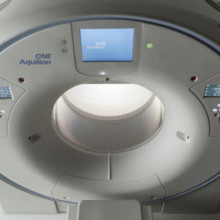
This partnership includes the investment of a dedicated research CT, Angio Suite and portable ultrasound machine.
The partnership with Canon Medical also provides the opportunity to establish a training academy and a Canon Medical National Centre of Excellence in London. As new advanced CT protocols are developed and validated here, hands-on training will be provided for medical imaging teams from across the province, the country and the world.
“As Southwestern Ontario’s only medical school, we are very pleased that the partnership also provides for the establishment of a training academy,” said Dr. Davy Cheng, Acting Dean, Schulich School of Medicine & Dentistry, Western University. “We expect this training to attract interest from medical learners and professionals internationally, and we will welcome them to London to learn from our clinical and research leaders.”
In addition, LHSC and St. Joseph’s are acquiring six clinical CTs to be used for patient care, which will standardize all of the CT equipment at London’s hospitals. Two will be installed at University Hospital, three at Victoria Hospital and one at St. Joseph’s.
“The investment in these six new machines means a standardization of all CT equipment at London’s hospitals, and more importantly, ensures we will have the best available technology for patients – offering lower radiation doses with each scan, and producing higher resolution images enabling more precise detection and diagnosis,” said Dr. Paul Woods, President and CEO, London Health Sciences Centre.
“London is renowned for its excellence in imaging and has been at the forefront of significant advancements in technology, clinical translation and training over many years. We have been a city of numerous national firsts in imaging dating back decades. Today we take that excellence to a new level with an exciting and innovative partnership that will advance health care, teaching and research in our city,” said Dr. Gillian Kernaghan, President and CEO, St. Joseph’s Health Care London.
Following installation, further research to validate use and drive innovations can be done effectively and efficiently within the clinical setting, done by hospital-based researchers through Lawson Health Research Institute, the research institute of LHSC and St. Joseph’s.
“London’s integrated health care and research community is well-positioned to make the most of this opportunity, which ultimately means we can continually improve care for the patients and families that we serve,” said Dr. David Hill, Lawson Scientific Director and Integrated Vice President, Research for London’s hospitals.
Scientist