


Search
Search
1663 Search Results:
… Application for Appointment To the Credentialed Professional Staff of London Health Sciences Centre (LHSC) and St. … - If address will change prior to or upon commencement of your start date, please update your records with Medical Affairs. Postal Code Telephone …
Application for Appointment To the Credentialed Professional Staff of London Health Sciences Centre (LHSC) and St. Josephs Health Care London (St. Josephs) Note: Medical Affairs will announce the arrival of all new professional staff members that have joined LHSC and St. Josephs (The Page LHSC; Imp...
… Application for Appointment To the Credentialed Professional Staff of London Health Sciences Centre (LHSC) and St. … - If address will change prior to or upon commencement of your start date, please update your records with Medical Affairs. Postal Code Telephone …
Application for Appointment To the Credentialed Professional Staff of London Health Sciences Centre (LHSC) and St. Josephs Health Care London (St. Josephs) DEMOGRAPHIC INFORMATION Last Name First Name and Init. Birth date (mm/dd/yyyy) Gender Birthplace Citizenship Business Name/Address Postal Code P...
… for Appointment To the Credentialed Professional Staff of London Health Sciences Centre (LHSC) and St. … - If address will change prior to or upon commencement of your start date, please update your records with Medical Affairs. Postal Code Telephone … - If address will change prior to or upon commencement of your start date, please update your records with Medical …
Page 1 Application for Appointment To the Credentialed Professional Staff of London Health Sciences Centre (LHSC) and St. Josephs Health Care London (St. Josephs) Note: Medical Affairs will announce the arrival of all new professional staff members that have joined LHSC and St. Josephs (The Page LH...
… Application for Appointment To the Credentialed Professional Staff of London Health Sciences Centre (LHSC) and St. … - If address will change prior to or upon commencement of your start date, please update your records with Medical Affairs. Postal Code Telephone …
Application for Appointment To the Credentialed Professional Staff of London Health Sciences Centre (LHSC) and St. Josephs Health Care London (St. Josephs) DEMOGRAPHIC INFORMATION Last Name First Name and Init. Birth date (mm/dd/yyyy) Birthplace Citizenship Business Name/Address Postal Code Phone (E...
… MIND & SPIRIT SINCE 1869 Page 1 Treasurer’s Report The new St. Joseph’s With many years of restructuring behind us, and our new mental health care facilities and redevelopment of … the completion of $584.5 million of investments in our Parkwood Institute Mental Health Care Building, …
CARING FOR THE BODY, MIND & SPIRIT SINCE 1869 Page 1 Treasurers Report The new St. Josephs With many years of restructuring behind us, and our new mental health care facilities and redevelopment of St. Josephs Hospital complete, 2015/16 was the year we fully became a new St. Josephs for all patients...
Assessing the pandemic's impact on Canadian Veterans and their spouses
Multiple studies are reporting the pandemic’s impact on the mental health of Canadians, but what effect is it having on our nation’s Veterans and their spouses?
“With concerns about COVID-19 infection and drastic changes to everyday life, the pandemic is taking a toll on the health of Canadians,” explains Dr. Don Richardson, Associate Scientist at Lawson Health Research Institute and Director of the MacDonald Franklin Operational Stress Injury (OSI) Research Centre, located at St. Joseph's Health Care London's Parkwood Institute. “And it may be particularly distressing for those vulnerable to mental illness.”
Population studies show that Veterans are at double the risk of mental illness when compared to the rest of the population. They experience higher rates of depression, anxiety and loneliness. Spouses of Canadian Veterans are also at higher risk of distress, as they may sometimes undertake significant caregiving responsibilities that that require significant emotional and time investments.
“It’s currently unknown how the pandemic will impact Veterans and their spouses, but it could result in particularly serious outcomes,” says Dr. Anthony Nazarov, Associate Scientist at Lawson and the MacDonald Franklin OSI Research Centre.
In a new project from Lawson and the Centre of Excellence on Post-Traumatic Stress Disorder (PTSD), researchers will seek answers to these questions by partnering with up to 1,000 Canadian Veterans and 250 spouses of Canadian Veterans. Through online surveys, the project will hear directly from Veterans and their spouses to assess the pandemic’s effects on their well-being over time. The team hopes results can be used by health care workers and policy-makers to support Veterans and their families during both the current pandemic and future public health emergencies.
“We want to hear from all Canadian Veterans and their spouses, whether they’re doing well or not and whether they’re seeking care or not,” explains Dr. Nazarov.
Image

From left: Drs. Don Richardson and Anthony Nazarov
Participants will complete online surveys, available in both English and French, once every three months for a total of 18 months. They will be asked questions about their psychological, social, family-related and physical well-being, and any relevant changes to their lifestyle and health care treatment.
“Veterans who regularly access health care services could encounter significant changes, including a move to virtual care appointments. This could lead to increased caregiving responsibilities for spouses,” says Dr. Nazarov. “Given the uncertainty surrounding the pandemic, these changes may persist well into the future, mandating a thorough assessment of patient satisfaction and treatment outcomes.”
The team hopes results can be used to support the wellness of Veterans and their families during public health emergencies. This includes providing health care professionals and policy-makers with information to guide emergency preparedness policies and health care delivery models. They hope results can also be used to recognize early signs of distress in order to target with early interventions.
“We are seeking to understand the impact of COVID-19 on Veterans and their families to identify if this global pandemic is leading to psychological distress or triggering historical traumas,” says Dr. Patrick Smith, CEO of the Centre of Excellence on PTSD. “The Centre’s primary goal is to increase Canadian expertise related to military and Veteran mental health, suicide prevention and substance use disorders. This study can help us understand if the pandemic is having debilitating and life-altering effects, and help us address a potential mental health crisis.”
Interested Canadian Veterans and spouses of Canadian Veterans can learn more about the study at www.veteransurvey.ca.
Image
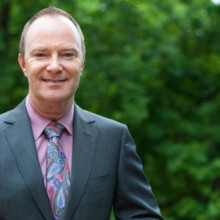
Dr. Patrick Smith
Scientist
… copies of this publication, or other information about St. Joseph’s Health Care, London or St. Joseph’s Health Care … Because of St. Joseph’s... Care and research across our region our people I love my work our SucceSSeS My baby is alive … Because of St. Joseph’s... Care and research across our region our people I love my work our SucceSSeS My baby …
For additional copies of this publication, or other information about St. Josephs Health Care, London or St. Josephs Health Care Foundation, please call 519-646-6034. St. JoSephS Because of St. Josephs... Care and research across our region our people I love my work our SucceSSeS My baby is alive Su...
… of the Board of Directors Monday, February 26, 2024 3:30 pm start time St. Joseph’s Hospital – Adams Boardroom A2-041 … Joseph’s did put a submission in but were not successful in our proposal • Bill 124: The Court of Appeal held up the decision by Ontario Supreme …
Meeting of the Board of Directors Monday, February 26, 2024 3:30 pm start time St. Josephs Hospital Adams Boardroom A2-041 and via MS Teams video- conference MINUTES Call to Order Nawaz Tahir The reflection was provided by Karen Perkin. 1. Full Agenda / Consent Agenda 1.1 Adoption of Full Agenda I...
… of the Board of Directors Wednesday, June 21, 2023 12:00 pm start time Parkwood Institute Main Bldg – Room A2-109A/B … and assists in maintaining governance best practices. He encouraged Members to participate in the evaluation. (a) … care • As individual members, we need better feedback about our contribution to the governing body • Our ongoing …
P a g e | 1 Meeting of the Board of Directors Wednesday, June 21, 2023 12:00 pm start time Parkwood Institute Main Bldg Room A2-109A/B MINUTES Call to Order Jonathan Batch The reflection was provided by J. Batch. 1. Full Agenda / Consent Agenda 1.1 Adoption of Full Agenda Addition of governance fu...
… of the Board of Directors Monday, March 25, 2024 3:30 pm start time St. Joseph’s Hospital – Adams Boardroom A2-041 … where the two plans are not aligned; • Health human resources (HHR), not just physicians, are a challenge in … to attended. (b) Board Retreat / Leadership in Mission Course N. Tahir informed the Board that Governance Committee …
Meeting of the Board of Directors Monday, March 25, 2024 3:30 pm start time St. Josephs Hospital Adams Boardroom A2-041 and via MS Teams video- conference MINUTES Call to Order Nawaz Tahir The reflection was provided by Brandon de Vries. Education Session Capital Master Plan, Part 1: Clinical Serv...
… the Board of Directors Monday, September 25, 2023 3:30 pm start time St. Joseph’s Hospital – Adams Boardroom A2-041 … reflection. A reflection is an opportunity to pause and set our minds and intentions to what is before us. Circulated in … Governance portion. Education for new Board Members is encouraged as it is a priority to have robust educational …
P a g e | 1 Meeting of the Board of Directors Monday, September 25, 2023 3:30 pm start time St. Josephs Hospital Adams Boardroom A2-041 Via MS Teams video-conference MINUTES Minutes to be ratified next meeting Call to Order Nawaz Tahir Welcome and roundtable introductions occurred. The Board then ...
… ST. JOSEPH’S HEALTH CARE, LONDON (the “Corporation”) ADMINISTRATIVE BY-LAW A By-law for the administration of the … 9 3.04. Adjourned … 19 6.07 Adjourned Meetings … of health services and patient care; (b) we recognize that our Catholic health care facility is an ecclesial community …
ST. JOSEPHS HEALTH CARE, LONDON (the Corporation) ADMINISTRATIVE BY-LAW A By-law for the administration of the affairs of the Corporation, duly enacted as authorized by special resolution of the Directors of the Corporation and approved, ratified and confirmed by the Members of the Corporation. Pass...
… MIND & SPIRIT SINCE 1869 Renowned for compassionate care, St. Joseph’s is one of the best academic health care … dose averaged over the entire body. For This Procedure: Your Effective Radiation Dose Is: Comparable To Natural … Hospital WHAT ARE X-RAYS AND WHAT DO THEY DO? ENSURING YOUR SAFETY WHAT IS A MEDICAL RADIATION TECNOLOGIST? A …
CARING FOR THE BODY, MIND & SPIRIT SINCE 1869 Renowned for compassionate care, St. Josephs is one of the best academic health care organizations in Canada dedicated to helping people live to their fullest by minimizing the effects of injury, disease and disability through excellence in care, teachin...
… 1 l Mental Health Resources Transitional and Lifelong Care Program Being a caregiver can be physically and emotionally stressful. This booklet provides resources for caregivers and families facing mental health … 1 l Mental Health Resources Transitional and Lifelong Care Program Being a …
1 l Mental Health Resources Transitional and Lifelong Care Program Being a caregiver can be physically and emotionally stressful. This booklet provides resources for caregivers and families facing mental health concerns and challenges. Transitional and Lifelong Care Program Parkwood Institute Main B...
… on research, educate junior trainees and enhance St. Joseph’s ability to deliver safe, effective surgical … and research to propel the future of specialized surgery Your donation matters here Working with breast radiology, the … the fellow will benefit from hands-on experience with our surgical faculty and a surgical nurse practitioner. The …
After completing five years of surgical residency training, many surgeons sub-specialize in a particular area of care. A fellowship is a learning opportunity, but the benefits are mutual. Clinical fellows collaborate on research, educate junior trainees and enhance St. Josephs ability to deliver saf...
Bridging the gap between high school and university
Exposure to professional experiences can help students envision themselves in specific professions and Dr. Donna Goldhawk aims to do just this by introducing medical research to high school science students. As coordinator of Youth Outreach for the Ontario Research Fund (ORF) grant entitled “Heart Failure: Prevention through Early Detection Using New Imaging Methods,” she is pleased to announce the call for applications to the 2019 Summer Studentship program.
This year, a total of three ORF summer scholarships are available at Lawson Health Research Institute (London), University of Ottawa Heart Institute (Ottawa), and Sunnybrook Research Institute (Toronto). Interested applicants can forward their cover letter and resume to @email by May 15, 2019.
Dr. Goldhawk is a Scientist at Lawson Health Research Institute and an Assistant Professor in Medical Biophysics at Western University. Since 2009, she has helped inspire students to pursue research by training them in her lab. In conjunction with secondary schools in the Thames Valley region and the Partners in Experiential Learning (PEL) program, she teaches youth that choosing a scientific career allows for multiple opportunities to fuse interests with a specific area of focus.
The PEL program was introduced in 2004 by Dr. Jim Koropatnick, Lawson Scientist, and Mr. Rodger Dusky, a retired secondary school teacher. PEL has been a long-standing partnership between the Thames Valley District School Board, London District Catholic School Board, Ministry of Education, Western University, London Health Sciences Centre and St. Joseph’s Health Care London.
This unique academic co-op education program identifies high school students interested in research and prepares them for placement in a health research environment. The students earn high school credits and receive training in basic laboratory research. In Dr. Goldhawk’s experience, PEL attracts an excellent caliber of student who is eager to learn, aspiring to pursue further education and capable of contributing to the science of molecular imaging.
Through the ORF, the Ministry of Research and Innovation emphasizes the value of attracting youth to the scientific enterprise. Students can expect experiential learning tailored to their current understanding of science and aimed at expanding this knowledge for a greater appreciation of biomedical research. For example, in Dr. Goldhawk’s laboratory cardiac research is focused on the measurement of iron contrast using MRI.
“Many cells have naturally distinct iron metabolism; however, we are also using genes from magnetic bacteria to improve the magnetic sensitivity of mammalian cells. MRI can then be used to detect disease processes,” states Dr. Goldhawk. “We are particularly interested in reporter gene expression for MRI, a term coined to describe how changes in the pattern of gene activity and its related protein activity may be visualized.”
Her current team not only includes graduate and undergraduate students at various stages in their programs but also an international collaboration with Dr. Weiwei Zhang, a Western Visiting Scholar from China. In this setting, high school students step into a work atmosphere where they can interact with individuals at different levels. As well, molecular imaging research works closely with multiple areas so students acquire training in both biology and physics.
“To retain the interest of talented young scientists, it is essential to provide them with interesting challenges that reward their curiosity and ambition to learn,” explains Dr. Goldhawk. “In hospital-based research institutes, youth are also exposed to the clinical side for which our research is targeted. This is a quality scientific experience for youth interested in expanding their outlook, performance, technical, problem-solving and record-keeping skills. I think it is essential to build these opportunities into our scientific programs.”
Bridging the gap from discovery to patient care
The following column was provided to Hospital News by Dr. David Hill, scientific director, Lawson Health Research Institute.
Dedicated health researchers across the country are working every day to make discoveries that improve patient outcomes and support a higher quality of life. Our research hospitals have a mandate to develop and test new treatments, technologies and procedures that address our most pressing health challenges.
There is a cycle of health innovation that is supposed to happen – scientific discoveries are made, they transition to clinical trials and then are adopted as an improved standard of care. This is followed by evaluations of the new method and moving along to the next cycle of refinements and improvements. But the reality in Canada is that gaps, in some cases chasms, disrupt the creation and adoption of evidence-based health innovations.
This starts with discovery. The research funding climate in Canada continues to be extremely difficult. Despite the Federal Government outlining substantial new investments in discovery research in Budget 2018 much of that money will not be available to researchers until 2020 and beyond, and the Canadian Institutes of Health Research (CIHR) continues to be limited by a low funding rate of around 14 per cent. Funding for large, definitive clinical trials is especially difficult to support with public funds. Too many good ideas are left unfunded, and in that environment researchers can feel it’s wiser to propose incremental and ‘safe’ science that avoids controversy and the risk of losing support for experienced research teams built up over many years.
Yet researchers are persistent and manage to secure funding from a range of smaller agencies. Unfortunately, many of these do not fund the indirect costs of research necessary to cover administration, infrastructure, equipment maintenance and upgrades, and the investigator’s salaries. Indirect costs are estimated to be approximately 40 per cent on top of direct study costs. In research hospitals these costs generally fall on the institutions to find funding outside of the provincial government budget that covers the costs of hospital care. This is a negative spiral whereby the more successful a hospital becomes in attracting research funds, the bigger the gap in finding the resources to support that research.
When innovative solutions to health care problems are delivered, backed by solid evidence, adoption into our hospital-based care is often far from rapid. Currently, in most provinces, there is no funding mechanism to translate health innovation to the ‘real world’ setting of our front-line care. Yet, such a mechanism is crucial to the translation of science. Clinical trials are carefully designed with strict protocols and criteria for a highly specific population of patients. Innovations that work in a clinical trial do not always work in the real world where patient populations and settings are much more complex.
Following a clinical trial, innovation needs to be tested at the point of care. Without funding to do this, research innovation hits a roadblock. Scientists are left waiting and hoping that one day their provincial government might look to incorporating their innovations into the health system funding schedule. Meanwhile, their work may be used to inform health care improvements in other nations.
An example can be found in medical imaging research. Canadian scientists, including those at Lawson Health Research Institute, are leaders in the development of positron emission tomography (PET) biomarkers to improve diagnosis and understanding of disease using PET scans. PET biomarkers are successfully created and then validated in clinical trials across our nation, but there is little funding to translate them back in a timely fashion to patient care in our hospitals. While countries like the US and Europe readily adopt these innovations, Canada lags behind.
This gap was addressed in a report to the Federal government by the Advisory Panel on Healthcare Innovation entitled “Unleashing Innovation: Excellent Healthcare for Canada” and published in 2015. The panel recommended the formation of a Healthcare Innovation Agency of Canada open to hospitals and other care providers in order to evaluate health innovations in the real-world setting of our health system. Scientists would apply by putting forward evidence from their research, including that collected from clinical trials. They would then design a new translational study to test their innovation at the point of care, with the goal of building evidence for presentation to provincial government.
Will everything tested at the point of care succeed? No; some things will fail in the real world. This is why such a fund is so important. It will show whether or not an innovation truly benefits patients and if it’s ready for wider adoption. If successful, the evidence will highlight the right time to bring innovations into the mainstream standard of care. By bridging this gap in the system, we can improve patient care and ensure a timely return on the investment in science.
Dr. David Hill is scientific director at Lawson Health Research Institute, the research institute of London Health Sciences Centre and St. Joseph’s Health Care London.
Scientist
… What to Bring Other Information Parkwood Institute Well-fitting, supportive shoes with: laces or … respon- sible for the loss of personal items. As part of our role in promoting a healthy community, and to better … and chiropody services are available upon request at your expense. The majority of rooms are 4 bed rooms. Bed …
What to Bring Other Information Parkwood Institute Well-fitting, supportive shoes with: laces or velcro to fasten closed-in heels firm, non-slip rubber soles Supportive well-fitting slippers with non- slip rubber soles and closed-in heels Several changes of comfortable clothes and sleepwear, p...
… Welcome to the Musculoskeletal Rehabilitation Unit The next step in your Rehabilitation Journey What to Bring Other Information Parkwood Institute … the Musculoskeletal Rehabilitation Unit The next step in your Rehabilitation Journey What to Bring Other Information …
Welcome to the Musculoskeletal Rehabilitation Unit The next step in your Rehabilitation Journey What to Bring Other Information Parkwood Institute CARING FOR THE BODY, MIND & SPIRIT SINCE 1869 CARING FOR THE BODY, MIND & SPIRIT SINCE 1869 Renowned for compassionate care, St. Josephs is one of the be...