


Search
Search
625 Search Results:
Walking the labyrinth: A path for meaning, insight and reflection
At Southwest Centre for Forensic Mental Health Care (Southwest Centre) in Elgin County, the unique story of every individual is honoured as care practitioners assist in the journey toward recovery. Part of the St. Joseph’s Health Care London family, Southwest Centre is devoted to caring for people with a mental illness who have also come into contact with the criminal justice system.
A new study by Lawson Health Research Institute shows that the use of labyrinths contributes to recovery by promoting spiritual self-care, insight development and personal meaning-making reflection. The research was co-authored by Lawson Allied Scientist and Certified Spiritual Care Practitioner at Southwest Centre, Stephen Yeo, along with his colleagues Dr. Clark Patrick Heard and Jared Scott, both Lawson Associate Scientists and Occupational Therapists.
“Research has demonstrated that labyrinth-walking can result in increased focus and calm, along with a reduction in blood pressure and stress,” explains Yeo. “Additionally, labyrinth-walking is narrative-driven and highly constructivist in nature, which promotes the opportunity for one to critically reflect on his or her unfolding story.”
This can be done in solitude or a trained facilitator can support important narrative reflection and invite opportunities for integration.
The process of reflecting and making meaning helps individuals to think about what they observed or did, why it mattered and how they might think or act differently based on new knowledge. This allows them to set goals and use what they’ve learned from the past to inform future action, and to consider the real-life implications.
Participation supports patients as they cope with mental illness, and the impact is magnified for individuals who have come into contact with the criminal justice system. Their experience can increase existential questions along with spiritual pain and distress.
Even in the most complex and difficult circumstances, walking the labyrinth facilitates a variety of coping approaches including:
- stress reduction and mindfulness;
- understanding one’s awareness of relationship with that which is sacred to them (transcendence) and the environment;
- development of ongoing personal narrative and meaning-making; and,
- kinesthetic prayer and meditation.
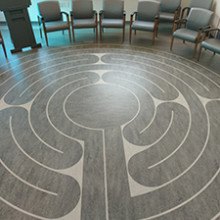
Unlike mazes that are like puzzles with many choices of path and direction, labyrinths are created using continuous lines and are easier to navigate with one route to and from the centre. There are two permanent labyrinths at Southwest Centre – one indoors and one outdoors. For the most part, the labyrinths are accessible for self-guided walking and, throughout the year, various group opportunities are scheduled for invited participation. This activity can be continued in the community, as there are labyrinths in various places across the province such as parks, faith communities and other health-care settings.
“Labyrinth participation supports themes related to hope, coping, resiliency, autonomy – all of which are significant contributors to recovery and the maintenance of well-being. Future research in this area could examine the benefits for different patient populations and also for those who reside in the community.”
Labyrinths are trans-religious and their application can be beneficial to religious and non-religious participants. They are also easy to maintain and can be installed in a variety of locations.
Along with his study co-authors, Yeo was honoured with the CASC Group Research Award from the Canadian Association for Spiritual Care. The award recognizes a CASC member who collaborates with other professionals in the research field of spirituality, religion and wellbeing. The recipient supports the core values of professional connection and interdependence, promoting positive relationship with colleagues of various professionals as well as clients.
“Given that this was my first foray into research at this level, I was very humbled to have been nominated for, and to have received, this award,” says Yeo. “I remain especially grateful to the professional guidance and support of my research colleagues.”
“Walking the Labyrinth: Considering mental health consumer experience, meaning making, and the illumination of the sacred in forensic mental health setting” was published in the December 2015 issue of the Journal of Pastoral Care and Counseling. This study is believed to be a first of its kind in a forensic mental health care facility.
Image
|
Left: Photo of the indoor labyrinth at the Southwest Centre for Forensic Mental Health Care. |
Scientist
… concerns related to your wheelchair and/or seating? Pain/Comfort Mobility Posture/Positioning/Sitting … concerns related to your wheelchair and/or seating? Pain/Comfort Mobility Posture/Positioning/Sitting …
1 Office Use Only St. Josephs Health Care London Appointment Date Hospital Chart No. Parkwood Seating Program PO Box 5777, STN B, London ON N6A 4V2 Page 1 of 2 (519) 685-4292, ext. 42199 FAX (519) 685-4560 Referral Source Service Avenue Parkwood Seating Program Pre-Assessment Form Date Reviewed: ___...
Women with complications after pelvic mesh implants at increased risk of depression and suicide
Dr. Blayne Welk, a urologist at St. Joseph’s Health Care London, noticed that some of his patients were experiencing depression and other issues following complications related to pelvic mesh-based slings.
“A lot of patients were very emotional telling their story,” notes Dr. Welk.
“They told me about a lot of frustrations related to treatment options for complications. A lot of patients manage for years with problems and didn’t know the source of the issue, or that there is something that can be done to address it. Unfortunately, there are some cases where we can’t fix all the complications, but there are things that we can do to improve the situation. I think a lot of women get frustrated along the journey of finding that solution.”
Image
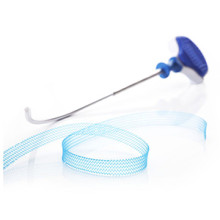
Dr. Welk is also an adjunct scientist with ICES, associate scientist at Lawson Health Research Institute and assistant professor at Western University’s Schulich School of Medicine & Dentistry. Following his observations in the clinic, he led a research project to study the impact of the complications some women were facing.
“There have been regulatory warnings and lawsuits related to significant transvaginal mesh complications. We wanted to quantify the serious psychological complications that can occur in women as a result of complications from transvaginal midurethral slings,” said Dr. Welk.
Complications are rare but when they happen they can be difficult and challenging to fix, as well as quite impactful for patient lives. They can experience chronic pain, new or changing urinary symptoms and erosions where some of the mesh becomes exposed in surrounding tissue.
To determine whether women who experience midurethral sling mesh complications requiring surgical intervention have an increased risk of depression or self-harm behaviour, Welk's team tracked the number of Ontario women who needed a follow-up surgery to remove or fix a mesh implant and if they received treatment for depression or self-harm. The study, published in the journal JAMA Surgery, included almost 60,000 women who had the procedure January 2004 through December 2015.
The researchers found that 2. 8 per cent (1586 women) underwent a surgical procedure for a mesh complication. Of those women, 11 per cent (175 women) were treated for depression compared to eight per cent of women (4,470) who didn’t have corrective surgery. Of the women who needed corrective surgery, 2.77 per cent of women suffered from self-harm behaviour compared to only 1.15 per cent of women who did not need corrective surgery. These risks were highest in younger women, in particular those 46 years old and younger.
“Younger women are the ones who are most at risk of these mental health complications. We suspect that’s because of a stronger negative association between the complications and intimacy among this age group. They are also more likely to still be working full-time and raising children.”
The study reinforces some of the consequences that can occur from slings, and that those can be quite serious.
“It is important to note that a lot of women are going into these operations to improve their quality of life. It’s not necessarily a dangerous condition when you have stress incontinence. There is a decision made to treat it. I think that in those rare cases when someone does experience severe complications, it can lead to decisional regret.”
There is often not an easy solution, with patients often requiring multiple different therapies to address the complications. This can include pain management, surgery, consultations with pain specialists and psychological support along the way. In some cases, removing the mesh does not resolve the pain and it can be very difficult to identify which individuals will benefit from what therapy, including surgery, notes Dr. Welk.
The researchers add that when women experience midurethral sling complications, both they and their surgeons should be aware of the potential serious psychological impact of these complications.
Author block: Blayne Welk, Jennifer Reid, Erin Kelly, You (Maria) Wu.
Scientist
… the head to twist or turn into uncomfortable and often painful positions. Botulinum toxin injections are … are unable to contract. This muscle relaxation helps reduce pain intensity. Botulinum toxin also helps manage pain by blocking the release of certain chemical messengers …
July 12, 2022; Page 1 of 2 Incobotulinumtoxin A (Xeomin) for Cervical Dystonia/Spasmodic Torticollis What is cervical dystonia and how is it typically treated? Cervical dystonia is a rare neurological disorder involving involuntary muscle contractions in the neck that cause the head to twist or turn...
… • If your breasts are tender you may want to discuss pain relief options with your doctor beforehand. SPECIAL … more comfortable for you. • You should not experience any pain during the procedure but will feel slight pressure. • … • If your breasts are tender you may want to discuss pain relief options with your doctor beforehand. SPECIAL …
YOur guide to Breast assessment Breast Care Program St. Josephs Hospital 268 Grosvenor St. London, ON N6A 4V2 THE BEST IN BREAST CARE The Breast Care Program at St. Josephs Health Care London provides a confidential, coordinated, specialized breast assessment service. The goal of the program is to m...