


Search
Search
581 Search Results:
Jamie Fleet
Jamie Fleet, MD
Assistant Professor, Schulich School of Medicine and Dentistry
Key Areas of Focus:
Stroke
Phone:
519-685-4559
Social:
Accepting Grad Students:
No
About:
Dr. Jamie Fleet is a physiatrist at Parkwood Institute and an Assistant Professor in the Department of Physical Medicine and Rehabilitation at the Schulich School of Medicine and Dentistry at Western University. Dr. Fleet completed medical school as well as residency training in Physical Medicine and Rehabilitation at McMaster University. She is currently enrolled in a Master’s program in Clinical Epidemiology through the Health Research Methodology program at McMaster University with a focus on fracture treatment and prevention in older patients after stroke. Her primary clinical area of focus is in stroke rehabilitation.
Though still early in her career, Dr. Fleet has developed a strong research background, primarily focusing on drug safety studies in older adults using large data through ICES. Her other research interests include exercise and health promotion/prevention strategies in patients after stroke, as well as fall prevention strategies and pain management. "

Keith Sequeira
Keith Sequeira, MD
Associate Professor, Schulich School of Medicine and Dentistry
Key Areas of Focus:
Implementation Science and Education
Phone:
519-685-4292 ext. 44029
Email:
Publications:
Accepting Grad Students:
No
About:
Dr. Keith Sequeira is a physiatrist at St. Joseph's Health Care London and London Health Sciences Centre and an associate professor in the Department of Physical Medicine and Rehabilitation in the Schulich School of Medicine and Dentistry at Western University. Dr. Sequeira completed his medical degree at the University of Toronto in 1994, residency training in Physical Medicine and Rehabilitation at Albany Medical Center in 1998, followed by a fellowship in Electrodiagnostic and Sports Medicine at Michigan State University.
Dr. Sequeira is the Medical Director of the Acquired Brain Injury Rehabilitation Program at Parkwood Institute and runs spasticity, EMG, brain and spinal cord injury clinics. Dr. Sequeira is the past Residency Program Director of Physical Medicine & Rehabilitation at Western, a program that he designed and initiated in 2005 and functions. He is the WSIB Champion, working on the integration of WSIB education into the medical school curriculum at Western, past director of the undergraduate the musculoskeletal curriculum within the medical school at Western, the recipient of the Dean’s Award of Excellence for Undergraduate Medical Education, and has authored numerous publications, including a 2020 article in the New England Journal of Medicine on lumbar radiculopathy.

Laura Graham
Laura Graham, PT, PhD
Assistant Professor, School of Physical Therapy
Key Areas of Focus:
Neurological injury, mild traumatic brain injury
Phone:
519-661-2111, ext. 88935
Email:
Social:
Accepting Grad Students:
No
About:
Laura Graham is an Assistant Professor and Graduate Chair of Western University’s Master of Physical Therapy Program, and an Associate Scientist with Lawson Health Research Institute. Professor Graham’s teaching focus is neurological injury/illness rehabilitation and her research interests revolve around the development of interventions for adults with persistent symptoms following concussion or other mild traumatic brain injuries (mTBI).
Professor Graham has worked as a physiotherapist at Parkwood Institute since 2011, primarily in adult brain injury rehabilitation. She has consulted with Ontario Brain Institute and WSIB Ontario on mTBI Program of Care revision, presented education of the treatment of mTBI both locally and internationally, and has taught physiotherapist instructors across Canada about concussion/mTBI rehabilitation for the National Orthopaedic Division of the Canadian Physiotherapy Association.
Professor Graham is currently helping to develop and evaluate two interventions for adults with mTBI. The first is BrainEx90, which is a circuit training-style therapy that covers self-management exercises, vision rehabilitation, vestibular rehabilitation, balance and core stability, cardiovascular training, and cognitive rehabilitation. nd the second is MyBrainPacer™ App, which is a symptom self-management tool to support people with mTBI through planning and pacing activities.

Lawson welcomes nursing students from South Korea
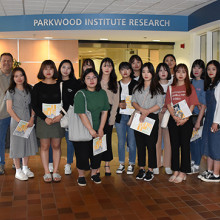
Dr. Dalton Wolfe, scientist, Lawson Health Research Institute, led a tour of the physiotherapy gym at St. Joseph Health Care London’s Parkwood Institute for 14 nursing students from Kyungil University in South Korea.
The nursing students have spent six weeks in Canada as part of the Health Care and English as a Second Language Program at King’s University College, during which they focused on English as a language instruction with a focus on medical terminology.
Dr. Wolfe showcased various physiotherapy tools, including a locomat and exoskeleton and explained how holistic and practice-based research can lead to better patient outcomes.
Image
Scientist
LHSC and St. Joseph’s introduce new research institutes
Lawson Research Institute at St. Joseph’s and London Health Sciences Centre Research Institute will strengthen hospital-based innovation in London, Ontario
LONDON, Ont. – Today, London Health Sciences Centre (LHSC) and St. Joseph’s Health Care London (St. Joseph’s) unveiled new research institutes designed to strengthen hospital-based innovation. Lawson Research Institute (Lawson) at St. Joseph’s and London Health Sciences Centre Research Institute (LHSCRI) will leverage each hospital’s unique areas of clinical focus while further integrating research with care, helping to advance discoveries that lead to improved patient outcomes.
The new institutes were announced at a launch event with guided open house tours taking place across LHSC’s Victoria Hospital, Children’s Hospital and University Hospital, as well as at St. Joseph’s Hospital and Parkwood Institute. Attendees were able to experience signature research areas, including aging, mental health and microbiome research at Lawson, as well as cancer, children’s and mental health research at LHSCRI. The day included demonstrations of discoveries that are reshaping care in Ontario and around the world, including a new robotic, body-weight support for people with mobility difficulties and studies using artificial intelligence (AI) to diagnose rare diseases.
“When research takes place in a hospital context, scientists have more direct connection to the needs of the patients they serve,” said Roy Butler, President and CEO of St. Joseph’s. “There’s data to show that patients treated in research-intensive hospitals live longer because they have access to cutting-edge science. All patients benefit, not just those involved in clinical trials – and that’s the power of health research. That’s why this milestone day and the discoveries to come are real cause for celebration.”
LHSC and St. Joseph’s have been innovating for more than 150 years. The research institutes will build on the legacy of scientific excellence at both organizations. Their launch marks the completion of the transition from Lawson Health Research Institute, a research brand shared between the two organizations since 2000.
“We’re building on our history while introducing the next era in health research excellence, ensuring we will continue to attract the brightest minds in science and that patients will receive world-class, innovative care,” said David Musyj, Supervisor, LHSC. “We will continue to collaborate with each other, Western University, and health research partners across the country and around the world, bolstering London’s position as a national hub for health research.”
Research teams across Lawson and LHSCRI will continue to collaborate closely on projects and large scientific initiatives. LHSC and St. Joseph’s will also continue to share administrative support for research activities.
Learn more about the new research institutes and their transformative work at:
Lawson Research Institute
London Health Sciences Centre Research Institute
-30-
For more information, please contact:
Celine Zadorsky
Senior Media Relations Consultant
London Health Sciences Centre
(226) 927-2309
OR
Debora (Flaherty) Van Brenk
Communications Consultant
St. Joseph’s Health Care London
226-577-1429 or 519-318-0657
About Lawson Research Institute: Lawson Research Institute, the health innovation arm of St. Joseph’s Health Care London, is committed to making and sharing discoveries that improve lives locally and internationally. Every day, Lawson’s 250-plus scientists work to transform imagination to innovation to patient impact. Lawson leads health-care research. Find us online at sjhc.london.on.ca/research and on social media @stjosephslondon
About London Health Sciences Centre Research Institute: At London Health Sciences Centre Research Institute (LHSCRI), our teams pioneer discoveries that transform the health of adult and paediatric patients around the world. As the research institute of London Health Sciences Centre (LHSC), we conduct research where patient care is delivered, working alongside patients, families, health-care providers and academic partners like Western University. We are leaders in advancing the understanding, diagnosis, treatment and management of diseases and health conditions through a diverse research program that ranges from laboratory-based science to clinical trials. Our research has a global impact as we build on LHSC’s 150-year legacy of health innovation and drive forward medical breakthroughs that make a difference in the lives of patients and their families. Find us online at www.lhscri.ca and on social media @LHSCRI.
Local COVID-19 research supported by St. Joseph's Health Crisis Fund
St. Joseph’s Health Care London and Lawson Health Research Institute have announced plans to move forward with clinical trials testing a drug that could potentially be used to prevent and treat COVID-19. St. Joseph’s Health Care Foundation will accelerate the creation of the studies by providing seed funding to get the research started through donor support. Based on the immediate need, The St. Joseph’s Health Crisis Fund has been created by St. Joseph’s Health Care Foundation to enable these and other research studies currently in development through Lawson, the research arm of St. Joseph’s.
While supporting urgent COVID-19 clinical trials will be an immediate focus, The St. Joseph’s Health Crisis Fund will also support critical patient care equipment and care and comfort items for healthcare staff and volunteers working on the frontlines of the pandemic across St. Joseph’s.
Led locally by Dr. Michael Silverman, Medical Director of St. Joseph’s Infectious Diseases Care Program, one trial will assess the safety and efficacy of using hydroxychloroquine (HCQ) to prevent COVID-19 in health care workers recently exposed to the virus. This trial will also assess the drug as a treatment for non-hospitalized patients with mild cases of the illness. St. Joseph’s will be one of many participating sites in the trial, which is being led by the Research Institute of the McGill University Health Centre.
“There is much debate surrounding the drug hydroxychloroquine. We do not yet know whether it’s safe or effective, and it should not be routinely recommended until we do,” says Dr. Silverman, also a Lawson Associate Scientist and city-wide Chair/Chief of Infectious Diseases. “We plan to carefully study the drug through a randomized controlled trial and assess whether it can help combat COVID-19.”
Dr. Silverman is also partnering with Dr. Michael Borrie, Geriatrician at St. Joseph’s and Lawson Scientist, on a prevention trial to test the safety and efficacy of the drug for patients and residents at Parkwood Institute who have been exposed to COVID-19. They are at a higher risk of infection, as well as serious complications and potential admission to acute care.
“There are two critical goals with this prophylactic trial,” explains Dr. Borrie. “First, we want to see if the drug, taken for five days, is safe for the participants in the study. We will then look to see whether it is effective to prevent illness or lessen symptoms and complications.”
They are testing whether HCQ may inhibit the coronavirus similar to how the antiviral drug Tamiflu is used to prevent influenza after exposure. The research team will recruit patients and residents who have been accidentally exposed to the virus by a confirmed or presumed case of COVID-19, but who aren’t yet experiencing symptoms. In addition to cardiograms and blood tests for safety, they are collaborating with Dr. Saman Maleki, Lawson Scientist and Immunologist, to analyze the blood for a variety of indicators including the presence of antibodies and immune response. They will collect clinical data and information on common health conditions to gain insights into why some vulnerable individuals get the disease and others don’t.
“We are aware of two small studies that were published rapidly last week, one in France and the other in China, testing the use of chloroquine for potentially treating COVID-19. Further studies are greatly needed,” adds Dr. Borrie. “This study at Parkwood Institute is a good start and we hope to have other Canadian sites join us in recruiting participants so that we can offer statistically significant results as soon as possible.”
Those interested in donating to St. Joseph’s Health Crisis Fund are asked to visit St. Joseph’s Health Care Foundation’s website to learn more at sjhcfoundation.org. Donations can be made online, through direct mail submissions or by calling the Foundation directly at 519-646-6085.
“The Sisters of St. Joseph, who founded our organization, faced contagious diseases and other pandemics at different times in our 150+ year history,” says Michelle Campbell. “Today, it’s a different time, and a new disease. Now, more than ever, we ask our community to help us address the crisis facing us all.”
In the news:
Scientist
… Parkwood Institute Locomotor Training Program CARING FOR THE … Training (LT) is an exciting opportunity offered at Parkwood Institute’s Neurotrauma Rehab Program. The LT Program at Parkwood Institute is an intensive outpatient physical … Parkwood Institute Locomotor Training Program CARING FOR THE …
Parkwood Institute Locomotor Training Program CARING FOR THE BODY, MIND & SPIRIT SINCE 1869 There is nothing you cant do, if you set your mind to it. Anything is possible - Rick Hansen Has a spinal cord injury, brain injury or other neurological injury left you unable to stand or walk? Do you fatigu...
London researchers collaborating on national dementia prevention program
LONDON, ON - Researchers at Lawson Health Research Institute are collaborating with Canada’s largest dementia research initiative, the Canadian Consortium on Neurodegeneration in Aging (CCNA), to study an innovative online program that offers older adults the opportunity to increase their knowledge of dementia and improve lifestyle risk factors. The program, Brain Health PRO (BHPro), offers interactive digital educational modules to empower older adults to improve their physical and mental health, and modify their risk factors for dementia.
“Using the BHPro modules participants will learn how to improve their physical and mental health and reduce their risk of cognitive impairment. It is particularly novel with the education modules being delivered remotely,” explains Dr. Michael Borrie, Scientist at Lawson and Medical Director for the Aging Brain and Memory Clinic at Parkwood Institute.
The bilingual program focuses on seven different modifiable dementia risk domains: exercise, nutrition, sleep, psychological and social health, cognitive engagement, heart health, and vision and hearing. For each, the program includes 10-minute educational videos, as well as interactive activities for users to complete. Participants will also be sent portable EEG headsets to measure their brain activity during sleep, and accelerometers to track their physical activity. With the rise of dementia anticipated to reach nearly one million Canadians over the next 12 years, dementia prevention is becoming an increasingly urgent national health priority.
“The launch of BHPro is part of a significant research effort to find concrete means of preventing dementia, with the ultimate goal of having tremendous benefits for the aging experience,” says Dr. Howard Chertkow, Scientific Director of the CCNA and Director of the Kimel Family Centre for Brain Health and Wellness at Baycrest.
“Alzheimer Society of Canada (ASC) is proud to support the launch of the BHPro through the CAN-THUMBS UP program,” adds Dr. Saskia Sivananthan, ASC’s Chief Research & KTE Officer.
BHPro is funded by the Canadian Institutes of Health Research and the ASC, and was created through the Canadian Therapeutic Platform Trial for Multidomain Interventions to Prevent Dementia (CAN-THUMBS UP) program, which is part of the CCNA. The study will support 350 older adults across Canada who have at least one risk factor for dementia, including up to 60 participants through Lawson, with the goal of seeing participants’ dementia risk reduced throughout the year-long study. Please note, there is limited space for research participants. To learn more, please visit canthumbsup.ca
About CCNA
CCNA is the national component of the CIHR dementia research strategy, bringing together over 340 researchers across Canada to collaboratively investigate the diagnosis, treatment and prevention of dementia and other age-related neurodegenerative diseases. For more information, visit ccna-ccnv.ca
About Lawson Health Research Institute
Lawson Health Research Institute is one of Canada’s top hospital-based research institutes, tackling the most pressing challenges in health care. As the research institute of London Health Sciences Centre and St. Joseph’s Health Care London, our innovation happens where care is delivered. Lawson research teams are at the leading-edge of science with the goal of improving health and the delivery of care for patients. Working in partnership with Western University, our researchers are encouraged to pursue their curiosity, collaborate often and share their discoveries widely. Research conducted through Lawson makes a difference in the lives of patients, families and communities around the world. To learn more, visit www.lawsonresearch.ca.
Media Contacts
Amanda Taccone
Communications Consultant & External Relations
Lawson Health Research Institute
T: 519-685-8500 ext. ext. 64059
C: 226-919-4748
@email
London researchers collaborating on national dementia prevention program
Researchers at Lawson Health Research Institute are collaborating with Canada’s largest dementia research initiative, the Canadian Consortium on Neurodegeneration in Aging (CCNA), to study an innovative online program that offers older adults the opportunity to increase their knowledge of dementia and improve lifestyle risk factors. The program, Brain Health PRO (BHPro), offers interactive digital educational modules to empower older adults to improve their physical and mental health, and modify their risk factors for dementia.
“Using the BHPro modules participants will learn how to improve their physical and mental health and reduce their risk of cognitive impairment. It is particularly novel with the education modules being delivered remotely,” explains Dr. Michael Borrie, Scientist at Lawson and Medical Director for the Aging Brain and Memory Clinic at Parkwood Institute.
The bilingual program focuses on seven different modifiable dementia risk domains: exercise, nutrition, sleep, psychological and social health, cognitive engagement, heart health, and vision and hearing. For each, the program includes 10-minute educational videos, as well as interactive activities for users to complete. Participants will also be sent portable EEG headsets to measure their brain activity during sleep, and accelerometers to track their physical activity. With the rise of dementia anticipated to reach nearly one million Canadians over the next 12 years, dementia prevention is becoming an increasingly urgent national health priority.
“The launch of BHPro is part of a significant research effort to find concrete means of preventing dementia, with the ultimate goal of having tremendous benefits for the aging experience,” says Dr. Howard Chertkow, Scientific Director of the CCNA and Director of the Kimel Family Centre for Brain Health and Wellness at Baycrest.
“Alzheimer Society of Canada (ASC) is proud to support the launch of the BHPro through the CAN-THUMBS UP program,” adds Dr. Saskia Sivananthan, ASC’s Chief Research & KTE Officer.
BHPro is funded by the Canadian Institutes of Health Research and the ASC, and was created through the Canadian Therapeutic Platform Trial for Multidomain Interventions to Prevent Dementia (CAN-THUMBS UP) program, which is part of the CCNA. The study will support 350 older adults across Canada who have at least one risk factor for dementia, including up to 60 participants through Lawson, with the goal of seeing participants’ dementia risk reduced throughout the year-long study. Please note, there is limited space for research participants. To learn more, please visit canthumbsup.ca
About CCNA
CCNA is the national component of the CIHR dementia research strategy, bringing together over 340 researchers across Canada to collaboratively investigate the diagnosis, treatment and prevention of dementia and other age-related neurodegenerative diseases. For more information, visit ccna-ccnv.ca
Scientist
Partners
Media Contact
Amanda Taccone
Communications Consultant & External Relations
Lawson Health Research Institute
T: 519-685-8500 ext. ext. 64059
C: 226-919-4748
@email
London researchers part of a federal funding boost to enhance transition in care research
How can we improve health care for Canadians experiencing “transitions in care” to ensure they don’t fall through the cracks as they move through the health care system?
That’s the question two London researchers are aiming to answer, with the support of nearly $1.5 million in federal funding announced today at Western University's Schulich School of Medicine & Dentistry.
Peter Fragiskatos, MP for London North Centre, announced the funding boost on behalf of Federal Health Minister Jean-Yves Duclos, alongside Dr. Jane Rylett, Scientific Director of the Institute of Aging with the Canadian Institutes of Health Research (CIHR).

“When a person experiences a transition in care, whether moving from surgery to rehabilitation or aging out of pediatric care, the quality of their care and their health can be at risk,” said Bryan Neff, Western’s acting vice president of research, who hosted the funding announcement. “With federal investments like this, Western will continue to lead the way in identifying how to provide the best possible care for Canadians while improving efficiency in the health-care system.”
Transitions in care happen when responsibility for a person’s care shifts between providers, institutions or sectors. Some groups, such as patients with complex medical conditions, Indigenous peoples, and new immigrants, are particularly vulnerable to poor outcomes during transitions.
People with diabetes – a complex, typically life-long condition – fall into this category, which is why London’s Primary Care Diabetes Support Program (PCDSP) was developed. The clinic, which is part of the Centre for Diabetes, Endocrinology and Metabolism at St. Joseph’s Health Care London, is based at St. Joseph’s Family Medical and Dental Centre. The program provides diabetes support and management for individuals with type 2 diabetes who don’t have a family doctor or who may have additional medical and social issues that make diabetes management particularly challenging.
Maria Mathews, PhD, and her team at Schulich Medicine will evaluate the program to determine its impact on patient health, and on health-care providers, diabetes-related complications, and health system costs.
“While this program has already been shown to deliver high-quality care, my team is examining its overall impact to determine whether this model could be expanded to other sites and to support other chronic conditions,” said Mathews, a professor in the department of family medicine. With the $895,000 investment in her research, Mathews will determine “how we can best provide high- quality care for people with chronic conditions in a way that supports their health, eases strain on family doctors, and creates efficiencies in the health care system.”
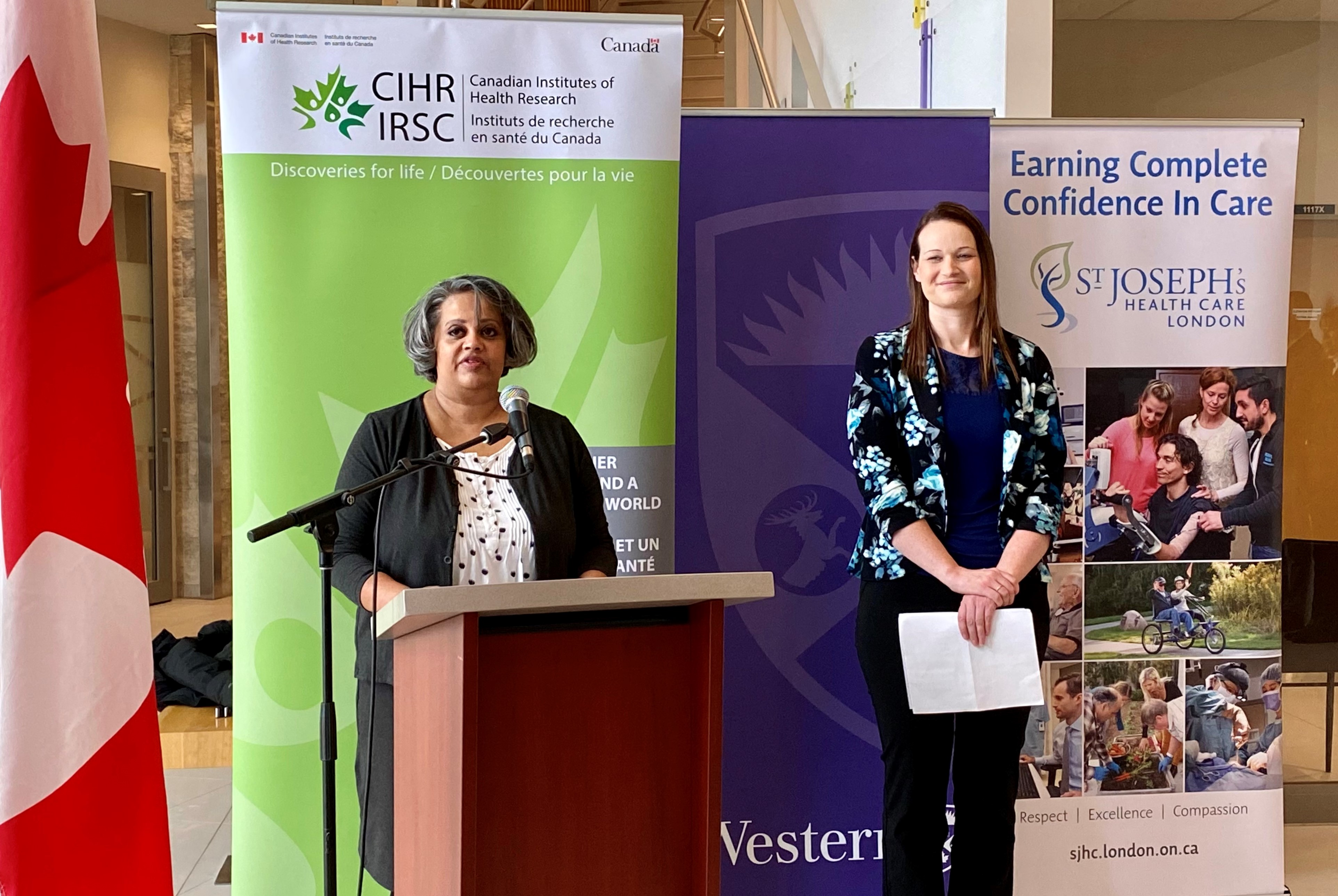
Laura Brunton, PhD, an assistant professor at the School of Physical Therapy in Western’s Faculty of Health Sciences, received more than half a million dollars in CIHR funding.
Her team will examine a local program based at St. Joseph’s Parkwood Institute – called the Transitional and Lifelong Care Program (TLC) – that supports people with childhood-onset disabilities as they transition to adult care. This includes many patients with brain-based, neurodevelopmental conditions, such as cerebral palsy, spina bifida and developmental disabilities, as they move into adult care.
“Many of these patients have experienced severe health inequities because of the gaps in care when transitioning from pediatric care to the adult sector,” said Brunton, also a physiotherapist at St. Joseph’s Health Care London and affiliate scientist at Lawson Health Research Institute. “We’re going to evaluate the TLC model as an intervention that provides transitional, lifelong care and reduces the barriers experienced.”
Roy Butler, president of St. Joseph’s Health Care London, said today’s announcement highlights the synergy and collaboration among these organizations.
“We are happy to hear that work being done by both Laura Brunton and Maria Mathews to improve patient care is being recognized through this funding announcement. The two areas these talented researchers will be studying are innovative and ground-breaking with compassionate, forward-thinking teams who provide highly acclaimed care to vulnerable patients.”

Fragiskatos emphasized the vital importance of funding this field of research, given that most Canadians will experience a ‘transition in care’ at some point.
“People living in Canada routinely experience transitions in care as they navigate the health system. The important research that will be done here in London and at institutions across the country will help develop meaningful approaches to make these transitions easier for patients and caregivers,” he said.
Local researchers were among 14 groups across Canada that received approximately $12 million in federal funding to improve continuity of care for Canadians through the “Transitions in Care” initiative, which is provided in partnership with the Azrieli Foundation, Mitacs, and the Rossy Family Foundation.
London scientists key players in national dementia strategy
LONDON, ON – Researchers in London have been awarded $1.345 million over five years through the second phase of the Canadian Consortium on Neurodegeneration in Aging (CCNA), announced today as part of Canada’s national dementia strategy. CCNA is a collaborative research program tackling the challenge of dementia and other neurodegenerative illnesses.
Dr. Manuel Montero-Odasso, Scientist at Lawson Health Research Institute, is world renowned for his findings on the relationship between cognition and mobility in the elderly, and gait as a predictor of frailty and dementia. He leads the Mobility, Exercise and Cognition (MEC) Team in London, comprised of top researchers in the areas of mobility, exercise and brain health.
“Evidence from other countries with national dementia strategies shows that coordinated, targeted efforts at the national level improves results for all aspects of dementia care and also for research,” says Dr. Montero-Odasso, also a geriatrician and Director of the Gait and Brain Lab at Parkwood Institute, a part of St. Joseph’s Health Care London.
CCNA was purpose-built to synergize dementia research within the Canadian context. Phase I saw the creation of infrastructure fostering collaboration amongst Canadian researchers, and there are now 20 teams built around important research topics.
“This kind of effective national collaboration by scientists and clinicians from many disciplines gives the CCNA a cutting edge in research, prevention, treatment and management of all forms of dementia,” explains Dr. Montero-ODasso. “We created a national network of researchers form west to east coast with a high level of expertise to deliver lifestyle interventions to improve cognition and slow down progression to dementia. I feel privileged working with such excellent investigators and leading this important endeavour locally.”
The MEC team has several projects in the works, but the majority of the new funding is to complete the SYNERGIC Trial, SYNchronizing Exercises and Remedies on Gait and Cognition.
This first-in-the-world clinical study is testing a triple intervention aimed at treating Mild Cognitive Impairment (MCI) and delaying the onset of dementia. The SYNERGIC Trial incorporates physical exercises and cognitive training, along with vitamin D supplementation to determine the best treatment for improving mobility and cognition.
“We are looking at how interventions will work together and targeting cognitive decline at its earliest stage – individuals with MIC,” explains Dr. Montero-Odasso. “Both physical and cognitive exercises have shown promising effects for maintaining cognition, while vitamin D deficiency is associated with cognitive decline.”
A professor at Western University’s Schulich Medicine & Dentistry, Dr. Montero-Odasso partners with researchers from across the city including Dr. Rob Bartha, imaging scientist at Schulich Medicine & Dentistry and Robarts Research Institute at Western University, and Dr. Kevin Schoemaker who leads the Laboratory for Brain and Heart Health.
Study participants in the SYNERGIC Trial are asked to complete an individualized and progressive routine of exercises and cognitive training three times a week for six months, with one final assessment at 12 months. The main site for the study is Parkwood Institute with the physical exercises taking place at the Labatt Health Sciences Building on the Western campus.
“Our preliminary analysis is giving us a strong indication that a multimodal approach, combining physical exercise, cognitive training and supplementation, has a synergistic effect. It seems the whole is greater than the sum of its parts,” says Dr. Montero-Odasso.
To date, 138 research patients has been recruited across multiple sites in Canada. Individuals over 60 years old with mild cognitive impairment without dementia are eligible for this clinical trial. Those interested in participating are encouraged to contact a Lawson research coordinator at 519-685-4292 ext. 42910.
Dr. Montero-Odasso adds that “as our population ages, a comprehensive strategy is vital to ensure the growing number of those living with dementia receive the care and support they deserve. Over half a million Canadians are currently living with dementia. By 2031, this number is expected to nearly double.” More than one third of dementia cases might be preventable.
'In CCNA’s Phase II, researchers are working on analyzing the overall health of every patient in a large clinical cohort study, COMPASS-ND. This information will be used to enhance understanding of how changes in the brain affect dementia severity and ways to reduce and prevent this through lifestyle changes. Lawson is the leading recruitment site for COMPASS-ND and the London team will be instrumental in the larger lifestyle interventions moving forward.
CCNA is funded by the Government of Canada, Canadian Institutes of Health Research (CIHR) and other funding partners.
-30-
About Lawson Health Research Institute
Lawson Health Research Institute is one of Canada’s top hospital-based research institutes, tackling the most pressing challenges in health care. As the research institute of London Health Sciences Centre and St. Joseph’s Health Care London, our innovation happens where care is delivered. Lawson research teams are at the leading-edge of science with the goal of improving health and the delivery of care for patients. Working in partnership with Western University, our researchers are encouraged to pursue their curiosity, collaborate often and share their discoveries widely. Research conducted through Lawson makes a difference in the lives of patients, families and communities around the world. To learn more, visit www.lawsonresearch.ca.
Media Contacts
Celine Zadorsky
Senior Media Relations Consultant
Communications & Public Engagement
T: 519-685-8500 ext. 73502
Celine.zadorsky@lhsc.on.ca
Manuel Montero-Odasso
Manuel Montero-Odasso, MD; PhD
Professor, Schulich School of Medicine and Dentistry
Key Areas of Focus:
Mobility, Cognitive and Brain Health
Phone:
519-685-4021
Email:
Website:
Social:
Accepting Grad Students:
Yes
About:
Dr. Manuel Montero-Odasso is a geriatrician at Parkwood Institute and Professor and Faculty Scholar in the Schulich School of Medicine and Dentistry at Western University. He is also the Director of the Gait & Brain Lab at Parkwood Institute, a clinician-scientist at the Lawson Health Research Institute and serves as team leader at the Canadian Consortium on Neurodegeneration in Aging and the Ontario Neurodegenerative Research Initiative.
Dr. Montero-Odasso leads the Gait and Brain Health Program goal of understanding mechanisms and treatments of mobility and cognitive decline in aging by focusing on the interaction between gait performance and cognition and how this increases the risk of falls. Through this work Dr. Montero-Odasso has established the use of “motor biomarkers”, like slowing of gait speed and dual-task effects on gait to predict frailty, falls, and dementia. He is also a co-PI of the Canadian Therapeutic Platform for Multidomain Interventions to Prevent Dementia, which focuses on multi-domain lifestyle interventions that include physical exercises, cognitive training, diet, self-management of cardiovascular factors and sleep, in order to reduce the risk or delay the onset of dementia in older adults.
Dr. Montero-Odasso has received more than $6 million of competitive peer-reviewed research funding, has published over 150 scientific articles, 14 books and book chapters, and has received several accolades, including the American Geriatrics Society New Investigator Award, the Schulich Clinician Scientist Award, the Premier of Ontario Excellence Research Award, and the CIHR New Investigator Award. In 2019, he was inducted as one of the Top 10 Hispanic Canadian for his contribution in Medicine and Science. He has been invited to give more than 100 international presentations as a guest speaker. He serves as associate editor for the Journal of Gerontology Medical Sciences, Geriatrics, and Journal of Alzheimer’s Disease, among others. He also serves as executive member and Vice-President of the Canadian Geriatrics Society.
… another study in which interprofessional teams from RMHC, Parkwood Hospital, LHSC and several hospitals in Nova Scotia … and fall prevention strategies. The GPP was one of five programs within St. Joseph’s Health Care, London who … (SCIPP) assists in the identification of high risk seniors. Parkwood Research Day, London, Ontario, Canada February 2010 …
Regional Mental Health Care London and St. Thomas 12th Annual Research Half Day, May 11, 2011 BOOK OF ABSTRACTS & RESEARCH REPORT 2010 by RMHC RESEARCH COMMITTEE 1 Book of Abstracts 2011 RESEARCH INSIGHTS of the Regional Mental Health Care London and St. Thomas Vol.8, No.1 2011 Message from the Dire...
… MacDougall Dr. Henry Lapointe - Site Chief, St. Joseph's Parkwood and SWC Joe Armstrong (Oral & Maxillofacial … MacDougall Dr. Henry Lapointe - Site Chief, St. Joseph's Parkwood and SWC Joe Armstrong (Oral & Maxillofacial …
GUIDELINES FOR PHYSICIAN PERFORMANCE MANAGEMENT - Listing of Physician Leaders in the Department/Organization DEPARTMENT DEPARTMENT CHIEFS SITE CHIEFS DIVISION DIVISION CHIEFS/SECTION HEADS/ DIVISION CHAIRS/MEDICAL DIRECTORS OTHER LEADERSHIP ROLE RESIDENCY PROGRAM DIRECTORS COMMENTS Ashraf Fayad (LH...
Methamphetamine Harm Reduction Project Launch Event
2:00pm - 3:00pm
Integrating harm reduction strategies into hospital settings for people who use methamphetamine
You are invited to attend this virtual launch event for the Methamphetamine Harm Reduction Project, being led by researchers at Parkwood Institute Research, a program of Lawson Health Research Institute.
Friday, April 23, 2021
10 - 11 a.m.
Register here
Evidence-based harm reduction strategies, for example needle exchange services, supervised injection sites and safe supplies, have been used in the community to reduce the risk of infection and overdose, and the risk of other harmful behaviour like crime.
Currently, harm reduction strategies for methamphetamine use are not used in Canadian hospitals. The standard of care does not allow the use of illicit substance in hospital, making implementation of harm reduction strategies challenging. A safe consumption of substances requires an exemption under Section 56.1 of the Controlled Drugs and Substances Act from Health Canada.
A recent London, Ontario study found that people who use methamphethamine actually have a greater risk of infection in hospital than in the community. "This may be due to better access to harm reduction in the community compared to in hospital, and so people are using cleaner techniques," explains Dr. Michael Silverman.
With support from Health Canada, a new hospital-based research study led by Dr. Cheryl Forchuk seeks to find what harm reduction strategies are needed and whether these can be implemented in hospital. This study represents a groundbreaking shift for the health care system in Canada.
The views expressed herein do not necessarily represent the views of Health Canada.
Michael Payne
Michael Payne, MD
Assistant Professor, Schulich School of Medicine and Dentistry
Key Areas of Focus:
Amputation
Phone:
519-685-4292 ext. 45018
Email:
Publications:
Accepting Grad Students:
Yes
About:
Dr. Michael Payne is a physiatrist at Parkwood Institute and an Associate Professor in the Department of Physical Medicine and Rehabilitation at the Schulich School of Medicine & Dentistry at Western University. He completed his undergraduate degree in Mechanical Engineering at Queens University followed by a Master’s degree in Sports Medicine and a medical degree at Western University, residency training in Physiatry at the University of Ottawa, and then a clinical fellowship in Australia.
Dr. Payne’s clinical practice has always focused on addressing mobility limitations across a wide range of physical impairments and has been the medical director of the Regional Amputee Rehabilitation program at St. Joseph’s Health Care London since 2009. Dr. Payne collaborates extensively with Dr. Susan Hunter from the School of Physical Therapy from Western University to address research questions centred around improving meaningful outcomes for people with limb loss or deficiencies. Specific interests include mobility outcome measurements, dysvascular amputation associated cognitive impairment, biomechanics, quality of life, gait abnormalities and falls.
… Budget appended as Schedule B; “Services” means the care, programs, goods and other services described in Schedule A … Interim Co-CEO Date St. Joseph's Health Care, London Parkwood Institute By: _________________________________ … Health Service Provider: St. Joseph's Health Care London - Parkwood Hospital B ruce G rey H uron Perth O xford Elgin M …
MULTI-SECTOR SERVICE ACCOUNTABILITY AGREEMENT April 1, 2018 to March 31, 2019 SERVICE ACCOUNTABILITY AGREEMENT with St. Joseph's Health Care, London Effective Date: April 1, 2018 Index to Agreement ARTICLE 1.0 - DEFINITIONS & INTERPRETATION ARTICLE 2.0 - TERM AND NATURE OF THIS AGREEMENT ARTICLE 3.0...
… your Rehabilitation Journey What to Bring Other Information Parkwood Institute CARING FOR THE BODY, MIND & SPIRIT SINCE … do so off hospital property. Specialized Geriatric Services Parkwood Institute WELCOME! We are a 20-bed unit located on … sessions, i.e. PT and OT Participating in walking programs and other exercise groups Participating in …
Welcome to the Musculoskeletal Rehabilitation Unit The next step in your Rehabilitation Journey What to Bring Other Information Parkwood Institute CARING FOR THE BODY, MIND & SPIRIT SINCE 1869 CARING FOR THE BODY, MIND & SPIRIT SINCE 1869 Renowned for compassionate care, St. Josephs is one of the be...
… stjosephslondon MY ST. JOSEPH’S IS St. Joseph’s Hospital Parkwood Institute Mount Hope Southwest Centre Centre for … Long Term Care Mental Health Care Teams, clinics and programs in our community and beyond. 0803. 09. 17. 03. … for years. HEALTH CARE IN HARMONY The coming together of programs and specialties at St. Joseph’s Hospital for …
m ST::JOSEPH'S A publication of St. Josephs Health Care London WINTER 2020 | ISSUE 01 BORN TO MOVE St. Josephs leads the way for those facing mobility challenges with the creation of The Gray Centre for Mobility and Activity. 1 201 ISSUE www.sjhc.london.on.ca ~ ~ OSEPH'S 11 C ~~ S!JOSEPHs HEALTH CAR...
… stjosephslondon MY ST. JOSEPH’S IS St. Joseph’s Hospital Parkwood Institute 06. Mount Hope Southwest Centre Centre … Long Term Care Mental Health Care Teams, clinics and programs in our community and beyond. 17. … to the essence of who they are.” Based at St. Joseph’s Parkwood Institute, Biigajiiskaan combines traditional …
A publication of St. Joseph s Health Care London FALL 2020 | ISSUE 02 NEW OPTIONS IN AN OLD BATTLE Pain specialists at St. Joseph's Health Care London are part of a new, collaborative approach to improve care for a growing number of people living with sickle cell disease. 1 ~ ~ OSEPH'S n Cl A public...