
Search
Search
719 Search Results:
… would be involved in his care on the Musculoskeletal Rehabilitation Unit (MSK) at Parkwood Institute. That is … Geriatric Services (SGS) in both the MSK and Geriatric Rehabilitation Units at Parkwood Institute. The placement … Fanshawe College, George Brown College and the Toronto Rehabilitation Institute. Mar was a registered nurse in the …
Annual Report 2016-2017 Welcome to the 2016-2017 Annual Report Contents Annual Report 2016-2017 .......................................................................................................... 1 Welcome to the 2016-2017 Annual Report ...........................................................
… help of the team in Complex Care and in the Musculoskeletal Rehabilitation Program, part of St. Joseph’s Specialized … and Richard Ivey Research Chair in Aging, Mental Health, Rehabilitation and Recovery. Numerous projects have been … help of the team in Complex Care and in the Musculoskeletal Rehabilitation Program, part of St. Joseph’s Specialized …
Annual Report 2017-2018 Welcome to the 2017-2018 Annual Report Contents Annual Report 2017-2018 .......................................................................................................... 1 Welcome to the 2017-2018 Annual Report ...........................................................
… routine tasks. 4With the help of St. Joseph's brain injury rehabilitation clinicians, patient Jill Wright has used her … injury survivors. 8 At St. Joseph's Acquired Brain Injury Rehabilitation Program at Parkwood Institute, patients learn … routine tasks. 4With the help of St. Joseph's brain injury rehabilitation clinicians, patient Jill Wright has used her …
STJOSE._, PHs HEA LTH CAR E l ONDON THE YEAR THE WORLD CHANGED TABLE OF CONTENTS THE YEAR THE WORLD CHANGED ..................................................................................................................................................................................... 1 St. Jose...
… athlete. With the help of the spinal cord injury rehabilitation team at Parkwood Institute, rock climbing … where she was admitted to the Spinal Cord Injury (SCI) Rehabilitation Program. She had a lofty goal - to return to … to three times each week and is an outpatient with the SCI Rehabilitation Program. Figuratively and literally, she has …
Moving forward together St. Joseph's Report to the Community 2021-2022 An unrelenting pandemic has meant another historic year for St. Joseph's Health Care London. Yet it has also been a year of tremendous accomplishment - a testament to the tenacity of our staff, physicians and volunteers and their...
… Parkwood Hospital Driver Assessment and Rehabilitation Program 801 Commissioners Road East London, … works collaboratively with a psychologist. A driver rehabilitation specialist can provide a comprehensive … accident, a driver evaluation may be indicated. A driver rehabilitation specialist can provide a comprehensive …
Parkwood Hospital Driver Assessment and Rehabilitation Program 801 Commissioners Road East London, Ontario N6C 5J1 Phone: (519) 685-4070 Fax: (519) 685-4576 DRIVING WITH ANXIETY / POST-TRAUMATIC STRESS DISORDER (PTSD) People who have been in severe motor-vehicle accidents can develop anxiety towards...
… and Immunology Program • Breast Care Program • Cardiac Rehabilitation and Secondary Prevention Program • … Team - Geriatric Psychiatry Outreach Team • Treatment and Rehabilitation Program - Inpatient/outpatient care - Adult … • Homes for Special Care • Steele Street Treatment and Rehabilitation Residential Program • Concurrent Disorders …
St. Josephs Health Care London Renowned for compassionate care, St. Josephs is one of the best academic health care organizations in Canada dedicated to helping people live to their fullest by minimizing the effects of injury, disease and disability. FACTS & FIGURES Staff 3,970 Physicians* 1,095 Res...
Assessing neurofeedback in stroke survivors
Researchers are testing whether a specialized form of imaging can help in stroke rehab.
A new study aims to assess the use of functional near-infrared spectroscopy (fNIRS), a type of imaging, to provide neurofeedback during stroke rehabilitation with a goal of eventually improving patient outcomes.
fNIRS is used to detect changes in brain oxygen levels using light. More recently it has also been used to develop brain-computer interfaces (BCIs), which allow patients with brain injuries to control devices like robotic arms with their thoughts.
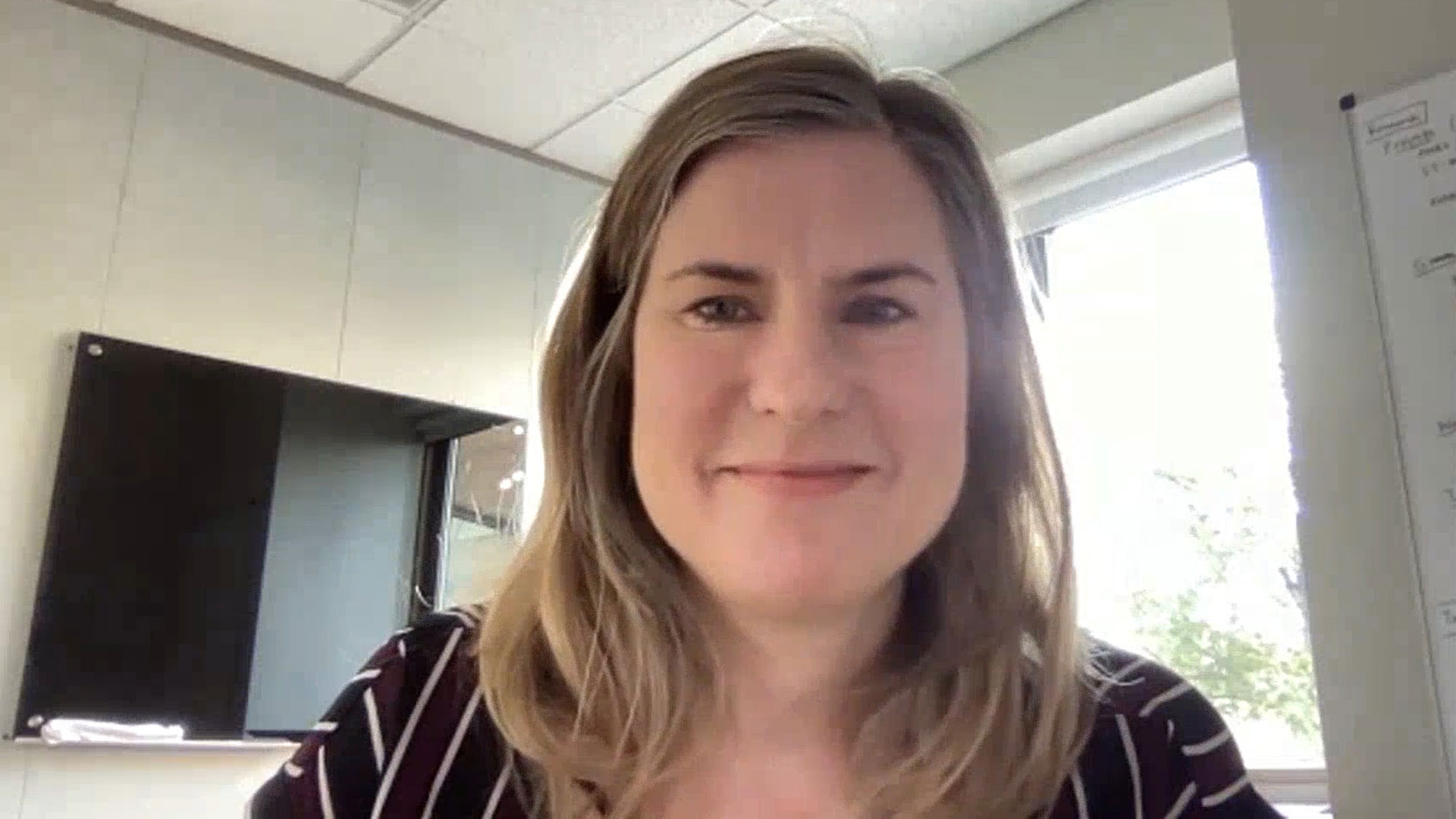
Dr. Sue Peters, a Scientist at Lawson Health Research Institute and Director of the Neurorehabilitation Physiology Lab at St. Joseph Health Care London’s Parkwood Institute, was one of the recipients of the Spring 2022 Lawson Internal Research Fund (IRF) Awards.
The funds will go towards a new study to assess whether fNIRS can be used to direct neurofeedback in stroke survivors – helping them with rehabilitation.
“Currently, there's no real measure of brain activity that is used in stroke rehabilitation to help make clinical decisions,” says Dr. Peters, who is also a Professor at Western University.
Over 400,000 Canadians live with the effects of a stroke, according to the Heart and Stroke Foundation, and there’s hope that fNIRS could make a big difference by eventually improving movement and independence.
“We're going to use the device in some common tasks that people might do with their arm and determine whether we can use this device reliably and accurately in a stroke-related context,” Dr. Peters explains.
Participants in the study will imagine moving while remaining still. This activates very similar parts of the brain to when people actually move. If done correctly, patients will see a visual cue generated through measurement using fNIRS.
“We know from MRI studies that when I move my right hand, the left side of my brain is activated,” notes Dr. Peters. “We think we can use this concept in stroke rehab.”
Dr. Peters is recruiting 40 people from the community who are at least six months post stroke and 40 healthy adults of all ages. They will first participate in motor assessment with a physiotherapist and then wear an fNIRS cap while thinking about moving their wrist to measure brain activity.
Previously, there were a lack of methods to image the brain during real-life movement.
“The hope is to eventually conduct a clinical trial where we're testing motor interventions to see whether some things are more effective than others at activating the regions of the brain that were impacted by the stroke.”
Dr. Peters believes the study has the potential to have a big impact on the future of rehabilitation for stroke patients, leading to lasting changes in quality of life.
Assessing neurofeedback in stroke survivors
A new study aims to assess the use of functional near-infrared spectroscopy (fNIRS), a type of imaging, to provide neurofeedback during stroke rehabilitation with a goal of eventually improving patient outcomes.
fNIRS is used to detect changes in brain oxygen levels using light. More recently it has also been used to develop brain-computer interfaces (BCIs), which allow patients with brain injuries to control devices like robotic arms with their thoughts.
Dr. Sue Peters, a Scientist at Lawson Health Research Institute and Director of the Neurorehabilitation Physiology Lab at St. Joseph Health Care London’s Parkwood Institute, was one of the recipients of the Spring 2022 Lawson Internal Research Fund (IRF) Awards.
The funds will go towards a new study to assess whether fNIRS can be used to direct neurofeedback in stroke survivors – helping them with rehabilitation.
“Currently, there's no real measure of brain activity that is used in stroke rehabilitation to help make clinical decisions,” says Dr. Peters, who is also a Professor at Western University.
Over 400,000 Canadians live with the effects of a stroke, according to the Heart and Stroke Foundation, and there’s hope that fNIRS could make a big difference by eventually improving movement and independence.
“We're going to use the device in some common tasks that people might do with their arm and determine whether we can use this device reliably and accurately in a stroke-related context,” Dr. Peters explains.
Participants in the study will imagine moving while remaining still. This activates very similar parts of the brain to when people actually move. If done correctly, patients will see a visual cue generated through measurement using fNIRS.
“We know from MRI studies that when I move my right hand, the left side of my brain is activated,” notes Dr. Peters. “We think we can use this concept in stroke rehab.”
Dr. Peters is recruiting 40 people from the community who are at least six months post stroke and 40 healthy adults of all ages. They will first participate in motor assessment with a physiotherapist and then wear an fNIRS cap while thinking about moving their wrist to measure brain activity.
Previously, there were a lack of methods to image the brain during real-life movement.
“The hope is to eventually conduct a clinical trial where we're testing motor interventions to see whether some things are more effective than others at activating the regions of the brain that were impacted by the stroke.”
Dr. Peters believes the study has the potential to have a big impact on the future of rehabilitation for stroke patients, leading to lasting changes in quality of life.
Media Contact
Amanda Taccone
Communications Consultant & External Relations
Lawson Health Research Institute
T: 519-685-8500 ext. ext. 64059
C: 226-919-4748
@email
… Reach Us? For more information please contact: Don Carlson Rehabilitation Engineer Phone: (519) 685-4292 ext. 42720 … Program The PossAbilities Program is one component of the rehabilitation continuum offered by Parkwood Hospital. … Hospital provides a continuum of acquired brain injury rehabilitation services. Brochures are available on all …
PossAbilities Program How Can You Reach Us? For more information please contact: Don Carlson Rehabilitation Engineer Phone: (519) 685-4292 ext. 42720 Fax: (519) 685-4066 What Can You Expect? Respect for your dignity, privacy and expertise. Timely response to your request for service. Client-centred ...
Atrial Fibrillation Support Group to help patients with physical and psychological wellbeing
The Cardiac Rehabilitation and Secondary Prevention program at St. Joseph’s Health Care London, in collaboration with London Health Sciences Centre’s Cardiac Care Program is launching a new initiative to increase the engagement of patients with common heart rhythm conditions.
The Atrial Fibrillation Support Group provides an opportunity for patients living with the heart disorder known as Atrial Fibrillation to attend educational and support sessions delivered by expert healthcare providers. Attendees will also be able to engage in group discussions led by an experienced facilitator. This new initiative aims to improve patient’s understanding of the available treatments as well as their ability to minimize the impact of Atrial Fibrillation on their physical and psychological wellbeing.
Education meetings will begin in early September and will be held monthly at St. Joseph’s Hospital. Informal group meetings may also be held monthly. Patients are encouraged to bring an interested family member or close caregiver.
In addition to the support group’s general activities, the Cardiac Rehabilitation and Secondary Prevention program at St. Joseph’s is conducting a research study which evaluates the benefit of the Atrial Fibrillation support group to patients. If you are not interested in being a research participant, you are still welcome to attend the Atrial Fibrillation Patient Support Group.
For more information on the Atrial Fibrillation Support Group, please visit the group's Facebook page or contact the group at 519-646-6100 ext. 64051 or @email.
Scientist
… diagnostic procedures, expert support related to aging, rehabilitation, or specialized mental health care, are the … Diseases Care Program Satellite Imaging Centre Southwestern Rehabilitation Centre Neurobehavioural Rehabilitation Centre Healthcare Materials Management …
For additional copies of this publication, or other information about St. Josephs Health Care, London or St. Josephs Health Care Foundation, please call 519-646-6034. St. JoSephS Because of St. Josephs... Care and research across our region our people I love my work our SucceSSeS My baby is alive Su...
… “Pursuing reduction in fatigue after COVID via exercise and rehabilitation: a randomized feasibility trial. This grant … “Pursuing reduction in fatigue after COVID via exercise and rehabilitation: a randomized feasibility trial. This grant …
Meeting of the Board of Directors Monday, February 26, 2024 3:30 pm start time St. Josephs Hospital Adams Boardroom A2-041 and via MS Teams video- conference MINUTES Call to Order Nawaz Tahir The reflection was provided by Karen Perkin. 1. Full Agenda / Consent Agenda 1.1 Adoption of Full Agenda I...
… if there was a downside to clumping surgical specialty and rehabilitation into one ambulatory care bucket versus naming … if there was a downside to clumping surgical specialty and rehabilitation into one ambulatory care bucket versus naming …
Meeting of the Board of Directors Monday, March 25, 2024 3:30 pm start time St. Josephs Hospital Adams Boardroom A2-041 and via MS Teams video- conference MINUTES Call to Order Nawaz Tahir The reflection was provided by Brandon de Vries. Education Session Capital Master Plan, Part 1: Clinical Serv...
… to maximize the capacity and flow from acute care through rehabilitation and complex care. This document was released … would require additional resources. The Ontario Rehabilitation and Complex Care Network (R. Butler chairs) … are working together to improve placement offerings to the rehabilitation disciplines for specialized rehabilitation in …
P a g e | 1 Meeting of the Board of Directors Monday, September 25, 2023 3:30 pm start time St. Josephs Hospital Adams Boardroom A2-041 Via MS Teams video-conference MINUTES Minutes to be ratified next meeting Call to Order Nawaz Tahir Welcome and roundtable introductions occurred. The Board then ...
1 Resources for Caregivers Transitional and Lifelong Care Program Caring for a loved one is a big responsibility. This booklet provides resources to help you with your caregiving journey or when you just someone to talk to. Transitional and Lifelong Care Program Parkwood Institute Main Building, 55...
… Care Program 9 Home and Vehicle Modification Residential Rehabilitation Assistance Program for Persons with … and Vocation Canada Pension Plan Disability Vocational Rehabilitation Program • Helps CPP disability benefit … pensions/cpp/cpp-disability-benefit/vocational- rehabilitation.html Can-Learn – Repayment Assistance Plan …
1 Transitional and Lifelong Care Program Resources for Financial Assistance Transitional and Lifelong Care Program Having a long-term disability can be costly. This booklet provides resources to help caregivers with financial costs and challenges. Transitional and Lifelong Care Program Parkwood Inst...
1 l Mental Health Resources Transitional and Lifelong Care Program Being a caregiver can be physically and emotionally stressful. This booklet provides resources for caregivers and families facing mental health concerns and challenges. Transitional and Lifelong Care Program Parkwood Institute Main B...
… Care Program Transportation Services Driver Assessment & Rehabilitation Program • One-on-one driving lessons and … Care Program Transportation Services Driver Assessment & Rehabilitation Program • One-on-one driving lessons and …
1 dr Transitions from Pediatric Care to Adult Health Care Transitional and Lifelong Care Program The transition to adult care for youth with complex health needs can be challenging. This booklet offers resources for caregivers and loved ones making the transition adulthood. Transitional and Lifelong...
… in care, teaching and research. Welcome to the Geriatric Rehabilitation Unit The next step in your Rehabilitation Journey CARING FOR THE BODY, MIND & SPIRIT … family members play a very important role in achieving your rehabilitation goals. Motivation Motivation is the key to a …
What to Bring Other Information Parkwood Institute Well-fitting, supportive shoes with: laces or velcro to fasten closed-in heels firm, non-slip rubber soles Supportive well-fitting slippers with non- slip rubber soles and closed-in heels Several changes of comfortable clothes and sleepwear, p...
… Welcome to the Musculoskeletal Rehabilitation Unit The next step in your Rehabilitation Journey What to Bring Other Information … family members play a very important role in achieving your rehabilitation goals. Your Health Care Team Motivation is … Welcome to the Musculoskeletal Rehabilitation Unit The next step in your Rehabilitation …
Welcome to the Musculoskeletal Rehabilitation Unit The next step in your Rehabilitation Journey What to Bring Other Information Parkwood Institute CARING FOR THE BODY, MIND & SPIRIT SINCE 1869 CARING FOR THE BODY, MIND & SPIRIT SINCE 1869 Renowned for compassionate care, St. Josephs is one of the be...