


Search
Search
719 Search Results:
… 10:15 10:45 Break 10:45 11:15 Rotator Cuff Non Operative Rehabilitation: Catherine Lane and Cathy Pasternak (PT) … Moderator: Dr. Faber 2:30 3:00 Rotator Cuff Post Operative Rehabilitation: Brenda Pankoff and Kelly Schmitt (PT) 3:00 … 10:15 10:45 Break 10:45 11:15 Rotator Cuff Non Operative Rehabilitation: Catherine Lane and Cathy Pasternak (PT) …
ROTATOR CUFF CONFERENCE MAY 31, 2019 SPEAKERS: Dr. George Athwal MD, FRCSC Dr. Darren Drosdowech MD, FRCS Tracy Elliott, PT Dr. Kenneth Faber MD, MHPE, FRCSC Dr. Steven Joseph MD, MA, CCFP (SEM), Dip. Sport Med Catherine Lane, PT Dr. Marie-Eve LeBel MD, MHPE, FRCSC Brenda Pankoff, PT Cathy Pasternak...
… physical dysfunction role is hand and upper extremity rehabilitation. The advent of the Hand Therapy … offers a comprehensive 600 hour hand and upper extremity rehabilitation fellowship designed for both entry level or … theoretical and clinical hand and upper extremity rehabilitation expertise. This learning can be achieved on a …
CARING FOR THE BODY, MIND & SPIRIT SINCE 1869 Renowned for compassionate care, St. Josephs is one of the best academic health care organizations in Canada dedicated to helping people live to their fullest by minimizing the effects of injury, disease and disability through excellence in care, teachin...
… St. Joseph's Health Care London Britt Eileen Coordinator, Rehabilitation $106,056.86 $610.29 2016 Hospitals & Boards … Joseph's Health Care London Gagliardi Julie Coordinator, Rehabilitation $106,056.85 $933.15 2016 Hospitals & Boards … Health Care London Tetzlaff Allan Coordinator, Forensic Rehabilitation $106,056.85 $610.29 2016 Hospitals & Boards …
Page 1 Cal Year / Anne civile Sector / Secteur Employer / Employeur Surname / Nom de famille Given Name / Prnom Position Title / Poste Salary Paid / Traitement vers Taxable Benefits / Avantages imposables 2016 Hospitals & Boards of Public Health / Hpitaux et Conseils de sant St. Joseph's Health Care...
… Parkwood Hospital Driving Assessment and Rehabilitation Program 801 Commissioners Road East London, … or confused �� Visual impairments (poor acuity) A driver rehabilitation specialist can provide a comprehensive … Parkwood Hospital Driving Assessment and Rehabilitation Program 801 Commissioners Road East London, …
Parkwood Hospital Driving Assessment and Rehabilitation Program 801 Commissioners Road East London, Ontario N6C 5J1 Phone: (519) 685-4070 Fax: (519) 685-4576 DRIVING WITH SCIZOPHRENIA Schizophrenia is a psychiatric disorder that can affect all areas of daily life including ones ability to drive. The...
… care centre. Parkwood Hospital plays a leading role in rehabilitation, complex care, palliative care, Veteran’s … care centre. Parkwood Hospital plays a leading role in rehabilitation, complex care, palliative care, Veteran’s …
Annual Accessibility Plan regarding ONTARIANS WITH DISABILITIES ACT for the St. Josephs Health Care, London September 2003 - August 2004 Submitted to Cliff Nordal Chief Executive Officer 30 September 2003 Prepared by Nick Kokkoros Facilitator Accessibility Working Group This publication is available...
… care centre. Parkwood Hospital plays a leading role in rehabilitation, complex care, palliative care, Veteran’s … care centre. Parkwood Hospital plays a leading role in rehabilitation, complex care, palliative care, Veteran’s …
Annual Accessibility Plan for the St. Joseph Health Care, London September 2004 - August 2005 Submitted to Cliff Nordal Chief Executive Officer 30 September 2004 Prepared by SJHC Accessibility Working Group Co-ordinator, Derek Lall This publication is available on the hospitals website and in altern...
Parkwood Institute Main Building Sexual Health after a Brain Injury This pamphlet contains information for patients living with a brain injury, including: How sexual health may be affected after a brain injury How to cope with changes to sexual health following a brain injury Tips for being sexua...
… Sexual Health After Spinal Cord Injury 2 Spinal Cord Injury Rehabilitation Program You can do it, we are here to help! … It’s important to ask for help. 3 Spinal Cord Injury Rehabilitation Program Topics people with SCI often wonder … in sexual activity is still possible. 4 Spinal Cord Injury Rehabilitation Program Will I be able to get an e rection or …
Parkwood Institute Main Building Sexual Health After Spinal Cord Injury 1 Parkwood Institute Main Building Sexual Health After Spinal Cord Injury 2 Spinal Cord Injury Rehabilitation Program You can do it, we are here to help! Sex and sexuality are important parts of being human, however after a spin...
… Health After Stroke Sexual Health After Stroke Stroke Rehabilitation Program Page 2 You can do it, we are here to … stroke are common. It is important to ask for help. Stroke Rehabilitation Program Page 3 Topics people with stroke … erections, lubrication, stimulation and pleasure. Stroke Rehabilitation Program Page 4 • Physical impairments: Having …
Parkwood Institute Main Building Sexual Health After Stroke Sexual Health After Stroke Stroke Rehabilitation Program Page 2 You can do it, we are here to help! Sex and sexuality are important parts of being human. After having a stroke, many things can change. The way in which you experience your bo...
… Health After Stroke Sexual Health After Stroke Stroke Rehabilitation Program Page 2 You can do it, we are here to … stroke are common. It is important to ask for help. Stroke Rehabilitation Program Page 3 Topics people with stroke … erections, lubrication, stimulation and pleasure. Stroke Rehabilitation Program Page 4 • Physical impairments: Having …
Parkwood Institute Main Building Sexual Health After Stroke Sexual Health After Stroke Stroke Rehabilitation Program Page 2 You can do it, we are here to help! Sex and sexuality are important parts of being human. After having a stroke, many things can change. The way in which you experience your bo...
Sharing the gift of hope through research
Community members and those in the field of health research attended a special open house and interactive tour by research groups at Lawson Health Research Institute – celebrating the holiday spirit and the gift of hope that is made possible through hospital-based research.
A part of St. Joseph’s Health Care London, Parkwood Institute represents the next era in care, recovery and rehabilitation. Across the site, clinical and research teams in different disciplines and specialties are collaborating in new ways.
The teams that make up Parkwood Institute Research, a Lawson program, are conducting clinical studies with the goal of understanding disease and improving care for a wide range of patients.
“Many people in the community know the high-quality and compassionate care that is supported by the various clinical teams at Parkwood Institute,” says Dr. Cheryl Forchuk, Beryl and Richard Ivey Research Chair in Aging, Mental Health, Rehabilitation and Recovery, and Assistant Scientific Director at Lawson. “What most don’t know is that we have research teams working across these sites, with each other and research patients.
Researchers tackle the most important challenges and provide access to highly innovative and meaningful solutions that improve the lives of patients and their families, added Dr. Forchuk.
Image
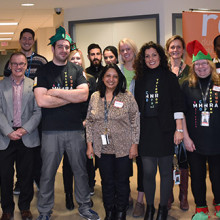
At the open house on November 30, there were 11 interactive displays in the areas of cognitive vitality and brain health, mobility and activity and mental health. This included the Gait and Brain Laboratory, the Operational Stress Injury Clinic, wound care, the Mental Health Nursing Research Alliance and more:
- The Mental Health INcubator for Disruptive Solutions (MINDS) of London Middlesex is a social innovation lab focused on developing, testing, implementing and evaluating disruptive solutions that promote the mental and emotional wellbeing of Transition-Aged Youth in our London-Middlesex community.
- The Canadian Consortium on Neurodegeneration in Aging (CCNA), supported by CIHR and many partners, is the premier research hub for all aspects of research involving neurodegenerative diseases that affect cognition in aging – including Alzheimer's disease.
- A dynamic lab with the top neurorehabilitation evidence-based reviews in stroke, brain injury, spinal cord injury and multiple sclerosis, or insight into clinical trials of stroke rehabilitation using exoskeletons, exercise paradigms, pharmaceuticals, and clinical studies of psychosocial factors that influence chronic pain in brain injury and spinal cord injury populations.
The open house had a festive theme and each of the exhibits involved a problem solving element to encourage learning and foster teamwork.
Image
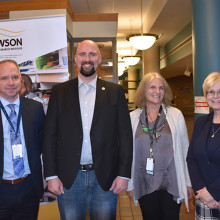
Peggy Sattler, Member of Provincial Parliament for London West, and Terence Kernaghan, Member of Provincial Parliament for London North Centre, were among the over 300 people in attendance.
“This special open house opportunity is meant to be a fun experience where you were also learning about research,” explains Dr. Forchuk. “During this holiday season, we wanted to share our own gift of hope in the form of collaborative research that is making a real difference.”
See photos from the open house on Facebook.
Scientist
Siobhan Schabrun
Siobhan Schabrun, PhD
Professor, School of Physical Therapy
Key Areas of Focus:
Chronic Pain
Email:
Social:
Accepting Grad Students:
Yes
About:
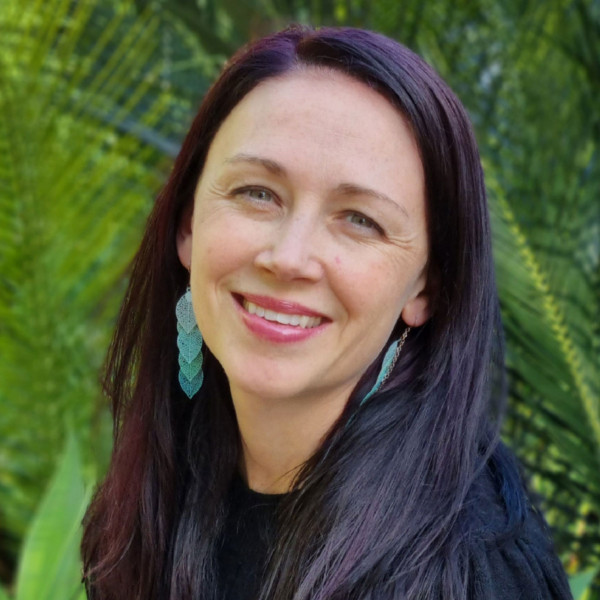
Siobhan Schabrun is the incoming William and Lynne Gray Endowed Research Chair in Mobility and Activity and Professor in the School of Physical Therapy. Her research program is focused on understanding, treating and preventing persistent pain – a major cause of reduced mobility and activity amongst otherwise healthy individuals and those living with musculoskeletal and neurological conditions. In addition, Professor Schabrun explores the use of non-invasive brain stimulation technologies to boost neuroplasticity and improve outcomes following traditional forms of rehabilitation such as exercise, functional electrical stimulation and virtual reality training. Professor Schabrun is passionate about improving the translation of research evidence into practice and about promoting the participation of women and girls in science.
… acute/ambulatory care; specialized mental health care; rehabilitation and specialized geriatrics; complex care and … acute/ambulatory care; specialized mental health care; rehabilitation and specialized geriatrics; complex care and …
S i S t e r the hiStory of the SiSterS of St. JoSeph of London Special thanks to Lori Perrie and Sister Mary Zimmer of the Sisters of St. Joseph of the Diocese of London for their knowledge, expertise and keen attention to detail. cover: The caring hands of Sister Norita Keenan, who worked at St. J...
… Our Services CARE OF THE ELDERLY CARE, RECOVERY AND REHABILITATION COMPLEX CHRONIC DISEASE MANAGEMENT … Our Services CARE OF THE ELDERLY CARE, RECOVERY AND REHABILITATION COMPLEX CHRONIC DISEASE MANAGEMENT … Our Services CARE OF THE ELDERLY CARE, RECOVERY AND REHABILITATION COMPLEX CHRONIC DISEASE MANAGEMENT …
STRATEGIC PLAN 2015 | 2018ST. JOSEPHS HEALTH CARE LONDON Realizing our Vision St. Josephs Vision, Mission and Values OUR VISION OUR MISSION OUR VALUES RESPECT, EXCELLENCE, COMPASSION STRATEGIC PLAN 2015 TO 2018 Our Patients, Residents and Families GOAL GUIDED BY THEIR VOICES; EXCELLENCE ALWAYS STRA...
Small box holds big promise in cardiac care
London, Ontario – For a non-descript box it wields a mighty name and even more impressive possibilities for people with heart disease. Called the AngioDefender, the machine – no bigger than a shoebox - holds much promise in the ability to personalize cardiac care, say researchers at Lawson Health Research Institute, the research arm of St. Joseph’s Health Care London.
St. Joseph’s Hospital in London is the only Canadian cardiac rehabilitation centre testing the AngioDefender, a non-invasive tool that can assess the health of blood vessels by using a simple blood pressure cuff. At the recent Canadian Cardiovascular Congress in Toronto, Lawson researchers presented findings of their study, which assessed the feasibility and reliability of the AngioDefender in patients undergoing cardiac rehabilitation.
“Right now everyone basically gets similar treatment in terms of maximizing therapy based on risk factor profiles,” says Dr. Neville Suskin, Lawson scientist and medical director of St. Joseph’s Cardiac Rehabilitation and Secondary Prevention Program. “With this machine, if it does what we hope it will do, it gives us insight into a person’s vascular health so that we can know if the treatment is working and adjust and individualize their care.”
Also key, says Dr. Suskin, is the machine can be used by any medical professional in any doctor’s office.
The AngioDefender system, manufactured by Everist Health, measures the health of the endothelium — the interior lining of blood vessels. Using a blood pressure cuff, the device runs through a series of inflations and deflations to analyze the endothelium’s response to changes in blood flow. When the blood pressure cuff is inflated, blood flow decreases and stops. When the blood pressure cuff deflates, blood flow increases and the main artery in the arm responds by getting bigger (dilating). How well it dilates is a sign of endothelial (vascular) health.
Using a specially designed data analysis algorithm, the AngioDefender system produces each patient’s “flow-mediated dilation” score. When the information is combined with the patient’s other risk factors, it calculates the patient’s vascular age. The whole process takes 15 to 20 minutes.
“The ability for a health professional to obtain a measure of vascular health in such a straightforward manner is very novel” says Dr. Suskin, whose team has found that the machine is feasible to use in a busy cardiac rehabilitation practice setting. “It doesn’t take long, patients tolerate it, and they are also very keen to know their vascular health as determined by this machine.”
If successful, the device may become part of the standard screening to assess early-stage cardiovascular disease and atherosclerosis, and an innovative way to monitor the effectiveness of treatment.
-30-
About Lawson Health Research Institute
Lawson Health Research Institute is one of Canada’s top hospital-based research institutes, tackling the most pressing challenges in health care. As the research institute of London Health Sciences Centre and St. Joseph’s Health Care London, our innovation happens where care is delivered. Lawson research teams are at the leading-edge of science with the goal of improving health and the delivery of care for patients. Working in partnership with Western University, our researchers are encouraged to pursue their curiosity, collaborate often and share their discoveries widely. Research conducted through Lawson makes a difference in the lives of patients, families and communities around the world. To learn more, visit www.lawsonresearch.ca.
About St. Joseph’s Health Care London
Renowned for compassionate care, St. Joseph’s Health Care London is a leading academic health care centre in Canada dedicated to helping people live to their fullest by minimizing the effects of injury, disease and disability through excellence in care, teaching and research. Through partnership with Lawson Health Research Institute and our collaborative engagement with other health care and academic partners, St. Joseph’s has become an international leader in the areas of: chronic disease management; medical imaging; specialized mental health care; rehabilitation and specialized geriatrics; and surgery. St. Joseph’s operates through a wide range of hospital, clinic and long-term and community-based settings, including: St. Joseph’s Hospital; Parkwood Institute; Mount Hope Centre for Long Term Care; and the Southwest Centre for Forensic Mental Health Care. www.sjhc.london.on.ca
Media Contacts
Celine Zadorsky
Senior Media Relations Consultant
Communications & Public Engagement
T: 519-685-8500 ext. 73502
Celine.zadorsky@lhsc.on.ca
… also rewire the brain’s neural network, similar to physical rehabilitation, to help recover smell. Research is ongoing … also rewire the brain’s neural network, similar to physical rehabilitation, to help recover smell. Research is ongoing …
SMELL AND TASTE DISORDERS INTRODUCTION Olfaction (the sense of smell) is an important function of the sinonasal cavity. It is increasingly being investigated as it contributes to behavior, cognition, quality of life (QOL), and sinonasal disease. Smelling is critical and important to our daily lives....
… C A Rehabilitation Courtyard Rehabilitation Treatment Courtyard Treatment Courtyard … C A Rehabilitation Courtyard Rehabilitation Treatment Courtyard Treatment Courtyard …
C A Rehabilitation Courtyard Rehabilitation Treatment Courtyard Treatment Courtyard Courtyard Southwest Centre for Forensic Mental Health Care BA C A B NEIGHBOURHOOD C DOWNTOWN SUNSET DRIVE Legend Zone Parking Barrier Free Parking Entrance Staff Motorcycle Parking Parking Bicycle Parking Motorcycle ...
… Centre.............................................. 28 Rehabilitation Centre ..................................... … BA Map of Southwest Centre for Forensic Mental Health Care Rehabilitation Courtyard BA Rehabilitation Treatment Courtyard Courtyard NEIGHBOURHOOD …
i~ SIJOSEPHs HEALTH CARE LONDON *Due to the COVID-19 pandemic, some of the information in this handbook is subject to change and may not reflect current restrictions, processes, or guidelines. Please speak to your care team if you have any questions. Southwest Centre for Forensic Mental Health Care ...
… SUNSET DRIVE Treatment Courtyard Treatment Courtyard Rehabilitation Courtyard Rehabilitation Courtyard Parking Legend Barrier Free Parking … SUNSET DRIVE Treatment Courtyard Treatment Courtyard Rehabilitation Courtyard Rehabilitation Courtyard Parking Legend Barrier Free Parking …
SUNSET DRIVE Treatment Courtyard Treatment Courtyard Rehabilitation Courtyard Rehabilitation Courtyard Parking Legend Barrier Free Parking Entrance Zone Visitors Parking Staff Parking Motorcycle Parking Motorcycle Parking Bicycle Parking A B C NEIGHBOURHOOD DOWNTOWN C BA C A Southwest Centre for For...
… of age or over (with the exception of the Musculoskeletal Rehabilitation Unit, which serves adults of all ages) • … information, including the fee. Our Care Areas Geriatric Rehabilitation Day Hospital - A day treatment program for … functional decline, who live in the community and require rehabilitation. Clients attend 2-3 times per week for a …
Renowned for compassionate care, St. Josephs is one of the best academic health care organizations in Canada dedicated to helping people live to their fullest by minimizing the effects of injury, disease and disability through excellence in care, teaching and research. sjhc.london.on.ca CARING FOR T...