


Search
Search
1081 Search Results:
Discharge Instructions St. Josephs Hospital Carpal Tunnel, Trigger Finger Release or Removal of Arthritic Nodules - Orthopaedics Day of Surgery Bring 2-3 pillows so you can elevate your arm on the way home. Please leave pillows in your car during your surgery. Care of the Surgical Site Remove the...
Discharge Instructions St. Josephs Hospital Carpal Tunnel, Trigger Finger Release or Removal of Arthritic Nodules - Plastics Day of Surgery Bring 2-3 pillows so you can elevate your arm on the way home. Please leave pillows in your car during your surgery. Care of the Surgical Site Remove the dre...
Discharge Instructions St. Josephs Hospital Shoulder Surgery (Arthroscopic or Open) Care of the Surgical Site Arthroscopic procedure: Change the bandage 48 hours after surgery and continue to change every 2 days. Use band-aids to keep the small incisions covered until your follow-up appointment. ...
St. Josephs Health Care Foundation Page 1 of 3 Donor Complaint and/or Concerns Policy #200-3 Board Policy Subject: Donor Complaint and/or Concerns Policy No.: #200-3 Section: Donor Relations Approved by: Board of Directors Date Approved: June 20, 2018 June 18, 2014 Reviewed by: Executive Committee D...
… has been made. The Foundation is subject to legislative requirements with respect to retention periods. 5.3 Personal … information in accordance with applicable legislative requirements. 6. Records Maintenance to Ensure Accuracy of … has been made. The Foundation is subject to legislative requirements with respect to retention periods. 5.3 Personal …
St. Josephs Health Care Foundation page 1 of 9 Privacy Policy #500-9 Board Policy Subject: Privacy Policy No.: #500-9 Section: General Administration Approved by: Board of Directors Date Approved: June 20, 2018 September 19, 2015 March 30, 2011 May 26, 2005 Reviewed by: Executive Committee Date Revi...
~------...... ........._ LAWSON HEALTH RESEARCH INSTITUTE Public Information and Disclosure Protocol Cyclotron & PET Radiochemistry Facility located at St. Josephs Health Care London Updated September 2021 LAWSON HEALTH RESEARCH INSTITUTE Public Information and Disclosure Protocol Cyclotron & PET Ra...
Dr. Cheryl Forchuk recognized for health care innovation
Dr. Cheryl Forchuk is the recipient of the 2020 Innovation Award for her work to prevent discharges from hospital to homelessness. Throughout her career, Dr. Forchuk has been investigating potential best practice approaches to prevent homelessness in our community for a wide range of people, including those with severe mental illness, veterans, families, and youth.
Her recent project, ‘Preventing Hospital Discharge into Homelessness: No Fixed Address Version 2 (NFAv2)’ streamlines housing and income services by bringing them into the hospital, and integrating them into a coordinated system of care.
Research shows that when someone is housed, their use of medical and social services decreases. Safe and adequate housing is required for individuals to recover from illness.
Version one of this program was a great success, providing direct access to a housing advocate and Ontario Works from inpatient hospital psychiatric units in London. The No Fixed Address v2 program provides individual inpatients, at risk of becoming homeless, with housing and financial assistance while in hospital. A collaborative approach which includes the local Canadian Mental Health Association, the Salvation Army Rent Stability Bank, Ontario Works, and the City of London brings community supports to the hospital. This enables patients to recover from their illness and reduces the number who may return to the hospital. Dr. Forchuk’s use of in-depth, individual, quantitative interviews, and qualitative focus groups, allows stakeholders to voice their experiences with the program as well as capture traditional outcomes.
“This innovative program has been so successful in London’s hospitals that the City of London has integrated the NFAv2 service within its municipal housing support programs,” explains Dr. Arlene MacDougall, Lawson Scientist and Dr. Forchuk’s nominator. “It also has the potential to be integrated across the province as the best practice in reducing homelessness in communities. Her efforts have been recognized by multiple funding agencies, and it will soon be the model for the rest of the nation to follow. Dr. Forchuk’s commitment to improve the lives and of those in our community makes her truly deserving of this award.”
“The No Fixed Address research project is the first evaluation anywhere of a strategy that aims to reduce the number of hospital patients being discharged into homelessness,” says Dr. Forchuk. “I’m really proud of our collective efforts. We have been able to help a lot of people, and have also learned a lot throughout the course of this study.”
Scientist
Driver Assessment Programs: Frequently Asked Questions 1. Will I get my license back right away? If you are successful in passing the driving assessment and your licence is under medical suspension, the MTO will be notified and it will take them approximately six weeks to reinstate your licence. If ...
Parkwood Institute Driver Assessment and Rehabilitation Centre Driver Assessment and Rehabilitation Program/DriveABLE Mailing address Location PO BOX 5777, STN B 550 Wellington Road London, ON N6A 4V2 London ON N6C 0A7 Tel: (519) 685-4070 Fax: (519) 685-4066 Referral (Please forward any relevant med...
Drug Allergies Drug Allergy Clinic The Drug Allergy Clinic is part of the Allergy and Immunology Program at St. Josephs Hospital. The clinic is focused on treating allergies to medications. The most common drugs that we deal with are antibiotics (especially penicillin) and also local anesthetic alle...
July 12, 2022; Page 1 of 2 Abobotulinumtoxin A (Dysport) for Cervical Dystonia/Spasmodic Torticollis What is cervical dystonia and how is it typically treated? Cervical dystonia is a rare neurological disorder involving involuntary muscle contractions in the neck that cause the head to twist or turn...
Easing the pressure for patients with chronic wounds
Chronic wounds represent a significant burden in Canada. Between four and 30 per cent of patients develop a chronic wound, depending on the health care setting. Over 85 per cent of all Spinal Cord Injury (SCI) survivors will experience health complications related to pressure ulcers, injuries to the skin and underlying tissue resulting from prolonged pressure. These types of wounds can significantly reduce participation in meaningful activities and overall quality of life.
Research from around the world shows that electrical stimulation can help speed the healing of pressure ulcers. This therapy is currently done by a trained health care provider and is not readily available for people across Canada.Electrical stimulation therapy (E-Stim) is a wound treatment that involves applying low levels of electrical current to the wound bed and surrounding tissues. It stimulates several healing processes, promotes local circulation and prevents infections.
The E-Stim Collaboration: A Best Practice Implementation Project for Better Pressure Ulcer Care aims to improve the coordination of pressure ulcer care and promote the use of evidence-informed wound treatments for people living with SCI. In particular, the research project is studying how to best provide E-Stim to people with pressure ulcers, in their own communities.
“Over the years I’ve seen the serious impact pressure ulcers have on the lives of people with spinal cord injury and other health challenges. This is what drives my commitment to not only develop best practice guidelines, but also to ensure they are put into action,” says Dr. Pamela Houghton, Associate Scientist, Lawson and Professor, School of Physical Therapy at Western University. “Advances in technology make it possible for more people with care needs to live at home.”
The pilot project in the South West LHIN has a unique model that builds capacity in the community and taps into the lived experience of people with pressure ulcers and SCI. It brings together the expertise of researchers, clinicians and managers from academia, hospital centres and community care.
Partners include the Parkwood Institute Research program at Lawson Health Research Institute, Western University, Saint Elizabeth’s Health Care Research Centre, Sunnybrook Health Sciences Centre and the South West Community Care Access Centre. An interdisciplinary specialized team, called SCIPUT, has been established within the Spinal Cord Injury Rehabilitation program provided at Parkwood Institute, St. Joseph’s Health Care London.
“Our collaborative team is using the PLAN-DO-STUDY-ACT quality improvement model. This allows us to learn from each cycle and make adjustments as we go,” says Dr. Houghton. “We have just completed the first cycle and are reporting on lessons learned.” Funded by the Rick Hansen Foundation, the team hopes this will set the stage for a larger cross-country initiative.
Those interested in participating can contact phoughto@uwo.ca. The study is open to:
- Individuals with an open pressure ulcer and with a condition that causes limited mobility and/or requires a wheelchair;
- Those who are able and willing to participate in treatment plan, and communicate feedback; and,
- People who are eligible to receive services from South West CCAC.
|
Image
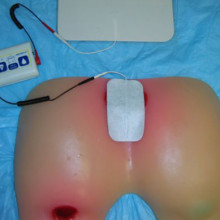
Electrical stimulation (E-Stim) directly stimulates several wound healing processes, promotes local circulation and prevents wound infections. It produces faster healing and wound closure. A trained health care provider applies low levels of electrical current to the pressure ulcer using specialized equipment. |
(yj~ SIJOSEPHs HEALTH CARE LONDON Evacuation Fire Hazardous Chemical Spill Bomb Threat/Suspicious Object Critical Infrastructure Failure External Disaster YELLOW Missing Person WHITE Violent Person Hostage Taking Person with a Weapon Adult Medical Emergency Pediatric Medical Emergency Emergency Colo...
~~ STJOSEPHs HEALTH CARE LONDON Emergency Management Committee Terms of Reference Purpose: The Emergency Management Committee is responsible for supporting an effective organization-wide emergency management program. Key Functions: Review the organizations emergency response procedures and Emergenc...
… Medicine Category Privileges Educational/Experience Requirements A All activities and procedures generally … Medicine Category Privileges Educational/Experience Requirements A All activities and procedures generally …
Delineation of Privileges Draft - September 2001 DRAFT November 2, 2001 London Health Sciences Centre And St. Josephs Health Care London Delineation of Procedural Privileges Department of Emergency Medicine Category Privileges Educational/Experience Requirements A All activities and procedures gene...
… Medicine Category Privileges Educational/Experience Requirements A All activities and procedures generally … Medicine Category Privileges Educational/Experience Requirements A All activities and procedures generally …
London Health Sciences Centre And St. Josephs Health Care London April 2016 Delineation of Procedural Privileges Department of Emergency Medicine Category Privileges Educational/Experience Requirements A All activities and procedures generally performed by physicians certified in Emergency Medicine....
… Medicine Category Privileges Educational/Experience Requirements A All activities and procedures generally … Medicine Category Privileges Educational/Experience Requirements A All activities and procedures generally …
London Health Sciences Centre And St. Josephs Health Care London April 2016 Delineation of Procedural Privileges Department of Emergency Medicine Category Privileges Educational/Experience Requirements A All activities and procedures generally performed by physicians certified in Emergency Medicine....
… Medicine Category Privileges Educational/Experience Requirements A All activities and procedures generally … Medicine Category Privileges Educational/Experience Requirements A All activities and procedures generally …
London Health Sciences Centre And St. Josephs Health Care London April 2016 Delineation of Procedural Privileges Department of Emergency Medicine Category Privileges Educational/Experience Requirements A All activities and procedures generally performed by physicians certified in Emergency Medicine....
… Medicine Delineation Privileges Educational and Experience Requirements A … Medicine Delineation Privileges Educational and Experience Requirements A …
ApprovedbyDepartmentChief,CWCCandMACDecember2018 Delineation of Procedural Privileges Department of Emergency Medicine Divisions of Adult and Paediatric Emergency Medicine Delineation Privileges Educational and Experience Requirements A Allactivitiesandproceduresgenerallyperformed byphysiciansce...
St. Josephs Health Care London EMERGENCY RESPONSE dial 55555 for ALL emergencies below COLOUR CODE WHAT DOES IT MEAN? WHAT SHOULD YOU DO? Code Green A horizontal, vertical, or full building evacuation (the cause could be a fire, bomb threat, etc.). An order is required to evacuate, unless persons a...