


Search
Search
1081 Search Results:
… Records 2. Q – Should I complete all my health screening requirements prior to the commencement of my primary … or start date? A – Yes. MUST: complete all health requirements prior to start date. Clinical Fellows … do I go if I require help in completing my health screen requirements? A – Depends on your position and start date. …
1 Occupational Health & Safety Services Questions and Answers - Health Screening Process 1. Q Where can I go to obtain documentation of my previous immunization, Tb testing & serology? A - Family doctor, medical school records, student health services, public health unit where you attended school, ...
… Records 2. Q – Should I complete all my health screening requirements prior to the commencement of my primary … or start date? A – Yes. MUST: complete all health requirements prior to start date. • Clinical Fellows • … do I go if I require help in completing my health screen requirements? A – Depends on your position and start date. …
1 Occupational Health & Safety Services Questions and Answers - Health Screening Process 1. Q Where can I go to obtain documentation of my previous immunization, Tb testing & serology? A Family doctor, medical school records, student health services, public health unit where you attended school, O...
… Records 2. Q – Should I complete all my health screening requirements prior to the commencement of my primary … or start date? A – Yes. MUST: complete all health requirements prior to start date. Clinical Fellows … do I go if I require help in completing my health screen requirements? A – Depends on your position and start date. …
1 Occupational Health & Safety Services Questions and Answers - Health Screening Process 1. Q Where can I go to obtain documentation of my previous immunization, TB testing & serology? A Family doctor, medical school records, student health services, public health unit where you attended school, O...
… Records 2. Q – Should I complete all my health screening requirements prior to the commencement of my primary … or start date? A – Yes. MUST: complete all health requirements prior to start date. • Clinical Fellows • … do I go if I require help in completing my health screen requirements? A – Depends on your position and start date. …
Reviewed 20200624 1 Occupational Health & Safety Services Questions and Answers - Health Screening Process 1. Q Where can I go to obtain documentation of my previous immunization, TB testing & serology? A Family doctor, medical school records, student health services, public health unit where you ...
… to others? Ensure consistent knowledge and understanding of requirements Yes New e-learning on hand hygiene was … health areas is important and needs to be balanced with requirements to meet standards to prevent infections. Also … to others? Ensure consistent knowledge and understanding of requirements Yes New e-learning on hand hygiene was …
Excellent Care for All Quality Improvement Plans (QIP): Progress Report for the 2015/16 QIP St. Josephs Health Care London Corporate (excluding Mount Hope) ID Measure/Indicator from 2015/16 Org Id Current Performance as stated on QIP2015/16 Target as stated on QIP 2015/16 Current Performance 2016 C...
… to others? Ensure consistent knowledge and understanding of requirements Yes New e-learning on hand hygiene was … health areas is important and needs to be balanced with requirements to meet standards to prevent infections. Also … to others? Ensure consistent knowledge and understanding of requirements Yes New e-learning on hand hygiene was …
Excellent Care for All Quality Improvement Plans (QIP): Progress Report for the 2015/16 QIP St. Josephs Health Care London Corporate (excluding Mount Hope) ID Measure/Indicator from 2015/16 Org Id Current Performance as stated on QIP2015/16 Target as stated on QIP 2015/16 Current Performance 2016 C...
… to others? Ensure consistent knowledge and understanding of requirements Yes New e-learning on hand hygiene was … health areas is important and needs to be balanced with requirements to meet standards to prevent infections. Also … to others? Ensure consistent knowledge and understanding of requirements Yes New e-learning on hand hygiene was …
Excellent Care for All Quality Improvement Plans (QIP): Progress Report for the 2015/16 QIP St. Josephs Health Care London Corporate (excluding Mount Hope) ID Measure/Indicator from 2015/16 Org Id Current Performance as stated on QIP2015/16 Target as stated on QIP 2015/16 Current Performance 2016 C...
… to others? Ensure consistent knowledge and understanding of requirements Yes New e-learning on hand hygiene was … health areas is important and needs to be balanced with requirements to meet standards to prevent infections. Also … to others? Ensure consistent knowledge and understanding of requirements Yes New e-learning on hand hygiene was …
Excellent Care for All Quality Improvement Plans (QIP): Progress Report for the 2015/16 QIP St. Josephs Health Care London Corporate (excluding Mount Hope) ID Measure/Indicator from 2015/16 Org Id Current Performance as stated on QIP2015/16 Target as stated on QIP 2015/16 Current Performance 2016 C...
… to others? Ensure consistent knowledge and understanding of requirements Yes New e-learning on hand hygiene was … health areas is important and needs to be balanced with requirements to meet standards to prevent infections. Also … to others? Ensure consistent knowledge and understanding of requirements Yes New e-learning on hand hygiene was …
Excellent Care for All Quality Improvement Plans (QIP): Progress Report for the 2015/16 QIP St. Josephs Health Care London Corporate (excluding Mount Hope) ID Measure/Indicator from 2015/16 Org Id Current Performance as stated on QIP2015/16 Target as stated on QIP 2015/16 Current Performance 2016 C...
Carbohydrate & Insulin Adjustments for Exercise Hypoglycemia (Low Glucose < 4.0 mmol/L) What are symptoms of hypoglycemia? When you have any of these symptoms always check your glucose. If you cannot check, assume your glucose is low. What should I do if I have hypoglycemia? 1. Treat with one of the...
Radiation Safety: Oxygen-15 gas Learning Tips 1. Click the Next and Previous arrows below to navigate this module. 2. Check out the FAQ tab to help answer any questions you may have. 3. This module will take you approximately 25 minutes to complete. * 4. Contact the Radiation Safety Officer for any ...
Reasons Muscles Matter 1. Enhance your level of functional fitness. Your muscles play a key role in determining whether you can perform the activities of daily living at home, work, and play. Accordingly, the higher your level of muscular fitness, the more likely you will be able to do the tasks in ...
… with the candidate to complete all hospital credentialing requirements, which includes the Health Review, and all … with the candidate to complete all hospital credentialing requirements, which includes the Health Review, and all …
Canadian Trained Professional Staff in an Academic Appointment New positions requires that Part A of the Position/Candidate Impact Summary Form be completed and request form submitted by Department to Medical Affairs for the Joint Professional Staff Human Resource Committee (JPSHRC) to Review. The A...
… with the candidate to complete all hospital credentialing requirements, which includes the Health Review, and all … with the candidate to complete all hospital credentialing requirements, which includes the Health Review, and all …
Non-Canadian Trained Professional Staff in an Academic Appointment New positions requires that Part A of the Position/Candidate Impact Summary Form be completed and request form submitted by Department to Medical Affairs for the Joint Professional Staff Human Resource Committee (JPSHRC) to Review. T...
Reddit AMA: How does the gut microbiome relate to healthy aging?
Drs. Greg Gloor, Gregor Reid, Jeremy Burton and Jean Macklaim participated in a Science AMA (Ask Me Anything) Series following the publication of their “The Gut Microbiota of Healthy Aged Chinese Is Similar to That of the Healthy Young” study.
Their study, one of the largest microbiota studies conducted in humans, has shown a potential link between healthy aging and a healthy gut.
During the AMA, the team of researchers answered over 30 questions relating to the study as well as other questions relating to probiotics and the human microbiome. Diet, environment, and fecal transplants were some of the topics reddit users wanted to discuss.
Each of the researchers also weighed in on the medical breakthroughs in microbiome and probiotic research in the future:
Dr. Greg Gloor: My prediction is that we will begin to understand the inter-relationships between the microbiota and the host. Right now the microbiome community and the human genetic community are not well connected. For example, the particular strains from a single donor that engraft following a fecal transplant differ between different recipients. We don’t understand how or why this happens, but the that the host genetic makeup and immunological response affects engraftment is an obvious starting point. We really can’t start to think about true precision medicine until we understand all the moving parts in play, we can’t just look at the host genetics, nor can we look only at the microbiota, or the broader environment - we need to synthesize all this information in order to truly deliver person-specific advice.
Dr. Gregor Reid: Sample a person’s microbiota and metabolomic read-out, know what drugs they are taking and what toxins they are being exposed to (mercury, pesticides, aflatoxins etc) and ‘design’ a probiotic that gets closer to being ‘personalized’ for whatever purpose is believed to be important to improve their health status. That would require having many probiotic strains available as options, and foods that could promote their influence in the host. Another challenge will be ethically doing this in early life; and another is to apply the intervention to impact distant sites like the brain. Furthermore, we need to know to what extent the intervention helps the person. For example, probiotics can reduce cholesterol, and this might reduce by 12.5% the risk of a cardiac event in the next ten years, while statins may reduce the risk by 25%. Depending on the actual risk of disease, the probiotic approach may not be sufficient. So, we should not promote something that endangers the life of the recipient in any way. Having said that, the side effects of high statin levels are extremely concerning, and we need to be looking at alternatives. If probiotics could reduce the need for high levels of statins, that might be a win-win.
Dr. Jeremy Burton: The gut microbiome composition has been shown to be predictive of certain conditions (T2 diabetes, some kidney stones etc), so the hospital of the future will likely analyse your microbiome, as well as your own genetics. Once a condition has been diagnosed and if there is a microbial link, some kind of microbial therapeutics will be administered in different ways. In a less severe microbial disruption, patients may only receive a dietary intervention, but where a more dramatic shift in the microbiome is required, a faecal transplant may be administered from the hospital “bank” or the person’s own microbiome maybe taken out and put in a gut model to grow and restore their bacterial populations in the laboratory before putting the “restored” microbiome back in the patient as an “auto” transplant.
Dr. Jean Macklaim: One of the things I hope we’ll be better able to understand in the future is how our early exposure to microbes sets the course of our immune response for the rest of our lives. There is a lot of evidence that the bacteria you are exposed to at birth and early in your childhood affects allergies, susceptibility to the common cold, chronic immune disorders, etc. Additionally, it’s very difficult to change your established microbiome and immune function in adulthood. If we are better able to prime our early microbiome, it could affect a lot of these disorders that change the quality of our lives during aging.
More information about the study and the full AMA can be found on Reddit.
Scientist
… if known REHABILITATION GOALS Presenting Difficulties (Requirements for Treatment) difficulty with arm and hand … if known REHABILITATION GOALS Presenting Difficulties (Requirements for Treatment) difficulty with arm and hand …
Comprehensive Outpatient Rehabilitation Program Parkwood Institute, Arthur J. Hobbins Building PO Box 5777 STN B, London, ON, N6A4V2 Tel: 519-685-4578 Fax: 519-685-4802 Referral Form FOR OFFICE USE ONLY Referral Date: MR#: Contact Date: Intake Date: CLIENT INFORMATION Name: DOB (YY/MM/DD): Address: ...
… with access to secure storage, in keeping with safety requirements and other patients’ rights; 7) has the right to … palatable food, in accordance with medical and religious requirements, and with consideration of personal and … with access to secure storage, in keeping with safety requirements and other patients’ rights; 7) has the right to …
Mental Health Care Patient Bill of Rights Respect = Excellence = Compassion St. Josephs Mental Health Care Patient Bill of Rights Acknowledgements: St. Josephs Health Care London (St. Josephs) and the mental health care Patient Council acknowledges, with appreciation, the work of the Centre for Addi...
Regulation of AI in Healthcare
5:00pm
Image

Register for the webinar
N.B. This webinar will be presented in English. A recording will be available with English and French subtitles.
This webinar is part of the INOVAIT Lecture Series: Big Data Analytics, Artificial Intelligence & Image-guided Therapy. This online lecture series addresses the role of big data in the field of IGT, and the integration of AI data handling into IGT technologies.
Relieving the pain: Current research on pain and its management
11:00pm - 1:00am
There has been an explosion of scientific knowledge that is helping us to uncover the changes that happen when an individual develops pain, giving millions of people the hope that they will be better able to manage their own pain.
Pain is one of the most common reasons people seek medical attention. In Canada, 25 per cent of adults are affected by chronic pain and that statistic moves up to 50 per cent in the elderly.
Acute and ongoing pain have traditionally been hard to understand and there has isn’t always a clear answer for tackling these issues. We do know that ongoing pain can have significant impacts on one’s wellbeing.
Join Lawson Health Research Institute for our next Café Scientifique to hear a panel of experts share more about local research in the areas of:
- The role of opioid and cannabis analgesics in the management of pain.
- The impact of pain for individuals and families, including children experiencing pain, and some of the barriers to its management.
- The growing understanding of the mechanisms of pain to create the best long-term results for patients.
- Educational tools for patients and caregivers.
Speakers
Image
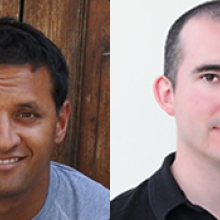
- Dr. Dwight Moulin, Clinical Neurological Sciences and Oncology
- Dr. Naveen Poonai, Paediatric Emergency Medicine
- Dr. Dave Walton, School of Physical Therapy
- MODERATOR – Dr. Kathy Speechley, Epidemiology & Biostatistics
Event Details
Date: Tuesday, November 20, 2018
Time: 7-9 pm (doors open at 6:30 pm)
Location: Best Western Plus Lamplighter Inn & Conference Centre, 591 Wellington Rd, London, ON N6C 4R3
Map and directions
Parking: Ample free parking on-site
This is a free community event and online registration is REQUIRED.
Click here to register.
Lawson is the research institute of London Health Sciences Centre and St. Joseph’s Health Care London.
… costs and the need to implement new unfunded legislated requirements mandated by governments. The $17.6 million net … costs and the need to implement new unfunded legislated requirements mandated by governments. The $17.6 million net …
St. Josephs Health Care London Annual Report 1 care 2 3 At St. Josephs Health Care, London, there are so many ways to care, all stemming from one vision to be a respected source of excellent health care. Uniting an organization of such diversity, embodying programs in rehabilitation, acute/ambulato...