


Search
Search
858 Search Results:
… endorsed a land transfer to enable the relocation of specialized mental health services to the Parkwood Hospital … complex care, long-term and veterans care, and tertiary and specialized mental health services. This restructuring … endorsed a land transfer to enable the relocation of specialized mental health services to the Parkwood Hospital …
St. Josephs Health Care, London Financial Statements Financial Statements of ST. JOSEPHS HEALTH CARE, LONDON Year ended March 31, 2005 St. Josephs Health Care, London Financial Statements Management's Report The accompanying financial statements of St. Josephs Health Care, London have been prepared ...
… endorsed a land transfer to enable the relocation of specialized mental health services to the Parkwood Hospital … complex care, long-term and veterans care, and tertiary and specialized mental health services. This restructuring … pilot new and innovative programs, and for the purchase of specialized equipment at all sites of St. Joseph's Health …
St. Josephs Health Care, London Financial Statements Financial Statements of ST. JOSEPHS HEALTH CARE, LONDON Year ended March 31, 2006 St. Josephs Health Care, London Financial Statements Management's Report The accompanying financial statements of St. Josephs Health Care, London have been prepared ...
… complex care, long-term and veterans care, and tertiary and specialized mental health services. This restructuring … pilot new and innovative programs, and for the purchase of specialized equipment at all sites of St. Joseph's Health … complex care, long-term and veterans care, and tertiary and specialized mental health services. This restructuring …
St. Josephs Health Care, London Financial Statements Financial Statements of ST. JOSEPHS HEALTH CARE, LONDON Year ended March 31, 2007 St. Josephs Health Care, London Financial Statements Management's Report The accompanying financial statements of St. Josephs Health Care, London have been prepared ...
… complex care, long-term and veterans care, and tertiary and specialized mental health services. This restructuring … pilot new and innovative programs, and for the purchase of specialized equipment at all sites of St. Joseph's Health … complex care, long-term and veterans care, and tertiary and specialized mental health services. This restructuring …
St. Josephs Health Care, London Financial Statements Financial Statements of ST. JOSEPHS HEALTH CARE, LONDON Year ended March 31, 2009 1 St. Josephs Health Care, London Financial Statements Management's Report The accompanying financial statements of St. Josephs Health Care, London have been prepare...
… complex care, long-term and veterans care, and tertiary and specialized mental health services. This restructuring … pilot new and innovative programs, and for the purchase of specialized equipment at all sites of St. Joseph's Health … complex care, long-term and veterans care, and tertiary and specialized mental health services. This restructuring …
St. Josephs Health Care, London Financial Statements Financial Statements of ST. JOSEPHS HEALTH CARE, LONDON Year ended March 31, 2011 St. Josephs Health Care, London Financial Statements original signed original signed MANAGEMENTS REPORT The accompanying financial statements of St. Josephs Health C...
… complex care, long-term and veterans care, and tertiary and specialized mental health services. This restructuring … pilot new and innovative programs, and for the purchase of specialized equipment at all sites of St. Joseph's Health … complex care, long-term and veterans care, and tertiary and specialized mental health services. This restructuring …
St. Josephs Health Care, London Financial Statements Financial Statements of ST. JOSEPHS HEALTH CARE, LONDON Year ended March 31, 2012 St. Josephs Health Care, London Financial Statements original signed original signed MANAGEMENTS REPORT The accompanying financial statements of St. Josephs Health C...
… complex care, long-term and veterans care, and tertiary and specialized mental health services. This restructuring … pilot new and innovative programs, and for the purchase of specialized equipment at all sites of St. Joseph's Health … complex care, long-term and veterans care, and tertiary and specialized mental health services. This restructuring …
St. Josephs Health Care London Financial Statements Financial Statements of ST. JOSEPHS HEALTH CARE LONDON Years ended March 31, 2013 and 2012 St. Josephs Health Care London Financial Statements 1 | P a g e original signed original signed MANAGEMENTS REPORT The accompanying financial statements of S...
… health care facility in St. Thomas (“St. Thomas”) and a new specialized mental health care facility in London … complex care, long-term and veterans care, and tertiary and specialized mental health services. This restructuring … pilot new and innovative programs, and for the purchase of specialized equipment at all sites of the Hospital. The …
St. Josephs Health Care London Financial Statements Financial Statements of ST. JOSEPHS HEALTH CARE LONDON Year ended March 31, 2014 St. Josephs Health Care London Financial Statements 1 | P a g e original signed original signed MANAGEMENTS REPORT The accompanying financial statements of St. Josephs...
… pilot new and innovative programs, and for the purchase of specialized equipment at all sites of the Hospital. The … pilot new and innovative programs, and for the purchase of specialized equipment at all sites of the Hospital. The …
St. Joseph s Health Care London Financial Statements Financial Statements of ST. JOSEPHS HEALTH CARE LONDON Year ended March 31, 2022 St. Joseph s Health Care London Financial Statements MANAGEMENTS REPORT The accompanying financial statements of St. Josephs Health Care London have been prepared b...
… for example, the redevelopment of both the acute care and specialized mental health care hospital facilities, a … care and veterans care, long-term care, rehabilitation and specialized geriatrics and specialized mental health care. Facilities and services … for example, the redevelopment of both the acute care and specialized mental health care hospital facilities, a …
1 News Release St. Josephs Health Care, London reports success on overall budget for last fiscal year and signals continued financial challenges for next two years - New board of directors appointed: Dr. Gerald Killan takes the reigns as board chair St. Josephs Health Care Foundation has most succes...
… endorsed a land transfer to enable the relocation of specialized mental health services to the Parkwood Site. … complex care, long-term and veterans care, and tertiary and specialized mental health services. This restructuring … endorsed a land transfer to enable the relocation of specialized mental health services to the Parkwood Site. …
FINANCIAL STATEMENTS OF ST. JOSEPHS HEALTH CARE, LONDON Year ended March 31, 2002 Cover photo (left to right) Fay Beaton, Chair, Family Advisory Council and Member, Patient and Family Services Planning Team; Tobi Flanagan, Occupational Therapist, Geriatric Psychiatry and Member, Geriatric Psychiatry...
… in Figure 1. Province wide shortages of nursing staff in specialized areas in addition to the impact of changing … endorsed a land transfer to enable the relocation of specialized mental health services to the Parkwood site. … complex care, long-term and veterans care, and tertiary and specialized mental health services. This restructuring …
FINANCIAL STATEMENTS OF ST. JOSEPHS HEALTH CARE, LONDON | Year ended March 31, 2003 Visit our web site: www.sjhc.london.on.ca Financial Statements of St. Josephs Health Care, London Year ended March 31, 2003 St. Josephs Health Care, London (SJHC) is a very complex organization. Reflective of the sig...
First clinical guidelines in Canada for pain following spinal cord injury
Researchers at Lawson Health Research Institute are the first in Canada to develop clinical practice guidelines for managing neuropathic pain with patients who have experienced a spinal cord injury (SCI).
Neuropathic pain is complex and chronic, and is the most common complication reported by people following SCI. The research team worked with care providers at Parkwood Institute, part of the St. Joseph’s Health Care London family, and an international panel to address the complex and unique challenges for managing pain during recovery and rehabilitation.
In 2003, Dan Harvey sustained a spinal injury after falling off a trampoline. Using his personal experience, as well as his experiences meeting with newly injured people, Harvey contributed to the development of the new guidelines.
“Neuropathic pain – and pain in general – affects every person with a spinal cord injury very differently. Some people have it, some people don’t. But for those who do have it, it can make rehabilitation and recovery much more difficult,” explains Harvey.
“On top of just learning how to use your body again, you also have to deal with various forms of physical pains, which can make it challenging to mentally adapt to an injury.”
For those with chronic pain, it may be hard to just get out of bed in the morning, feel well enough to leave the house, or even fall asleep. “I have fairly extensive neuropathic pain, so I’m well aware of how difficult it can be to get a full night’s sleep, or show attentiveness at work or at school when it literally feels like your legs are on fire,” says Harvey.
Image
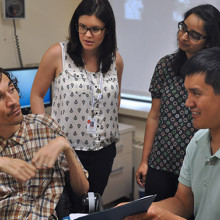
Dan Harvey with Lawson researchers Stacey Guy, Swati Mehta and Dr. Eldon Loh.
Dr. Eldon Loh, Lawson Researcher and Physical Medicine and Rehabilitation Specialist at St. Joseph’s, and his team recognized that pain can be an overlooked part of a spinal cord injury and plays a major factor in the success of rehabilitation. It’s difficult for someone in pain to participate fully in their own recovery, and so long-term disability becomes more likely. Pain is difficult to manage and it often takes multiple approaches to find something that works for each person.
“This is a starting point for us to standardize how we approach pain in the clinic. We have identified gaps and offered recommendations to not only manage the pain, but also ensure that our patients can fully benefit from rehabilitation,” says Dr. Loh.
The results of the three-year process led to recommendations for screening and diagnosis, treatment and models of care. Important clinical considerations accompany each recommendation.
“For those in hospital following an injury, it’s about making sure they can be as independent as possible before discharge. Over time, we want to keep pain levels under control so that they are able to live life to the fullest,” adds Dr. Loh.
The research will inform new tools and resources for care providers and patients.
Harvey believes the guidelines will have a tremendous impact for patients whose pain may have been overlooked. “Pain can be created through many different avenues and the effects can snowball after a person is discharged and sent home. If you don’t check all of the boxes, you might be missing a very important item.”
The new guidelines have been published in the international journal Spinal Cord. The Ontario Neurotrauma Foundation and Rick Hansen Institute provided funding for the research study.
A special thanks to individuals from St. Joseph's who were involved in the project: Steve Orenczuk, Patrick Potter, Keith Sequiera, Lindsey Guilbault, Robert Teasell, Anna Kras-Dupuis, Dalton Wolfe, Alba Casalino and Dwight Moulin.
Image
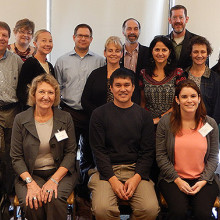
Additional members of the panel that developed the new clinical practice guidelines.
First-in-North-America resource touts health benefit of fermented foods
New network helps consumers, researchers and food industry find and share trusted information about ‘ferment-ceuticals’
London (Ont.) – A one-stop network, the first of its kind in North America, has begun sharing easily digested research, recipes and other resources about the health benefits of fermented foods.
The new Canadian Fermented Foods Initiative (CFFI) launches officially on Nov. 17 with a gathering of research and industry experts from across the country and Europe.
The collaboration helps consumers, researchers, health professionals and food industry share trusted, science-based expertise and information about fermented foods.
Funded by the Weston Family Foundation, the initiative is led by Jeremy Burton, PhD, who heads of one of Canada’s largest microbiome research programs and is Interim Vice President Research at St. Joseph’s Health Care London and Lawson Research Institute. His research leadership is joined by Raylene Reimer, PhD, professor of nutrition at the University of Calgary; and University of Alberta professor Ben Willing, PhD, former Canada Research Chair in Microbiology of Nutrigenomics.
Fermented foods such as sourdough bread, sauerkraut, kimchi and kombucha offer more than just good taste and an economical way to preserve food, Burton says. Large, population-based studies show people who eat fermented foods are generally healthier, with fewer digestive issues and lower risk of chronic diseases.
“How exactly does that work – and why? Well, that’s the big question we’re trying to solve,” Burton says. “One day, I believe, ‘ferment-ceuticals’ will be engrained in our diets and our health vocabulary.”
St. Joseph's is a leader in the field. A paper authored by the team and published this week in Advances in Nutrition represents the most comprehensive synthesis to date of research on fermented foods and human health.
Connor Flynn, a London, Ont., chef, master food preserver and high school teacher whose video recipes are included in the CFFI website, adds, “Fermenting foods is an old practice that’s never fallen out of flavour, but has sometimes fallen out of favour to North Americans. Now it has become popular again.”
To learn more about the CFFI, including fermented food recipes and the chef behind them, head to fermentedfoods.ca.
- 30 -
To arrange interviews with CFFI project lead Jeremy Burton and chef Connor Flynn, who are available Friday Nov. 14 from 7 am – 8 am ET and Nov. 14 from 1 – 4 pm ET, contact:
Deb (Flaherty) Van Brenk, Communication Consultant
St. Joseph’s Health Care London
@email
About St. Joseph’s Health Care London
Renowned for compassionate care, St. Joseph’s Health Care London is a leading academic health care centre in Canada dedicated to helping people live to their fullest by minimizing the effects of injury, disease and disability through excellence in care, teaching and research. Through Lawson Research Institute, our innovation arm, and with collaborative engagement with other health and academic partners, St. Joseph’s has become an international leader in the areas of: chronic disease management; medical imaging; specialized mental health care; rehabilitation and specialized geriatrics; and surgery. St. Joseph’s operates through a wide range of hospital, clinic and long-term and community-based settings, including: St. Joseph’s Hospital; Parkwood Institute; Mount Hope Centre for Long Term Care; and the Southwest Centre for Forensic Mental Health Care.
… team at St. Joseph’s Health Care London, primary care, specialized care, community support services and local … Joseph’s Health Care London Elizabeth McCarthy Director, Specialized Geriatric Services St. Joseph’s Health Care … team at St. Joseph’s Health Care London, primary care, specialized care, community support services and local …
STRATEGIC PRIORITIES 2019 2022 Together, we are improving the health care system for older adults with frailty. SOUTH WEST FRAIL SENIOR STRATEGY 2019-2022 The purpose is to improve outcomes and experiences of the health care system for older adults with frailty and their caregivers. Patients and fam...
June 16, 2020; Page 1 of 3 Gabapentin (Neurontin) Why is this medication prescribed? To treat pain from damaged nerves (neuropathic pain). Gabapentin works by dampening the pain signals sent through the bodys nervous system. Gabapentin can also be used in the treatment of seizure disorders. How sh...
June 16, 2020; Page 1 of 3 Gabapentin (Neurontin) Why is this medication prescribed? To treat pain from damaged nerves (neuropathic pain). Gabapentin works by dampening the pain signals sent through the bodys nervous system. Gabapentin can also be used in the treatment of seizure disorders. How sh...
… Gentle Persuasive Approaches in Dementia Care Specialized Geriatric Services has embraced the Gentle … Gentle Persuasive Approaches in Dementia Care Specialized Geriatric Services has embraced the Gentle …
Gentle Persuasive Approaches in Dementia Care Specialized Geriatric Services has embraced the Gentle Persuasive Approach (GPA) concept and has invested in the training of several outreach team staff who are prepared to offer this innovative education curriculum to Long Term Care Homes and Geriatric ...
… Those who wish to smoke must do so off hospital property. Specialized Geriatric Services Parkwood Institute WELCOME! … Those who wish to smoke must do so off hospital property. Specialized Geriatric Services Parkwood Institute WELCOME! …
Welcome to the Geriatric Rehabilitation Unit The next step in your Rehabilitation Journey What to Bring Other Information Parkwood Institute CARING FOR THE BODY, MIND & SPIRIT SINCE 1869 CARING FOR THE BODY, MIND & SPIRIT SINCE 1869 Renowned for compassionate care, St. Josephs is one of the best aca...