


Search
Search
858 Search Results:
June 16, 2020; Page 1 of 2 Nabilone (Cesamet) Why is this medication prescribed? Nabilone is a synthetic cannabinoid made by the pharmaceutical industry. It is similar to marijuana (the natural plant) in its actions, but usually has less effect on mood. Nabilone is typically used to treat severe n...
… Health Care London provides a confidential, coordinated, specialized breast assessment service. The goal of the … a very good understanding of your breast health. MRI is a specialized test that creates very detailed 3D images of the … Health Care London provides a confidential, coordinated, specialized breast assessment service. The goal of the …
YOur guide to Breast assessment Breast Care Program St. Josephs Hospital 268 Grosvenor St. London, ON N6A 4V2 THE BEST IN BREAST CARE The Breast Care Program at St. Josephs Health Care London provides a confidential, coordinated, specialized breast assessment service. The goal of the program is to m...
TREATMENT FOR NASAL POLYPS WHAT ARE NASAL POLYPS AND HOW ARE THEY DIAGNOSED? The four pairs of paranasal sinuses are located in the facial bones between the eye and the brain. These are air filled cav- ities. If the lining of a sinus becomes inflamed (as in chronic rhinosinusitis) it may begin to sw...
New study uncovers negative effects from vaping
LONDON, ON- A recently published preclinical study by researchers at Lawson Health Research Institute and Western University’s Schulich School of Medicine & Dentistry show that vaping may negatively affect pulmonary surfactant in the lungs.
Surfactant, which is made of lipids and proteins, is a critical layer in the lungs that allows people to breathe with minimal effort by reducing surface tension. Without surfactant, it would take more effort to breathe and a person would need mechanical help to do so.
“Vaping continues to be popular but not much is known about what happens with the aerosol when it enters the lungs,” says Dr. Ruud Veldhuizen, Lawson Scientist and Professor at Schulich Medicine & Dentistry. “We realized that the first thing the vapor aerosol comes in contact with in the lungs is pulmonary surfactant, which is an area our team specializes in.”
The research team was able to study the effects by placing a film of surfactant inside a syringe and, then using a vaping device to push aerosol into the syringe. This allowed the vapor to directly interact with the surfactant. The researchers then mimicked inhaling and exhaling vapor into the syringe 30 times to resemble a standard vaping session.
“In particular we were looking at the surface tension in the surfactant,” explains Emma Graham, Master’s student at Schulich Medicine & Dentistry. “After vaping, we saw high surface tension which suggests the surfactant would not be as effective at supporting proper lung functioning.”
The team also examined different vaping devices, flavours, additives and nicotine to see if there were any difference in effects.
“Nicotine didn’t have any worse effects on surface tension of surfactant compared to other e-liquids, but some flavourings like menthol e-liquid did,” says Graham.
While his team intends to study this further, Veldhuizen says these findings could provide an indication as to why people that vape have a susceptibility to develop lung injury, including those with respiratory viruses such as COVID-19.
“We would like to get this information out there so that people know vaping may be damaging to the lungs,” says Veldhuizen. “As a next step, we hope to further investigate the effects of vaping on the lungs and how we can treat resulting injury.”
The study has been published in the PLOS ONE Journal. These findings build on a body of research about the impacts of vaping through Lawson and Schulich Medicine & Dentistry. Our researchers were the first in the world to report on a potential new type of vaping-related injury in 2019.
About Lawson Health Research Institute
Lawson Health Research Institute is one of Canada’s top hospital-based research institutes, tackling the most pressing challenges in health care. As the research institute of London Health Sciences Centre and St. Joseph’s Health Care London, our innovation happens where care is delivered. Lawson research teams are at the leading-edge of science with the goal of improving health and the delivery of care for patients. Working in partnership with Western University, our researchers are encouraged to pursue their curiosity, collaborate often and share their discoveries widely. Research conducted through Lawson makes a difference in the lives of patients, families and communities around the world. To learn more, visit www.lawsonresearch.ca.
About Western
Western delivers an academic experience second to none. Since 1878, The Western Experience has combined academic excellence with life-long opportunities for intellectual, social and cultural growth in order to better serve our communities. Our research excellence expands knowledge and drives discovery with real-world application. Western attracts individuals with a broad worldview, seeking to study, influence and lead in the international community.
About The Schulich School of Medicine & Dentistry
The Schulich School of Medicine & Dentistry at Western University is one of Canada’s preeminent medical and dental schools. Established in 1881, it was one of the founding schools of Western University and is known for being the birthplace of family medicine in Canada. For more than 130 years, the School has demonstrated a commitment to academic excellence and a passion for scientific discovery.
Media Contacts
Celine Zadorsky
Senior Media Relations Consultant
Communications & Public Engagement
T: 519-685-8500 ext. 73502
Celine.zadorsky@lhsc.on.ca
New study using nuclear medicine and rare isotopes in the fight against cancer
London - In a national multicentre study, scientists at Lawson Health Research Institute and Western University are working to create rare isotopes that will be used as an important tool to help treat cancer.
Currently, radiation therapy is a staple in cancer treatment, with approximately 50 per cent of cancer patients receiving radiation at some point in their cancer journey. Although a very effective tool, traditional radiation therapies rely on intense beams of energy. These beams can kill cancer cells, but their use is limited to select locations, making them less suited for difficult-to-treat metastatic cancers that have spread to multiple sites.
“Cancer treatment has evolved over the years with targeted drugs that go straight to the cancer and advanced radiation therapy. However, radiation comes from an external source that can damage other areas in the body,” says Dr. Len Luyt, Lawson Scientist and Professor at Western. “We are now working to advance treatment further by combining radiation and targeted drug therapy.”
The therapies work like a homing device — using specially designed molecules to seek out and deliver radioactive isotopes directly to cancer cells, wherever they might be in the body.
The multidisciplinary research team involves researchers at Lawson, Western University, University of British Columbia, BC Cancer, TRIUMF, Simon Fraser University, Université Laval, Université de Sherbrooke, University of Toronto and University of Alberta.
“This is the holy grail of cancer treatment. These disease-targeting molecules circulate throughout the body, binding tightly to cancer cells in order to eliminate them with a highly localized blast of energy,” explains principal investigator Dr. François Bénard, Professor of Radiology and Associate Dean at UBC’s Faculty of Medicine, and Senior Executive Director of the BC Cancer Research Institute.
The London, Ontario team will focus on developing the radio pharmaceuticals at labs in the London Regional Cancer Program at LHSC, the Cyclotron located at St. Joseph’s Health Care London, and at Western.
“The radio pharmaceuticals we are designing will be very specific to certain receptor proteins that are on cancer cells and not elsewhere on the body. This allows us to bring the isotopes to the cancer cells and clear it from the body so you have less side effects in other areas,” says Dr. Luyt. “This approach is showing promise in prostate cancer and now this team-based approach is looking at targeting any metastatic cancer.”
This collaborative research project has received $23.7 million in federal funding through the New Frontiers Research Fund (NFRF) over six years.
“We will establish Canada as a world leader in the field of nuclear medicine and ensure Canadian patients are the ones who benefit,” adds Dr. Bénard. “By developing these medicines in Canada and bringing them into local clinical trials, we will ensure Canadians have access to innovative cancer treatments sooner.”
The team hopes to bring multiple drug candidates into clinical trials in the coming years with the ultimate goal of developing an effective treatment for metastatic cancer patients.
About Lawson Health Research Institute
Lawson Health Research Institute is one of Canada’s top hospital-based research institutes, tackling the most pressing challenges in health care. As the research institute of London Health Sciences Centre and St. Joseph’s Health Care London, our innovation happens where care is delivered. Lawson research teams are at the leading-edge of science with the goal of improving health and the delivery of care for patients. Working in partnership with Western University, our researchers are encouraged to pursue their curiosity, collaborate often and share their discoveries widely. Research conducted through Lawson makes a difference in the lives of patients, families and communities around the world. To learn more, visit www.lawsonresearch.ca.
About Western
Western delivers an academic experience second to none. Since 1878, The Western Experience has combined academic excellence with life-long opportunities for intellectual, social and cultural growth in order to better serve our communities. Our research excellence expands knowledge and drives discovery with real-world application. Western attracts individuals with a broad worldview, seeking to study, influence and lead in the international community.
Media Contacts
Celine Zadorsky
Senior Media Relations Consultant
Communications & Public Engagement
T: 519-685-8500 ext. 73502
Celine.zadorsky@lhsc.on.ca
New study using nuclear medicine and rare isotopes in the fight against cancer
In a national multicentre study, scientists at Lawson Health Research Institute and Western University are working to create rare isotopes that will be used as an important tool to help treat cancer.
Currently, radiation therapy is a staple in cancer treatment, with approximately 50 per cent of cancer patients receiving radiation at some point in their cancer journey. Although a very effective tool, traditional radiation therapies rely on intense beams of energy. These beams can kill cancer cells, but their use is limited to select locations, making them less suited for difficult-to-treat metastatic cancers that have spread to multiple sites.
“Cancer treatment has evolved over the years with targeted drugs that go straight to the cancer and advanced radiation therapy. However, radiation comes from an external source that can damage other areas in the body,” says Dr. Len Luyt, Lawson Scientist and Professor at Western. “We are now working to advance treatment further by combining radiation and targeted drug therapy.”

The therapies work like a homing device — using specially designed molecules to seek out and deliver radioactive isotopes directly to cancer cells, wherever they might be in the body.
The multidisciplinary research team involves researchers at Lawson, Western University, University of British Columbia, BC Cancer, TRIUMF, Simon Fraser University, Université Laval, Université de Sherbrooke, University of Toronto and University of Alberta.
“This is the holy grail of cancer treatment. These disease-targeting molecules circulate throughout the body, binding tightly to cancer cells in order to eliminate them with a highly localized blast of energy,” explains principal investigator Dr. François Bénard, Professor of Radiology and Associate Dean at UBC’s Faculty of Medicine, and Senior Executive Director of the BC Cancer Research Institute.
The London, Ontario team will focus on developing the radio pharmaceuticals at labs in the London Regional Cancer Program at LHSC, the Cyclotron located at St. Joseph’s Health Care London, and at Western.
“The radio pharmaceuticals we are designing will be very specific to certain receptor proteins that are on cancer cells and not elsewhere on the body. This allows us to bring the isotopes to the cancer cells and clear it from the body so you have less side effects in other areas,” says Dr. Luyt. “This approach is showing promise in prostate cancer and now this team-based approach is looking at targeting any metastatic cancer.”
This collaborative research project has received $23.7 million in federal funding through the New Frontiers Research Fund (NFRF) over six years.
“We will establish Canada as a world leader in the field of nuclear medicine and ensure Canadian patients are the ones who benefit,” adds Dr. Bénard. “By developing these medicines in Canada and bringing them into local clinical trials, we will ensure Canadians have access to innovative cancer treatments sooner.”
The team hopes to bring multiple drug candidates into clinical trials in the coming years with the ultimate goal of developing an effective treatment for metastatic cancer patients.
New study will assess fecal transplants in treatment of pancreatic cancer
Scientists examining microbiome to improve cancer therapies
MEDIA RELEASE
For Immediate Release
LONDON, ON- Pancreatic cancer is an aggressive disease that affects up to six-thousand Canadians a year and is the third leading cause of cancer deaths. In a new study a multidisciplinary team of scientists at Lawson Health Research Institute are examining the microbiome in the gut, as a possible gateway to improving treatment outcomes.
“Pancreatic cancer is very hard to treat, partially because when it’s detected, the cancer is usually in a later stage and spreads very quickly,” explains Dr. John Lenehan, Medical Oncologist at London Health Sciences Centre’s London Regional Cancer Program (LRCP) and Associate Scientist at Lawson. “Our best chemotherapy treatments for the average patient, will give them a little less than a year to live.”
With the goal of improving treatments for these patients the research team led by Dr. Saman Maleki, Scientist at Lawson, is studying whether changing the gut microbiome can result in better response to cancer treatments.
“We know that the microbiome plays an important role in patients’ response to various forms of systemic treatments such as immunotherapy and chemotherapy for different cancers,” says Dr. Maleki.
This unique study will happen in three stages. The first stage is an observational study to examine fecal samples of 52 patients at LRCP with advanced pancreatic cancer. The second stage will focus on using the samples from these patients in preclinical models to test new combinations of treatments. The final stage of the study will focus on intervention through human clinical trials by modifying a patient’s microbiome with something called a fecal transplant prior to treatment.
“The microbiome is involved in many aspects of cancer development and these organisms aren’t just living in the gut but also within the tumor,” says Dr. Michael Silverman, Lawson Scientist and Chair/Chief of Infectious Diseases at LHSC and St. Joseph’s Health Care London. “We believe that by giving people a fecal transplant, we can change the bacteria that live within the tumor and gut and then optimize the immune response to both the tumour and to treatment, with the goal of improving patient outcomes.”
Fecal transplants involve collecting stool from a healthy donor, preparing it in a lab and safely transplanting it to the patient, in this case with a capsule. The goal is to transplant the donor’s microbiome so that healthy bacteria will colonize in the patient’s gut.
“If you think of microbiome, each bacterium is like a little factory and all together they are a giant factory within us producing things we need,” explains Dr. Jeremy Burton, Lawson Scientist who specializes in human microbiome research. “Over time, a person’s diet, medications, and lifestyle can change the microbiome and it can have a big impact to the rest of our body.”
The research team was recently awarded a $450,000 Catalyst 2021 grant from the Weston Family Foundation to conduct this study, which is the first in the world focusing on prospectively modifying the microbiome in pancreatic cancer patients for treatments and outcomes.
“We normally don’t see this in one study where we go through the full spectrum of learning from patients, to looking at treatments, and then moving to a final intervention stage,” explains Dr. Maleki. “This has not been tried in pancreatic cancer before, but we think leveraging the microbiome and improving the immune response can potentially move the needle in this patient population.”
The team is recruiting both pancreatic cancer patients, as well as healthy volunteers for fecal transplant samples. Those interested in helping with fecal transplant donations can contact Dr. Seema Parvathy at 519-646-6100 ext. 61726 or email seemanair@@email
-30-
About Lawson Health Research Institute
Lawson Health Research Institute is one of Canada’s top hospital-based research institutes, tackling the most pressing challenges in health care. As the research institute of London Health Sciences Centre and St. Joseph’s Health Care London, our innovation happens where care is delivered. Lawson research teams are at the leading-edge of science with the goal of improving health and the delivery of care for patients. Working in partnership with Western University, our researchers are encouraged to pursue their curiosity, collaborate often and share their discoveries widely. Research conducted through Lawson makes a difference in the lives of patients, families and communities around the world. To learn more, visit www.lawsonresearch.ca.
Media Contacts
Celine Zadorsky
Senior Media Relations Consultant
Communications & Public Engagement
T: 519-685-8500 ext. 73502
Celine.zadorsky@lhsc.on.ca
New study will assess fecal transplants in treatment of pancreatic cancer
Pancreatic cancer is an aggressive disease that affects up to six-thousand Canadians a year and is the third leading cause of cancer deaths. In a new study a multidisciplinary team of scientists at Lawson Health Research Institute are examining the microbiome in the gut, as a possible gateway to improving treatment outcomes.
“Pancreatic cancer is very hard to treat, partially because when it’s detected, the cancer is usually in a later stage and spreads very quickly,” explains Dr. John Lenehan, Medical Oncologist at London Health Sciences Centre’s London Regional Cancer Program (LRCP) and Associate Scientist at Lawson. “Our best chemotherapy treatments for the average patient, will give them a little less than a year to live.”
With the goal of improving treatments for these patients the research team led by Dr. Saman Maleki, Scientist at Lawson, is studying whether changing the gut microbiome can result in better response to cancer treatments. “We know that the microbiome plays an important role in patients’ response to various forms of systemic treatments such as immunotherapy and chemotherapy for different cancers,” says Dr. Maleki.
Image
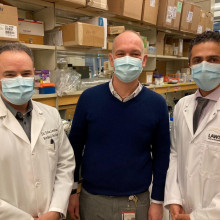
Dr. John Lenehan, Dr. Jeremy Burton and Dr. Saman Maleki
This unique study will happen in three stages. The first stage is an observational study to examine fecal samples of 52 patients at LRCP with advanced pancreatic cancer. The second stage will focus on using the samples from these patients in preclinical models to test new combinations of treatments. The final stage of the study will focus on intervention through human clinical trials by modifying a patient’s microbiome with something called a fecal transplant prior to treatment.
“The microbiome is involved in many aspects of cancer development and these organisms aren’t just living in the gut but also within the tumor,” says Dr. Michael Silverman, Lawson Scientist and Chair/Chief of Infectious Diseases at LHSC and St. Joseph’s Health Care London. “We believe that by giving people a fecal transplant, we can change the bacteria that live within the tumor and gut and then optimize the immune response to both the tumour and to treatment, with the goal of improving patient outcomes.”
Image
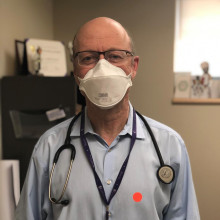
Dr. Michal Silverman, Lawson Associate Scientist
Fecal transplants involve collecting stool from a healthy donor, preparing it in a lab and safely transplanting it to the patient, in this case with a capsule. The goal is to transplant the donor’s microbiome so that healthy bacteria will colonize in the patient’s gut. “If you think of microbiome, each bacterium is like a little factory and all together they are a giant factory within us producing things we need,” explains Dr. Jeremy Burton, Lawson Scientist who specializes in human microbiome research. “Over time, a person’s diet, medications, and lifestyle can change the microbiome and it can have a big impact to the rest of our body.”
The research team was recently awarded a $450,000 Catalyst 2021 grant from the Weston Family Foundation to conduct this study, which is the first in the world focusing on prospectively modifying the microbiome in pancreatic cancer patients for treatments and outcomes.
“We normally don’t see this in one study where we go through the full spectrum of learning from patients, to looking at treatments, and then moving to a final intervention stage,” explains Dr. Maleki. “This has not been tried in pancreatic cancer before, but we think leveraging the microbiome and improving the immune response can potentially move the needle in this patient population.”
The team is recruiting both pancreatic cancer patients, as well as healthy volunteers for fecal transplant samples. Those interested in helping with fecal transplant donations can contact Dr. Seema Parvathy at 519-646-6100 ext. 61726 or email seemanair@@email
June 16, 2020; Page 1 of 2 Nortriptyline (Aventyl) Why is this medication prescribed? Nortriptyline works to treat pain by increasing the concentrations of chemical messengers in the nervous system to reduce the pain messages arriving in the brain. Nortriptyline is used to treat pain from damaged ...
November 2023 Sunday Monday Tuesday Wednesday Thursday Friday Saturday 29 30 31 1 Day 3 2 Day 4 3 Day 5 4 Day 6 5 Day 7 6 Week 2 Day 8 7 Day 9 8 Day 10 Seasonal Pie 9 Day 11 10 Day 12 11 Day 13 Remembrance Day 12 Day 14 13 Week 3 Day 15 14 Day 16 15 Day 17 Seasonal Soup & Salad 16 Day 18 17 Day 19 1...
CARING FOR THE BODY, MIND & SPIRIT SINCE 1869 Renowned for compassionate care, St. Joseph's is one of the best academic health care organizations in Canada dedicated to helping people live to their fullest by minimizing the effects of injury, disease and disability through excellence in care, teachi...
… Surgeons of Ontario. B-OBS Procedures requiring the use of specialized equipment and/or training as approved by the … Surgeons of Ontario. B-GYN Procedures requiring the use of specialized equipment and/or training as approved by the … Surgeons of Ontario. B-OBS Procedures requiring the use of specialized equipment and/or training as approved by the …
London Health Sciences Centre And St. Josephs Health Care London July 2016 Delineation of Procedural Privileges Department of Obstetrics and Gynaecology OBSTETRICS Physicians applying for an appointment in Obstetrics in the Department of Obstetrics and Gynaecology must be certified in the specialty....
… Category A Delineation. Procedures requiring the use of specialized equipment and/or training as approved by the … Category A Delineation. Procedures requiring the use of specialized equipment and/or training as approved by the … Category A Delineation. Procedures requiring the use of specialized equipment and/or training as approved by the …
ApprovedbyDepartmentChief,CWCCandMACJanuary2019 Delineation of Procedural Privileges Department of Obstetrics and Gynaecology Obstetrics Delineation Privileges Educational and Experience Requirements AOBS Allactivitiesandproceduresgenerallyperformed byphysicianscertifiedinthespecialty. SpecialtyC...
Sunday Monday Tuesday Wednesday Thursday Friday Saturday 1 2 3 4 5 6 7 Day 14 Week 3 Day 15 Day 16 Day 17 Seasonal Soup & Salad Day 18 Day 19 Day 20 8 9 10 11 12 13 14 Day 21 Thanksgiving Sunday Week 1 Day 1 Day 2 Day 3 Day 4 Day 5 Day 6 15 16 17 18 19 20 21 Day 7 Week 2 Day 8 Day 9 Day 10 Seasonal ...
… used by police depts.. involving police officers with specialized mental health training or police officers … parole officers with and community support for individuals specialized mental health training or partnerships with … spanners, strong leadership, early identification, and specialized case management (Steadman, Morris & Dennis, …
Diversion for People with Concurrent Disorders Kathleen Hartford RN, PhD And the Investigative Team of the Diversion-Concurrent Disorders Project Editors Note: This is an edited version of a report commissioned by the Ministry of Health and Long Term Care and submitted on March 30,2007. Minor altera...
… Category A Delineation. Procedures requiring the use of specialized equipment and/or training as approved by the … Category A Delineation. Procedures requiring the use of specialized equipment and/or training as approved by the …
ApprovedbyDepartmentChief,CWCCandMACJanuary2019 Delineation of Procedural Privileges Department of Oncology Delineation Privileges Educational and Experience Requirements A Allactivitiesandproceduresgenerallyperformed byphysicianscertifiedinthespecialtyofRadiation OncologyorsubspecialtiesofHaema...
… recertification. B Procedures requiring the use of specialized training and/or equipment as approved by the … recertification. B Procedures requiring the use of specialized training and/or equipment as approved by the …
London Health Sciences Centre And St. Josephs Health Care London April 2016 Delineation of Procedural Privileges Department of Ophthalmology Category Privileges Educational / Experience Requirements A All activities and procedures generally performed by surgeons who are certified in Ophthalmology. P...
… recertification. B Procedures requiring the use of specialized training and/or equipment as approved by the … recertification. B Procedures requiring the use of specialized training and/or equipment as approved by the …
London Health Sciences Centre And St. Josephs Health Care London April 2016 Delineation of Procedural Privileges Department of Ophthalmology Category Privileges Educational / Experience Requirements A All activities and procedures generally performed by surgeons who are certified in Ophthalmology. P...
… Category A Delineation. Procedures requiring the use of specialized equipment and/or training as approved by the … Category A Delineation. Procedures requiring the use of specialized equipment and/or training as approved by the …
ApprovedbyDepartmentChief,CWCCandMACJanuary2019 Delineation of Procedural Privileges Department of Ophthalmology Delineation Privileges Educational and Experience Requirements A Allactivitiesandproceduresgenerallyperformed byphysicianscertifiedinthespecialtywith proceduresrequiringtheuseoflasers...
… and Surgeons of Ontario. B Procedures requiring the use of specialized training and/or equipment as approved by the … and Surgeons of Ontario. B Procedures requiring the use of specialized training and/or equipment as approved by the …
London Health Sciences Centre And St. Josephs Health Care London April 2016 Delineation of Procedural Privileges Department of Otolaryngology Head & Neck Surgery Category Privileges Educational/Experience Requirements A All activities and procedures generally performed by surgeons certified in Otol...