


Search
Search
858 Search Results:
SEPTOPLASTY & TURBINATE SURGERY INTRODUCTION Many people have difficulty with nasal congestion and stuffiness. When someone has chronic stuffiness, theyre often forced to breathe through their mouth, leading to a sensation of a dry mouth. In many patients, these symptoms get worse at night when they...
CARING FOR THE BODY, MIND & SPIRIT SINCE 1869 Renowned for compassionate care, St. Joseph's is one of the best academic health care organizations in Canada dedicated to helping people live to their fullest by minimizing the effects of injury, disease and disability through excellence in care, teachi...
~ SIJOSEPHs HEALTH CARE LONDON CORPORATE Procedure: SEVERE WEATHER Owner of Procedure: Emergency Management and Risk Specialist Approval by: Emergency Management Committee Date: 2022-06-02 Original Effective Date: 2021-05-03 Reviewed Date(s): 2022-05-27 Revised Date(s): 2022-05-27 PURPOSE Adverse or...
Parkwood Institute Main Building Sexual Health after a Brain Injury This pamphlet contains information for patients living with a brain injury, including: How sexual health may be affected after a brain injury How to cope with changes to sexual health following a brain injury Tips for being sexua...
Parkwood Institute Main Building Sexual Health After Spinal Cord Injury 1 Parkwood Institute Main Building Sexual Health After Spinal Cord Injury 2 Spinal Cord Injury Rehabilitation Program You can do it, we are here to help! Sex and sexuality are important parts of being human, however after a spin...
Parkwood Institute Main Building Sexual Health After Stroke Sexual Health After Stroke Stroke Rehabilitation Program Page 2 You can do it, we are here to help! Sex and sexuality are important parts of being human. After having a stroke, many things can change. The way in which you experience your bo...
Parkwood Institute Main Building Sexual Health After Stroke Sexual Health After Stroke Stroke Rehabilitation Program Page 2 You can do it, we are here to help! Sex and sexuality are important parts of being human. After having a stroke, many things can change. The way in which you experience your bo...
Sharing the gift of hope through research
Community members and those in the field of health research attended a special open house and interactive tour by research groups at Lawson Health Research Institute – celebrating the holiday spirit and the gift of hope that is made possible through hospital-based research.
A part of St. Joseph’s Health Care London, Parkwood Institute represents the next era in care, recovery and rehabilitation. Across the site, clinical and research teams in different disciplines and specialties are collaborating in new ways.
The teams that make up Parkwood Institute Research, a Lawson program, are conducting clinical studies with the goal of understanding disease and improving care for a wide range of patients.
“Many people in the community know the high-quality and compassionate care that is supported by the various clinical teams at Parkwood Institute,” says Dr. Cheryl Forchuk, Beryl and Richard Ivey Research Chair in Aging, Mental Health, Rehabilitation and Recovery, and Assistant Scientific Director at Lawson. “What most don’t know is that we have research teams working across these sites, with each other and research patients.
Researchers tackle the most important challenges and provide access to highly innovative and meaningful solutions that improve the lives of patients and their families, added Dr. Forchuk.
Image

At the open house on November 30, there were 11 interactive displays in the areas of cognitive vitality and brain health, mobility and activity and mental health. This included the Gait and Brain Laboratory, the Operational Stress Injury Clinic, wound care, the Mental Health Nursing Research Alliance and more:
- The Mental Health INcubator for Disruptive Solutions (MINDS) of London Middlesex is a social innovation lab focused on developing, testing, implementing and evaluating disruptive solutions that promote the mental and emotional wellbeing of Transition-Aged Youth in our London-Middlesex community.
- The Canadian Consortium on Neurodegeneration in Aging (CCNA), supported by CIHR and many partners, is the premier research hub for all aspects of research involving neurodegenerative diseases that affect cognition in aging – including Alzheimer's disease.
- A dynamic lab with the top neurorehabilitation evidence-based reviews in stroke, brain injury, spinal cord injury and multiple sclerosis, or insight into clinical trials of stroke rehabilitation using exoskeletons, exercise paradigms, pharmaceuticals, and clinical studies of psychosocial factors that influence chronic pain in brain injury and spinal cord injury populations.
The open house had a festive theme and each of the exhibits involved a problem solving element to encourage learning and foster teamwork.
Image
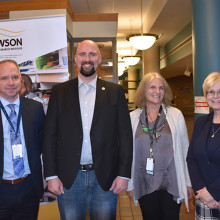
Peggy Sattler, Member of Provincial Parliament for London West, and Terence Kernaghan, Member of Provincial Parliament for London North Centre, were among the over 300 people in attendance.
“This special open house opportunity is meant to be a fun experience where you were also learning about research,” explains Dr. Forchuk. “During this holiday season, we wanted to share our own gift of hope in the form of collaborative research that is making a real difference.”
See photos from the open house on Facebook.
Scientist
… Those role areas include: acute/ambulatory care; specialized mental health care; rehabilitation and specialized geriatrics; complex care and veterans care; and … Those role areas include: acute/ambulatory care; specialized mental health care; rehabilitation and …
S i S t e r the hiStory of the SiSterS of St. JoSeph of London Special thanks to Lori Perrie and Sister Mary Zimmer of the Sisters of St. Joseph of the Diocese of London for their knowledge, expertise and keen attention to detail. cover: The caring hands of Sister Norita Keenan, who worked at St. J...
… AND REHABILITATION COMPLEX CHRONIC DISEASE MANAGEMENT SPECIALIZED MENTAL HEALTH CARE DIAGNOSTIC AND SURGERY … AND REHABILITATION COMPLEX CHRONIC DISEASE MANAGEMENT SPECIALIZED MENTAL HEALTH CARE DIAGNOSTIC AND SURGERY … AND REHABILITATION COMPLEX CHRONIC DISEASE MANAGEMENT SPECIALIZED MENTAL HEALTH CARE DIAGNOSTIC AND SURGERY …
STRATEGIC PLAN 2015 | 2018ST. JOSEPHS HEALTH CARE LONDON Realizing our Vision St. Josephs Vision, Mission and Values OUR VISION OUR MISSION OUR VALUES RESPECT, EXCELLENCE, COMPASSION STRATEGIC PLAN 2015 TO 2018 Our Patients, Residents and Families GOAL GUIDED BY THEIR VOICES; EXCELLENCE ALWAYS STRA...
… fund new and innovative programs, and for the purchase of specialized equipment at all sites of St. Joseph's Health … fund new and innovative programs, and for the purchase of specialized equipment at all sites of St. Joseph's Health …
Financial Statements of ST. JOSEPH'S HEALTH CARE FOUNDATION OF LONDON And Independent Auditors' Report thereon Year ended March 31, 2022 KPMG LLP 140 Fullarton Street, Suite 1400 London ON N6A 5P2 Canada Tel 519-672-4880 Fax 519-672-5684 INDEPENDENT AUDITORS' REPORT To the Board of Directors of St. ...
Small box holds big promise in cardiac care
London, Ontario – For a non-descript box it wields a mighty name and even more impressive possibilities for people with heart disease. Called the AngioDefender, the machine – no bigger than a shoebox - holds much promise in the ability to personalize cardiac care, say researchers at Lawson Health Research Institute, the research arm of St. Joseph’s Health Care London.
St. Joseph’s Hospital in London is the only Canadian cardiac rehabilitation centre testing the AngioDefender, a non-invasive tool that can assess the health of blood vessels by using a simple blood pressure cuff. At the recent Canadian Cardiovascular Congress in Toronto, Lawson researchers presented findings of their study, which assessed the feasibility and reliability of the AngioDefender in patients undergoing cardiac rehabilitation.
“Right now everyone basically gets similar treatment in terms of maximizing therapy based on risk factor profiles,” says Dr. Neville Suskin, Lawson scientist and medical director of St. Joseph’s Cardiac Rehabilitation and Secondary Prevention Program. “With this machine, if it does what we hope it will do, it gives us insight into a person’s vascular health so that we can know if the treatment is working and adjust and individualize their care.”
Also key, says Dr. Suskin, is the machine can be used by any medical professional in any doctor’s office.
The AngioDefender system, manufactured by Everist Health, measures the health of the endothelium — the interior lining of blood vessels. Using a blood pressure cuff, the device runs through a series of inflations and deflations to analyze the endothelium’s response to changes in blood flow. When the blood pressure cuff is inflated, blood flow decreases and stops. When the blood pressure cuff deflates, blood flow increases and the main artery in the arm responds by getting bigger (dilating). How well it dilates is a sign of endothelial (vascular) health.
Using a specially designed data analysis algorithm, the AngioDefender system produces each patient’s “flow-mediated dilation” score. When the information is combined with the patient’s other risk factors, it calculates the patient’s vascular age. The whole process takes 15 to 20 minutes.
“The ability for a health professional to obtain a measure of vascular health in such a straightforward manner is very novel” says Dr. Suskin, whose team has found that the machine is feasible to use in a busy cardiac rehabilitation practice setting. “It doesn’t take long, patients tolerate it, and they are also very keen to know their vascular health as determined by this machine.”
If successful, the device may become part of the standard screening to assess early-stage cardiovascular disease and atherosclerosis, and an innovative way to monitor the effectiveness of treatment.
-30-
About Lawson Health Research Institute
Lawson Health Research Institute is one of Canada’s top hospital-based research institutes, tackling the most pressing challenges in health care. As the research institute of London Health Sciences Centre and St. Joseph’s Health Care London, our innovation happens where care is delivered. Lawson research teams are at the leading-edge of science with the goal of improving health and the delivery of care for patients. Working in partnership with Western University, our researchers are encouraged to pursue their curiosity, collaborate often and share their discoveries widely. Research conducted through Lawson makes a difference in the lives of patients, families and communities around the world. To learn more, visit www.lawsonresearch.ca.
About St. Joseph’s Health Care London
Renowned for compassionate care, St. Joseph’s Health Care London is a leading academic health care centre in Canada dedicated to helping people live to their fullest by minimizing the effects of injury, disease and disability through excellence in care, teaching and research. Through partnership with Lawson Health Research Institute and our collaborative engagement with other health care and academic partners, St. Joseph’s has become an international leader in the areas of: chronic disease management; medical imaging; specialized mental health care; rehabilitation and specialized geriatrics; and surgery. St. Joseph’s operates through a wide range of hospital, clinic and long-term and community-based settings, including: St. Joseph’s Hospital; Parkwood Institute; Mount Hope Centre for Long Term Care; and the Southwest Centre for Forensic Mental Health Care. www.sjhc.london.on.ca
Media Contacts
Celine Zadorsky
Senior Media Relations Consultant
Communications & Public Engagement
T: 519-685-8500 ext. 73502
Celine.zadorsky@lhsc.on.ca
SMELL AND TASTE DISORDERS INTRODUCTION Olfaction (the sense of smell) is an important function of the sinonasal cavity. It is increasingly being investigated as it contributes to behavior, cognition, quality of life (QOL), and sinonasal disease. Smelling is critical and important to our daily lives....
… distancing is being maintained throughout our facility, and specialized cleaning is being done. Due to COVID-19, we have … environment which focuses on providing consultation and specialized assessments regarding fitness to stand trial, … in our clinics and throughout our facilities, and specialized cleaning is being done. For more information on …
i~ SIJOSEPHs HEALTH CARE LONDON *Due to the COVID-19 pandemic, some of the information in this handbook is subject to change and may not reflect current restrictions, processes, or guidelines. Please speak to your care team if you have any questions. Southwest Centre for Forensic Mental Health Care ...
Southwest Challenge 2016
11:30am
The London Centennial Wheelers Cycling Club and the London Cycling Club are proud to present the 5th Annual Southwest Challenge Cycling Tour.
Will you choose the epic 180 km, same-day ride which covers the challenging and scenic countryside between London and Woodstock? How about the shorter but still challenging 110 km route? Will it be the 60 km route that offers the perfect combination of challenge and distance for the recreational cyclist? Or will it be the 25 km route, new this year for those looking to enjoy a relaxing ride?
Be a part of the challenge on Saturday, September 10 by registering and collecting donations for Children's Health Foundation. Your support will help save and improve lives of kids and their families across Southwestern Ontario and parts of Northern Ontario.
Funds raised will help provide specialized paediatric equipment, programs and services at Children's Hospital at London Health Sciences Centre, Thames Valley Children's Centre, and paediatric research at Children's Health Research Institute.
MORE DETAILS
Visit the Southwest Challenge Site
Specialized diabetes care may help prevent recurrent emergency department visits
One in three Canadians is living with diabetes or prediabetes. When they experience complications like severe hyperglycemia (high blood sugar), they require emergency care. For many, one emergency department (ED) visit leads to multiple others.
“There’s an increasing prevalence of diabetes in our population. It’s imperative that we support patients in managing the disease to prevent adverse outcomes and optimize health,” says Dr. Justin Yan, Associate Scientist at Lawson Health Research Institute and Emergency Department Physician at London Health Sciences Centre (LHSC). “In our research, we wanted to see whether specialized diabetes care was associated with a reduction in recurrent ED visits and hospitalizations.”
Dr. Yan and his colleagues studied de-identified data from patients who presented with hyperglycemia to the EDs at LHSC’s Victoria and University Hospitals over a one-year period. They compared those patients who had been followed by specialized diabetes care at St. Joseph’s Health Care London (250 patients) to those who had not (206 patients).
At St. Joseph’s Centre for Diabetes, Endocrinology and Metabolism, patients with diabetes are supported by a dedicated team of endocrinologists, family physician diabetologists, certified diabetes educators (registered nurses and dietitians), nurse practitioners, pharmacists, social workers and social service workers. The multidisciplinary team provides specialized care and comprehensive teaching which includes diet and lifestyle management advice, exercise programs, help with medications and more.
“Our team provides patient-centered multidisciplinary support to patients with diabetes” says Dr. Selina Liu, Associate Scientist at Lawson, Endocrinologist at St. Joseph’s and co-investigator on the study. “We work with patients to empower them to manage their diabetes with a goal of preventing serious complications, both acute and chronic, including those that can lead to ambulance calls, ED visits and hospitalizations.”
The research team found that patients who had received specialized diabetes care were less likely to revisit the ED due to hyperglycemia (9.6 per cent versus 32.5 per cent) and to be hospitalized due to hyperglycemia (5.2 per cent versus 14.1 per cent) within 30 days of their initial ED visit.
“While further research is needed, our findings are important for a number of reasons,” notes Dr. Yan. “They suggest that follow-up with specialized diabetes care may prevent recurrent ED visits and hospitalizations. In addition to improving patient outcomes, this could equate to significant cost savings for the health care system.”
The team hopes this knowledge can be used to develop targeted interventions for patients who are at higher risk of returning to hospital for hyperglycemia. They are planning future studies to look at what factors contribute to a patient being at higher risk of adverse outcomes and what interventions are most effective in preventing them.
The study, “Do adult patients with type 1 or 2 diabetes who present to the emergency department with hyperglycemia have improved outcomes if they have access to specialized diabetes care?,” is published in the Canadian Journal of Diabetes. It was funded by Lawson Health Research Institute’s Internal Research Fund.
Scientist
… SINCE 1869 CARING FOR THE BODY, MIND & SPIRIT SINCE 1869 Specialized Geriatric Services Contact Information Parkwood InstituteLocationWho We Are Specialized Geriatric Services Hours: 8 am – 4 pm Monday to … life of frail older persons OUR MISSION • to be a group of specialized geriatric services linked by a common purpose • …
Renowned for compassionate care, St. Josephs is one of the best academic health care organizations in Canada dedicated to helping people live to their fullest by minimizing the effects of injury, disease and disability through excellence in care, teaching and research. sjhc.london.on.ca CARING FOR T...
… Specialized Geriatric Services, St. Joseph’s Health Care …
… Rehab Acquired Brain Injury Spinal Cord Injury Stroke/Neuro Specialized Geriatric Services MSK Rehab Geriatric Rehab … Rehab Acquired Brain Injury Spinal Cord Injury Stroke/Neuro Specialized Geriatric Services MSK Rehab Geriatric Rehab … Specialized Geriatrics Parkwood Access Referral Form …
Language of Preference / Cultural Preferences: Smoke free policy has been reviewed with patient Most recent/updated progress notes available in Cerner (if no, please send) History & Physical notes updated in Cerner (if no, please send ower or Attorney for Personal Care (if not in place identify SDM ...
Specific type of inflammation may be linked to risk of colorectal cancer
LONDON, ON – In a new preclinical study published in the journal Gastroenterology, researchers at Lawson Health Research Institute and Western University have found that a specific type of inflammation may be associated with an increased risk of colorectal cancer.
Colorectal cancer is the second most common cancer in Canada and one of the leading causes of cancer death. One of the major risk factors is inflammation caused by illnesses like colitis, Crohn’s disease or other forms of inflammatory bowel disease (IBD).
Previous studies have shown that the degree of inflammation caused by colitis is an important indicator of the risk of a patient developing colorectal cancer. In this study, researchers from Lawson and Western’s Schulich School of Medicine & Dentistry studied six different types of colitis – which result in different forms of inflammation – to assess whether certain types were associated with a higher risk of cancer.
“We found it wasn't necessarily the severity and duration of the inflammation that was most important, but rather the type of inflammation,” says Dr. Samuel Asfaha, a Lawson Scientist, Gastroenterologist at London Health Sciences Centre (LHSC) and Associate Professor at Schulich.
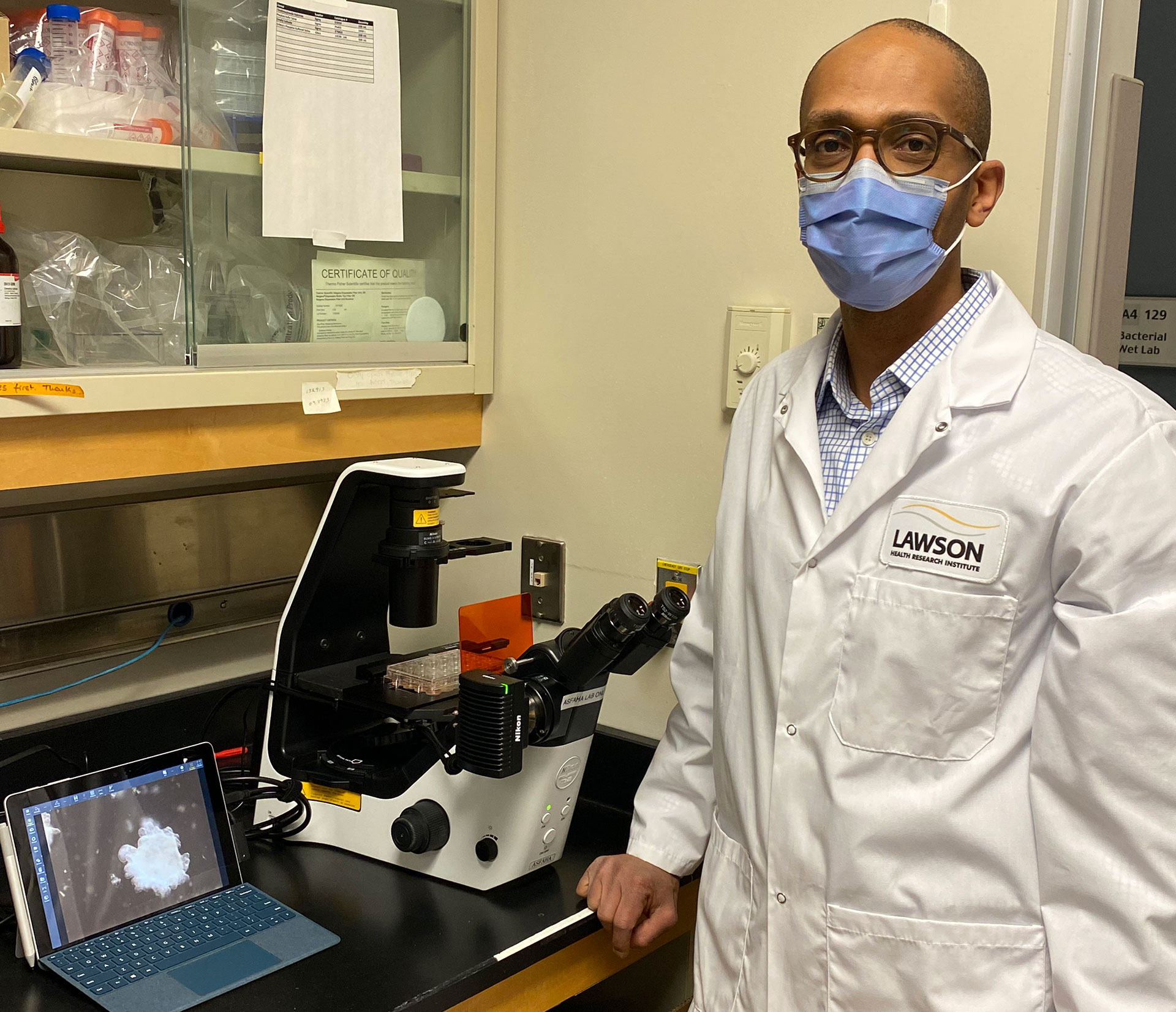
The team found that only one type of colitis led to cancer in preclinical models. They identified a new subset of immune cells called macrophages that were critical to the development of cancer. They also found that if they blocked these specific immune cells, they could prevent colitis-associated cancer.
“To our knowledge this is the first published study that extensively compares the different models of colitis or inflammation in the colon,” says Dr. Alice Shin, lead author on the study, which she worked on as PhD student at Schulich. “We are also the first to show that this specialized subset of macrophages that we identified are important for the initiation phase of inflammation-associated cancer.”

The next steps are to understand what the macrophages are doing to initiate cancer and whether a biomarker could be found that would identify which patients with chronic inflammation are at higher risk of developing cancer.
“Patients who have chronic inflammation often must undergo annual cancer surveillance,” Dr. Asfaha says. “By being able to differentiate those who are most at risk for developing cancer versus those who are who are at lower risk, we can focus our attention on those who are at increased risk.”
There is hope that further study could also lead to an understanding of whether certain treatments are more effective for colitis-associated cancer as opposed to other non-hereditary (sporadic) colorectal cancers.
About Lawson Health Research Institute
Lawson Health Research Institute is one of Canada’s top hospital-based research institutes, tackling the most pressing challenges in health care. As the research institute of London Health Sciences Centre and St. Joseph’s Health Care London, our innovation happens where care is delivered. Lawson research teams are at the leading-edge of science with the goal of improving health and the delivery of care for patients. Working in partnership with Western University, our researchers are encouraged to pursue their curiosity, collaborate often and share their discoveries widely. Research conducted through Lawson makes a difference in the lives of patients, families and communities around the world. To learn more, visit www.lawsonresearch.ca.
About Western
Western delivers an academic experience second to none. Since 1878, The Western Experience has combined academic excellence with life-long opportunities for intellectual, social and cultural growth in order to better serve our communities. Our research excellence expands knowledge and drives discovery with real-world application. Western attracts individuals with a broad worldview, seeking to study, influence and lead in the international community.
About The Schulich School of Medicine & Dentistry
The Schulich School of Medicine & Dentistry at Western University is one of Canada’s preeminent medical and dental schools. Established in 1881, it was one of the founding schools of Western University and is known for being the birthplace of family medicine in Canada. For more than 130 years, the School has demonstrated a commitment to academic excellence and a passion for scientific discovery.
Media Contacts
Amanda Taccone
Communications Consultant & External Relations
Lawson Health Research Institute
T: 519-685-8500 ext. ext. 64059
C: 226-919-4748
@email