


Search
Search
2802 Search Results:
… Dear Lori: Office of the President 268 Grosvenor Street, PO Box 5777 London, ON N6A 4V2 T: 519 646-6100 ext. … three percent (3°/o) of your annual base salary is based on St. Joseph's achieving the four targets outlined in our QIP. … for that indicator The results of the four indicators are listed below: QIP Indicator Current 50 Percent Target 2015/16 …
June 9, 2016 Lori Higgs Vice President Clinical Support and Chief Financial Officer Personal and Confidential Dear Lori: Office of the President 268 Grosvenor Street, PO Box 5777 London, ON N6A 4V2 T: 519 646-6100 ext. 64200 F: 519 646-6054 www.sjhc.london.on.ca The purpose of this letter is to shar...
… Reporting For the Period October 1, 2013 to March 31, 2014 St. Joseph's Health Care London Kathy Burrill Roy Butler … Reporting For the Period October 1, 2013 to March 31, 2014 St. Joseph's Health Care London Name: Title: Invoice Date … 68.00$ TRAVEL MILEAGE ALLOWANCE MEETINGS HAMILTON/INGERSOLL/STRATHROY Total 1,047.41$ Name: Title: Invoice Date Amount …
Name: Title: Invoice Date Amount Expense Category Description 10/28/2013 79.10$ TRAVEL PARKING CONFERENCE TORONTO 10/28/2013 440.80$ TRAVEL ACCOMMODATIONS CONFERENCE TORONTO 10/28/2013 100.00$ TRAVEL MEALS CONFERENCE TORONTO Total 619.90$ Name: Title: Invoice Date Amount Expense Category Description...
… Dear Karen: Office of the President 268 Grosvenor Street, PO Box 5777 London, ON N6A 4V2 T: 519 646-6100 ext. … three percent {3°/o) of your annual base salary is based on St. Joseph's achieving the four targets outlined in our QIP. … for that indicator The results of the four indicators are listed below: QIP Indicator Hand Hygiene (Moment 1 Hand …
June 10, 2015 Karen Perkin Vice President Patient Care and Chief Nurse Executive Personal and Confidential Dear Karen: Office of the President 268 Grosvenor Street, PO Box 5777 London, ON N6A 4V2 T: 519 646-6100 ext. 64200 F: 519 646-6054 www.sjhc.london.on.ca The purpose of this letter is to share ...
… June 10, 2015 Karen Stone Vice President Human Resources and Facilities Personal … Dear Karen: Office of the President 268 Grosvenor Street, PO Box 5777 London, ON N6A 4V2 T: 519 646-6100 ext. … three percent (3°/o) of your annual base salary is based on St. Joseph's achieving the four targets outlined in our QIP. …
June 10, 2015 Karen Stone Vice President Human Resources and Facilities Personal and Confidential Dear Karen: Office of the President 268 Grosvenor Street, PO Box 5777 London, ON N6A 4V2 T: 519 646-6100 ext. 64200 F: 519 646-6054 www.sjhc.london.on.ca The purpose of this letter is to share the resul...
… Dear Lori: Office of the President 268 Grosvenor Street, PO Box 5777 London, ON N6A 4V2 T: 519 646-6100 ext. … three percent (3%) of your annual base salary is based on St. Joseph's achieving the four targets outlined in our QIP. … for that indicator The results of the four indicators are listed below: QIP Indicator Current 50% Target 2014/15 % …
June 10, 2015 Lori Higgs Vice President Clinical Support and Chief Financial Officer Personal and Confidential Dear Lori: Office of the President 268 Grosvenor Street, PO Box 5777 London, ON N6A 4V2 T: 519 646-6100 ext. 64200 F: 519 646-6054 www.sj hc. london. on. ca The purpose of this letter is to...
… Office of the President 268 Grosvenor Street, PO Box 5777 London, ON N6A 4V2 June 4, 2018 T: 519 646-6100 ext. 64200 F: 519 646-6054 Karen Stone www.sjhc.london.on.ca Vice President Human Resources and Facilities St. Joseph's Health Care London Personal and Confidential …
Office of the President 268 Grosvenor Street, PO Box 5777 London, ON N6A 4V2 June 4, 2018 T: 519 646-6100 ext. 64200 F: 519 646-6054 Karen Stone www.sjhc.london.on.ca Vice President Human Resources and Facilities St. Joseph's Health Care London Personal and Confidential Dear Karen: The purpose of th...
… Office of the President 268 Grosvenor Street, PO Box 5777 London, ON N6A 4V2 T: 519 646-6100 ext. … position of Vice President, Patient Care and Quality for St. Joseph's Health Care London (St. Joseph's) on a regular full-time basis commencing … Office of the President 268 Grosvenor Street, PO Box 5777 London, ON N6A 4V2 T: 519 646-6100 ext. …
Office of the President 268 Grosvenor Street, PO Box 5777 London, ON N6A 4V2 T: 519 646-6100 ext. 64200 F: 519 646-6054 www.sjhc.london.on.ca February 21, 2017 Private and Confidential Ms. Jodi Younger Dear Jodi, It is our great pleasure to confirm in writing our verbal offer for the position of Vic...
… 2018 Jodi Younger Vice President Patient Care and Quality St. Joseph's Health Care London Personal and Confidential … Dear Jodi: Office of the President 268 Grosvenor Street, PO Box 5777 London, ON N6A 4V2 T: 519 646-6100 ext. … percent (3 °/o) of your annual base salary is based on St. Joseph's achieving the four indicators outlined in our …
June 4, 2018 Jodi Younger Vice President Patient Care and Quality St. Joseph's Health Care London Personal and Confidential Dear Jodi: Office of the President 268 Grosvenor Street, PO Box 5777 London, ON N6A 4V2 T: 519 646-6100 ext. 64200 F: 519 646-6054 www.sjhc.london.on.ca The purpose of this let...
… Vice President Patient Care and Chief Nurse Executive St. Joseph's Health Care London Personal and Confidential … Dear Karen: Office of the President 268 Grosvenor Street, PO Box 5777 London, ON N6A 4V2 T: 519 646-6100 ext. … three percent (3%) of your annual base salary is based on St. Joseph's achieving the four indicators outlined in our …
June 4, 2018 Karen Perkin Vice President Patient Care and Chief Nurse Executive St. Joseph's Health Care London Personal and Confidential Dear Karen: Office of the President 268 Grosvenor Street, PO Box 5777 London, ON N6A 4V2 T: 519 646-6100 ext. 64200 F: 519 646-6054 www.sjhc.london.on.ca The purp...
… base salary in the amount of $4,022.58. However, Bill 55, Strong Action for Ontario Act imposes limitations on the … to quality and continual improvement is evident. Lastly, I would also like to confirm the 2017/18 annual … performance based compensation goals are outlined in the St. Joseph's posted QIP. If you have any questions please do …
Roy Butler Page2 Confidential Given the corporate performance detailed above, you have achieved 66.67% of your performance-based compensation. This amounts to 2% of your annual base salary in the amount of $4,022.58. However, Bill 55, Strong Action for Ontario Act imposes limitations on the amount p...
… CONFERENCE FLORIDA 03/01/2014 1.00$ TRAVEL PARKING MEETING STRATHROY 03/01/2014 90.00$ TRAVEL MILEAGE ALLOWANCE … MEETINGS SW ONTARIO 03/01/2014 2.00$ TRAVEL PARKING PARKING STRATHROY 03/01/2014 21.60$ TRAVEL MILEAGE ALLOWANCE MEETINGS STRATHROY, WOODSTOCK 05/09/2014 11.60$ TRAVEL PARKING …
Name: Title: Invoice Date Amount Expense Category Description 04/04/2014 156.80$ TRAVEL MILEAGE ALLOWANCE CONFERENCE TORONTO 04/04/2014 446.71$ TRAVEL ACCOMMODATIONS CONFERENCE TORONTO 05/30/2014 158.40$ TRAVEL MILEAGE ALLOWANCE CONFERENCE TORONTO 05/30/2014 277.24$ TRAVEL ACCOMMODATIONS CONFERENCE ...
… Name: Glen Kearns Title: Integrated Vice President Diagnostic Services and CIO Invoice Date Amount Expense Category … For the Period April 1, 2013 to September 30, 2013 St. Joseph's Health Care London Executive Expense Reporting … For the Period April 1, 2013 to September 30, 2013 St. Joseph's Health Care London Name: Gillian Kernaghan …
Name: Kathy Burrill Title: Vice President Communication & Public Affairs Invoice Date Amount Expense Category Description 05/06/2013 670.17$ TRAVEL ACCOMMODATIONS CONFERENCE CALGARY 05/06/2013 721.08$ TRAVEL AIRFARE CONFERENCE CALGARY 05/06/2013 60.65$ TRAVEL MEALS CONFERENCE CALGARY Total 1,451.90$...
Exemplary leadership earns Ting-Yim Lee medical physics Gold Medal
Medical physicist Ting-Yim Lee still isn’t sure exactly what interviewers saw in him when they recruited him in 1988 to work in radiology research at St. Joseph’s Health Care London.
But he’s honoured they saw and cultivated that kernel of possibility.
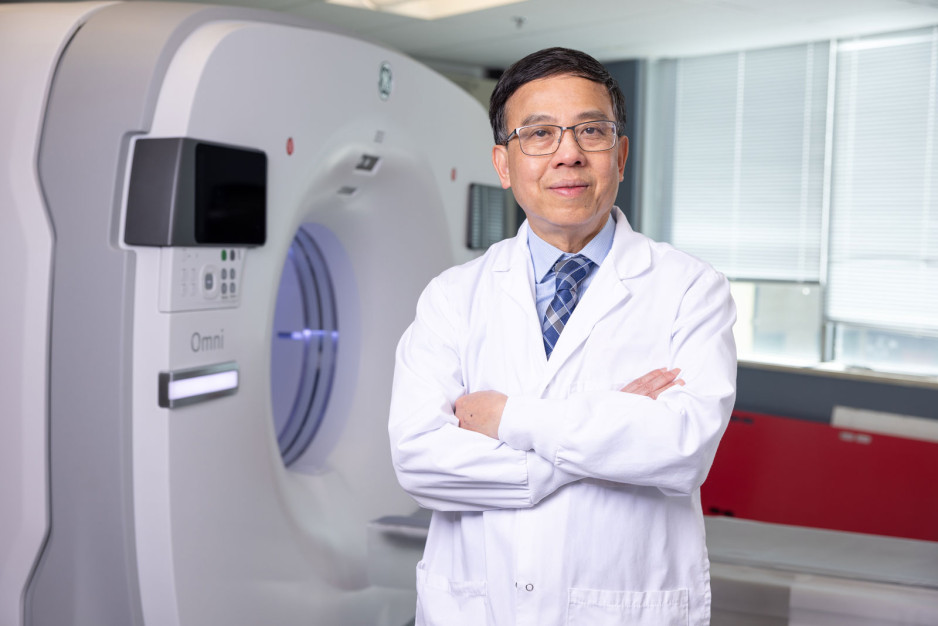
Lee is now recognized as an innovative imaging scientist transforming research and patient care. In June, Lee will receive the Canadian Organization of Medical Physicists’ (COMP) Gold Medal Award for exemplary achievement. It is the organization’s most prestigious award.
“I was hired from Winnipeg to work here,” he says. “I had a thin CV, and very few publications. I was a nobody, I thought. But St. Joseph’s recognizes the potential in people and they saw potential in me. If not for St. Joseph’s nurturing environment, our imaging program would not be what it is today.”
Lee is director of PET/CT Research at Lawson Research Institute (Lawson) and medical physicist at St. Joseph’s Hospital. He is also a professor at Western University’s Schulich School of Medicine & Dentistry and a scientist at Robarts Research Institute.
At St. Joseph’s and Lawson, he has sparked the growth of the Molecular Imaging and Theranostics program. Recently it was chosen to be Canada’s first a GE Centre of Excellence in Molecular Imaging and Theranostics based on the past track record of the Lawson Imaging program of achieving a number of national and global firsts.
Mustard-seed growth
Lee says the Lawson Imaging Program’s development is symbolized by the mustard seed in the St. Joseph’s logo: “The mustard seed is the smallest of seeds and it grows into a strong and beautiful tree. When I started at St. Joseph’s, we’d installed a CT scanner one year earlier, and we were quite behind other hospitals. Then we started developing it bit by bit, piece by piece, leaf by leaf.”
Among his most celebrated achievements is developing CT Perfusion technology, a world-first in 2000 that has revolutionized stroke diagnosis and treatment by providing detailed images of blood flow in and to the brain.
The technology is used in more than 8,000 hospitals worldwide and more than 25,000 licences of the technology have been sold over the last 22 years– the royalties enabling the purchase of new, state-of-the-art CT and PET/CT equipment at St. Joseph’s to the benefit of researchers and patients alike.
Lee’s contribution helped secure a $30-million Canada Foundation for Innovation initiative in 2006, introducing hybrid imaging to Canada—including the nation’s first PET/MRI systems. His
expertise has turned contrast-enhanced CT into a powerful functional imaging tool with applications to oncology, cardiology, and neurology.
Excellence, multiplied
“It is no exaggeration to state that without Dr. Lee, the Lawson Imaging Research Program and the medical physics team would never have achieved the heights of success that it has,” says Frank Prato, PhD, founder of the program in 1982 and its leader until 2024.
Prato says Lee has had “a profound influence” on the careers of hundreds of medical physicists, including training and mentoring 60 graduate and postdoctoral students – many of whom are now training students of their own.
“These multipliers/amplifiers of Dr. Lee’s mentorship have had a profound effect on the excellence of the medical physicists we have in Canada and the excellence of the ones we train for the world,” Prato says.
Lee has published 290 research papers, which have been cited nearly 19,000 times – an indication of their impact in the medical community. He has been awarded the Meritorious Service Cross from the Governor General of Canada and received the Career Achievement Award as a WORLDiscoveries innovator.
The St. Joseph’s difference
More recently, Lee created, in partnership with St. Joseph’s Health Care Foundation and Western, two endowed chairs to research and translate liquid radiation therapy.
His considerable accomplishments are matched by his humility and his eagerness to deflect credit to his colleagues, St. Joseph’s, the St. Joseph’s Health Care Foundation and the broader imaging and research communities.
Excellent technology and research are an outgrowth of the people and culture of St. Joseph’s, Lee emphasizes. “I always feel that when I walk into St. Joseph’s, it immediately has that warm feeling that envelops you. It’s different. It’s a nurturing environment.”
The COMP Gold Medal is the highest award given by the Canadian Organization of Medical Physicists and is given to currently active or retired individuals to recognize medical physicists who have made outstanding contributions:
- A body of work fundamentally altering the knowledge base and practice of medical physics
- Leadership positions in medical physics organizations leading to improvements in the status and public image of medical physicists in Canada
- Significant influence on the professional development of the careers of medical physicists in Canada through educational activities or mentorship
Several London and Lawson-affiliated researchers have won the COMP Gold Medal, including Prato in 2024.
This year’s annual scientific meeting takes place in London on June 4 – 7.
Expanding transitional support for young adults with diabetes
In 2012, researchers from across Ontario, led by a team at Lawson Health Research Institute, started the first multicenter randomized controlled trial to evaluate implementation of a transition coordinator for young adults with type 1 diabetes as they transferred from paediatric to adult care.
“There is a huge difference between the kind of care that they receive as children compared to adults, and that is consistent across Canada and most other countries,” explains Dr. Cheril Clarson, associate scientist at Children’s Health Research Institute, a program of Lawson, and a paediatric endocrinologist at Children’s Hospital, London Health Sciences Centre.
With children, patient visits involve a variety of specialists from different areas, such as the physician, nurse educator, dietitian and social worker. “The naturally build up a long-term relationship with the team, as some children might start the program when they are 2 or 3 years old as an example.” Dr. Clarson adds that the child’s caregivers are an integral part of the process and the care team also gets to know them very well.
Moving into the adult program means that the patient now has more responsibility and autonomy over their own care. They have to remember to go to appointments, fill prescriptions and maintain their daily diabetes care.
“During the emerging adulthood period, your attention is taken up by many other things – leaving home, starting post-secondary education, figuring out your identity and independence,” says Dr. Tamara Spaic, Lawson associate scientist and adult endocrinologist at St. Joseph’s Health Care London. “And on top of that they need to manage their diabetes every day. They are in a completely new system with a new care team – it’s a major transition. For many, they stop coming to appointments regularly and they don’t keep up with all of their own care.”
As young adults struggle to find their footing in a new system, there are significant short and long-term consequences when it comes to their health. Some will experience acute complications like high sugars leading to diabetic ketoacidosis and hospital admission or severe low blood sugars where they can lose consciousness and have a seizure.
“Different studies show between 30 to 60 per cent increased risk of complications like retinopathy, myocardial infraction, stroke and kidney disease in those who do not follow their care plan,” notes Dr. Spaic. “We see a bump in this young adult period where levels spike and their diabetes isn’t being controlled – this has impacts for both the individual and the system.”
The study enrolled 205 young adults with type 1 diabetes between the ages of 17 and 20. Patients were recruited from three paediatric centres and their care was transitioned to three adult centres. The multi-centre partnership included Children’s Hospital; St. Joseph’s; Children’s Hospital of Eastern Ontario; The Ottawa Hospital; and, Trillium Health Partners in Mississauga.
Participants were randomly assigned to two groups, with 104 patients in the structured transition program and 101 patients receiving standard care. Patients were seen in the paediatric care setting for six months and then transferred to adult care, where they continued with either the transition program or standard care for one year.
The core component of the program was a transition coordinator, a nurse who is a certified diabetes educator. The coordinator followed the young adults throughout the transition, interacting with the paediatric health care team to establish a base of support as they moved into adult care. They attended visits, established appropriate contacts for the patient, provided support for diabetic care, problem solved and helped navigate the system. In addition to face-to-face meetings, they were available via text messages, emails and phones calls.
“We had a high recruitment rate for the population and type of study, and a high number of participants followed the full program,” says Dr. Clarson. “Our results at the end of the intervention showed that the program worked very well. By providing additional support through a transitional coordinator, the results showed better outcomes all around.”
Compared to the baseline, study participants attended more care visits, were more satisfied with their care, suffered much less distress associated with diabetes, had better management on a daily basis and reported less emotional burden of diabetes.
The team then took it a step further and spent another year following the participants to see if they were able to sustain the behaviour and positive outcomes. They did not find a difference between the control and intervention groups.
“Unfortunately, we found no difference in the number of visits they attended, their satisfaction with care and management of their diabetes,” explains Dr. Spaic. “When they didn’t have the intervention, they essentially went back to baseline. Out hope is to see the program extended.”
Dr. Clarson adds that they developed the program so that it can be integrated in different ways, and also in difference areas of health care beyond diabetes. For example, they found that the preferred method of communication with the coordinator was text. This is an easy way to provide the fundamental support of a coordinator for longer, and it is cost-effective.
“Our patients really loved the intervention. By the end of the study, they felt more comfortable being able to navigate the adult health care system. They felt empowered and responded well. They wanted to continue the program.” The next step for the researchers is to evaluate support through a virtual transition coordinator.
“Closing the Gap: Results of the Multicenter Canadian Randomized Controlled Trial of Structured Transition in Young Adults With Type 1 Diabetes” was recently published in the journal Diabetes Care by the American Diabetes Association.
Learn more about the study and read about Nicole Pelcz, study participant, who found out at 13 years old that she had type 1 diabetes.
In the media:
Diabetic teens fall back to old habits after transition care, study says – London Free Press
Scientist
Exploring mobile software to better support youth mental health
Mental health services are rooted in relationships. When it comes to delivery, and specifically community-based and outpatient services, connection and communication between the individual and care provider need to be the focus.
When we think of youth in particular, technology is a regular form of communication for them.
“Our research team at Lawson is looking at how technology can assist in the delivery of mental health services for youth in a way that still supports the important components of treatment,” says Dr. Cheryl Forchuk, Assistant Scientific Director at Lawson. “In our work with youth, they’ve talked about wanting the technology they are already using integrated into their care.”
In the health care sector, the use of technology needs to be carefully tested and implemented, to ensure it is not only meeting the needs of those using it but also that it complies with the standards for privacy and security.
On February 7, 2019, Lawson Health Research Institute and InputHealth welcomed community members and stakeholders for the announcement of a new health care technology solution that is being researched by Dr. Forchuk and her team, with generous contributions from the provincial government.
TELEPROM-Y is a mobile-based TELEMedicine and Patient-Reported Outcome Measurement Youth study aiming to improve access to specialized services and reduce inpatient mental health admissions for youth. The initiative is one of 11 that received funding from Ontario’s second round of the Health Technologies Fund (HTF), a program of the Ontario Ministry of Health and Long-Term Care administered by Ontario Centres of Excellence.
TELEPROM-Y received $395,109 in provincial funding with $494,630 in matching contributions for a total investment of $889,739.
InputHealth’s CEO Damon Ramsay and Chief Medical Officer Puneet Seth, along with Jennifer Moles from the Ontario Centres of Excellence were on hand with Dr. Cheryl Forchuk to hear more about how the technology and funding will help support youth. Project contributors Woodstock General Hospital and Youth Opportunities Unlimited (Y.O.U.) also attended the announcement.
This project is taking a unique approach to creating connections with youth. Researchers will use an electronic Collaborative Health Record (CHR) developed by InputHealth, an innovative Canadian digital health software company, which allows for secure communication. Patients will have access to virtual visits, prompts and reminders, text or email messages, and educational materials delivered by phone.
Image
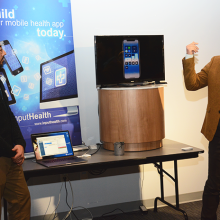
InputHealth's Puneet Seth and Damon Ramsay provided a demonstration of the software being used in the study.
Dr. Forchuk explains that “the study is focusing on an important transitional period. The majority of mental illnesses occur between the ages of 16 to 25 years old.” The research team is recruiting participants between these ages who have symptoms of anxiety and/or depression, and are receiving outpatient services from a hospital-based mental health care program at London Health Sciences Centre, St. Joseph’s Health Care London and Woodstock General Hospital, or community-based services from partner organizations.
A key aspect is to assess whether the technology is effective and efficient, while acceptable to both the staff and youth using the app.
“Careful evaluation is essential to make sure we are doing the right things for the people we serve,” adds Dr. Forchuk, who is also the Beryl and Richard Ivey Research Chair in Aging, Mental Health, Rehabilitation and Recovery.
Image

The mobile software will also be evaluated on its ability to improve the ease of access to care; monitor mood and behaviour changes for earlier intervention; enhance information exchange between patient and health care provider; and, support the overall experience for the youth.
Other project contributors include St. Michael’s Hospital Centre for Excellence in Economic Analysis Research, The Forge (McMaster University), Thunder Bay Regional Health Sciences Centre and Western University.
The study extends previous findings from the Youth Mental Health Engagement Network study (Y-MHEN), which developed, delivered and evaluated an interactive web-based personal health record, the Lawson SMART Record (LSR), to assist mental health patients in managing their care and connecting with care providers.
The Health Technologies Fund is a program of the Ontario Ministry of Health and Long-term Care and is administered by the Ontario Centres of Excellence. Program supports the development of made in Ontario health technologies by accelerating evaluating, procurement, adoption and diffusion within the Ontario health system.
Scientist
… MIND & SPIRIT SINCE 1869 Renowned for compassionate care, St. Joseph's is one of the best academic health care organizations in Canada dedicated to helping people live to their fullest by minimizing the effects of injury, disease and … MIND & SPIRIT SINCE 1869 Renowned for compassionate care, St. Joseph's is one of the best academic health care …
CARING FOR THE BODY, MIND & SPIRIT SINCE 1869 Renowned for compassionate care, St. Joseph's is one of the best academic health care organizations in Canada dedicated to helping people live to their fullest by minimizing the effects of injury, disease and disability through excellence in care, teachi...
… Onabotulinumtoxin A (Botox®) for Upper and Lower Limb Spasticity What is spasticity and how is it typically treated? Spasticity is a neuromuscular condition in which there is an … Onabotulinumtoxin A (Botox®) for Upper and Lower Limb Spasticity What is spasticity and how is it typically treated? …
Page 1 of 2 February 16, 2023; Onabotulinumtoxin A (Botox) for Upper and Lower Limb Spasticity What is spasticity and how is it typically treated? Spasticity is a neuromuscular condition in which there is an abnormal increase in muscle tone, making the affected body parts stiff and difficult to move...
… Abobotulinumtoxin A (Dysport®) for Upper and Lower Limb Spasticity What is spasticity and how is it typically treated? Spasticity is a neuromuscular condition in which there is an … Abobotulinumtoxin A (Dysport®) for Upper and Lower Limb Spasticity What is spasticity and how is it typically treated? …
Page 1 of 2 February 16, 2023; Abobotulinumtoxin A (Dysport) for Upper and Lower Limb Spasticity What is spasticity and how is it typically treated? Spasticity is a neuromuscular condition in which there is an abnormal increase in muscle tone, making the affected body parts stiff and difficult to mo...
… About Mount Hope Mount Hope is part of the St. Joseph’s Health Care London family of services. Our … by common spaces make up Mount Hope – one tower is called St. Mary’s and the other Marian Villa floors have wayfinding themes with distinctive murals and decor such as tropical or rural foot …
About Mount Hope Mount Hope is part of the St. Josephs Health Care London family of services. Our facility two towers connected by common spaces make up Mount Hope one tower is called St. Marys and the other Marian Villa floors have wayfinding themes with distinctive murals and decor such as trop...
… Learn More. sjhc.london.on.ca BODY | MIND | SPIRIT Leena Justus Registered Nurse Mount Hope Centre for Long Term Care Renowned for compassionate care, St. Joseph’s is one of the best academic health care … Learn More. sjhc.london.on.ca BODY | MIND | SPIRIT Leena Justus Registered Nurse Mount Hope Centre for Long Term Care …
Care Matters Here. Learn More. sjhc.london.on.ca BODY | MIND | SPIRIT Leena Justus Registered Nurse Mount Hope Centre for Long Term Care Renowned for compassionate care, St. Josephs is one of the best academic health care organizations in Canada, dedicated to helping people live their fullest by mi...