


Search
Search
2373 Search Results:
… STJOSEPH_~ HEALTH CARE LONDON Office of the Chair, Board of Directors 268 Grosvenor St, PO Box 5777 London, ON N6A 4V2 T: 519 646-6100 ext 64202 … through excellence in care, teaching and research. 1 ~ S!JOSEPHs HEALTH CAR£ LONDON sjhc.london.on.ca /media/2939 …
STJOSEPH_~ HEALTH CARE LONDON Office of the Chair, Board of Directors 268 Grosvenor St, PO Box 5777 London, ON N6A 4V2 T: 519 646-6100 ext 64202 June 5, 2015 Dr. Gillian Kernaghan President and Chief Executive Officer St. Joseph's Health Care London Dear Dr. Kernaghan: In accordance with the terms a...
… Page 1 of 10 CEO Report to the Board January 24, 2024 1.0 Strategy in Action • Reaching Out to Our Community: Lower limb preservation program; A changemaker in reducing stigma; Warm jackets for cold winter months • Advancing … Project – an update • Leading in Research and Innovation: St. Joseph’s appoints Vice President, Research and …
Page 1 of 10 CEO Report to the Board January 24, 2024 1.0 Strategy in Action Reaching Out to Our Community: Lower limb preservation program; A changemaker in reducing stigma; Warm jackets for cold winter months Advancing Excellence in Care Together: Improving access to geriatric care; Nourish Proj...
… CEO Compensation These positions are two of Ontario’s most critical hospital leadership positions. They are unique … in close collaboration to advance what has become the most integrated system of hospital care, teaching and research in the … CEO Compensation These positions are two of Ontario’s most critical hospital leadership positions. They are unique …
Backgrounder CEO Compensation These positions are two of Ontarios most critical hospital leadership positions. They are unique roles and yet, they will be defined by how the hospitals in London continue to work in close collaboration to advance what has become the most integrated system of hospital ...
… Integration of Hospital Leadership The London hospital system is the most integrated system of hospital care in Ontario. This comes through … Integration of Hospital Leadership The London hospital system is the most integrated system of hospital care in Ontario. This comes …
Backgrounder Evolution in the Integration of Hospital Leadership The London hospital system is the most integrated system of hospital care in Ontario. This comes through extensive partnership and collaboration while fostering responsive leadership models to both support integration initiatives and r...
… Chair of St. Joseph's Health Care Society 2009-2010 …
… Chair of St. Joseph's Health Care Society 2010-2011 remarks …
Changing our MINDS
Local youth use art and storytelling to illustrate the personal and system challenges in mental health.
The words and images are both heartbreaking and hopeful.
“Nobody likes you if you are sad.”
you are enough. stay strong. let life surprise you.
“Please don’t leave like everyone else.”
1 year sober. 1 year of school. 1 year building a safe home. 1 year loving myself.

Zine-writing, a personal and introspective medium often used by people who have been marginalized, is an important part of local research that is finding solutions to complex mental health challenges among young adults. Its name derives from its magazine (“zine”) format.
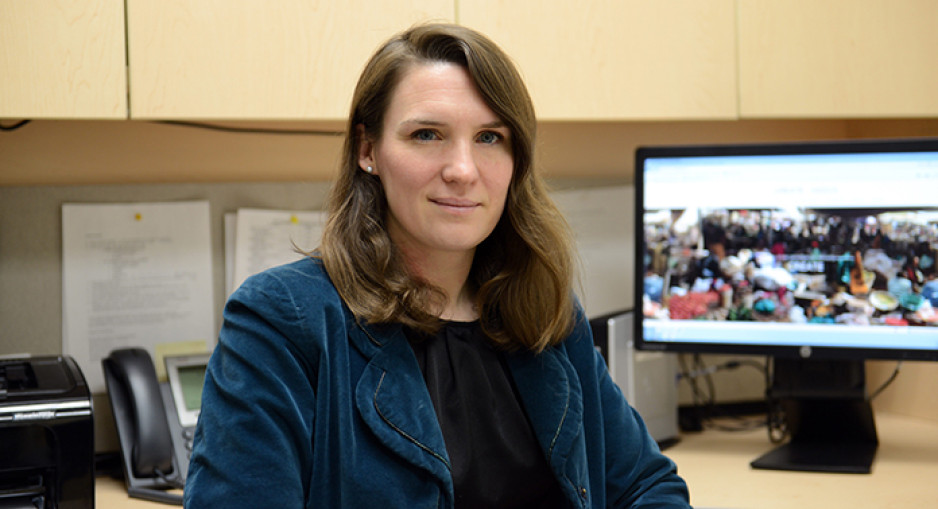
“When we make the voices of people with lived experience central to our research, we can learn from each other and then change the system together,” says Dr. Arlene MacDougall, founder of MINDS of London-Middlesex.
The social innovation and research lab based at St. Joseph’s Health Care London (St. Joseph’s) is dedicated to designing, piloting and testing mental health innovations for teens and young adults. Its recent evolution into MINDS 2.0 adds insights by and for people up to age 35 who have complex, pervasive mental health and addiction issues.
Learning from experts
Rin, a London artist, who has published independent zines for a decade, created three for this project, including one that, with irony, asks the reader to ponder which vulnerable people aren’t worth saving.
“I believe making art can be very healing,” says Rin. “I wanted to share some of my story to help myself and help others. I want to play a part in shaping a mental health system that’s better than the one I encountered.”

The zines weave art, prose and poetry into story:

3 things I would change: affordability, stigma, waitlists.
“If I had a magic wand, I would use it to heal the waters, grow the trees, foster animal growth.”
Look in the mirror, see how far you’ve come.
They also raise and propose solutions to troubling issues among people with mental illness: housing and homelessness, sparse resources for people with addictions, lack of coordination among service providers, and dehumanizing attitudes in health and criminal justice systems.
“Participants experienced catharsis just in telling their stories,” says Renee Hunt PhD, Associate Director of Research and Operations at MINDS. “And because they’re the experts, they’re also playing an important part in changing systems that need an overhaul.”
Adds Rin, “It feels empowering knowing people are listening to us – people who care and are committed to making change to the system.”
MacDougall notes the pivotal role of St. Joseph’s Health Care Foundation – in particular, a groundbreaking $5-million donation towards mental health research from philanthropist Ryan Finch – in advancing mental health innovation through MINDS and MINDS 2.0.
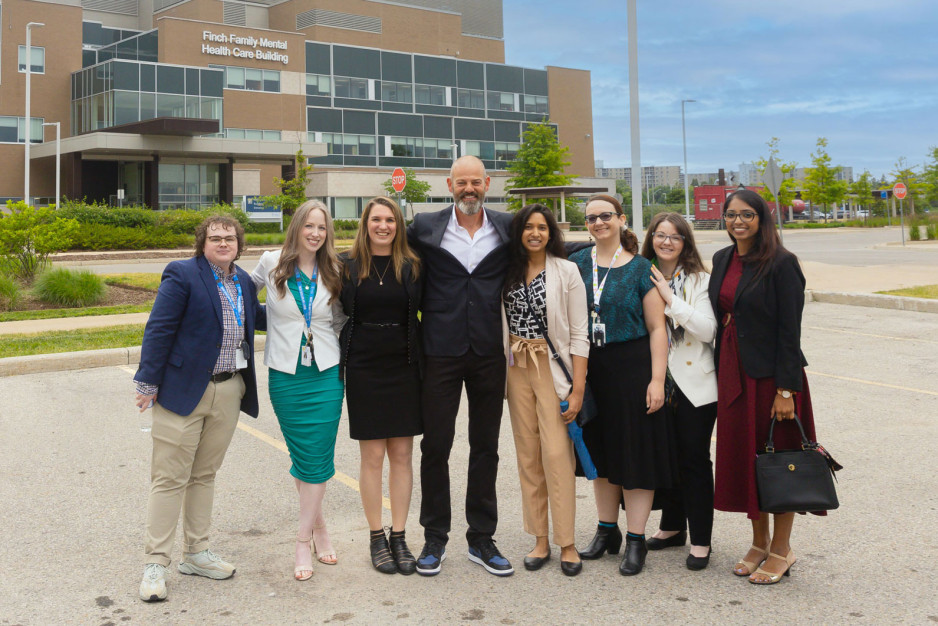
“They’ve been our biggest supporters since day one. This wouldn’t have happened without support from Ryan and the foundation and all the many donors who believe in mental health research,” says MacDougall, who is also Director of Research and Innovation with St. Joseph’s Mental Health Care Program.

“MINDS has been a catalyst for system change,” MacDougall adds. “Research is always about finding answers and generating impact.”
Many findings from MINDS research have been put into practice, among them are the creation of guidebooks for peer support, free taxi service for rural youth needing urban mental health or addiction services, and educational resources to support 2SLGBTQI+ students.
MacDougall says MINDS 2.0 expands that work with new voices and the exploration of more in-depth solutions.
What’s next for MINDS 2.0
- Workshopping ideas and prototypes for mental health systems change. Sessions will be held where people with lived/living experience and service providers propose and develop potential solutions.
- Leadership-building. Twenty mental health practitioners will be trained to become “agents of change” who will collectively create, implement and evaluate mental health programs, technology, interventions and training.
- Imaginarium conference. In 2025, a first-of-its-kind national conference will take place to share system innovations in mental health and addiction.
… the Province Page 9 Editor’s Note “May we live in interesting times” It is my pleasure on behalf of the Board and staff of CHAO to wish all CHAO members a happy, health and … Chair Carol Lambie, an opportunity to undertake a reasoned stra- tegic planning review that will assess the successes …
January 2015 In this Issue Page 1: Comment from David Nash Page 2: CHAO Convention reprise Pages 3 CHAO Mission Leadership Program Pages 4-9 Around the Province Page 9 Editors Note May we live in interesting times It is my pleasure on behalf of the Board and staff of CHAO to wish all CHAO members a ...
… Page 7– People in the News and Editor’s Note Physician-Assisted Suicide The Supreme Court decision that would seem to open the door to physician-assisted suicide brings into focus the need to present … the Canadian Conference of Catholic Bishops issued a statement that said in part, “ The Bishops of our Country …
April 2015 In this Issue Page 1: Comment from David and Ron. Page 2:-5 Around the Province Pages 6-CHAO Mission Leadership Program Page 7 People in the News and Editors Note Physician-Assisted Suicide The Supreme Court decision that would seem to open the door to physician-assisted suicide brings in...
… 1 Gifts of Securities St. Joseph’s Health Care Foundation accepts donations of … Chalmers, Associate Bryan Vickers 1900 - 148 Fullarton Street London, Ontario N6A 5P3 Phone: 519-675-6857 FAX: … FINS# - T002 DTC# - 5002 CUID – DOMA St. Joseph’s Health Care Foundation account number: …
1 Gifts of Securities St. Josephs Health Care Foundation accepts donations of shares through the following four brokerage firms: RBC Dominion Securities Denise Chalmers, Associate Bryan Vickers 1900 - 148 Fullarton Street London, Ontario N6A 5P3 Phone: 519-675-6857 FAX: 519-675-2020 Email: denise.ch...
… Name of doNor address City ProviNCe Postal Code telePhoNe This is my authorization to transfer shares of Currently held by Account Number to St. Joseph’s Health Care Foundation as a donation. A Donation of shares will be transferred through St. Joseph’s Health Care Foundation’s brokerage firm. (For …
Name of doNor address City ProviNCe Postal Code telePhoNe This is my authorization to transfer shares of Currently held by Account Number to St. Josephs Health Care Foundation as a donation. A Donation of shares will be transferred through St. Josephs Health Care Foundations brokerage firm. (For oFF...
… DEPARTMENT CHIEF SUPPORT FOR APPOINTMENT Instructions: · This form is to be completed by the … Anticipated Start Date: … PRIVILEGE INFORMATION: Hospital (LHSC or St. Joseph’s) Primary Practice Site (VH, UH, VFMC, SJH, etc. ) Credentialed Professional Staff Category Admitting Privileges Department Division …
DEPARTMENT CHIEF SUPPORT FOR APPOINTMENT Instructions: This form is to be completed by the appropriate department contact and signed by the Department Chief. Email this completed form directly to medical.affairs@londonhospitals.ca Applicant Name: ___________________________________________________...
… DEPARTMENT CHIEF SUPPORT FOR APPOINTMENT Instructions: · This form is to be completed by the … Anticipated Start Date: … PRIVILEGE INFORMATION: Hospital (LHSC or St. Joseph’s) Primary Practice Site (VH, UH, VFMC, SJH, etc. ) Credentialed Professional Staff Category Admitting Privileges Department Division …
DEPARTMENT CHIEF SUPPORT FOR APPOINTMENT Instructions: This form is to be completed by the appropriate department contact and signed by the Department Chief. Email this completed form directly to medical.affairs@londonhospitals.ca Applicant Name: ___________________________________________________...
… DEPARTMENT CHIEF SUPPORT FOR APPOINTMENT Instructions: · This form is to be completed by the … Applicant Name: Anticipated Start Date: PRIVILEGE INFORMATION: Hospital (LHSC or St. Joseph’s) Primary Practice Site (VH, UH, VFMC, SJH, etc. … DEPARTMENT CHIEF SUPPORT FOR APPOINTMENT Instructions: · This form is to be completed by the …
DEPARTMENT CHIEF SUPPORT FOR APPOINTMENT Instructions: This form is to be completed by the appropriate department contact and signed by the Department Chief. Email this completed form directly to medical.affairs@londonhospitals.ca Applicant Name: Anticipated Start Date: PRIVILEGE INFORMATION: Hosp...
… DEPARTMENT CHIEF SUPPORT FOR APPOINTMENT Instructions: · This form is to be completed by the … Anticipated Start Date: … PRIVILEGE INFORMATION: Hospital (LHSC or St. Joseph’s) Primary Practice Site (VH, UH, VFMC, SJH, etc. ) Credentialed Professional Staff Category Admitting Privileges Department Division …
DEPARTMENT CHIEF SUPPORT FOR APPOINTMENT Instructions: This form is to be completed by the appropriate department contact and signed by the Department Chief. Email this completed form directly to medical.affairs@londonhospitals.ca Applicant Name: ___________________________________________________...
… Anticipated Start Date: … PRIVILEGE INFORMATION Hospital (LHSC or St. Joseph’s) Primary Practice Site (VH, UH, VFMC, SJH, etc. ) Credentialed Professional Staff Category Admitting Privileges Yes or No Department … to confirm that the delineation of privileges category listed in the above table is aligned to the applicant’s …
DEPARTMENT CHIEF SUPPORT FOR APPOINTMENT Applicant Name: ______________________________________________________________ Anticipated Start Date: __________________________________________________________ PRIVILEGE INFORMATION Hospital (LHSC or St. Josephs) Primary Practice Site (VH, UH, VFMC, SJH, et...
… Anticipated Start Date: … PRIVILEGE INFORMATION Hospital (LHSC or St. Joseph’s) Primary Practice Site (VH, UH, VFMC, SJH, etc. ) Credentialed Professional Staff Category Admitting Privileges Yes or No Department … to confirm that the delineation of privileges category listed in the above table is aligned to the applicant’s …
DEPARTMENT CHIEF SUPPORT FOR APPOINTMENT Applicant Name: ______________________________________________________________ Anticipated Start Date: __________________________________________________________ PRIVILEGE INFORMATION Hospital (LHSC or St. Josephs) Primary Practice Site (VH, UH, VFMC, SJH, et...
… MIND & SPIRIT SINCE 1869 Renowned for compassionate care, St. Joseph’s is one of the best academic health care organizations in Canada dedicated to helping people live to their fullest by minimizing the effects of injury, disease and … MIND & SPIRIT SINCE 1869 Renowned for compassionate care, St. Joseph’s is one of the best academic health care …
CARING FOR THE BODY, MIND & SPIRIT SINCE 1869 Renowned for compassionate care, St. Josephs is one of the best academic health care organizations in Canada dedicated to helping people live to their fullest by minimizing the effects of injury, disease and disability through excellence in care, teachin...
CIHR funding for COVID-19 enables researchers to investigate virus transmission during surgery and pandemic planning
Researchers at Western University and Lawson Health Research Institute continue to make important contributions to help mitigate the spread of COVID-19 and its negative consequences. Two projects in London will address virus transmission during surgery and pandemic planning for COVID-19, thanks to new funding announced by the Government of Canada, through the Canadian Institutes of Health Research (CIHR), along with provincial partners.
Researchers in London received more than $400,000 in funding through this latest round.
“Accelerating high-quality research and real-time evidence is a priority for Canada in its fight against COVID-19. I congratulate the successful teams for their essential work aimed at better preventing, detecting and treating COVID-19 at the individual and population levels,” said Patty Hajdu, Minister of Health in a press release. “Our government believes that it’s through collaboration and data sharing that we will respond efficiently to this global health emergency.”
Virus transmission in surgical smoke
In an effort to perform surgery during the pandemic as effectively and safely as possible, Dr. Leigh Sowerby, Associate Professor at Schulich Medicine & Dentistry and Associate Scientist at Lawson, will be investigating whether or not the virus that causes COVID-19 can be transmitted in surgical smoke. Surgical smoke is the aerosol produced by an essential surgical tool called electrocautery.
“Electrocautery is a ubiquitous tool for surgery, and is known to generate aerosol and smoke. We do not know if the SARS-CoV-2 virus can be transmitted in this plume, and this is important to answer for all surgeons, but in particular, for surgeons working in the respiratory and aerodigestive tract,” said Dr. Sowerby, who is also a head and neck surgeon at London Health Sciences Centre and St. Joseph’s Health Care London. “CIHR funding will allow us to rapidly execute this project. Without this funding, the project would not be possible.”
Dr. Sowerby says the results from this study, whether positive or negative, will have important implications. If positive, it will have a critical and direct impact on ensuring the safety of health care workers performing procedures on patients. Procedures using cautery will continue to require high level protection if the COVID-19 status of the patient is unknown. If negative, it will allow these surgical procedures to continue safely and effectively while conserving critical protective equipment for cases that need it.
The family physician’s role in pandemic plans
Maria Mathews, PhD, Associate Professor at Schulich Medicine & Dentistry, is investigating how the role of family physicians can be better incorporated into pandemic plans. Family physicians play important roles during a pandemic, from detecting potential outbreaks and screening and testing patients to providing care to infected patients and contributing to surge capacity in hospitals.
“During the early stages of the COVID-19 pandemic, family physicians had concerns about roles they were asked to fill for a variety of reasons, including the lack of appropriate personal protective equipment, availability of tests, and concerns about infection risks to other patients and staff in a family practice clinic,” said Mathews.
Mathews will examine the experiences in four regions in Canada – Newfoundland and Labrador, Nova Scotia, Ontario and British Columbia – to identify key roles, supports and best practices. The results will provide government ministries, public health units, and other health organizations with evidence and tools in order to incorporate family physicians in the response to a potential second COVID-19 wave and plan for future pandemics.
Scientist
… MIND & SPIRIT SINCE 1869 Renowned for compassionate care, St. Joseph's is one of the best academic health care organizations in Canada dedicated to … through excellence in care, teaching and research. \~ SIJOSEPHs H EALT H CA RE LONDON sjhc.london.on.ca November 30, …
CARING FOR THE BODY, MIND & SPIRIT SINCE 1869 Renowned for compassionate care, St. Joseph's is one of the best academic health care organizations in Canada dedicated to helping people live to their fullest by minimizing the effects of injury, disease and disability through excellence in care, teachi...