


How St. Joseph’s Diabetes Care Team is transforming lives through innovation and compassion
Image
Image
When patient Matt Griest switched to insulin pump therapy, he had no idea just how life-changing it would be and how the support, knowledge and compassion from the Diabetes Care Team would highly impact his transition.
“They provide a wealth of knowledge and extensive resources,” says Griest. “I felt empowered and confident every step of the way.”

And the care he received at St. Joseph’s was all the more meaningful because several members of the care team knew exactly what he was going through – because they too have been there.
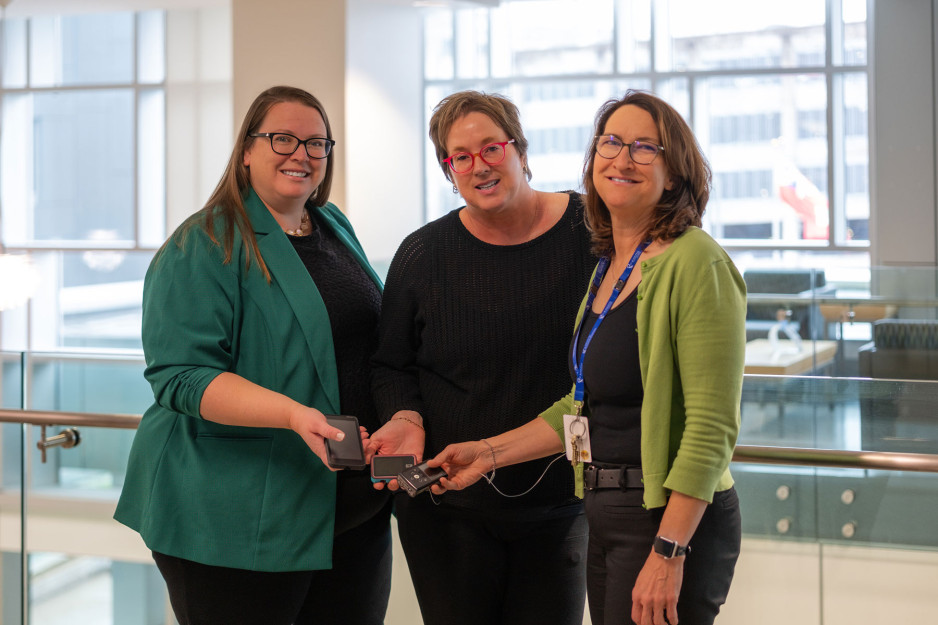
Barbara Weryk, Marsha Driscoll and Mary Biro are registered nurses and diabetes educators. They all live with type 1 diabetes –and each one wears an insulin pump.
“Most patients just want to know they can live a normal life,” says Driscoll. "Seeing us wear the pump often puts them at ease.”
Griest started receiving care at St. Joseph’s a decade ago and was amazed by the quality of care he received from the Diabetes Care team. Recently, after working with the team and his doctor he made the switch to Insulin Pump Therapy.
While insulin pumps are a preferred method for managing type 1 diabetes, a recent clinical trial co-led at St. Joseph’s has revealed their significant benefits for people living with type 2 diabetes who require multiple daily insulin injections.
The Diabetes Care Team at St. Joseph’s has been instrumental in supporting and educating patients, as they begin recommending Insulin Pump Therapy to people with Type 2 diabetes.
The team focuses on assuring quality care and compassion by addressing fears, dispelling myths and tailoring care to each patient.
“It’s not my agenda; it’s the patient’s agenda,” says Biro, registered nurse and certified diabetes educator with St. Joseph’s “We ask permission first, we listen and we work together.”
The Diabetes Care Team focuses on each patient's unique needs. They recognize the common public misconceptions on diabetes diagnosis and that understanding helps them meet people where they are and support them in improving their quality of life by providing quality care.
“There’s still a lot of stigma around type 2 diabetes,” says Weryk. “People think you caused it. But that’s not how we treat people. We meet them where they are and help them move forward.”
“Some people worry about relying on technology,” adds Driscoll. “But we’re here to guide them through it, without judgment.”
The research results have shown that people with Type 2 diabetes can benefit from the use of insulin pump therapy and is beneficial in improving the quality of life for people living with diabetes.
“I wish I had made the switch sooner,” Griest says. “My diabetes is now so much better managed.”
For Griest he finds that since starting insulin pump therapy, he feels he has a weight off his shoulders.
“Everyone sleeps better at night without worrying about crashes or spikes.” says Griest.
He recalls the patience the team had as he made the transitions and how informed they were about the therapy.
Whether it’s teaching someone how to wear a pump, helping patients overcome shame, or simply listening, the team prioritizes emotional safety and personalized support.
Endocrinologist Dr. Kristin Clemens - a St. Joseph’s physician, Lawson Research Institute Scientist and Diabetes Canada Chair in Diabetes Management at Western University’s Schulich School of Medicine and Dentistry – emphasizes how vital research is to the future of diabetes care.
“I’d really like to thank all the research participants. Research is so important to patient care. It helps us innovate, do better and improve outcomes.”
Dr. Tamara Spaic, an endocrinologist and Lawson researcher who was Canadian sites lead investigator on the clinical trial, highlights how managing glucose effectively is essential but can still be difficult form many people living with type 2 diabetes.
"With expanding treatment options and new technologies, we now have tools that can improve outcomes and ease the day-to-day burden of self-management,” Spaic says. “Our goal is to bring the benefits of this research into the hands of patients who need it most.”
At St. Joseph’s, innovative research and exceptional care are rooted in everything that is done.