


‘Poop pill’ benefits may extend to treating kidney cancer, lung cancer and melanoma
Clinical trials suggest fecal transplants can prevent side effects in treating kidney cancer. It can also dramatically improve outcomes for people with lung and melanoma cancers.
A groundbreaking study show that the toxic side effects of drugs to treat kidney cancer could be virtually eliminated with customized fecal microbiota transplants (FMT), a field where London excels.
The discovery published in the prestigious Nature Medicine journal, was published simultaneously with another paper also in the same journal that suggests FMT is also effective in helping treat lung cancer and melanoma.
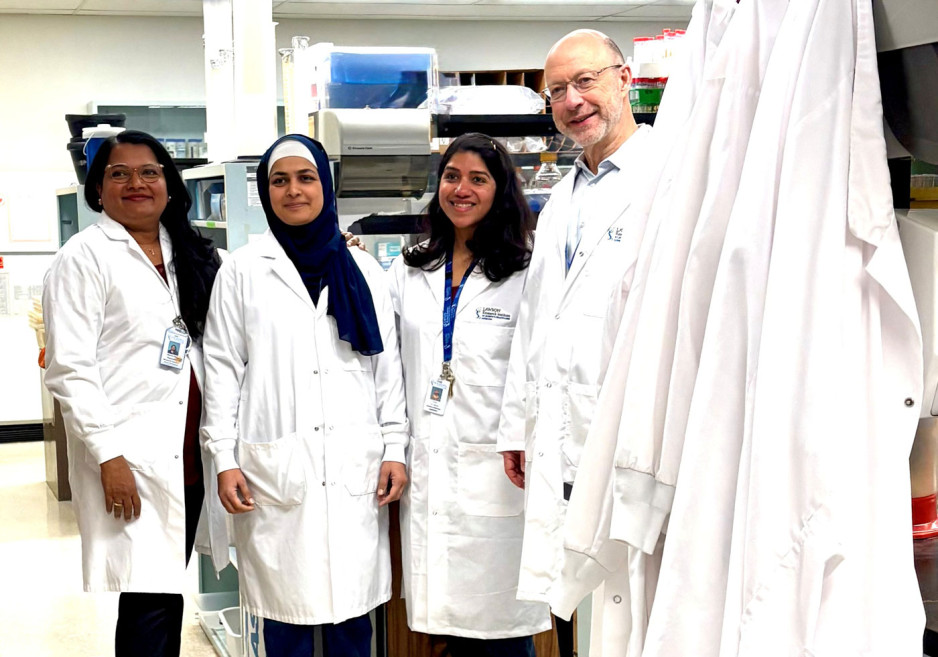
The findings – both studies using FMT capsules developed at Lawson Research Institute (Lawson) of St. Joseph’s Health Care London – represent a giant step forward in using FMT for safe, effective and highly individualized cancer treatment.
“These clinical trials, along with others that are ongoing, reinforce London’s role as a global epicenter of FMT innovation and treatment,” says Dr. Michael Silverman, Scientist at Lawson and Director of the FMT Program and of St. Joseph’s Infectious Diseases Care Program.
The kidney cancer trial was led by London Health Sciences Centre Research Institute (LHSCRI) using FMT capsules – poop pills known as LND101 – processed at Lawson from healthy donor stools and ingested to help restore a patient’s healthy gut microbiome and treat different types of cancer.
“Standard treatment for advanced kidney cancer often includes an immunotherapy drug that helps the patient’s immune system tackle cancer cells,” says Saman Maleki, PhD, Scientist at LHSCRI. “But unfortunately, the treatment frequently leads to colitis and diarrhea, sometimes so severe that a patient must stop treatment early.”
FMT can reduce toxicity of immunotherapy drug
Researchers found that giving FMT before immunotherapy appears to prevent drug side effects in most patients who respond to treatment. These findings come from the Phase 1 clinical trial designed to evaluate the safety of healthy-donor FMT in people undergoing treatment for kidney cancer. It involved 20 patients at the Verspeeten Family Cancer Centre at London Health Sciences Centre (LHSC).
“To use FMT to reduce drug toxicity and improve patients’ quality of life while possibly enhancing their clinical response to cancer treatment is tremendous, and it had never been done in treating kidney cancer before this,” Silverman says.
“None of this would be possible if not for this close collaboration: innovating the FMT capsules in Lawson labs and introducing them at LHSCRI in clinical trials for improved patient health” says Seema Nair Parvathy, PhD, senior scientist at the Lawson FMT program.
Scaling up poop-pill production and research
Because LND101 comes from healthy donors, production can be scaled up to eventually help large numbers of cancer patients, Silverman notes.
Key to this study was the early observation that patients invariably experienced harsh side effects if their gut microbiome included a usually harmless bacteria called Segatella copri. Repopulating a patients’ gut with healthy bacteria from donor stool that had no Segatella copri appears to be the missing piece in preventing medication side effects.
“Our hope is that our research will one day help people with cancer live longer while reducing the harmful side effects of treatment,” adds Dr. Ricardo Fernandes, Scientist at LHSCRI, and Medical Oncologist at LHSC. “We are world leaders in FMT research and we’re excited about its potential.”
The study builds on earlier London-generated research showing FMT can safely augment treatment for people with melanoma. It is also being studied in people with pancreatic cancer and triple-negative breast cancer and is already a well-established treatment for serious gut infections such as C. difficile, which can cause severe diarrhea. St. Joseph’s is also co-leading a new clinical trial exploring the potential benefits of FMT for people with the eating disorder, anorexia nervosa.
This research was funded with support from Ontario Institute of Cancer Research, Canadian Institutes of Health Research, AMOSO, Western University’s Division of Medical Oncology, donors to London Health Sciences Foundation and St. Joseph’s Health Care Foundation, the Hecht Foundation and Weston Family Foundation.
Separate, good results in some lung, skin cancers
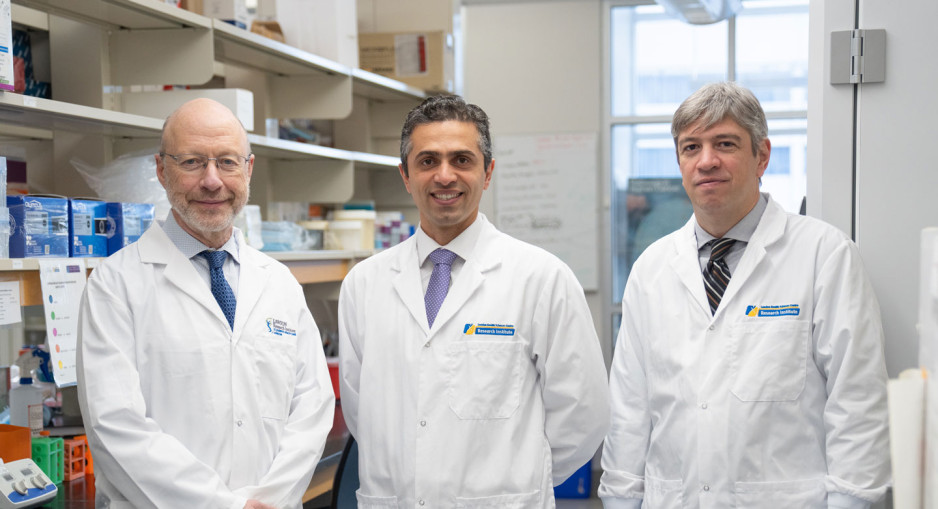
The clinical trial examining FMT’s effect as a co-treatment for advanced non-small-cell lung cancer and advanced melanoma took place at Centre de recherche du Centre hospitalier de l’Université de Montréal (CRCHUM) as well as at LHSCRI, with Maleki as a co-principal investigator and using Lawson’s LND101 capsules for FMT.
Ordinarily, lung cancer is treated with an immunotherapy drug that’s successful in shrinking the tumor only 39 - 46 per cent of the time. But the phase 2 study in Montreal showed that combining FMT with the immunotherapy drug boosted the success rate to 80 per cent.
For patients with melanoma, combining FMT with the usual two immunotherapy drugs met with success 75 per cent of the time, compared with 50 – 58 per cent for the immunotherapy alone. This group also had a higher risk of adverse effects such as myocarditis, however.
In other words, FMT had the potential of doubling the chance of successful treatment for people with advanced lung cancer; and dramatically increasing success rates for people with advanced melanoma
People in both the clinical trials also showed longer survival rates compared with standard therapies.
The study authors suggest the beneficial effect can be attributed to eliminating harmful bacteria in the fecal transplant process and FMT boosting the patient’s immune response.
The lung and melanoma study was funded by the Canadian Cancer Society.
“Our clinical trial demonstrated that fecal microbiota transplantation could improve the efficacy of immunotherapy in patients with lung cancer and melanoma,” says Dr. Arielle Elkrief, co-principal investigator and Physician Scientist, Université de Montréal-affiliated hospital research centre (CRCHUM). “The results also uncovered one possible mechanism of action of fecal transplantation—through the elimination of harmful bacteria following the transplant. Our results open up a novel avenue for personalized microbiome therapies, and fecal transplant is now being tested as part of the large pan-Canadian Canbiome2 randomized controlled trial.”
“Fecal microbiota transplantation in melanoma and lung cancer opens an entirely new therapeutic avenue, made possible by the exceptional commitment of our patients and the teamwork,” adds Dr. Rahima Jamal, Director of the Unit for Innovative Therapies (UIT) at CRCHUM. “At the Unit for Innovative Therapies (UIT) of the CRCHUM, we have had the privilege of translating laboratory discoveries into early phase clinical trials and witnessing their concrete impact on people living with cancer.”
The research In brief: How ‘poop pills’ and immunotherapy target kidney cancer
- Remove harmful Segatella copri bacteria from patient’s gut
- Process donor stool into LND101 capsules rich in healthy bacteria
- Patient takes 40 capsules to restore gut balance
- One week later: immunotherapy anti-CTLA-4 drug activates immune system
Result: Phase 1 clinical trial suggests fecal transplant is safe and patients have fewer side effects from anti-CTLA-4 drug.
Why and how to become a poop donor:
- Just like blood transfusions, fecal transplants save lives. But transplants need donors.
- One stool can transplant three to four people. And donors can give as often as they poop.
- To find out more about eligibility and how to donate, call 519 646-6100, ext. 61726 or email @email