


Researchers aim for thumbs up on 3D-printed splint
Image
Image
A team led by Lawson Research Institute scientist Joy MacDermid, PhD, is exploring how digital scanning and 3D printing could help bring custom hand splints closer to home for people living with thumb arthritis.
For many people living with thumb arthritis, the pain is all too familiar - the ache when opening a jar, the struggle to grip a cup, the throb when holding a pen. Over time, these everyday challenges can add up to a loss of independence.
Thumb arthritis affects approximately one in four older adults in Canada. A custom-made hand splint, known as an orthosis, can ease pain and improve function. But for people living far from specialized care, accessing this treatment isn't always easy.
Now a research team at Lawson Research Institute, the research arm of St. Joseph’s Health Care London, is working to help patients give thumbs up to an innovative treatment.
A new way to reach patients
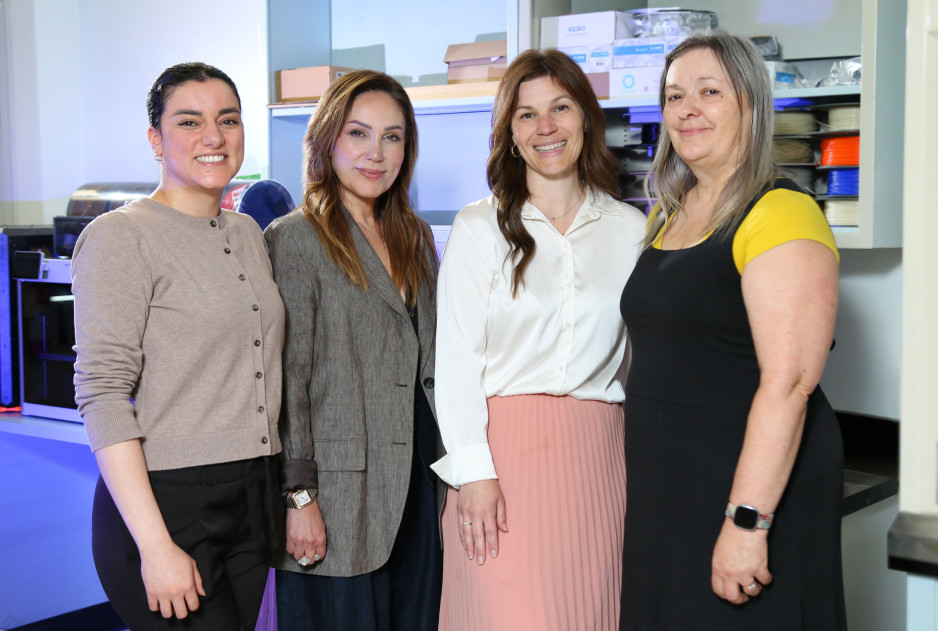
Lawson scientist Joy MacDermid, PhD, co-director of the clinical research lab at St. Joseph’s Roth | McFarlane Hand & Upper Limb Centre, is leading a project that uses digital technology and 3D printing to bring custom hand orthoses closer to patients, wherever they live.
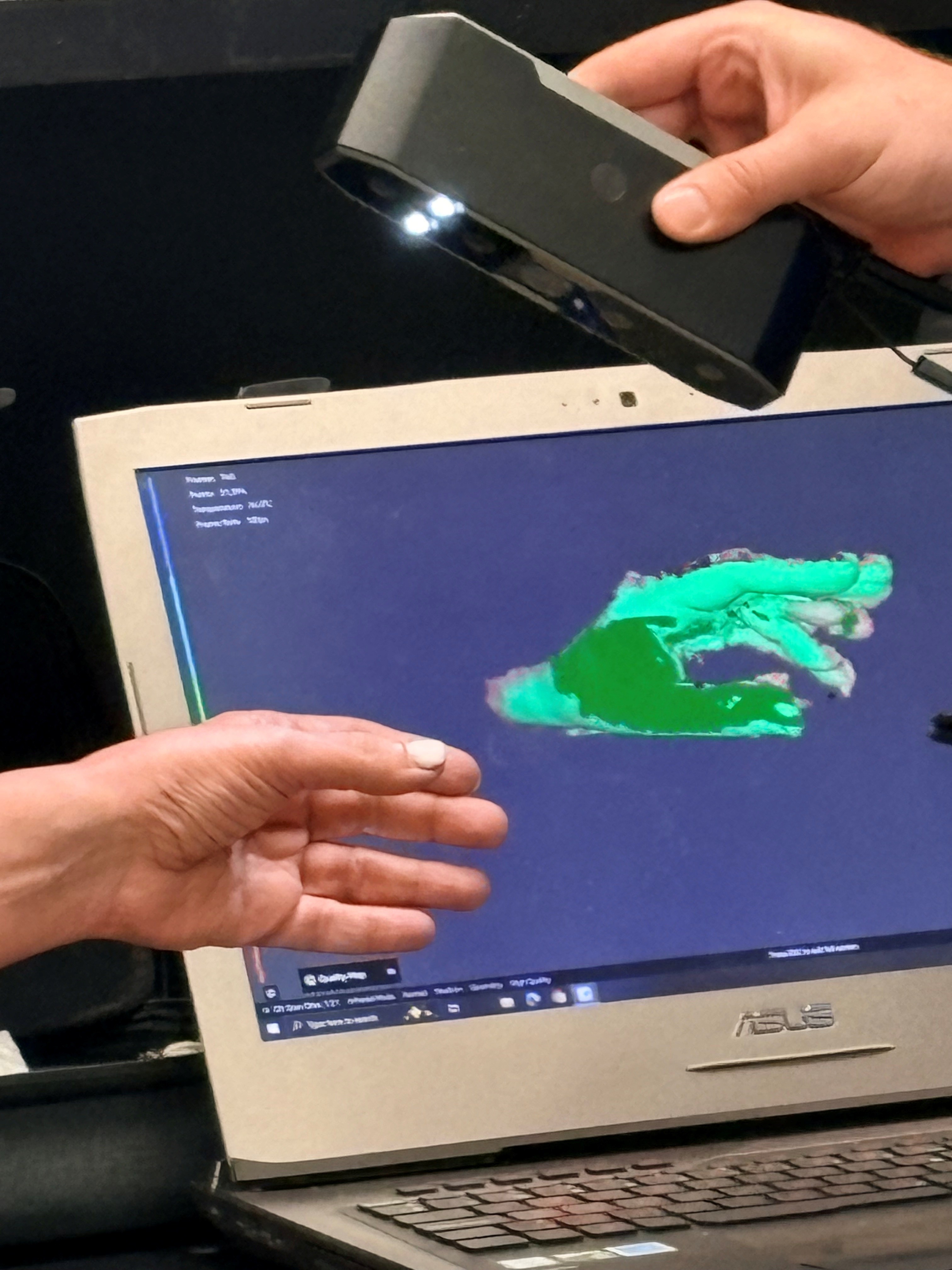
The idea is simple, even if the technology isn’t. Instead of travelling to a specialist centre, a clinician at a local clinic could scan a patient’s hand using a small, affordable scanner. That digital image would then be securely sent to specialists at St. Joseph’s, where a custom orthosis would be designed and produced using 3D printing technology.
“Not everyone lives close to a centre where this care is available,” explains MacDermid, who is also a physiotherapy professor at Western University's Faculty of Health Sciences and a member of Western’s Bone and Joint Institute. “The goal is not to replace in-person care, but to extend its reach in a safe and practical way.”
Engineering meets rehabilitation
 Making this work involves solving two key challenges.
The first: developing a way to scan a patient’s hand accurately enough to create a well-fitting orthosis. This work was led by Lawson scientist Louis Ferreira, PhD, at the Roth | McFarlane Hand & Upper Limb Centre, where he developed a precision hand scanner and also tested a range of options - including consumer-grade devices - to identify technologies that could be used in clinical care.
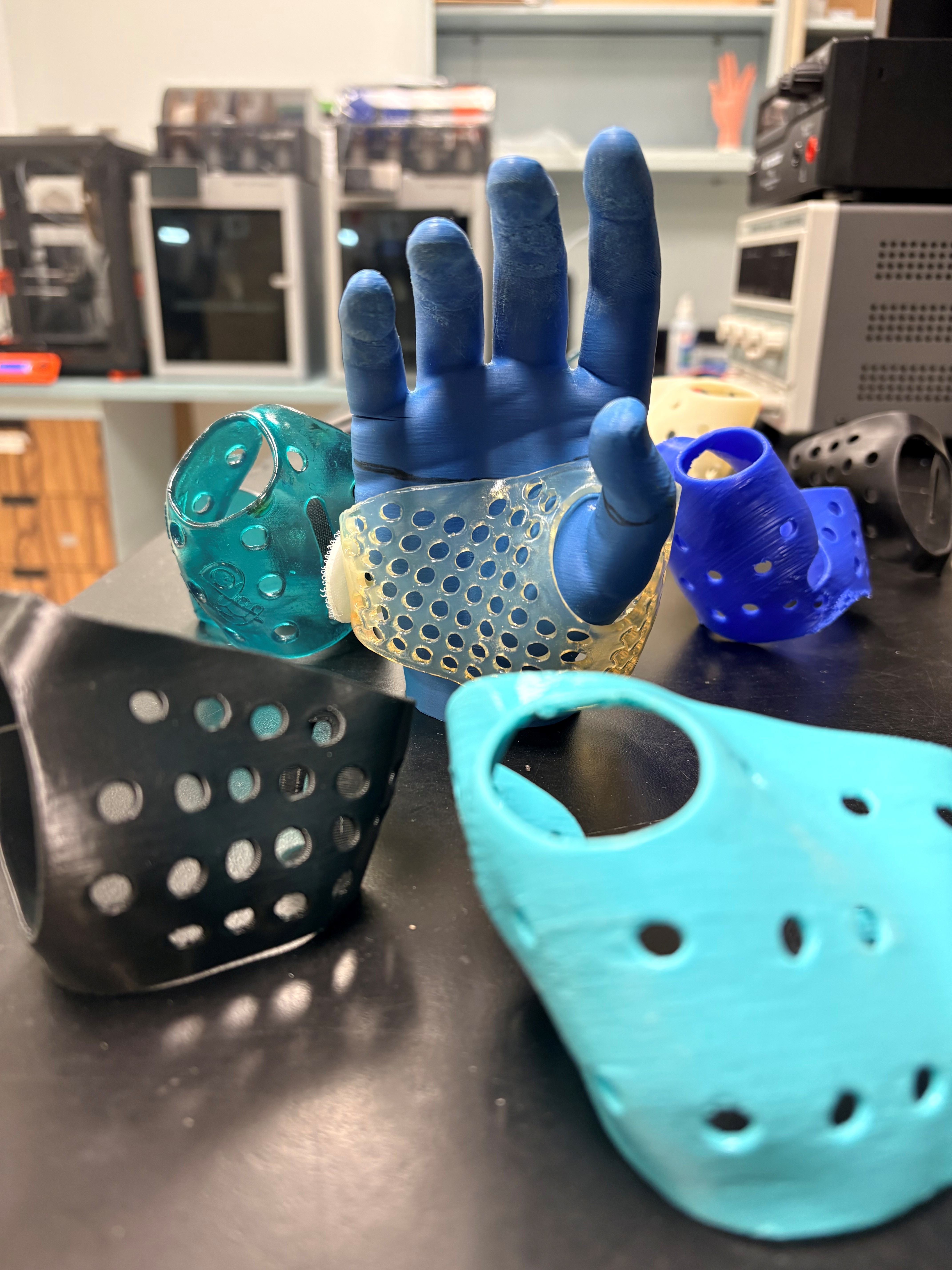
The second: the 3D-printing system itself. Rather than adapting an off-the-shelf machine, Ferreira worked with hand therapy experts, including MacDermid and Maryam Farzad, adjunct research professor at Western University, to design and build a system specifically for creating custom, well-fitting orthoses. The team also collaborated with industry partner Orfit, which developed specialized materials for the process.
“This project sits at the intersection of engineering and rehabilitation,” says MacDermid. “What makes it especially meaningful is the close collaboration between engineers, clinicians and patients working together to solve a real clinical need.”
The technology may also improve comfort. 3D-printed orthoses can be designed with built-in ventilation, allowing air to circulate and helping reduce heat and moisture during daily wear.
Designed with patients, not just for them
Now in its second phase, supported by an Arthritis Society Canada Ignite Innovation Grant, the research is moving into real-world testing. The team will train hand therapists in hospital and community settings to use the process.
In a pilot study, participants will try both a traditionally made orthosis and a 3D-printed version, wearing each in turn before comparing comfort, fit and function. Feedback from participants will help refine both the design and the process.
“We don’t just design for patients, we design with them,” says MacDermid. “Their experience is essential to making sure this works in practice.”
By training community clinicians, not just engineers or specialists, the project hopes to learn how scanning technology and 3D printing can be a scalable and sustainable way to deliver quality custom hand splints to patients.
Expertise and a helping hand
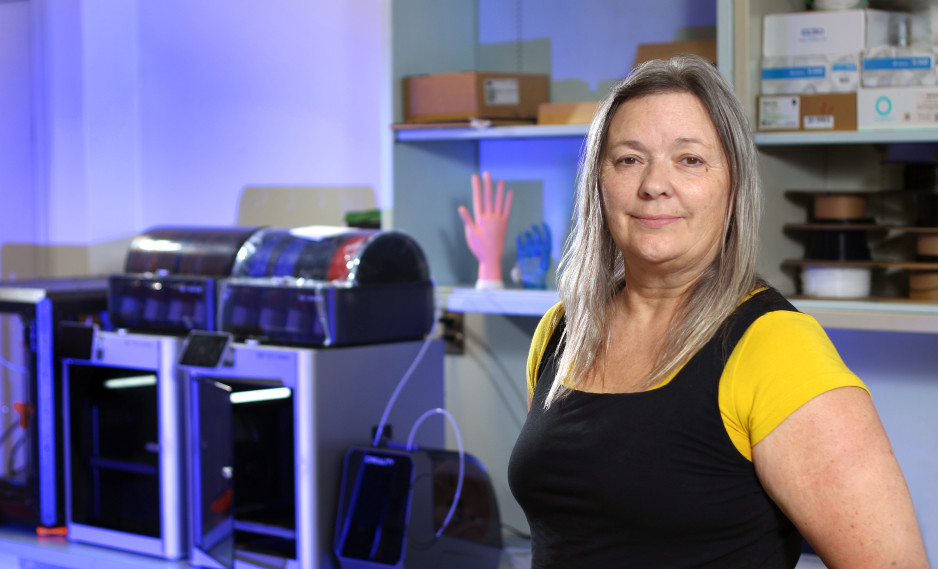
MacDermid has decades of expertise in the field, as a Western University physiotherapy professor and member of Western’s Bone and Joint Institute.
MacDermid also is a research lead –focusing on occupation-related musculoskeletal injuries – in Lawson’s game-changing Workplace Injury Research Network. The network was made possible through an investment from the WSIB, in partnership with the WorkSafe Ontario Fund.
What’s next
If successful, this approach could mean that someone in rural Ontario no longer has to travel hours to replace a worn splint or wait weeks for an appointment at a specialized centre.
“For someone in a remote community, replacing a splint can mean a long journey,” says MacDermid. “We’re exploring whether digital technologies can help reduce that burden, bringing more of the process closer to home while still ensuring patients benefit from specialist expertise.”
In the future, researchers envision a system where a patient's digital hand model could be stored, allowing a replacement splint to be produced and delivered without requiring another trip to a specialized clinic.
Ultimately, the goal is to reduce barriers so more people can access the care they need, regardless of where they live.
“What excites me most is that we’re trying things in new ways,” says MacDermid. “This work opens up opportunities to reach people we can’t always reach right now. Whenever you push technology forward, it may start as complex, but we learn how to make it easier and more refined. We are not just solving a problem for today, we're building something that will keep improving.”