


A vision of hope: St. Joseph’s leads the way with Zero Suicide Initiative
Image
Image
“Zero Suicide.” It’s a bold and thought-provoking name—one that envisions a future where every life touched by despair can find safety, dignity and hope. At St. Joseph’s Health Care London, this vision has been guiding change since 2017, shaping how suicide prevention is understood and delivered within the hospital and beyond.
At the heart of this work is Shauna Graf, consultant with St. Joseph’s Quality Transformation and Innovation team. As the former project lead and former chair of the Zero Suicide Operations Team, Shauna has been instrumental in supporting teams to bring the initiative to life and ensuring its sustainability.
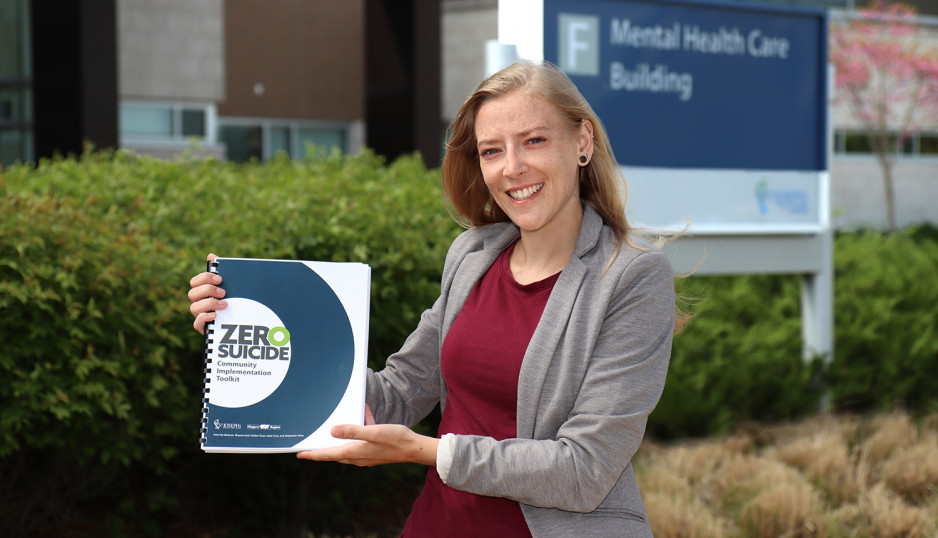
“Zero Suicide supports health care organizations in implementing best practices in suicide prevention,” Shauna explains. “It focuses on leadership, recognizing risk, providing evidence-based interventions and ongoing evaluation.”
One of the most important tools is suicide screening, which opens the door to conversations that might otherwise never happen. At St. Joseph’s, clinicians use the Columbia Suicide Severity Rating Scale—a few short questions that help identify risk and create a path forward. “Screening tools open conversations in a standardized way, removing stigma and leading to patient-centered care,” says Shauna. “It’s often the first step in helping someone stay safe.”
But Zero Suicide at St. Joseph’s is about much more than clinical tools. From the beginning, voices of those with lived and living experience have been central to the work. Patients, families and survivors have helped guide the program, ensuring that resources reflect real needs and that stigma is actively broken down.
“Including these voices has been so important,” Shauna says. “It helps staff better understand why we are doing this work and contributes to providing patient and family-centered interventions.”
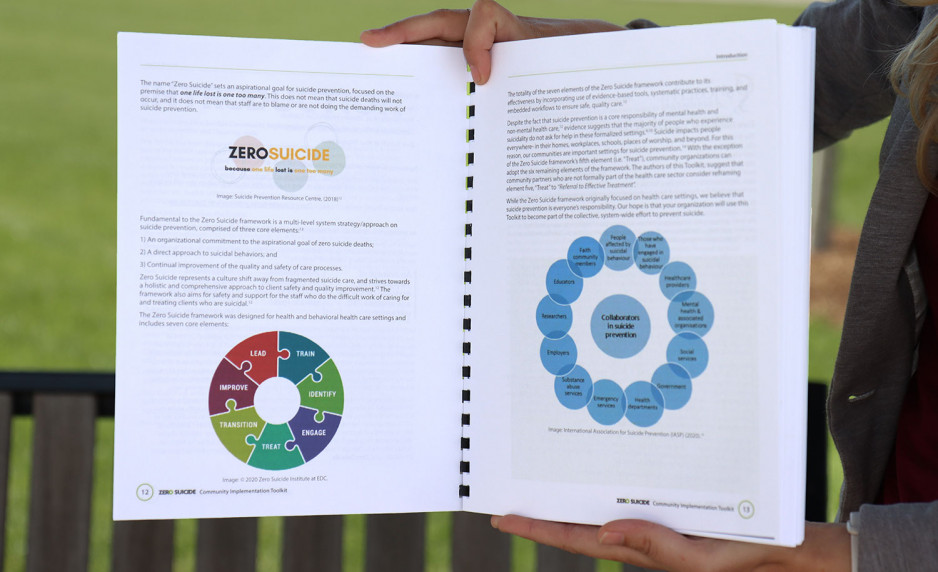
The impact has also extended far beyond hospital walls. In partnership with Niagara Region Public Health, St. Joseph’s co-authored the Zero Suicide Community Implementation Toolkit—a resource now being used by community organizations across Canada and beyond. Local partners, like St. Leonard’s Community Services in London, have piloted the toolkit, and it has been presented internationally as a model for suicide prevention.
The toolkit was designed specifically to support organizations that are not a formal part of the health care sector, by providing them with tools to enhance suicide prevention within their own organizations.
“Collaboration is at the heart of Zero Suicide,” says Shauna. “By creating common language and approaches, whether in hospitals or community agencies, we make it easier to talk about suicide openly and respond in evidence-based ways.”
Today, the Zero Suicide Operations Team at St. Joseph’s meets monthly to keep the work moving forward—updating resources, integrating changes into electronic health records, and engaging staff in continuous learning. The commitment is ongoing, but so are the results.
For Shauna, the most powerful impact is also the most personal: “Suicide can affect anyone, at anytime, anywhere. Knowing we’ve implemented Zero Suicide across our sites, engaged with our community and potentially prevented the loss of someone to suicide—it’s hard to put into words. The more we talk about suicide in an open way, the more potential we have to prevent it.”
Finding Help
For people in crisis, help is always available:
- Call or text 9-8-8 – a Canada-wide suicide crisis helpline, available 24/7/365.
- In London and Middlesex, contact Reach Out: 1-866-933-2023 (toll-free) or 519-433-2023 (call or text), or visit www.reachout247.ca.
- In an emergency, call 911.
To learn more about Zero Suicide at St. Joseph’s, including the community toolkit, visit our Zero Suicide webpage.