


Now Serving: Carb counts with inpatient meals

For many people living with diabetes, every meal comes with a small calculation and a few questions.
- How many carbohydrates are on the plate?
- How will they affect blood sugar?
- How much insulin might be needed?
People at home answer these questions by reading nutrition labels and measuring portions, but in a hospital setting, carb counting can become more challenging.
That’s why St. Joseph’s Health Care London launched a new initiative to help fill the gap.
Since November 2025, inpatient meal tray tickets now include the total grams of carbohydrates and fiber for each meal at Parkwood Institute Main Building. The change is the result of a collaboration between hospital dietitians and Food and Nutrition Services, designed to help patients better manage their blood sugar while in hospital—and prepare them to continue doing so when they return home.
Why carb counting matters
For people living with diabetes, carbohydrates play a key role in blood sugar management.
“When people are first learning about diabetes, they sometimes think it’s only sugar that affects blood sugar levels,” says dietitian Andrea Langley. “But foods that contain carbohydrates—like bread, pasta, rice and fruit—also have an impact. Understanding that connection is one of the most important things we teach.”
Carbohydrate counting helps people estimate how a meal will affect their blood sugar. Some patients also take insulin with each meal and adjust their dose based on the amount of carbohydrates they plan to eat.
“If someone eats more carbohydrates than expected, their blood sugars can run high,” explains dietitian Lisa Jorgensen. “If they eat less, they might experience low blood sugar. Matching insulin to carbohydrates helps keep things balanced.”
Making the information easier to find
Patients at St. Joseph’s can already see carbohydrate values on select hospital menus when planning their meals. But menus are marked two days in advance.
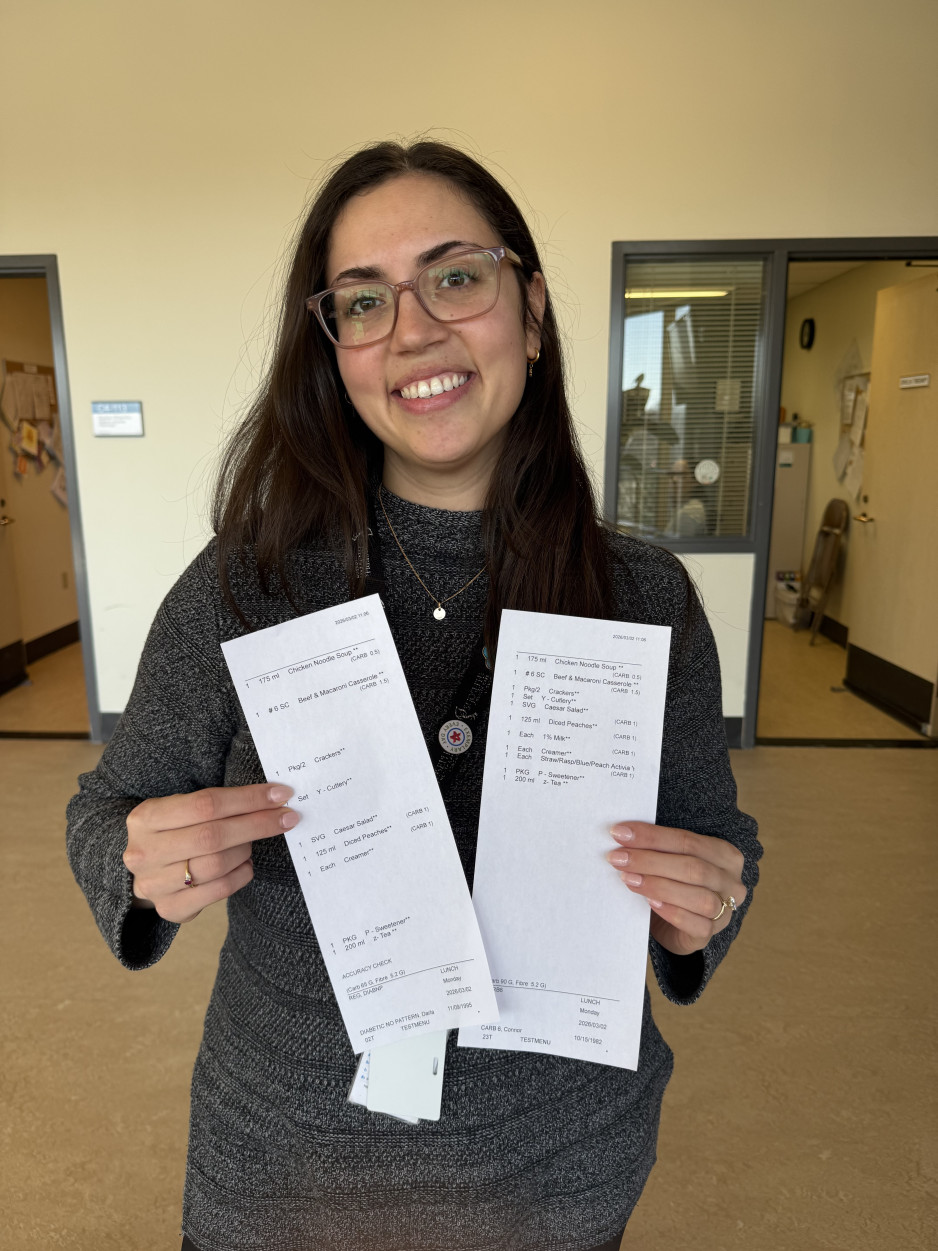
“By the time the meal arrives, many patients may no longer remember the carb count they selected, making it difficult to measure and adjust insulin with insulin pumps,” says dietitian Lindsay Vanderspank.
Adding the information directly to the meal ticket on the tray when the meal is delivered ensures patients have the details right in front of them when they need it most—at mealtime.
For patients who already rely on carb counting, that can make a big difference.
“For some people who regularly count carbohydrates, not knowing can actually be stressful,” says Jorgensen. “Having that information readily available helps them stick to their usual routine.”
Learning while in hospital
The initiative also creates an opportunity for patients newly diagnosed with diabetes.
Nutrition labels can be confusing at first, with multiple numbers and nutrients listed. Dietitians often start by focusing on one key concept: total carbohydrates.
“When you look at a food label, you focus on the total carbohydrates and subtract the fiber,” says Jorgensen. “Sugar is listed separately, but it’s already included in the total carbohydrates.”
To avoid overwhelming patients, dietitians introduce carb counting gradually.
“There’s a lot of information on a nutrition label,” Langley explains. “When someone is just starting to learn, we emphasize the carbohydrates first rather than asking them to look at everything at once.”
A practical approach to eating well
Carb counting is only one way to manage diabetes—and it isn’t for everyone.
“It can be work,” says Langley. “People have to think about it every day at every meal. Over time it may become more natural, but everyone manages their diabetes differently.”
For those who prefer a simpler approach, dietitians often recommend the balanced plate method:
- Half the plate: non-starchy vegetables
- One quarter: carbohydrate foods (such as rice, pasta or potatoes)
- One quarter: protein foods
Protein can also help slow the absorption of carbohydrates, helping keep blood sugar levels steadier.
Dietitians also encourage patients to limit sugary beverages like juice or pop and choose water or milk more often.
In the hospital, small changes can make a meaningful difference in how patients manage their health.
By adding carb counts to meal trays, St. Joseph’s is making it easier for patients to make informed choices in the moment—whether they’ve been managing diabetes for years or are just beginning to learn.