


Making every entrance easier: the wheelchair locator role at St. Joseph’s
Image
Image
For many patients, entering a hospital isn’t easy. For those facing additional barriers, that experience can come with even more anxiety.
When Volunteer Services manager Tracy Drenth recognized the need for easily accessible wheelchairs at our entrances, action was taken and the wheelchair locator volunteer role was created.

“Post-COVID recovery as patient volumes returned, we saw a need to better support our patients and become more accessible. That’s when we built the role and began screening for the position,” shares Drenth.
Wheelchairs are often left across different hallways and departments often leaving entrances empty or with limited chairs for patients who may need them. The wheelchair locator role was designed to keep each entrance stocked so that patients and staff know where the chairs are exactly when they need them.
Volunteer Kyri was chosen for the role and has quickly expanded its impact. What started as a once-a-week position has grown into a four-day-a-week consistent role.
With a strong sense of direction and a natural eagerness to support patient care, Kyri has made the role his own. He ensures each entrance remains well stocked, while also serving as a friendly and reliable presence, helping patients navigate their way through the building.
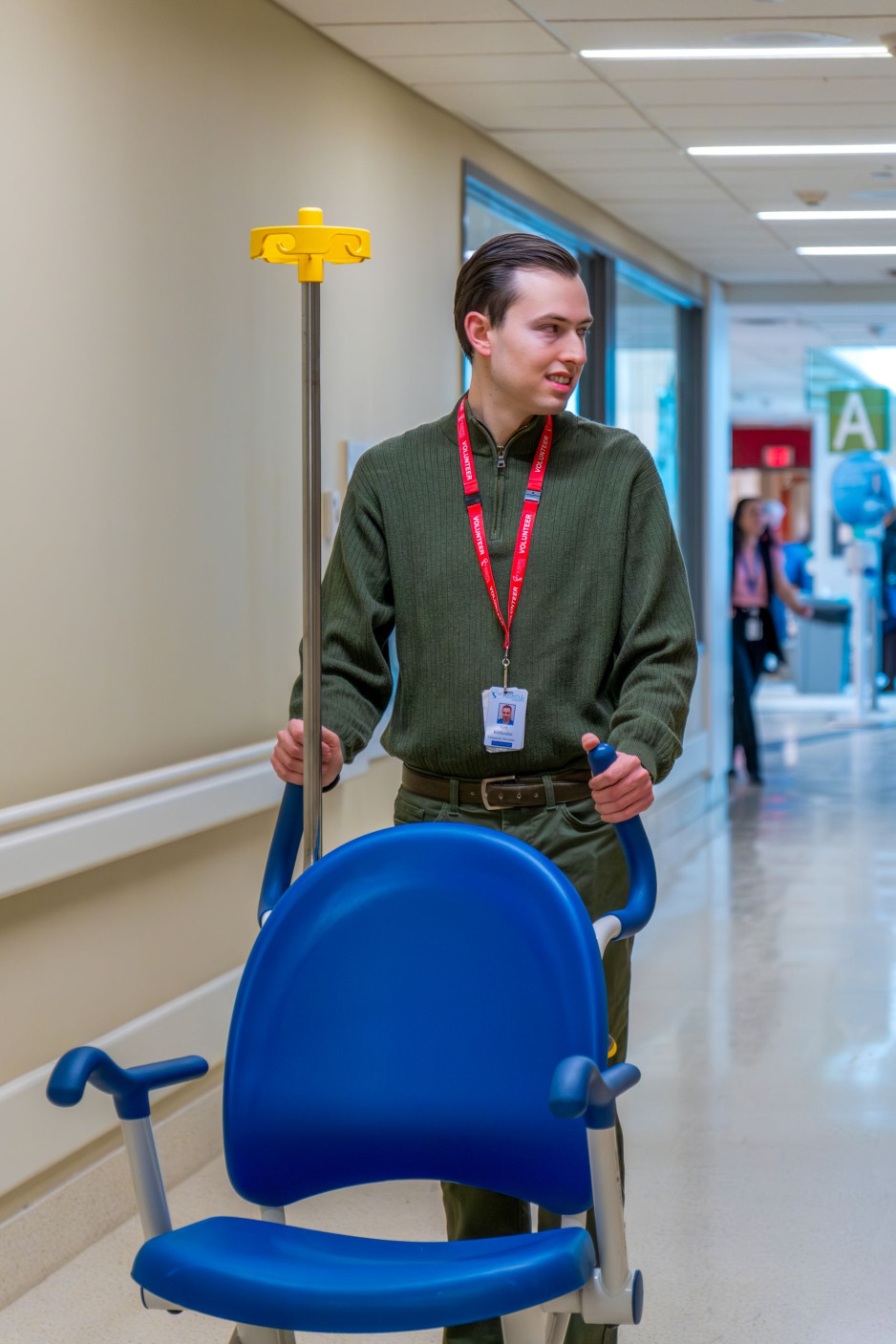
“I collect and bring back at least 40 chairs each shift,” says Kyri. “I love exactly what I do and I get my steps in.”
Vanessa Harrigan, clinical manager in the Urgent Care Centre (UCC) at St. Joseph’s Hospital, has seen firsthand the difference this role makes and just how supported patients feel when they can easily find what they need upon arrival.
“His work has a direct impact on patient flow and safety,” says Harrigan, “With lines to get into the UCC, patients can find themselves standing and waiting. Quick access to a wheelchair provides critical support for those who need it.
Harrigan also noted that during the winter months, there is an uptick in falls and slips—creating a higher demand for wheelchairs.
The impact of the wheelchair locator role is also felt among staff.
“We are often far too busy to go searching for wheelchairs. In Urgent Care, it’s not feasible to run around the building while we have a constant flow of patients. Having our entrance stocked gives our staff peace of mind and supports how efficiently we can care for patients,” shares Harrigan.
Now, the UCC entrance has become one of the areas where wheelchairs are consistently available.
“I used to receive multiple complaints and frustrations. Since the role became consistent, I haven’t received one. It has made a huge impact on how we care for our patients, and we are incredibly grateful for the volunteer’s dedication to supporting both patients and staff.”
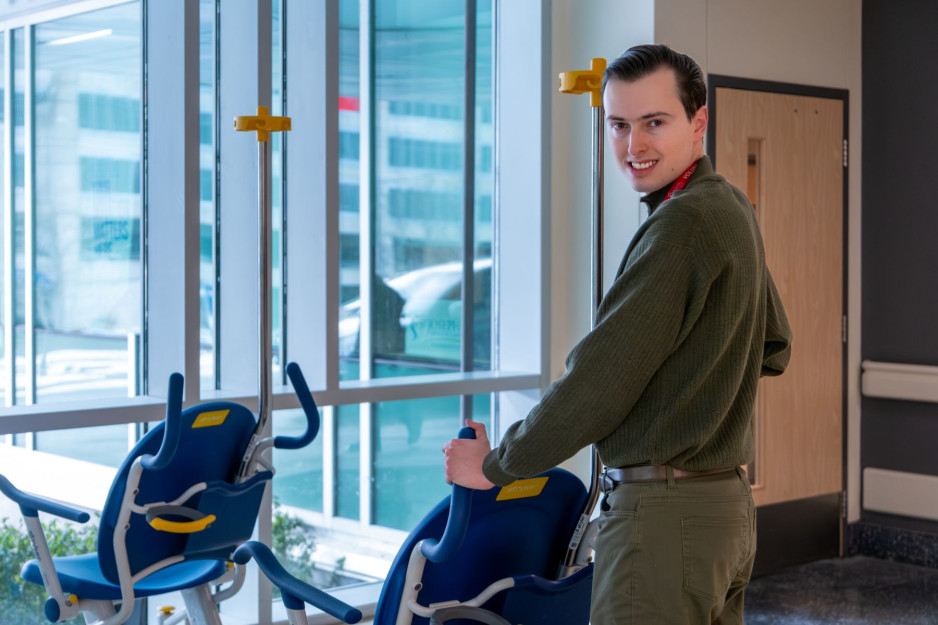
Drenth knew there was a need for the role, but when Kyri went on vacation, she saw just how meaningful the role was.
“When Kyri is away, we often get calls asking about the wheelchairs—and about him. It confirms there’s a real need for this role and that it’s making a meaningful difference in patient care,” shares Tracy.
Despite not being a clinical department, Volunteer Services plays a role in supporting patient care. By creating roles like the Wheelchair Locator, they bring our mission, vision and values to life in meaningful ways.
At St. Joseph’s Health Care London, we continue to take steps to ensure that every patient’s journey through our hospital is met with ease and support.