


A deep dive inside the human body
Image
Image
First-in-Canada research PET/MRI helps explore what makes us tick
If you were to travel deep inside the human body, you would be able to see the hum of activity inside each tiny cell and the electrical conversation between them. You could visualize miniscule details of the soft tissue that makes you, you.
While it may sound like an episode of The Magic School Bus, you don’t need Miss Frizzle or a miniature mode of transportation to get there – you “just” need a team of highly qualified professionals and a PET/MRI imaging scanner.
Researchers are seeing the human body more clearly than ever, thanks to a transformative new imaging technology at Lawson Research Institute (Lawson) of St. Joseph’s Health Care London (St. Joseph’s).
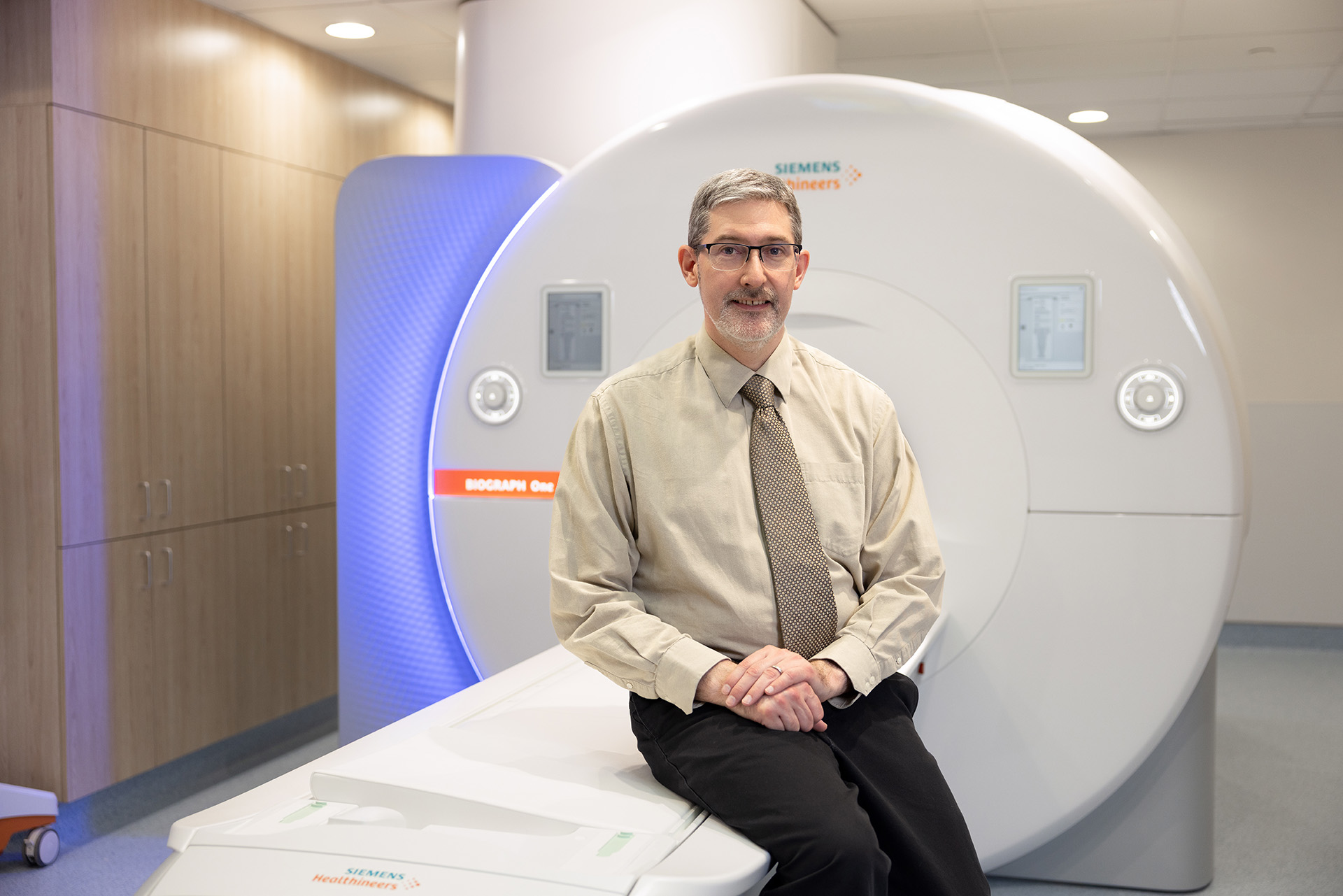
This first-in-Canada Siemens BIOGRAPH One PET/MRI scanner combines two imaging technologies with more detection power and sensitivity than any previous machine (PET is short for positron emission tomography, and MRI is magnetic resonance imaging – both the gold standard in advanced imaging).
With its rhythmic whoosh-whoosh while at rest, and a cacophony of clunks, clicks and beeps while at work, this $8-million machine enables discovery that until now has been the domain of science-fiction writers and dreamers.
“We are going to combine MRI and PET in never-before-seen ways to transform the way we diagnose and treat patients,” says St. Joseph’s Lawson scientist Jean Théberge, PhD, certified clinical Medical Physicist specialized in MRI.
What’s new
Lawson was first in Canada, in 2012, to embrace PET/MRI technology at St. Joseph’s Hospital. This new-generation, research-dedicated machine enables a higher sensitivity for the radioactive tracers – contrast agents that bind with receptors on cells to show where specific metabolism is occurring and with what intensity – used in imaging, allowing researchers to see smaller things at a higher resolution. In medicine, early detection is often key for treatment and better patient outcomes. The new PET/MRI can pinpoint, with unparalleled accuracy, issues in the human body that are too small to detect conventionally.
Imagine the advancements – and the potential new treatment pathways – if diagnosticians knew of microbleeds in the brain after a stroke, or very early metastasizing of cancer, or even the chemical process in the brain that distinguishes depression from a mood disorder.
 Why it matters
The ability to see deeper and more clearly into the human body opens researchers up to learn more about how we function and how disease, pain and injury affect the body.
As a research tool, the PET/MRI allows for faster, more accurate understanding and diagnoses of:
- Chronic pain and musculoskeletal Injury
- Mental health and brain-behaviour pathways
- Cardiovascular disease
- Inflammation and neuroinflammation diseases
- Cancer
How it works
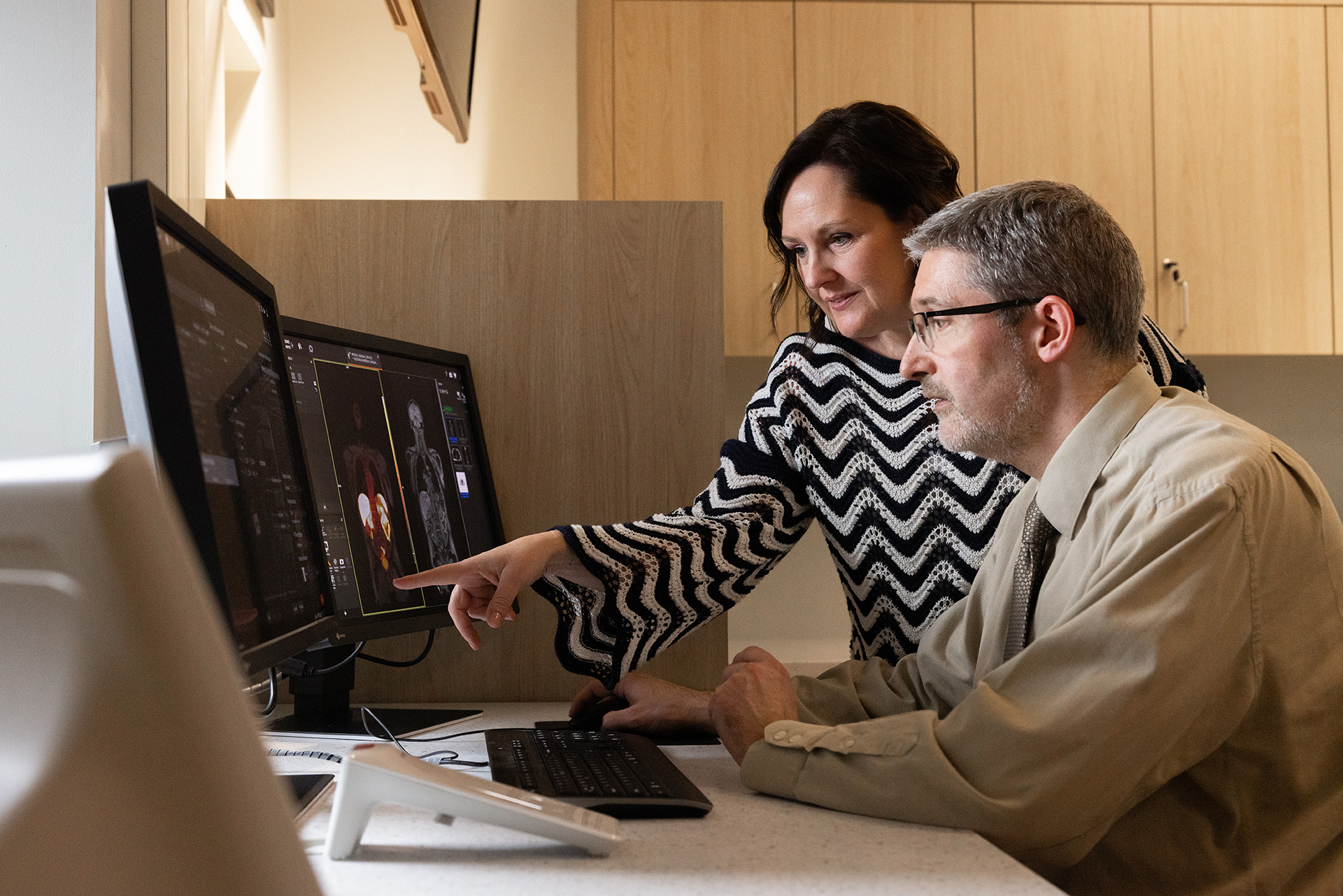
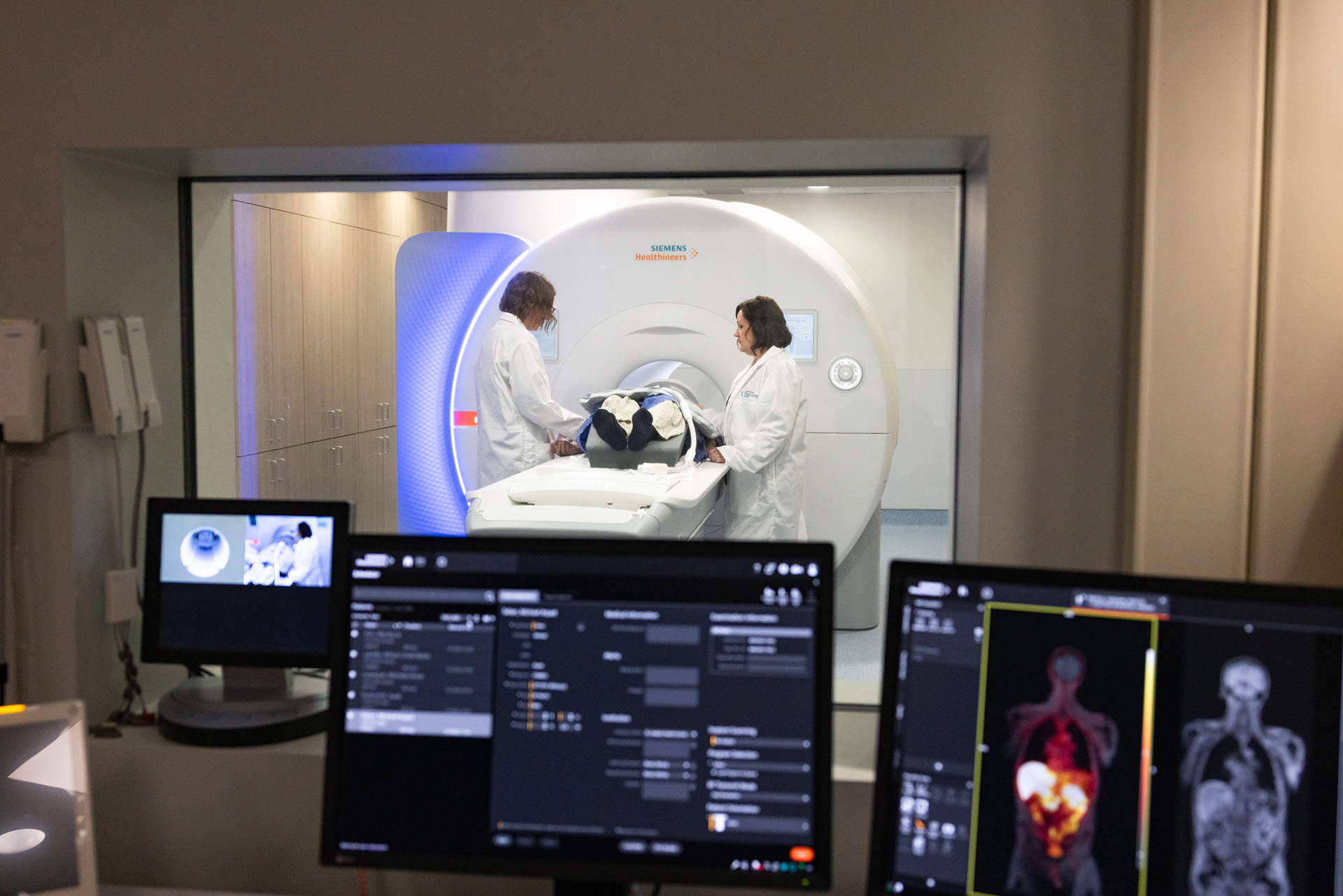
Picture a laser tripwire protecting gemstones in a classic heist movie – that’s a bit like the workings of a PET/MRI scanner. The PET portion of the machine detects gamma rays, or light, from a radiotracer administered to the patient. These rays intersect, pinpointing specific areas in the body as hot spots. The more light emitted from specific areas, the higher the metabolic activity. This allows researchers to see biochemical changes happening in the body, whether cancer, brain activity or inflammation, making visible what was once invisible. At the same time, the MRI scanner is building detailed images of the soft tissue in the body. Working together, the PET and MRI give researchers a comprehensive view of both the functional and structural activity in your body.
Why St. Joseph’s is the perfect host site
St. Joseph’s is a world leader in imaging research and discovery, with numerous health care “firsts”. As Canada’s first centre of excellence in molecular imaging and theranostics, we have the technology, expertise, training and scientific research support that sparks innovation and translates to improved patient care.
Customized radiotracers used in PET/MRI scans to detect different diseases are also created in-house at Lawson’s Nordal Cyclotron & PET Radiochemistry Facility. Says Théberge, “Not only do we have a strong history of work in our facility, we can also develop new tracers with the same rigor, and similar process, as you develop something like a pharmaceutical drug.”
Lawson also attracts world-class scientists and what the industry refers to as ‘highly qualified personnel’, individuals specialized in both MRI technology and nuclear medicine.
How it got here
“The human cost of workplace injury is enormous,” says Jeff Lang, WSIB President and CEO. “We're proud to invest in research that transforms how we diagnose and treat workplace injuries and illness for Ontarians – and this PET/MRI enables some of that game-changing work to take place."
Acquiring the BIOGRAPH One PET/MRI was made possible through a $65.75-million investment from the Workplace Safety and Insurance Board (WSIB), in partnership with the WorkSafe Ontario Fund.
The landmark investment launched Lawson’s game-changing Workplace Injury Research Network, which brings people, technology and science-backed innovation together to solve occupational injury and illness. Through this work, the PET/MRI will enable research into rapid and accurate diagnostics of mental health disorders, chronic pain, musculoskeletal conditions and more.
This investment from the WSIB is just one example of how donor and partnership support enable groundbreaking research at St. Joseph’s. “Having technology like the new PET/MRI here at Lawson simply would not be possible without the generosity of partners like the WSIB,” says St. Joseph’s Health Care Foundation President and CEO Michelle Campbell. “This investment will pioneer medical advancements to help create better health care and a healthier community as a result.”
Introducing Canada’s first Siemens BIOGRAPH One PET/MRI
Introducing a new era of imaging at Lawson with Canada’s first Siemens BIOGRAPH One PET/MRI. This research-focused technology takes a deep dive into the human body, to understand, diagnose and treat some of the world’s biggest health challenges. Lawson’s PET/MRI was made possible through an investment from the WSIB, in partnership with the WorkSafe Ontario Fund.
