

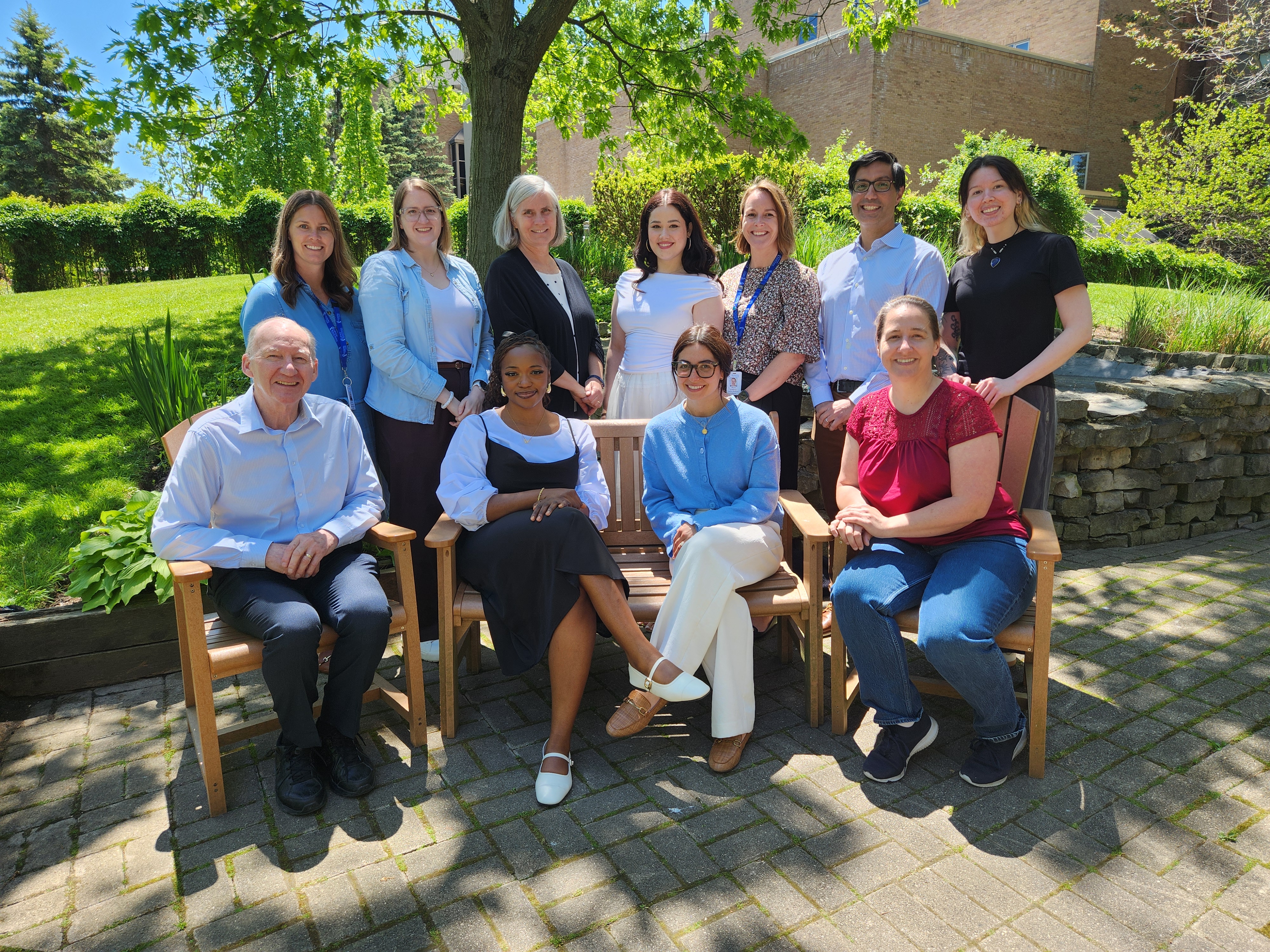
The Cognitive Clinical Research Group at Lawson is helping lead exciting progress in Alzheimer’s care, bringing renewed hope to patients and families across Southwestern Ontario.
The work is driven by a large multi-disciplinary team that includes research coordinators, assistants, nurses, and scientists, all of whom play an essential role in advancing care and research. Together, they support 18 studies ranging from novel Alzheimer’s treatments to large studies that look at the effect of memory decline over time, as well as research exploring the impact of blood pressure and blood flow on brain health. Through this coordinated effort, the team is helping to improve diagnosis, expand access to innovation and support better quality of life for patients and families.
A key reason for the group’s success is the strength of its research team and the collaborative networks it has built. In addition to the expertise of its own staff, the group works closely with St. Joseph’s Hospital’s Imaging Department, using the PET scanner, with London Health Sciences Centre to advance molecular diagnostics, and with collaborators at Western University to explore how lifestyle medicine can be integrated into Alzheimer’s treatment. This team-based approach allows the group to offer patients and families highly specialized care and research opportunities while creating an environment where patients and families feel supported, informed and valued. Their shared dedication, expertise and strong partnerships are an important part of what sets the team apart.
For Kayla Vander Ploeg, research operations lead, the work is especially inspiring because of the momentum now being seen in the field.
“For the first time in a long time, there is hope for disease modification,” says Vander Ploeg. The group’s specialist area is the detection and treatment of Alzheimer’s disease and new advances are helping make that work more precise. It is important to be tested and diagnosed early so that accurate information on health status can be shared as well as what support is available.
Through molecular diagnostics, including blood testing and cerebrospinal fluid analysis, the team can provide more accurate estimates of amyloid and tau burden, two of the main proteins involved in Alzheimer’s disease. As new biomarkers and disease-modifying therapies emerge, the team is helping make earlier, more accurate diagnosis and treatment options more accessible and equitable in Southwestern Ontario.
The impact of this work extends far beyond the research setting. Clinical trials can offer patients and families greater support, stronger connections to care and the opportunity to contribute to future advances. Just as important, patients in London and the surrounding region do not need to travel elsewhere to access leading Alzheimer’s expertise. With one of the largest Alzheimer’s research networks in the country, the group can provide most care, testing and research opportunities locally.
“If you are worried about memory or your future risk of developing Alzheimer’s disease, please come see us so that we can help you,” says Dr. Jaspreet Bhangu, Lawson scientist and member of the team. Even when participants do not have immediate personal benefit, their involvement helps shape future therapies, care pathways and earlier interventions for others.
A major strength of the group’s work is its close integration with clinical care through St. Joseph’s Health Care London. Working in the same environment as investigators and patients supports close collaboration, helps identify individuals who may benefit from clinical trials earlier and strengthens continuity of care.
By combining clinical trials, observational studies, educational initiatives and clinical partnerships, the Cognitive Clinical Research Group is helping shape a new chapter in Alzheimer’s care, one defined by collaboration, innovation and a deep commitment to improving the lives of patients and families. For those facing questions about memory loss or future risk, that means access to leading expertise, research opportunities and support close to home.