


When 'dementia' symptoms...aren't
Building pathways to treat patients with normal pressure hydrocephalus
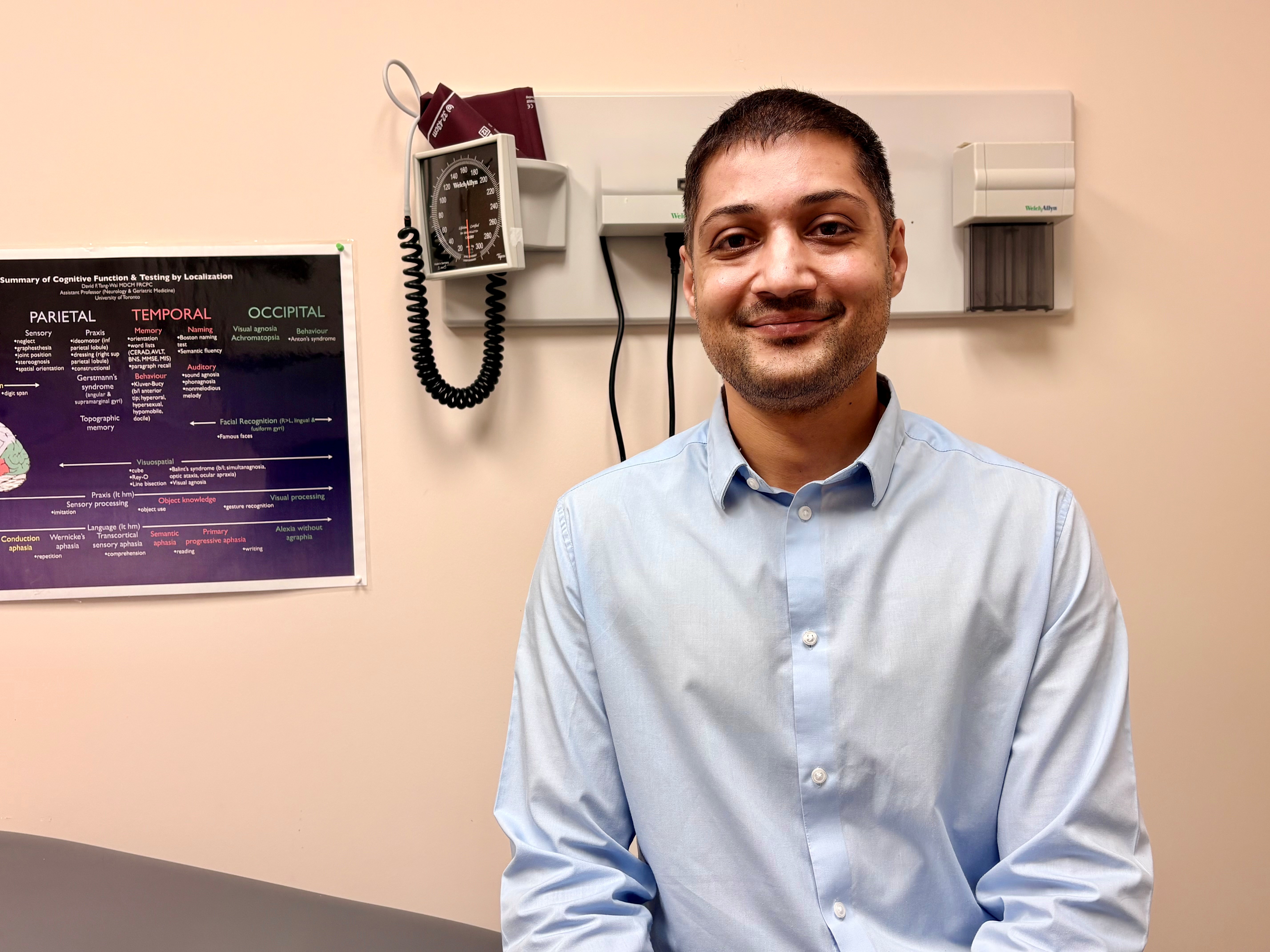 When an older adult experiences changes in gait, balance, or cognition, families often fear the worst: Alzheimer's disease or some other form of irreversible dementia.
But in some cases, the underlying cause may be something entirely different - and potentially treatable.
Dr. Ameya Patwardhan, a neurologist at St. Joseph's Health Care London (St. Joseph's), clinician scientist with Lawson Research Institute (Lawson) and Associate Professor at Western University is working to ensure those patients get the care they need.
His research focuses on normal pressure hydrocephalus (NPH), a complex neurological condition caused by abnormal accumulation of cerebrospinal fluid in the brain. While NPH can affect mobility, cognition and daily functioning, carefully selected patients can benefit from a "shunt" surgery to divert excess fluid away from the brain.
"NPH represents an important opportunity in medicine because it is one of the few conditions that can mimic dementia yet may respond to treatment," says Patwardhan.
What's new
Patwardhan recently received ethics approval to create a patient registry for people at different stages of NPH. The registry will follow patients over time, helping researchers better understand how the condition changes, why some people respond differently to treatment and what information may help guide future care.
Patwardhan is also working to develop a comprehensive regional program dedicated to the condition. The goal is to bring together expertise in neurology, geriatrics, neurosurgery, rehabilitation and imaging so that patients can receive more coordinated assessment and care closer to home.
The work builds on existing strengths at St. Joseph's including specialized care in aging, mobility and neurological care.
Patwardhan is also collaborating with local and national experts to develop clinical pathways that make assessment easier to navigate, support clearer conversations with patients and families and help identify who may benefit most from surgery.
Together, these efforts reflect Lawson's role in advancing applied, patient-centred research that improved diagnosis and care pathways closer to home.
Why it's complicated
Identifying and treating the condition is rarely straightforward, as it can mimic or coexist with other neurological disorders.
Diagnosis involves integration of scan findings and clinical examination, usually by a neurologist or neurosurgeon; a lumbar puncture to drain cerebrospinal fluid; and assessment (called Tap testing) for temporary improvement.
Patwardhan says the condition is under-recognized yet highly treatable. Imaging findings precede clinical symptoms. Many NPH cases are diagnosed as Alzheimer's and vice versa; sometimes both may co-occur. Even when both Alzheimer's and NPH are present, shunt surgery may improve symptoms. A key question driving Patwardhan's work is how NPH interacts with other brain conditions, such as Alzheimer's disease. In a recent Movement Disorders Review paper, Patwardhan examined how Alzheimer's-related changes may affect prognosis after shunt surgery. The work highlights the important of looking at each patient's full health picture when discussing treatment options.
Why it matters
Earlier diagnosis could help patients gain access to treatment sooner, while better prediction tools could help physicians provide clearer guidance about the potential risks and benefits of surgery.
Just as important, patients in Southwestern Ontario can access NPH expertise in London without needing to travel to larger centre elsewhere in Canada.
Patwardhan's research and clinical focus remains on improving care and supporting treatment decisions that are meaningful for patients and families.
What's next
An NPH diagnosis is "not a dead end," he says. There are so many options we can talk about." Through clinical expertise, collaborative partnerships and innovative research, he hopes to bring greater clarity to a misunderstood condition and help more patients receive the answers and care they need.
His message is a hopeful one for patients, families and clinicians: asking plenty of questions could lead to unconventional answers and those answers could lead to unanticipated treatment options improving patient's quality of life.
Clinicians and care teams interested in learning more about the emerging NPH program or patient registry can connect with Dr. Patwardhan's team.