


After a career spent recognizing others, it's Dr. Cooper's turn
For years, Dr. Paul Cooper helped make sure others were recognized.
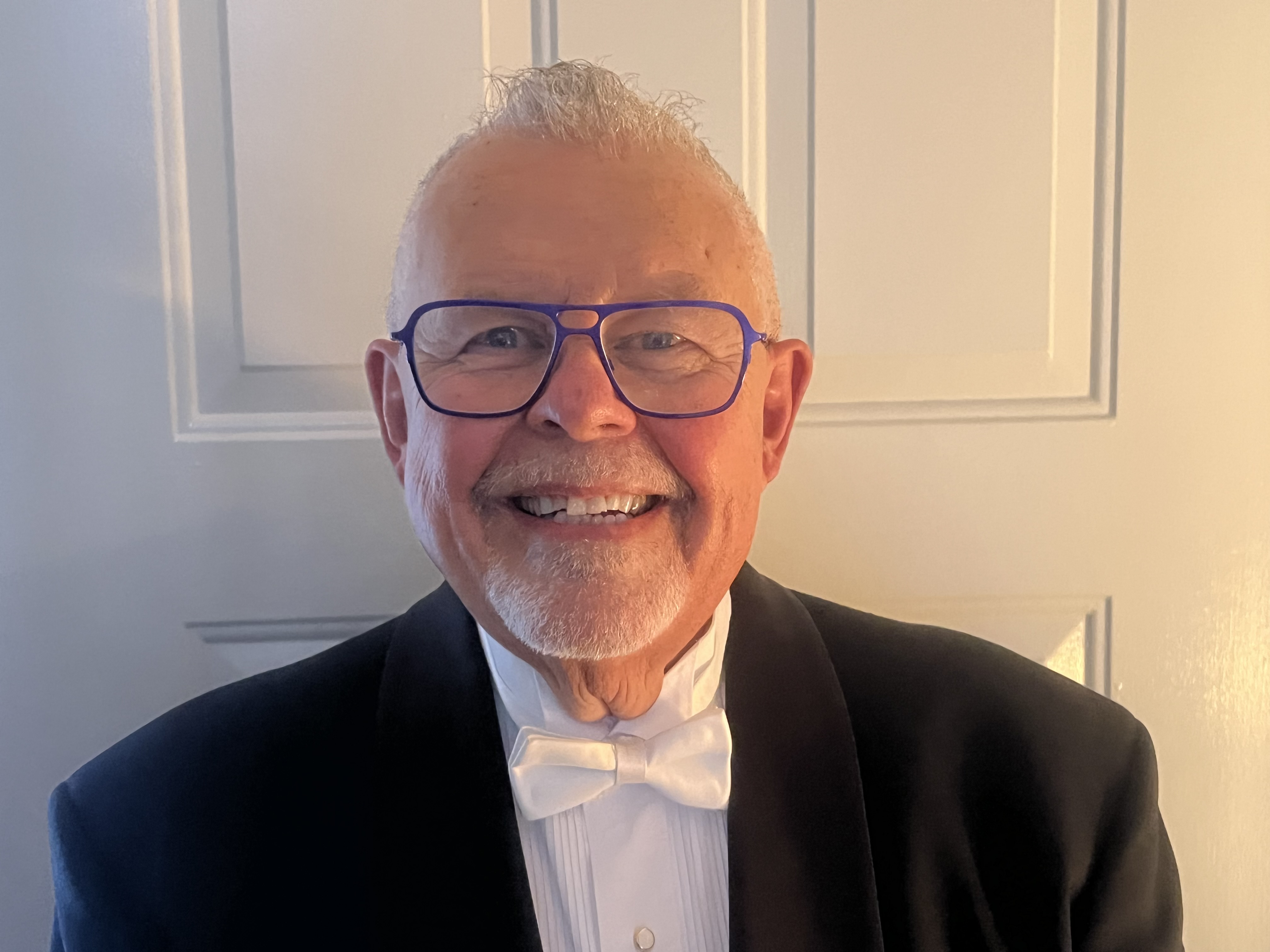 During his years of leadership at St. Joseph's Health Care London (St. Joseph's), he helped expand the organization's service awards program to include physicians, creating new opportunities to celebrate colleagues whose years of service and contributions might otherwise have gone unrecognized.
The change reflected something Cooper believed deeply: people deserved to know that their work mattered. Sometimes, that meant creating new opportunities for recognition. Other times, it meant sitting down to sign birthday and Christmas cards for physicians across the organization.
Now, after decades spent celebrating and supporting the people around him, it's Cooper's turn. This year, he is celebrating 45 years of service with St. Joseph's; though his connection to the organization began even earlier.
Throughout those four and a half decades, Cooper witnessed and helped shape some of the most significant changes in the organization's history, from the transformation of laboratory medicine to the arrival of the first MRI unit at St. Joseph's.
But before any of that, he was a medical student walking the hospital's halls, imagining where his career might lead.
Where it all began
Cooper first walked the halls of St. Joseph's as a Western University medical student in the early 1970s.
It was during his medicine rotation at St. Joseph's that he began thinking seriously about where his own career might take him. He was introduced to the emerging field of neuroendocrinology, an interest that took him to Harvard University in Boston, Massachusetts, for about two years and a half years.
It wasn't long before St. Joseph's wanted him back. In January 1981, Cooper returned to London, beginning what would become 45 years of service with the organization.
A front-row seat to change
Over the decades that followed, both Cooper's career and St. Joseph's continued to evolve.
His work included clinical and leadership roles spanning neurology, endocrinology and internal medicine. He eventually moved into a senior leadership role as Vice President, Medical Affairs and Women’s Health, putting him at the table during a period of significant restructuring across St. Joseph's.
As the organization was undergoing change, his portfolio expanded to include laboratory medicine and diagnostic imaging.
At the time, laboratory services at St. Joseph's operated through four separate departments: Microbiology and Virology, Biochemistry, Pathology and Hematology. Cooper helped lead their integration into a unified Department of Pathology and Laboratory Medicine, also known as PaLM.
"St. Joseph's was the first to adopt this model and one that would eventually spread across London," says Cooper. Restructuring also led to the creation of a core laboratory that handled routine and urgent blood work, while specialty laboratories focused on more complex testing.
"We wanted to change the way laboratory medicine was being done at St. Joseph's before restructuring took place," adds Cooper.
Cooper was also heavily involved in the process of bringing the first MRI unit to St. Joseph's, at a time when the technology was still new to Canadian health care.
"I think by one or two days, we led by having the first functional MRI unit in Canada," he says. It would become, in his words, one of the "stars in the crown of St. Joseph's” and part of the organization's longstanding strength in medical imaging.
What stays with you
The St. Joseph's Cooper knows today, is very different from the one he first encountered as a medical student. The Sisters of St. Joseph, who once led wards and held senior positions across the hospital, gradually became less present in its day-to-day operations.
"Their legacy, their ethos and the way they treated people persisted long after," he adds. That approach to caring for people is something he carried with him.
Ask Cooper what advice he would give the next generation of health care workers and he immediately mentions the people working alongside him.
"One of the best things about my career has been my interaction with my colleagues," he says.
Cooper recalls a close-knit Department of Medicine at St. Joseph's, where colleagues gathered for Christmas parties and summer barbecues and knew one another's spouses, children and lives outside the hospital. That closeness, he says, mattered inside the hospital too.
"That collegiality spills over into the way we practice," says Cooper. "The support of good colleagues is, I think, one of the biggest and most important things in medicine and in my career."
His second piece of advice is simple: take your vacation days.
Time away often provided him with the opportunity to clear his head, recharge and think about something other than work- something he believes is essential in a profession centred on caring for people during some of the most difficult moments of their lives.
"We are really playing a servant role as health care workers," shares Cooper. "We're looking after people at a time when they're very often at their weakest, their most stressed."
It is another lesson he traces back to the Sisters of St. Joseph and their commitment to caring for the sick and less fortunate.
After 45 years with St. Joseph's, it seems fitting that someone who spent so much of his career making sure others felt valued and recognized is now having a moment of his own.