


"A real strength for living" Patients benefit from Spiritual Care services at Southwest Centre
Image
Image
Each week at St. Joseph’s Southwest Centre for Forensic Mental Health Care (Southwest Centre), between 30 and 50 per cent of inpatients choose to take part in Spiritual Care programming. Chaplain Stephen Yeo says the numbers point to a need that runs deep
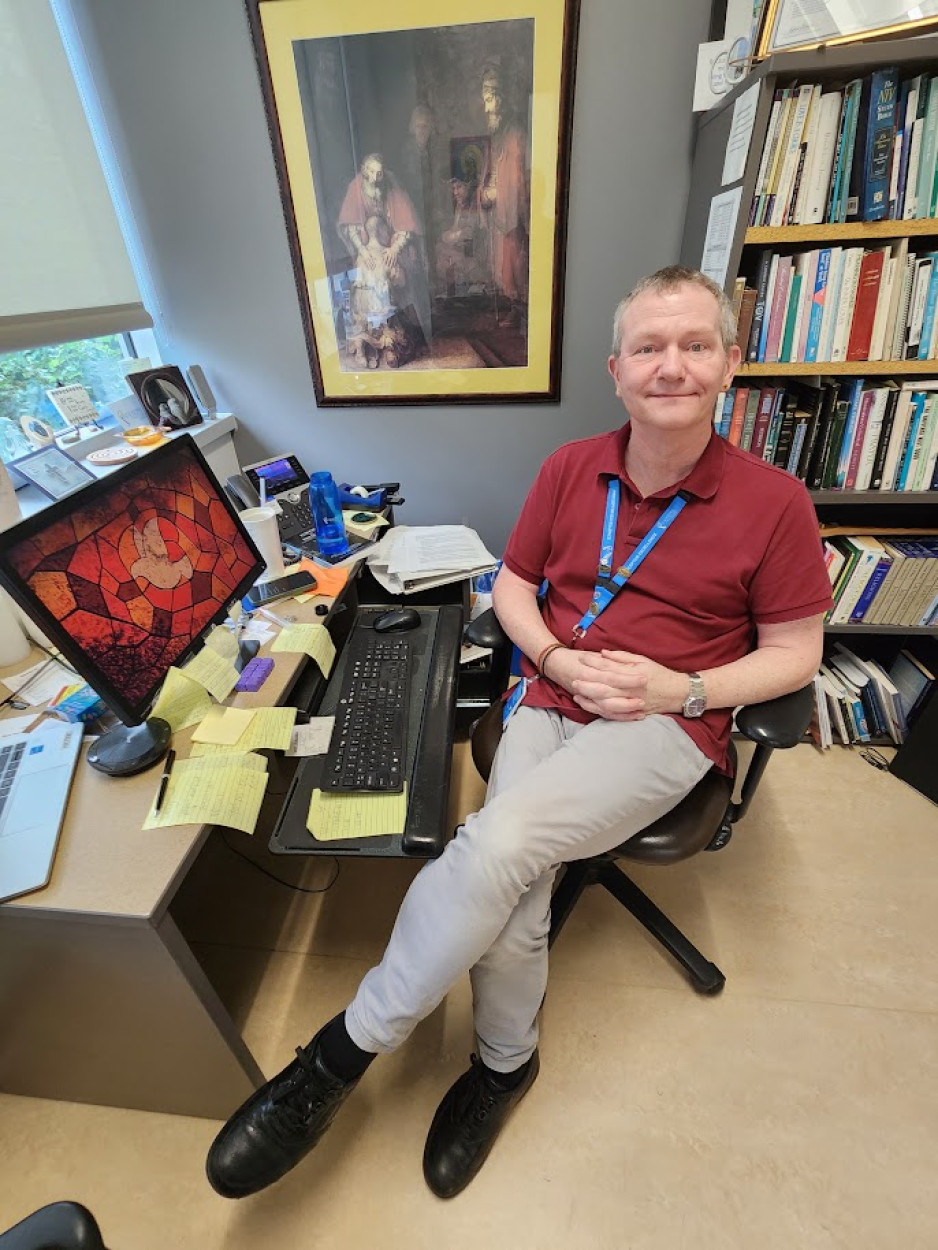
Years ago, during an evening chapel service for patients held at Southwest Centre, a volunteer from the community began the service by saying he was there to pray
on behalf of “all these wonderful people,” so they would know they were loved.
Afterward, Stephen Yeo, Spiritual Care supervisor-educator at Southwest Centre, rode the elevator with one of the patients on the way back to his unit. As he often does, he asked how the service had been for him.
"He looked at me and said, 'He called us wonderful people,'" Yeo recalls. "Usually, patients will say the music was nice, or the reflection was good. For him, it was that someone called them wonderful. I don't know if our patients are ever really called wonderful, but they are wonderful people. They really are. And that was something he was taking back to his room with him."
It's a moment that has stayed with Yeo for a long time and it helps explain something he has been watching closely for the past year and a half: week after week, a good percentage of patients are choosing to engage in Spiritual Care programming.
A consistent appetite
Yeo started tracking group participation about 18 months ago. He'd noticed, anecdotally, that turnout was consistently strong.
"It really seemed like people had an appetite for what we were offering," he says.
The numbers backed him up. In a typical week, somewhere between 30 and 50 per cent of patients in the 88-bed specialized forensic psychiatric facility take part in spirituality programming. Some weeks it climbs even higher and it hasn't tapered off
."These numbers really aren't going away," Yeo adds. "They're consistent. I think they're telling us something about the needs of our population."
Meeting patients where they are
Spiritual Care services are available to every inpatient at Southwest Centre, offered as early as their arrival in the Assessment Program and continuing through treatment and rehabilitation. For forensic patients who have been found either not criminally responsible or unfit to stand trial due to a mental illness, that journey can often last between three to five years.
Yeo describes Spiritual Care services as a net that reaches out to support people as they cope with hospitalization and the effects of their illness, with a focus on some of the bigger questions: meaning, purpose and how to rebuild a life.
Patients can meet one-to-one with a chaplain or a spiritual care student, join a weekly spirituality group, an occasional labyrinth walk, or attend an evening chapel service led by community volunteers from a range of faith traditions. Some patients do it all. Others choose what is meaningful to them, such as a request for prayers before an Ontario Review Board hearing to help with calming and grounding.
For patients who have a particular faith, the team works to offer specific rituals and supports where it can, but many who take part don't identify with any religion at all. The group explores themes everyone can relate to, such as hope, strength and courage.
"I've had people come to group and tell me, 'I'm a spiritual atheist, but I like the group, I like the discussions, I feel really good here,'" says Yeo. "And I'm like, hey, whatever works for you."
There are no strings attached. Yeo's invitation is deliberately low pressure. "I'll say, you don't have to say yes to anything right now. But if it's something you'd like to do, come on down at this time," he says. "You make the call."
A presence on every unit
Part of the story goes back to 2015. Yeo, who is also an educator for Spiritual Care students on placements at Southwest Centre year-round, changed how placements work at the hospital. Instead of spreading each student across two or three units, he tried embedding one student on one unit, full-time, much like a social worker, recreation therapist or occupational therapist.
"I wondered what kind of effect that would have," he says. "How would it be perceived?"
The team set out to find out. Their 2022 perception study, published in the Journal of Pastoral Care & Counseling[RS1.1][SY1.2], found that both staff and patients saw the embedded model in a very positive light. It also showed that the more present Spiritual Care was on a unit, the more patients engaged with the program.
Yeo credits the training students receive in listening without judgment, sometimes called ‘beneficent attentiveness’ along with access. "When patients and staff know they can reach someone reasonably quickly, that makes a big difference," adds Yeo.
Healthy spirituality matters
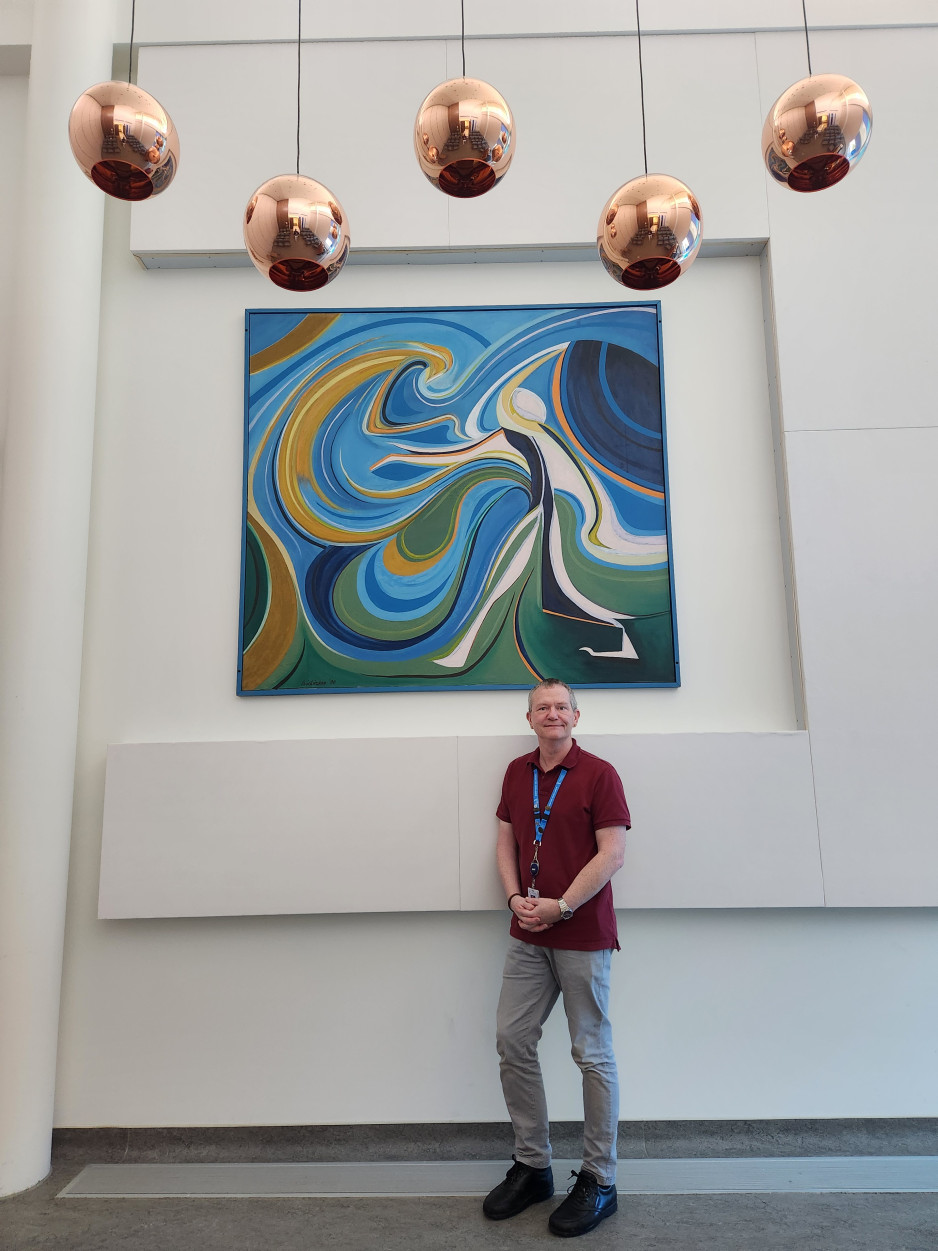
After more than 22 years working in a forensic mental health care facility, Yeo says he still can't claim to know what it's like to be a forensic patient. But he has seen how much many of them carry, including profound loss and for some, a sense of shame and regret.
"Healthy spirituality connects at a human level and says to patients, you matter. You still have value, you still have worth," he says. "Many of our patients have often hit rock bottom when it comes to feeling good about themselves. We're trying to speak to that and to let them know, we're not here to judge."
To Yeo, steady participation is a sign that alongside medication and other clinical treatments, patients may be also seeking something deeper. "People are hungry for many ways to cope with being in hospital," he says. "To make sense of things, to find meaning and purpose, to rebuild a life narrative. Spiritual health is really a thing people are hungry for."
His hope is that what patients find at Southwest Centre, they take with them throughout life’s journey, even after leaving the hospital. For some, that could mean joining a faith or spiritual community. For others, it's simply keeping up the practices that have helped them cope. Isolation can be a real danger for many patients in the forensic system.
"I hope they come away realizing that spirituality is about life, in the hospital and out of the hospital," he says. "That they will think to themselves: I can nurture it and take care of it, and it can be really meaningful to me. It's a real strength for living."
Living phoenixes
Asked what he has learned from his years alongside forensic patients, Yeo turns to the legend of the phoenix; the bird said to burst into flames after centuries of flight, only to rise again renewed from its own ashes. It's a symbol he feels people can relate to, whether they're religious or not.
"I believe I've met some living phoenixes in my work. Not many, but a few," he says. "People who have suffered an incalculable loss and who have risen up out of the ashes and come back to life in really meaningful ways. Spirituality played a huge part in that renewal."
He often comes back to the words of Viktor Frankl, the psychiatrist and Holocaust survivor who wrote Man's Search for Meaning. As Yeo puts it, Frankl believed that people are not destroyed by suffering, but by suffering without meaning.
"Our patients have suffered a lot, often long before they ever get to the hospital," Yeo says. "After 22 years, I still believe to my core that spirituality can help people find meaning in that suffering. And that makes a huge difference."