


New bone-density scanner improves patient access
Image
Image
St. Joseph’s second DXA machine reduces waitlist for osteoporosis diagnosis and enables cutting-edge research
In September, Shirley Van Waes broke a bone in her shoulder when she slipped and fell onto a concrete floor.
Almost as bad as the pain was being told the break might signal a fragility fracture; and that she might have to wait several months for a bone-density scan to confirm or rule out osteoporosis.
“None of this was on my radar,” the retired pharmacist says of the news. “Now it hangs over my head. If I have osteoporosis, I want to know so I can start treatment if it’s indicated.”
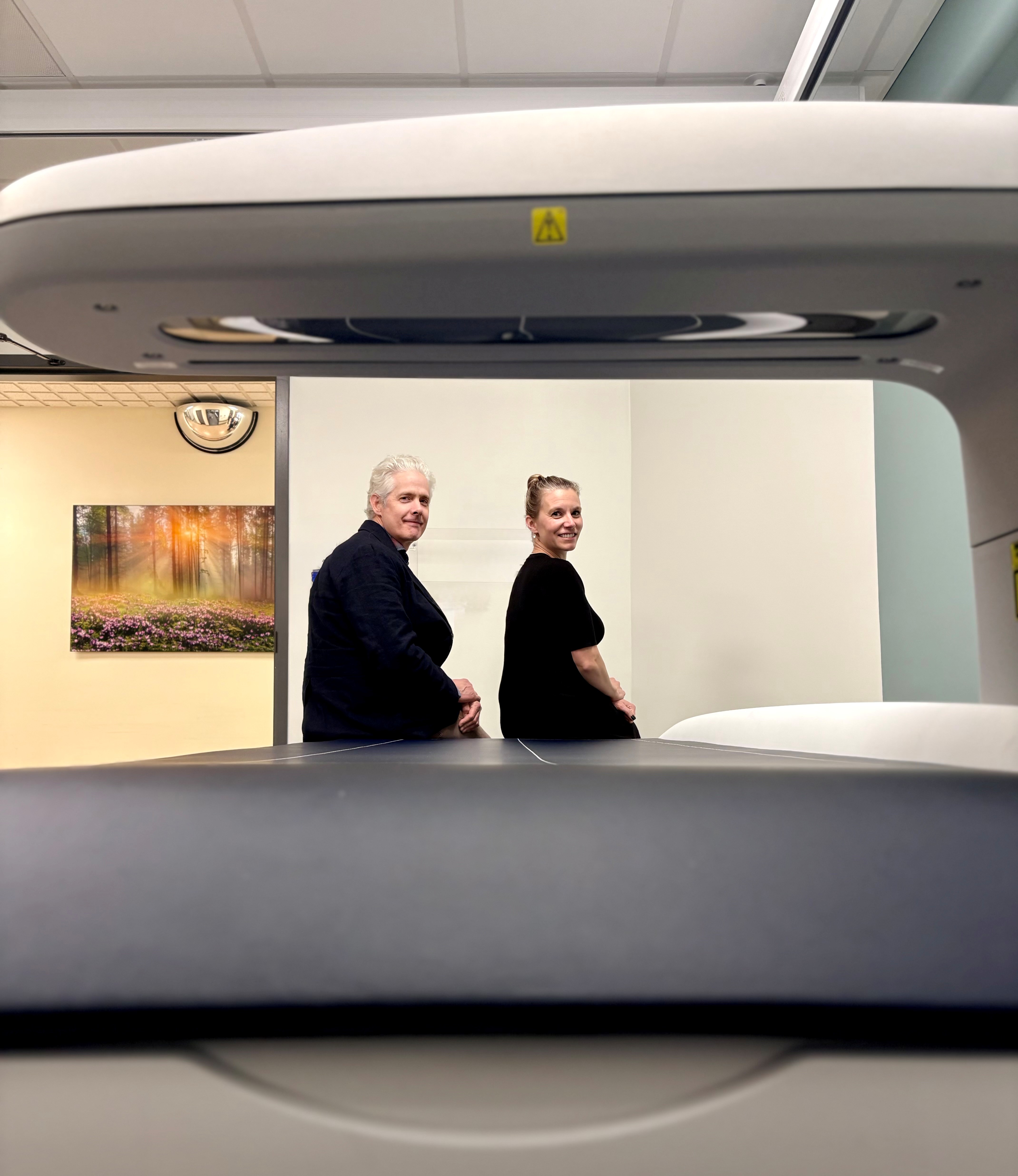
Then London geriatrician Dr. Jenny Thain told her the waitlist may soon shrink with the introduction of a new bone-density scanner at Parkwood Institute of St. Joseph’s Health Care London (St. Joseph’s).
Dual-energy X-ray Absorptiometry (DXA) technology is a low-dose x-ray machine that measures bone density and soft tissue such as muscle and fat.
Appointments are by referral from a primary-care provider.
St. Joseph’s Hospital was first in the city to acquire a DXA machine, although there are now others in London and the region. This latest acquisition, at Parkwood Institute, will reduce waitlists, improve accessibility for people with disabilities and enable groundbreaking research into patients’ risk of bone fractures.
The technology at Parkwood is especially valuable for inpatients with significant mobility impairments– people recovering from stroke or a spinal cord injury, for example – who might also need the body-lift system that’s part of the new suite.
Its purchase as a clinical and research tool was made by the Gray Centre for Mobility and Activity, a clinical-research program supported by a generous gift through the St. Joseph’s Health Care Foundation from philanthropists William and Lynne Gray.
Silent disease, major impact
“Osteoporosis is a silent disease, so a lot of people don’t know they have it until they have a fall resulting in a fracture,” says physiatrist Dr. Jamie Fleet, a researcher at The Gray Centre and St. Joseph’s Lawson Research Institute.
Thain notes that London hospitals admit more than 1,000 patients a year with fragility fractures, many of whom come to Parkwood Hospital for rehabilitation.
Osteoporosis Quick Facts
- As we age, bone mineral is gradually lost, making bones more likely to fracture.
- People older than 50 years old and people living with diabetes, stroke, spinal cord injury, or undergoing some cancer treatments may be at higher risk.
- More than 2.3 million Canadians are living with osteoporosis.
- At least 1 in 3 women and 1 in 5 men will suffer a fragility fracture during their lifetime.
- Physical activity, calcium supplements, vitamin D supplements, a balanced diet with adequate protein intake, and some medications may help strengthen bones.
Source: Osteoporosis Canada
“After a fragility fracture has occurred, it is important to have a full bone health assessment and start treatment as soon as possible. The Parkwood DXA machine now allows this to happen in a timely way, allowing a diagnosis and treatment plan to be made prior to discharge,” she says.
Fleet and Thain say as many as 20 patients per day will be referred to the new suite, effectively doubling St. Joseph’s capacity for DXA patients.
Cancer treatments, stroke, amputations, and diabetes can reduce bone density and bone strength and make people more vulnerable to fractures – an important area of research Fleet is studying.
Often, though, people with complex medical histories aren’t referred for testing or considered for research, she says. “Clinicians, understandably, are managing their other medical conditions and this may get overlooked in the midst of other treatments. As a result, these patients are often under-scanned or undiagnosed.”
The DXAs at Parkwood and St. Joseph’s Hospital are identically calibrated so that specialists can see comparable results regardless of which site conducts the scans.
“People who have a fragility fracture spend much longer time in hospital and much longer time recovering at home, which is why detecting and treating osteoporosis early is so important,” says nuclear medicine physician Dr. Jonathan Romsa, head of city-wide molecular imaging and theranostics in the department of medical imaging.
"One goal of the Osteoporosis Group, a team of specialists in London, is to provide clear reports that help family doctors identify people at risk of osteoporosis and fractures, so they can receive the right care as early as possible."
“When we can be proactive and prevent fragility fractures, people can stay independently in their homes a lot longer,” Romsa says.
For Van Waes, the prospect of a faster diagnosis is helping her move forward and plan next steps. “Not knowing is hard. When you know something, you can deal with it.”