
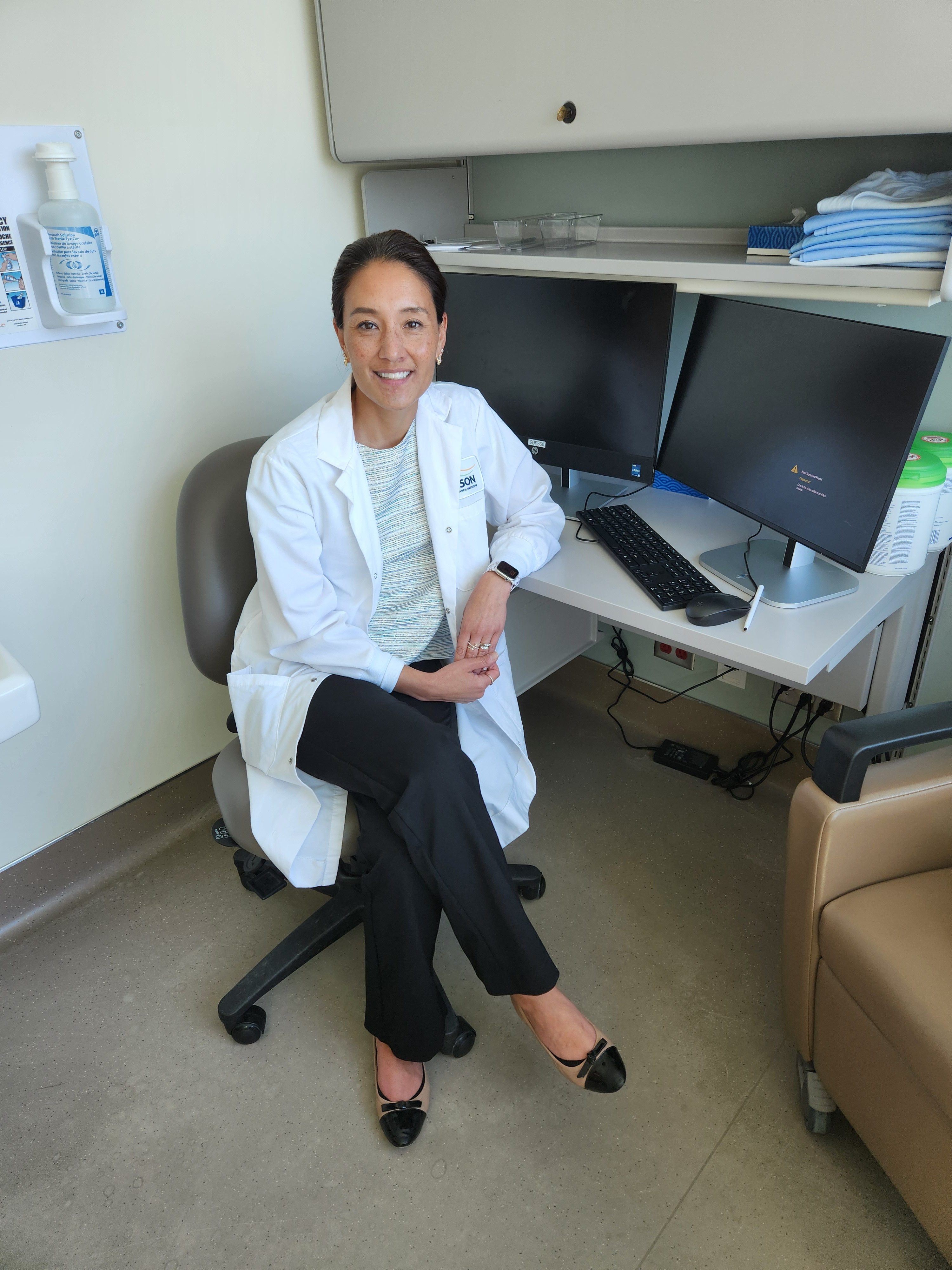
Dr. Kristin Clemens is a health services and disparities researcher, clinical trialist and the inaugural Director of the Metabolic and Chronic Disease Research Unit (MCDRU) at Lawson Research Institute of St. Joseph’s Health Care London. She is also a clinician-scientist and associate professor of Medicine and Epidemiology & Biostatistics at Western University and holds the Diabetes Canada Chair in Diabetes Management.
Dr. Clemens began her career a decade ago as a traditional epidemiologist, studying patterns and risk factors for diabetes and metabolic disease—particularly among patients with complex, overlapping conditions.
As her clinical work expanded as an endocrinologist at St. Joseph’s Hospital, her research focus began to shift. She became increasingly motivated, not only to describe health and health care, but to improve outcomes in meaningful, practical ways.
Over the past five years, her MCDRU team has developed real-world health care interventions that address gaps in care—especially for patients with cardiovascular, kidney, metabolic (CKM) and bone disease.
Her team’s approach is grounded in collaboration. They begin by identifying where the health system is falling short, then work closely with patients, clinicians and other stakeholders to understand why those gaps exist. From there, they co-design practical solutions and rigorously evaluate them through clinical trials, cohort studies and quality improvement initiatives.
Among the team’s recent achievements is PREFERRED-1, a pilot randomized controlled trial that studied the effectiveness and safety of denosumab (an osteoporosis treatment) in end-stage kidney disease. The team is also leading OK TRANSPLANT 2, an early phase of a large, randomized trial examining a weight-management intervention for patients with advanced kidney disease. In parallel, the team is developing a women-focused intervention aimed at closing persistent gaps in cardiovascular–kidney care among those living with diabetes.
For Dr. Clemens, the most meaningful research outcomes go beyond publications and H factors. A key measure of success is seeing her research translate into real-world changes in care. For example, findings from PREFERRED-1 are helping to shape a provincial care pathway to improve how osteoporosis is assessed and managed in older adults with kidney disease. Her team’s expertise in developing CKM-focused interventions has enabled international partnerships, including work with Best Care to design a coordinated care pathway for CKM.
Dr. Clemens has also had the privilege of mentoring dozens of undergraduate, graduate and postgraduate trainees in her work. Supporting the next generation of researchers in chronic disease is a lasting source of impact—ensuring that meaningful health research for real world Canadians will continue.