


Search
Search
5 Search Results:
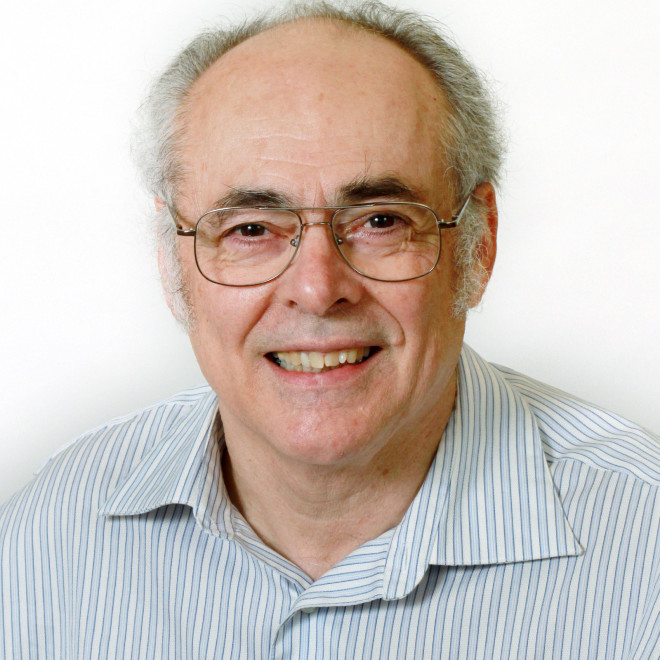
Dr. Frank S. Prato
Full Name
Dr. Frank S. Prato
Role
Location
Degrees and Qualifications
PhD, FCCPM, ABMP, FCOMP, FURSI, FCAHS
Research Overview
Over the last 30 years I have founded a research imaging program at Lawson that currently includes 23 Ph.Ds. and 7 MDs. The focus is to provide leading edge medical imaging technology to the patients of Southwestern Ontario, to citywide researchers and to foster what is needed for clinical trials. We have had a rich history including: first MRI in Canada (1982), first perfusion CT in the world (2000), first PET/CT in Canada (2002), first PET/MRI in Canada (2012).
In the last decade we have introduced PET technology to London including a medical cyclotron and radiochemistry facility that supplies Health Canada approved products to London, Toronto and Windsor. We are a hospital based research program and as such we have a stewardship responsibility to our patients to provide the best medical imaging facilities to guide their treatment and when they reach the limits of proven treatment methods they have the option to enroll in clinical trials that explore new treatment approaches.
Publications:


Biography
Since founding the Lawson Imaging Research Program in the 1980s Frank Prato has led the introduction of a number of new imaging technologies here in London. For example in 1982 his laboratory produced the first human MRI in Canada. Since 2002 Frank has focused on the introduction of new molecular imaging methods including the establishment of advanced positron emission tomography (PET) facilities in combination with magnetic resonance imaging (MRI). In 2012 the Lawson Imaging Research team installed Canada’s first human hybrid PET/MRI at Lawson’s St. Joseph’s Hospital site. Currently Frank is involved in the PET/MRI imaging of neuro-degenerative diseases caused by dementia and mental illness as well as in the study of cardiac diseases that lead to heart failure. Frank’s focus is to improve early diagnosis of disease to limit disability caused by chronic disease/conditions. Frank’s program is located within the hospital/patient environment as Imaging research is an essential part of the patient care continuum.
Scientific Record
- 6113 life time citations, h-index = 45 (Scopus)
- 10,624 life time citations, h-index = 58 (Google Scholar)
- 300+ peer-reviewed publications (222 papers)
- 700+ conference abstracts
- 184 invited presentations
- 67 graduate students and PDFs
- 14 patents and 4 spin-off companies
Dr. Cheryl Forchuk
Contact Information
Phone
519-685-8500
Extension
77034
Email
Administrative Support
sheryl.rooth@sjhc.london.on.ca
Website
Biography
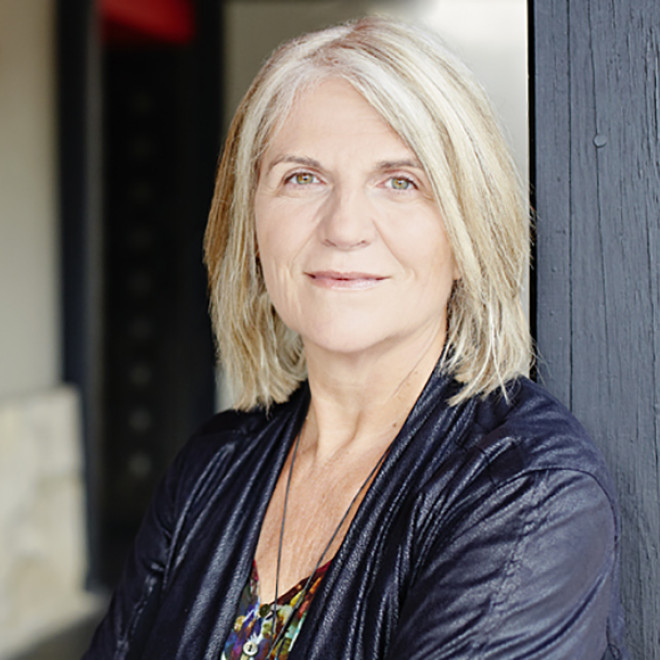
Dr. Cheryl Forchuk is the Beryl and Richard Ivey Research Chair in Aging, Mental Health, Rehabilitation and Recovery; a Distinguished University Professor at Arthur Labatt Family School of Nursing (Western University); and Scientist and Assistant Director at Lawson Health Research Institute. She has published on many topics including transitional discharge, technology in mental health care, and poverty, housing and homelessness. She has been honoured with numerous awards including the Order of Ontario, an honorary life membership in the Registered Nurses Association of Ontario and the Canadian Association of Advanced Practice Nursing, and a Research Pioneer Award from Psychosocial Rehabilitation Canada.
Dr. Clark Heard
Full Name
Dr. Clark Heard
Role
Degrees and Qualifications
Doctorate - Occupational Therapy - Temple University (Philadelphia, PA, USA)
Bachelor of Health Sciences - Occupational Therapy - McMaster University (Hamilton, ON, Canada)
Research Overview
- Focused on occupation, outcomes and the human experience of spirituality
Biography
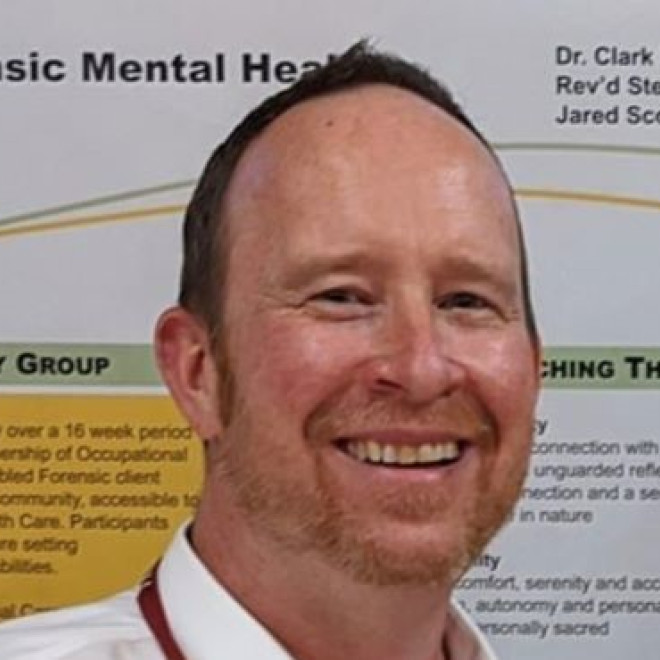
Dr. Clark Heard is a staff occupational therapist at the Southwest Centre for Forensic Mental Health Care in St. Thomas, Ontario, Canada. Clark is also Adjunct Research Professor at the School of Occupational Therapy at Western University. A graduate of McMaster University (Hamilton, ON) and Temple University (Philadelphia, PA), Clark has a high volume of scholarly publication and has clinically precepted more than 125 occupational therapy students. A recipient of multiple teaching awards, Clark was nationally recognized by the Canadian Association of Occupational Therapists in 2015.Clark Has also been recognized with the Sister's of St. Joseph Award for Excellence in Care.
https://www.sjhc.london.on.ca/news-and-media/our-stories/unsung-heroes
Dr. Elizabeth Osuch
Contact Information
Phone
519-685-8500
Extension
65188
Email
Administrative Support
ellen.annett@lhsc.on.ca
Research Overview
- Affective disorders
- Reward system/neurocircuitry
- fMRI in neuropsychaitric disorders
- Differentiating mood disorders in the early stages of illness
- Machine learning classification algorithms
- Neurophysiology of non-suicidal self-injurious behavior
Biography
Degrees and Diplomas
1997 Postgraduate Training (Residency in Psychiatry), Sheppard Pratt Health Systems, Baltimore, Maryland, United States
1993 MD, Michigan State University College of Human Medicine, Doctor (Medical), East Lansing, Michigan, United States
1983 BA, New College, Honors College of University of South Florida, Bachelor’s, Honours, Major in Philosophy, Sarasota, Florida, United States
Research Training
1997 - 2000 Clinical Research Fellowship, National Institute of Mental Health, Biological Psychiatry Branch, Senior Staff Fellow, Supervisor: Dr. Robert M. Post, Bethesda, Maryland, United States
Qualifications, Certifications and Licenses
2005 - present The College of Physicians and Surgeon of Ontario
2005 - present The Royal College of Physicians and Surgeons Canada
1998 - 2018 American Board of Psychiatry and Neurology, Certified, United States
2005 - 2009 Maryland Board of Physicians, License, Maryland, United States
Partners
Evelyn Vingilis: University of Western Ontario, Schulich School of Medicine and Dentistry, Department of Family Medicine: Department of Family Medicine; The Western Centre for Public Health and Family Medicine; Second Floor; University of Western Ontario
Jean Theberge: Lawson Health Research Institute, London Health Sciences Centre; University of Western Ontario Schulich School of Medicine and Dentistry, Department of Psychiatry; University of Western Ontario Department of Medical Biophysics
Vince Calhoun: The Mind Research Network; The University of New Mexico Department of Electrical and Computer Engineering
Jing Sui: Brainnetome Center and National Laboratory of Pattern Recognition, Institute of Automation, Chinese Academy of Sciences; University of Chinese Academy of Sciences; CAS Centre for Excellence in Brain Science and Intelligence Technology, Institute of Automation, Chinese Academy of Sciences, China
Peter Williamson: University of Western Ontario Schulich School of Medicine and Dentistry, Department of Psychiatry; University of Western Ontario Department of Medical Biophysics
Richard Neufeld: Department of Psychology, University of Western Ontario, London, Ontario
Dr. J Don Richardson
Full Name
Dr. J Don Richardson
Role
Location
Degrees and Qualifications
MD, FRCPC
Research Overview
- Advanced Analytics to Understand Military Related PTSD: Canadian Armed Forces (CAF) members and veterans are at risk of developing PTSD and other mental health conditions resulting from trauma exposure during their military service. The proposed study utilizes natural language processing (NLP) to identify key features related to 1) suicide attempts and 2) moral injury using unstructured data. Additionally, we propose using IBM SPSS Modeler or other technology available through IBM via Southern Ontario Smart Computing Innovative Platform (SOSCIP) to: 1) identify patterns of comorbidity; and 2) predict treatment trajectories amongst a cohort of treatment-seeking CAF members and veterans.
- Develop algorithms that can be utilized in the screening of CAF members and veterans for PTSD, MDD, and suicidal ideation (SI): Research indicates that military personnel are at increased risk of developing PTSD, major depressive disorder, and suicidal ideation as a result of events experienced during their military service. The proposed study utilizes machine learning to develop assistive diagnostic algorithms to aid in the early identification of PTSD and MDD among CAF members and veterans.
- Statistics Canada Canadian Armed Forces Longitudinal Health Survey: In 2018, a follow-up assessment was completed of the large, representative sample of individuals who, 13 year earlier (2002), were employed by CAF and, at that time, participated in the Canadian Forces Supplement of the 1st Canadian Survey of Mental Health & Wellbeing. The plan is to investigate the incidence of new mental health (MH) problems and the persistence of the MH problems identified in 2002. The research will focus determining the incidence rate of new-onset MH problems during the 13 years since 2002 and identify characteristics associated with risk factors and protective factors to developing a new-onset MH outcome.
- Statistics Canada 2013 CAF Mental Health Survey: The 2013 CAF Mental Health Survey is a nationally representative sample of 8180 active CAF members. Using this nationally representative sample the plan is to examine the association between Psychiatric Illness, sleep disturbances and Suicidal Ideation in order to increase our understanding of military-specific factors that are associated with the development of PTSD among CF members who are deployed on combat missions.
- Posttraumatic Stress Disorder and Comorbidity in Treatment Seeking CAF Members and Veterans: The objective of the current study is to retroactively use information provided by former and current CF members presenting to Parkwood Hospital’s Operational Stress Injury Clinic for treatment in order to investigate (1) The relationship between events experienced during deployment and suicidal ideation (i.e., to determine whether certain combat experiences are more related to suicidal ideation than others), (2) The relationship between PTSD symptom clusters and health-related quality of life (i.e., to determine whether certain PTSD symptom clusters have a greater impact on wellbeing), and (3) The relationship between PTSD and comorbid disorders .
- Posttraumatic Stress Disorder (PTSD) and Comorbidity in Canadian Veterans Patients attending the Parkwood Operational Stress Injury Clinic complete a standardized assessment and treatment protocol. The standardized questionnaires at intake include PHQ-9 and GAD-7 for depression and anxiety, the PHQ-15 for somatic symptoms, the Alcohol Use Identification Test (AUDIT) for alcohol use, the PCL-M and PCL-5 for PTSD, the Deployment Experience Questionnaire, and the SF-36 to assess health-related quality-of-life. Prior to being seen for follow-up care, patients complete the PHQ-9, GAD-7, the PCL-5 and the OQ 45. Using a retrospective chart review design, the plan is to examining PTSD and comorbidity as well as examining predictors treatment outcome, including recovery.
Publications:
Biography
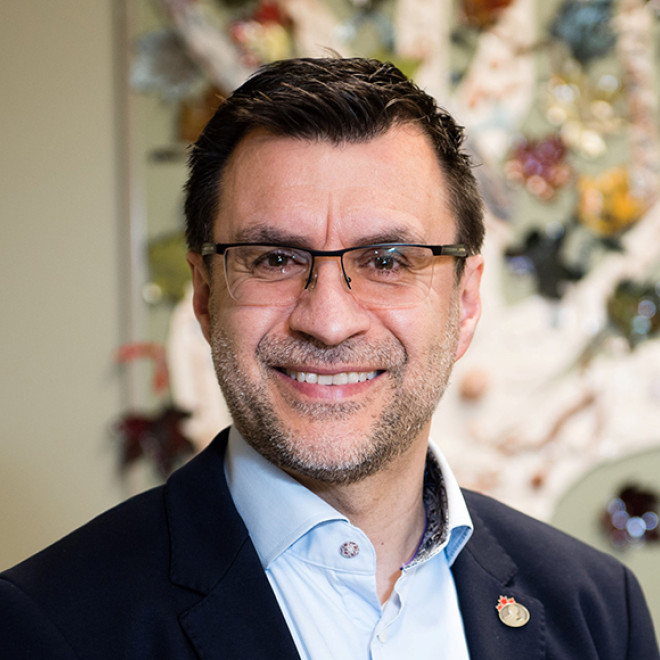
Dr. Richardson is consultant psychiatrist and Medical Director of the Parkwood Operational Stress Injury (OSI) Clinic in London, Ontario. He is also the Scientific Director of the MacDonald Franklin OSI research Centre at the Parkwood Institute and a fellow with the Canadian Institute for Military and Veteran Health. He has a Social Work degree from McGill University and completed his medical degree at Queen’s University and his fellowship in psychiatry at the University of Ottawa. He has more than 25 years of experience in the assessment and treatment of Veterans and Canadian forces members with PTSD and other operational stress injuries. Dr. Richardson has more than 50 published articles and book chapters in the area of Military and Veteran Mental Health including risk factors for PTSD and suicidal ideation, sleep disturbances, health care utilization, treatment outcomes and the impact of PTSD on quality-of-life.