


Search
Search
1376 Search Results:
Dr. Kenneth Faber
Full Name
Dr. Kenneth Faber
Role
Research Overview
- Biomechanics and shoulder - elbow
- Clinical outcomes - shoulder
- Education
Dr. Kenneth Gilbert
Full Name
Dr. Kenneth Gilbert
Role
Research Overview
- Perioperative medicine
- Cardiac risk
- Diabetes control
- Transfusion practices
- Obstructive sleep apnea
… f\s··,:;~ STJOSEPHs HEALTH CARE . LONDON May 30, 2017 Dr. Gillian Kernaghan President and Chief Executive Officer St. Joseph's Health Care London Dear Dr. Kernaghan: Office of the Chair, Board of Directors PO … f\s··,:;~ STJOSEPHs HEALTH CARE . LONDON May 30, 2017 Dr. Gillian Kernaghan President and Chief Executive Officer …
f\s,:;~ STJOSEPHs HEALTH CARE . LONDON May 30, 2017 Dr. Gillian Kernaghan President and Chief Executive Officer St. Joseph's Health Care London Dear Dr. Kernaghan: Office of the Chair, Board of Directors PO Box sm, Stn B London, ON N6A4V2 T: 519 646-6100 ext 64202 In accordance with the terms and co...
Dr. Larry Allen
Full Name
Dr. Larry Allen
Role
Research Overview
- Clinical and practical applications in opthalmology
Dr. Laura Diachun
Full Name
Dr. Laura Diachun
Role
Research Overview
- Medical education
- Geriatrics
- Ageism
- Career selection
Dr. Laura Graham
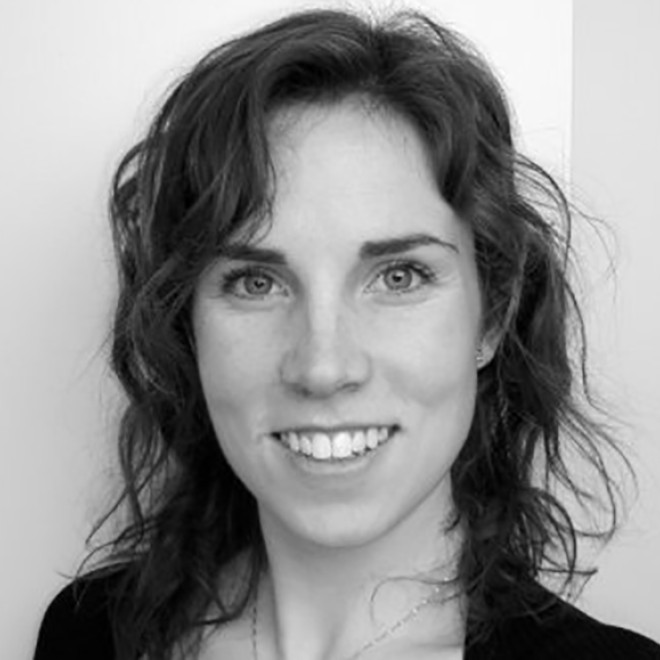
Full Name
Dr. Laura Graham
Role
Location
Degrees and Qualifications
PT
Website
Research Overview
Mobility and Activity
Biography
As a physiotherapist, Laura has primarily worked in adult brain injury since 2011. Her teaching focus is physiotherapy foundational clinical skills and applied neurological injury/illness rehabilitation; and her research focus is interventions for adults with persistent symptoms post concussion/mild traumatic brain injury. She has consulted with WSIB Ontario on mTBI Program of Care revision, presented at See The Line concussion symposium, and taught physiotherapist instructors across Canada about concussion/mTBI rehabilitation for the National Orthopaedic Division of the Canadian Physiotherapy Association.
Partners
Dr. Dalton Wolfe (Lawson); Dr. Jim Dickey (Western)
Dr. Leigh Sowerby
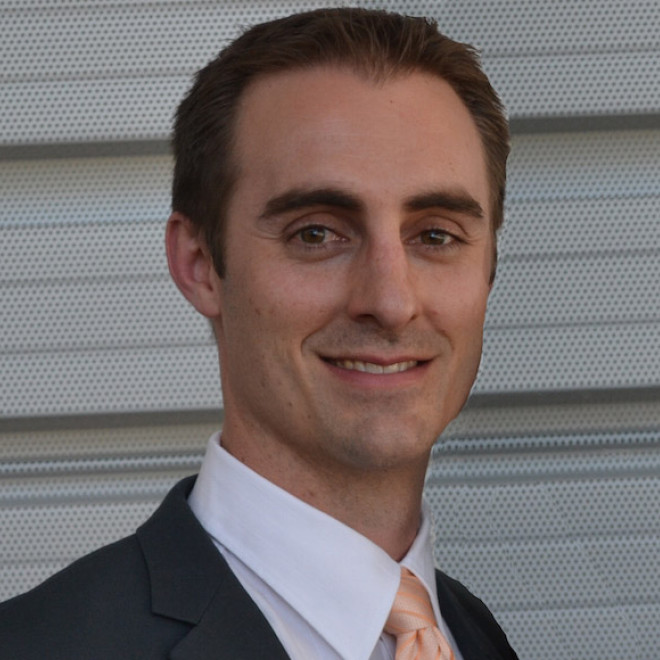
Full Name
Dr. Leigh Sowerby
Role
Location
Degrees and Qualifications
MD
Contact Information
Phone
519-646-6143
Extension
66143
Email
Administrative Support
jen.bruce@sjhc.london.on.ca
Research Overview
- Sinonasal disorders, Chronic Rhinosinusitis, Aspirin-Exacerbated Respiratory Disease
- Health Economics
- Health Management
Dr. Lena Palaniyappan recognized for research using brain imaging to develop treatments for mental illness
Lawson associate scientist Dr. Lena Palaniyappan has won the Canadian College of Neuropsychopharmacology (CCNP)’s 2017 Young Investigator Award for outstanding contributions to the field of neuropsychopharmacology.
The Young Investigator Award is given for basic research or clinical research in alternating years. This year’s award was presented for clinical research. Scientists who have completed their post-doctoral or residency training 10 years ago or less are considered for the award.
Dr. Palaniyappan uses neuroimaging tools to study the processes that operate in the brain when patients experience symptoms of mental illness, including psychosis – repeated voices or visions (hallucinations) and disturbing thoughts (delusions). For many patients, it is not possible to prevent psychosis or reverse the condition fully. Through their research, Dr. Palaniyappan and his team are working to fully characterize the illness and create new treatments.
Recently he led a study that showed it is possible to use information from the brain’s connectivity maps to alter the chemistry of selected brain regions. The hope is that this approach can be used to target precise areas of dysfunction rather than altering the properties of the entire brain to treat psychiatric symptoms.
“Receiving this award highlights the importance of brain imaging in discovering new therapies for brain-based disorders,” says Dr. Palaniyappan. “I feel very inspired looking at the achievements of past recipients as many of them have gone on to change how we think about the brain and mind.”
Dr. Palaniyappan is the medical director of the Prevention and Early Intervention Program for Psychoses (PEPP), a community-focused mental health program located at London Health Sciences Centre (LHSC). He is also an associate professor at Western University’s Schulich School of Medicine & Dentistry.
“With the increasing sophistication of tools to understand the mysteries of the human brain and the world-renowned expertise available in London, there has never been a better time to study psychiatric disorders,” adds Dr. Palaniyappan. “I hope we will soon be able to use brain scans to provide patient-specific information on prognosis and monitor the effects of treatments.”
Dr. Lillian Barra
Full Name
Dr. Lillian Barra
Role
Dr. Lina Dagnino
Research Overview
- Epithelial development and repair
- Cell cycle regulation
- Transcriptional regulation
- Epidermal stem cells
- Integrins, cytoskeleton & epidermis
- Wound healing
Dr. Lisa Van Bussel
Full Name
Dr. Lisa Van Bussel
Role
Research Overview
- Mental health
- Aging and geriatric care
- Quality of life/rehabilitation
Dr. Mamadou Diop

Full Name
Dr. Mamadou Diop
Role
Location
Degrees and Qualifications
PhD
Research Overview
My research is focused on developing mobile optical devices and mathematical models that enable non-invasive quantification of physiological parameters (e.g., tissue hematocrit content and oxygenation) to inform about health and diseases. These techniques include time-resolved near-infrared spectroscopy, diffuse correlation spectroscopy and hyperspectral spectroscopy. I am also developing methods for 4D spectral tomographic imaging, for the quantification of tissue hemodynamics (e.g., blood flow and vascular permeability) and oxygen metabolism.
Publications:
Biography
Dr. Diop graduated from University Cheikh Anta Diop of Dakar (Senegal) where he also completed an MSc in physics under the supervision of Prof. Ahmadou Wague. In 2004 he was awarded a PhD degree in Physics from Laval University (Quebec) for his work on 3D Colloidal Photonic Crystals, under the supervision of late Prof. Roger A. Lessard. He then joined the group of Dr. Rod Taylor at the Institute for Microstructural Sciences of the National Research Council of Canada (NRC, Ottawa) for a 2-year postdoctoral position to work on optical trapping of cells. In 2006 he moved to London (Ontario) to take a 2nd postdoctoral position in the group of Dr. Keith St Lawrence at the Lawson Health Research Institute (LHRI). Two years later, Dr. Diop became a Research Associate then a LHRI Research Scientist in 2013. His work at LHRI has led to significant technological advancements, including a method that can continuously monitor absolute cerebral blood flow and oxygen metabolism at the bedside. Dr. Diop is also an assistant Prof. in the department of Medical Biophysics and the school of Biomedical engineering at Western University where he leads the Translational Biophotonics Lab.
Dr. Manuel Montero-Odasso named as one of most influential Hispanic Canadians
Dr. Manuel Montero-Odasso, Clinician Scientist at Lawson Health Research Institute and Director of the Gait and Brain Lab, has been named as one of the 10 most influential Hispanic Canadians for 2019. Presented by TD Bank, those on the list were honoured at an awards ceremony in Toronto, Ontario in November.
A geriatrician at St. Joseph’s Health Care London, Dr. Montero-Odasso is recognized as a world expert in dementia and gait disorders. The main focus of his research is on the interaction of mobility and cognitive decline in aging. He is the team leader for the Canadian Consortium on Neurodegeneration in Aging (CCNA), a collaborative research program advancing dementia research, and leads the Mobility, Exercise and Cognition (MEC) Team in London, comprised of top researchers in the area of mobility, exercise and brain health.
Dr. Montero-Odasso says that one aspect of his career that he is most proud of is being able to collaborate with other researchers in his field and “contribute to new approaches to combat mobility and cognitive decline in aging.” This is evident through the clinical trials he pioneered by implementing an approach of “improving cognition to improve mobility.”
TD Bank’s “10 Most Influential Hispanic Canadians” is awarded to individuals from the Hispanic community across Canada to recognize their outstanding achievements. Dr. Montero-Odasso’s influence is displayed on a global scale as he has received over 100 invitations to give international lectures and has published over 200 manuscripts and book chapters. He has a close relationship with the Spanish-speaking community and has hosted visiting scientists from Argentina and Spain.
“I feel honoured and privileged, particularly this kind of award where you are nominated by your peers. I am also glad my work is reflecting the role that my Hispanic background plays,” says Dr. Montero-Odasso, who is also a professor of Medicine, Epidemiology, and Biostatistics at Western University. “Additionally when you look at the other nominees, and those who have received the award in the past, it really gives you a sense of the amazing things Hispanics who live and work in this country are contributing to Canadian society.”
Dr. Montero-Odasso emphasizes the value of diversity and learning from different backgrounds when seeking solutions. As he continues working in this important field as a physician and researcher, Dr. Montero-Odasso’s goal is to, “find effective ways to treat and delay aging disability in order to add, as they say, life to the years, and not only years to the life.”
Scientist
Dr. Marie-Eve LeBel
Full Name
Dr. Marie-Eve LeBel
Role
Research Overview
- Surgical innovations
Dr. Marilyn Hill
Full Name
Dr. Marilyn Hill
Role
Research Overview
- Cognitive-behavioural
- Chronic pain and fibromyalgia
Dr. Mark Chandy
Full Name
Dr. Mark Chandy
Role
Location
Degrees and Qualifications
MD PhD FRCPC
Research Area
Research Overview
Stem cell biology, induced pluripotent stem cells, cardiovascular disease.
Biography
My research employs molecular biology to understand the pathophysiology of cardiovascular disease. Early in my career, I studied the mechanisms of chromatin dynamics, which have broad implications in the influence of the environment in conditions such as diabetes and smoking. I later helped characterize how transcription factors and microRNA direct cardiovascular differentiation and how perturbations of these mechanisms are implicated in cardiovascular disease. My interest in stem cell biology attracted me to Joseph Wu, MD, Ph.D. at Stanford, to learn more about human induced pluripotent stem cell (iPSC) disease modeling endothelial dysfunction.
Advances in next-generation sequencing, bioinformatics, and gene editing make it possible to decipher SNPs contributing to cardiovascular disease and disease-specific transcriptome profiles. More precise diagnostic biomarker-based tests could be developed with a deeper appreciation of an individual’s molecular signature. Additionally, personalized medicine could emerge from iPSC disease and advance precision medicine.
As a recently appointed Assistant Professor at the University of Western Ontario, I am now an independent physician-scientist conducting research using iPSC disease modeling that I developed at Stanford University. My research focuses on cardiovascular disease modeling to 1) investigate the effects of the environment on the vasculature, 2) discover biomarkers to risk stratify cardiovascular disease, and 3) discover druggable target genes for cardiovascular disease. The overarching goal of my research is to use iPSCs to understand mechanisms underlying the relationship between inherited factors and how environmental stress, such as diabetes, e-cigarettes, and marijuana, sensitize an individual to exacerbated cardiovascular disease. The discovery of these gene and environment interactions will facilitate the identification of high-risk individuals who could benefit from therapy that alters disease trajectory. In the future, iPSC disease modeling could guide the discovery of sm! all molec ule agonists or inhibitors that could be used as personalized medical therapy for cardiovascular disease.
Partners
Aleksandra Leligdowicz
Dr. Marnin Heisel
Full Name
Dr. Marnin Heisel
Role
Research Overview
- Suicide & Depression
- Psychotherapy & psychiatric treatment
- Psychometrics & scale development
- Resilience & Psychological well-being
- Geropsychology
- Older adult mental health
- Knowledge translation