


Search
Search
1347 Search Results:
Dr. s copy Western Schulich School of Medicine & Dentistrys copy Department of s copy Medical Affairs copy THIS LETTER IS ONLY TO BE ISSUED TO CONFIRM A CHANGE IN PRIVILEGES OR ARC CATEGORY TO AN EXISTING CREDENTIALED CLINICAL ACADEMIC
Dr. s copy Western Schulich School of Medicine & Dentistrys copy Department of s copy Medical Affairs copy THIS LETTER IS ONLY TO BE ISSUED TO CONFIRM A CHANGE IN PRIVILEGES OR ARC CATEGORY TO AN EXISTING CREDENTIALED CLINICAL ACADEMIC
… promote strategic human resource planning and management in areas affecting the three institutions and make … promote strategic human resource planning and management in areas affecting the three institutions and make …
December 2020 Joint Professional Staff Human Resource Committee Joint Professional Staff Human Resources Committee (JPSHRC) Terms of Reference The Committee has been established by St. Josephs Health Care (St. Josephs), London, London Health Sciences Centre (LHSC), and the Schulich School of Medicin...
Isnt there just a surgery that can fix it? Surgery for this condition is only VERY rarely performed. A general surgeon or thoracic surgeon can perform a procedure called a Nissen Fundoplication. It is a laparoscopic surgery, where the stomach is wrapped around opening to esophagus opening. It is onl...
Latest findings on gait and dementia available to public through open access
September is World Alzheimer’s Month and Saturday, September 21 was World Alzheimer’s Day.
In recognition, the Journal of Alzheimer’s Disease has published an open access, special issue that will be available to everyone for the first two weeks of publication.
Dr. Manuel Montero-Odasso, Scientist at Lawson Health Research Institute, has edited and led the special issue focusing on gait disorders and dementia.
He is world renowned for his findings on the relationship between cognition and mobility in the elderly, and gait as a predictor of frailty and dementia. He leads the Mobility, Exercise and Cognition (MEC) Team in London, comprised of top researchers in the areas of mobility, exercise and brain health.
Image
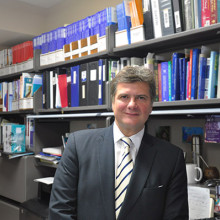
Dr. Montero-Odasso is also a professor at Western University’s Schulich Medicine & Dentistry, geriatrician at St. Joseph’s Health Care London and London Health Sciences Centre, and Director of the Gait and Brain Lab, a part of Lawson’s Parkwood Institute Research group.
“This Journal of Alzheimer’s Disease supplemental issue showcases studies presenting the epidemiology of gait disturbances and cognitive impairment, dissecting specific associations between cognitive domains and quantitative gait parameters, and addressing with advanced neuroimaging techniques the potential mechanisms underlying the gait-cognitive interaction seen before dementia,” explains Dr. Montero-Odasso. “Also, this issue highlights how to manage mobility impairment in the cognitive impaired by using assistive devices.”
Alzheimer’s disease is an irreversible, progressive brain disorder that slowly destroys memory and thinking skills. It is the most common cause of dementia among older adults. There are over half a million Canadians living with dementia - plus about 25,000 new cases diagnosed every year. By 2031, that number is expected to rise to 937,000, an increase of 66 per cent.
Read the Gait Disorders Special Issue with editorial from Drs. Montero-Odasso and George Perry entitled “Gait Disorders in Alzheimer’s Disease and Other Dementias: There is Something in the Way You Walk.”
Scientist
Lawson cyclotron to produce new imaging agent that may better locate prostate cancer
Lawson Health Research Institute is the first in Canada to enter a sublicense agreement with The Centre for Probe Development and Commercialization (CPDC) to produce PSMA-1007, a new imaging agent that could help improve the detection of prostate cancer.
The radiopharmaceutical tracer can locate and bind to prostate specific membrane antigen (PSMA) – a protein on the surface of prostate cancer cells. This imaging agent makes the prostate cancer cells visible with PET/CT (positron emission tomography/computed tomography) imaging.
Dr. Glenn Bauman, a Radiation Oncologist at the London Regional Cancer Program at London Health Sciences Centre and Scientist with Lawson, has been involved in a number of research developments in PSMA PET/CT.
“Until now, a PET imaging agent called 18F-DCFPyL, was commonly used in research. More recently, we've been looking at a PET radiopharmaceutical called PSMA-1007 that may give us clearer pictures in the pelvis and the area of the prostate,” says Dr. Bauman, who is also a Professor of Oncology and Medical Biophysics at Western University’s Schulich School of Medicine and Dentistry.
Dr. Michael Kovacs, Director of the Lawson Cyclotron & PET Radiochemistry Facility at St. Joseph’s Health Care London, says the license means London will have a local supply of PSMA-1007 that is “more or less a magic bullet for prostate cancer cells.”
Radiopharmaceuticals decay quickly after production and so there is a need to produce them locally. Lawson’s cyclotron, which is housed at St. Joseph’s, is one of fewer than roughly two dozen facilities in Canada and delivers products to the GTA, Windsor and London.
“The cyclotron is a type of particle accelerator where we can accelerate particles called protons to high energy and fire them into a target that makes radioisotopes every day,” Dr. Kovacs explains. “The raw radioisotope is taken to the lab to synthesize PET radiopharmaceuticals, including PSMA imaging agents, before going through quality control.”
“Being able to produce PSMA-1007 locally is exciting, as outsourcing comes with logistical challenges if a production run fails or transportation fails,” explains says Dr. Bauman. “Having our own means of production is a real advantage to us as we conduct our research.”
CPDC, which holds the rights to produce PSMA-1007 in Canada, is already running a clinical trial in hopes of having it available in clinical settings. They expect to have study results in two to three years.
Early studies show the clearer images from PSMA-1007 may have the biggest impact in patients with a recurrence of prostate cancer who have already had treatment. The return of cancer can be very small and difficult to detect with conventional methods. In many of those cases, studies are finding a rise in PSMA levels can be an early signal of the cancer’s return, allowing for earlier diagnosis with PSMA PET.
Looking forward, PSMA-1007 has the potential to be used as a theranostic agent where by the isotope is used deliver radiation treatment directly to the cancer, but this application is likely many years away.
This is the part two of a three-part series on PSMA PET imaging research. Check out part one and three.
Lawson Impact Awards Community Partner of the Year Award: Dr. Joseph Rea
An advocate for mental health awareness, the late Dr. Joseph Rea is being awarded the Community Partner of the Year Award
A well-known family physician in the London area, the late Dr. Joseph Rea is being recognized with a 2022 Lawson Community Partner of the Year Award for his advocacy and passion to improve mental health outcomes.
In 2003 through his advocacy and philanthropy, he founded the Dr. Joseph Rea Chair in Mood Disorders at St. Joseph’s Health Care Foundation.
Media Contact
Celine Zadorsky
Senior Media Relations Consultant
Communications & Public Engagement
T: 519-685-8500 ext. 73502
Celine.zadorsky@lhsc.on.ca
Lawson Impact Awards Scientist of the Year Award: Dr. Douglas Fraser
Recognized for his high-impact work over the past several years, Dr. Douglas Fraser has been named as Lawson Health Research Institute's Scientist of the Year as part of the 2022 Lawson Impact Awards.
Dr. Fraser, who is a Scientist at Lawson and Critical Care Physician at Children's Hospital at London Health Sciences Centre (LHSC), has led the way in a number of areas of research.
Over the past few years, he has published numerous studies and signed multiple licensing agreements that show promise for improving the diagnosis and treatment of concussion, COVID-19 and long-COVID.
Media Contact
Celine Zadorsky
Senior Media Relations Consultant
Communications & Public Engagement
T: 519-685-8500 ext. 73502
Celine.zadorsky@lhsc.on.ca
Lawson ranks in top ten among Canada's research hospitals
Lawson Health Research Institute – the research institute of London Health Sciences Centre (LHSC) and St. Joseph’s Health Care London – is ranked seventh in the country in Re$earch Infosource’s 2023 list of Canada’s Top 40 Research Hospitals.
This is the 13th year in a row that Lawson has ranked top ten in the country, and the seventh-place ranking is up two spots from 2022 – highlighting continued dedication to hospital-based research at LHSC and St. Joseph’s.
Lawson also ranked second for research intensity among the large tier institutions with more than $776,000 of research spending per researcher.
“These rankings help LHSC and St. Joseph’s assess how we compare to similar hospitals across the country,” says Dr. David Hill, Scientific Director at Lawson and Integrated Vice President, Research at LHSC and St. Joseph’s. “Our continuous placement in the top 10 of all research hospitals shows we are doing important and relevant medical research that is making a difference to patient care.”
Lawson has been at the forefront of research in a wide range of specializations, making advances in areas from cancer care and mental health supports to molecular imaging and theranostics in recent years.
“Conducting research in hospitals means it can go from bench to bedside much more quickly,” says Dr. Hill. “Things move much faster now than they ever did. Our top 10 ranking shows we are leading the way, and that funders are confident in London’s hospital-based researchers.”
The top 40 list analyzes hospital-based research institutes from across the country on several metrics, including total research expenditure from the previous fiscal year. The ranking looks at funds from all sources, including both internal and external, to support research in hospitals.
Media Contact
Amanda Taccone
Communications Consultant & External Relations
Lawson Health Research Institute
T: 519-685-8500 ext. ext. 64059
C: 226-919-4748
@email
Lawson researchers win American Shoulder and Elbow Surgeons’ Neer Award
The American Shoulder and Elbow Surgeons association has awarded a team of London researchers the 2017 Charles S. Neer Award for Clinical Science, one of the most prestigious awards in the areas of shoulder and elbow surgical research in North America.
The award recognizes the scientists’ development of the PCR-RFLP (polymerase chain reaction restriction fragment length polymorphism) assay, a test that can accurately identify Propionibacterium acnes (P acnes) infection of the shoulder within 24 hours. Current methods take an average of six or more days, and are prone to sample contamination and false-positive results.
“We are incredibly honoured to receive this award,” says Dr. David O’Gorman, Lawson scientist, Co-Director of Molecular and Cellular Research at the Roth McFarlane Hand and Upper Limb Centre (HULC) at St. Joseph’s Health Care London, and senior author of the publication. “We believe it illustrates the high quality of research being done at Lawson and marks the beginning of another clinically relevant research program at HULC.”
P acnes is a type of bacteria typically found deep in the hair follicles and sebaceous pores of the skin. A P acnes infection of the shoulder is a common and serious complication that occurs after arthroplasty (surgery to replace a damaged joint, most commonly with artificial material). It can cause pain in the shoulder joint and often loosens the implant. In most cases, the patient requires additional surgery to remove the infection and replace the implant.
It can be difficult to diagnose a P acnes infection as it often presents without symptoms that would be characteristic of an infection, such as pain, skin reddening or wound drainage. The prevalence of P acnes in the deeper layers of the skin also increases the chance of sample contamination and false-positive results making it hard to isolate and identify in a pathology lab.
Currently P acnes infection is identified by administering a tissue swab for anaerobic culture, which takes an average of six or more days but could take up to three weeks. This technique also carries substantial risk of contamination from the adjacent skin and other sites where P acnes is present.
The PCR-RFLP assay can identify P acnes in tissue from a shoulder biopsy within a 24-hour period. The extremely sensitive technology also has the ability to detect fewer than ten P acnes cells in the sample, which may decrease the false-positive rate in cultures caused by swab contamination.
“The accuracy of this test and the shorter period of time needed for identification can help with treatment decision making, targeted antibiotic therapy, and monitoring to minimize implant failure and revision surgery,” explains Dr. O’Gorman, who is also an Assistant Professor in the Departments of Surgery and Biochemistry at Western University’s Schulich School of Medicine & Dentistry. “We hope that the test can be further developed into a ‘point of case’ assay that can detect P acnes in tissue samples in real time while the patient is undergoing shoulder surgery.”
Since the PCR and RFLP mapping used for the assay are techniques routinely performed in many clinical microbiology and pathology labs, the test would be a cost-efficient approach not restricted to highly specialized research labs.
Other scientists who were part of the study include Dr. George Athwal and Dr. Kenneth Faber, HULC orthopaedic surgeons, Lawson scientists and Schulich professors; Ana Pena Diaz, research technician for the HULC Molecular and Cellular Biology Research Lab; and Scott Holmes, a medical student and Schulich Research Opportunities Program participant who was primarily responsible for designing and optimizing the assay.
Both Dr. O’Gorman and Dr. Faber are also members of Western’s Bone and Joint Institute.
“A rapid method for detecting Propionibacterium acnes in surgical biopsy specimens from the shoulder” was published in the Journal of Shoulder and Elbow Surgery (JSES).
Scientist
Lawson teams respond rapidly to call for research
When cases of COVID-19 began spreading in the London region, Lawson Health Research Institute (Lawson) had to rapidly adjust to a new environment.
As a hospital based research institute, Lawson is uniquely positioned to address the medical questions posed by a new virus. The expertise and infrastructure to begin these investigations was already in place. The global shortage of supplies, as well as physical distancing measures, forced many research projects to be put on hold. Other areas, however, were ramping up their work to support the scientists and physicians eager to figure out how we can better prevent, detect, and treat patients with COVID-19.
Lawson Clinical Research Services (LCRS) and the Center for Clinical Investigation and Therapeutics (CCIT) got to work immediately. The teams responded rapidly to research requests, getting new studies up and running within days.
Image
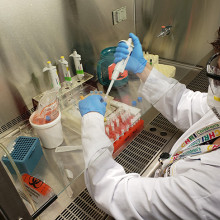
Carolina Gillio Meina, Research Associate
Dr. Douglas Fraser, Lawson Scientist and Paediatric Critical Care Physician at London Health Sciences Centre (LHSC), initiated a study to examine the immune response in patients with COVID-19. Reports from other parts of the world identified a heightened immune response in more severe cases of the infection, also labeled the ‘cytokine storm’. Laboratories at Lawson were ready to handle this type of research, as close proximity to patients and sample collection is essential.
Image
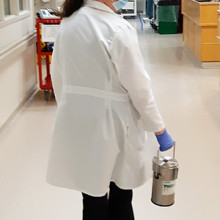
“Our world changed almost overnight,” adds Tereschyn. “We had to pivot on a dime and change the entire way we do business. Our staff have really risen to the challenge.”
Image
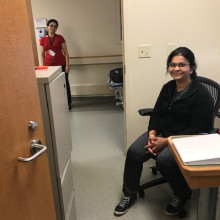
Mala Ramu (left) and Sangeetha Balaji (right), Lawson Clinical Research Services
The LCRS and CCIT teams are supporting essential research in other ways as well, including logistics and administrative support, and supply sharing.
“We’ve developed many new partnerships throughout this pandemic, and figured out in very short order how to work efficiently together,” says Tereschyn. “While COVID-19 has presented us with many challenges, it has also been a great opportunity for us to support one another in ways that I don’t believe would have transpired otherwise.”
Leading the conversation on equity, diversity and inclusivity
The city of London, Ontario is home to a vibrant health research community. On Wednesday, May 9, researchers from across the city gathered to discuss the importance of equity, diversity and inclusivity (EDI) in the careers of health researchers. Through participation at Exchange: A London Health Research Day Forum on Diversity & Inclusivity, guests discussed the challenges associated with EDI and potential solutions for the future.
Exchange was held the evening before London Health Research Day, the region’s premier research showcase event which features nearly 400 trainee presentations. Trainees are the future of Canadian science and EDI is crucial to that future. This is a topic of national importance that has garnered attention and action from the federal government, funding agencies and scientists across the country.
Recognizing the importance of this topic, Canada’s Minister of Science, The Honorable Kirsty Duncan, and local Member of Parliament for London North Centre, MP Peter Fragiskatos, shared video greetings with Exchange guests.
“The Exchange event highlights a vital area of discussion. It is important to not only recognize but embrace the differences between scientists and the diverse perspectives they bring to research,” said Rebecca Sullivan, a third year PhD candidate at Western University’s Schulich School of Medicine & Dentistry, training in Savita Dhanvantari’s lab at Lawson Health Research Institute, and one of the organizers of the event. “Becoming aware of our own unconscious biases and trying to change these culturally ingrained implicit associations is the only way to make active change in science!”
Image
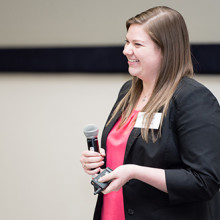
Above: Rebecca Sullivan, a third year PhD candidate, leading a scenario-based group activity at Exchange
The evening’s first presenter was Dr. Janet Smylie, Director of the Well Living House Applied Research Centre for Indigenous Infant, Child and Family Health at St. Michael’s Hospital and CIHR Applied Public Health Research Chair in Indigenous Health Knowledge and Information. Dr. Smylie, who also delivered the keynote presentation at London Health Research Day, spoke about the role of anti-Indigenous racism and discrimination within health care professions, including its impact on research. This included a discussion of Dr. Smylie’s own research in the field of Indigenous health.
Image
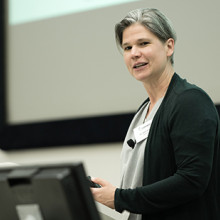
Above: Dr. Janet Smylie presenting on "Addressing anti-Indigenous racism and discrimination within health care professions"
Greta Bauer, PhD, a professor in the Department of Epidemiology and Biostatistics at Schulich Medicine & Dentistry, spoke about the role of epidemiology as a toolkit for building equity in health research. This included a discussion on incorporating intersectionality and multidimensionality into population health research methodology.
“The purpose of this work is to give researchers the measurement and statistical tools they need to shift the focus from studying broad population average effects to more heterogeneity within populations,” said Greta. “The whole point is to better study not only diversity in health outcomes, but in the processes that generate those outcomes.”
Image
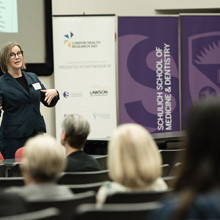
Above: Greta Bauer, PhD, presenting on "Epidemiology as a toolkit for building equity"
This talk was followed by a presentation on Gender-Based Analysis Plus (GBA+). GBA+ is an analytical tool used to assess how diverse groups of women, men and gender-diverse people may experience policies, programs and initiatives. The “plus” in GBA+ acknowledges that GBA goes beyond biological (sex) and socio-cultural (gender) differences. We all have multiple identity factors that intersect to make us who we are; GBA+ also considers many other identity factors, like race, ethnicity, religion, age, and mental or physical disability. GBA+ is a method for collecting and reviewing data in an unbiased manner, one that leaves aside many of the assumptions that can mask the GBA+ impacts of a given initiative. Alysha Croker, PhD, Manager, Tri-Agency Institutional Program Secretariat, discussed how GBA+ is being used in research and grant funding, including at the federal funding agencies.
“Diverse research teams can lead to more innovation, greater collective intelligence and an increased capacity to tackle complex issues,” said Alysha, when discussing the importance of EDI in the careers of health researchers.
Image
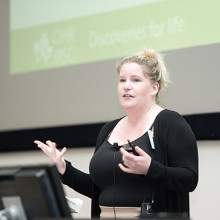
Above: Alysha Croker, PhD, presenting on "Incorporating Gender-Based Analysis Plus (GBA+) in research and beyond"
The evening also included a presentation from Shantal Feltham, founder and CEO of Stiris Research, a North American clinical trials management company based in London. Shantal discussed the importance of ensuring that clinical trials are designed to recruit diverse research participants that represent real patient populations. She also discussed her own experiences and perspectives as a female entrepreneur.
Image
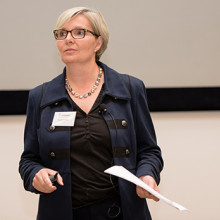
Above: Shantal Feltham delivering a presentation titled "That’s a great idea – It’ll never work"
A group of health research trainees concluded the night with a scenario-based presentation and activity. Audience members were divided into small groups and given a diversity scenario to discuss. Topics ranged from the experiences of LGBTQ+ researchers, racial diversity, physical ability barriers in research labs and more. Notes and ideas from these conversations were recorded and displayed the next day at London Health Research Day.
“Exchange highlighted EDI in health research in action. It featured talks by leading female researchers on issues in Indigenous health and LGBTQ health, implementation of equity in the Canada Research Chairs program, and female entrepreneurship in the field of health research,” said Savita Dhavantari, PhD, assistant director and scientist at Lawson and assistant professor at Schulich Medicine & Dentistry. Savita was also one of the Exchange organizers and the facilitator for the event. “Above all, I hope attendees were encouraged to be fearless in advocating for equity, diversity and inclusivity in health research.”
Image

Above: Guests at Exchange discussing a diversity scenario
Image
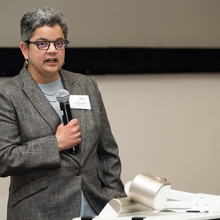
Above: Savita Dhanvantari, PhD, facilitating the Exchange event
To see more photos from Exchange and London Health Research Day, visit the London Health Research Day website.
Exchange and London Health Research Day are presented in partnership by Lawson Health Research Institute and Western University’s Schulich School of Medicine and Dentistry.
Scientist
\~ SIJOSEPHs HEALTH CARE LETTER OF NOTIFICATION OF X-RAY WORKER STATUS FOR STUDENTS In accordance with the Occupational Health and Safety Act / Regulation 861: X-ray Safety, you are hereby informed that you are employed as an X-ray Worker. You may receive occupational exposure while working near, or...
… all programs and departments, including specific divisions/areas you wish to observe, if known: Observer Location(s): … Note: For observers visiting patient care areas, verbal consent must be obtained from the patient by … all programs and departments, including specific divisions/areas you wish to observe, if known: Observer Location(s): …
Appendix A LHSC Observer Request Form April 2014 1 OBSERVER REQUEST FORM Full Name of Observer: (print) (Attach a current C.V or resume). Category of Observer: [ ] Physician [ ] Dentist [ ] Midwife [ ] Other (please specify) Purpose of Visit: Explain what learning outcomes you expect to accomplish d...
LHSC and St. Joseph’s introduce new research institutes
Lawson Research Institute at St. Joseph’s and London Health Sciences Centre Research Institute will strengthen hospital-based innovation in London, Ontario
LONDON, Ont. – Today, London Health Sciences Centre (LHSC) and St. Joseph’s Health Care London (St. Joseph’s) unveiled new research institutes designed to strengthen hospital-based innovation. Lawson Research Institute (Lawson) at St. Joseph’s and London Health Sciences Centre Research Institute (LHSCRI) will leverage each hospital’s unique areas of clinical focus while further integrating research with care, helping to advance discoveries that lead to improved patient outcomes.
The new institutes were announced at a launch event with guided open house tours taking place across LHSC’s Victoria Hospital, Children’s Hospital and University Hospital, as well as at St. Joseph’s Hospital and Parkwood Institute. Attendees were able to experience signature research areas, including aging, mental health and microbiome research at Lawson, as well as cancer, children’s and mental health research at LHSCRI. The day included demonstrations of discoveries that are reshaping care in Ontario and around the world, including a new robotic, body-weight support for people with mobility difficulties and studies using artificial intelligence (AI) to diagnose rare diseases.
“When research takes place in a hospital context, scientists have more direct connection to the needs of the patients they serve,” said Roy Butler, President and CEO of St. Joseph’s. “There’s data to show that patients treated in research-intensive hospitals live longer because they have access to cutting-edge science. All patients benefit, not just those involved in clinical trials – and that’s the power of health research. That’s why this milestone day and the discoveries to come are real cause for celebration.”
LHSC and St. Joseph’s have been innovating for more than 150 years. The research institutes will build on the legacy of scientific excellence at both organizations. Their launch marks the completion of the transition from Lawson Health Research Institute, a research brand shared between the two organizations since 2000.
“We’re building on our history while introducing the next era in health research excellence, ensuring we will continue to attract the brightest minds in science and that patients will receive world-class, innovative care,” said David Musyj, Supervisor, LHSC. “We will continue to collaborate with each other, Western University, and health research partners across the country and around the world, bolstering London’s position as a national hub for health research.”
Research teams across Lawson and LHSCRI will continue to collaborate closely on projects and large scientific initiatives. LHSC and St. Joseph’s will also continue to share administrative support for research activities.
Learn more about the new research institutes and their transformative work at:
Lawson Research Institute
London Health Sciences Centre Research Institute
-30-
For more information, please contact:
Celine Zadorsky
Senior Media Relations Consultant
London Health Sciences Centre
(226) 927-2309
OR
Debora (Flaherty) Van Brenk
Communications Consultant
St. Joseph’s Health Care London
226-577-1429 or 519-318-0657
About Lawson Research Institute: Lawson Research Institute, the health innovation arm of St. Joseph’s Health Care London, is committed to making and sharing discoveries that improve lives locally and internationally. Every day, Lawson’s 250-plus scientists work to transform imagination to innovation to patient impact. Lawson leads health-care research. Find us online at sjhc.london.on.ca/research and on social media @stjosephslondon
About London Health Sciences Centre Research Institute: At London Health Sciences Centre Research Institute (LHSCRI), our teams pioneer discoveries that transform the health of adult and paediatric patients around the world. As the research institute of London Health Sciences Centre (LHSC), we conduct research where patient care is delivered, working alongside patients, families, health-care providers and academic partners like Western University. We are leaders in advancing the understanding, diagnosis, treatment and management of diseases and health conditions through a diverse research program that ranges from laboratory-based science to clinical trials. Our research has a global impact as we build on LHSC’s 150-year legacy of health innovation and drive forward medical breakthroughs that make a difference in the lives of patients and their families. Find us online at www.lhscri.ca and on social media @LHSCRI.
… all programs and departments, including specific divisions/areas you wish to observe, if known: Observer Location(s): … Note: For observers visiting patient care areas, verbal consent must be obtained from the patient by … all programs and departments, including specific divisions/areas you wish to observe, if known: Observer Location(s): …
Appendix A LHSC Observer Request Form April 2014 1 OBSERVER REQUEST FORM Full Name of Observer: (print) (Attach a current C.V or resume). Category of Observer: [ ] Physician [ ] Dentist [ ] Midwife [ ] Other (please specify) Purpose of Visit: Explain what learning outcomes you expect to accomplish d...
… dating back more than 130 years. St. Joseph’s five key role areas include acute/ambulatory care, complex care and … dating back more than 130 years. St. Joseph’s five key role areas include acute/ambulatory care, complex care and …
Media Release August 27, 2008 For immediate release St. Josephs responds to meat products recall London, Ontario St. Josephs Health Care, London is one of many organizations throughout Canada that used Maple Leaf Foods products from the facility known as establishment 97B before these items were re...
London Health Research Day 2017
11:30am - 10:30pm
You are invited to London Health Research Day, presented in partnership by Lawson Health Research Institute and the Schulich School of Medicine & Dentistry. Showcasing hundreds of poster and platform presentations from top graduate trainees, this premier research event is your opportunity to learn about health research being conducted in London.
Guest registration is required for the lunchtime keynote speaker at 11:45 a.m. and the networking and awards reception at 5:30 p.m.
Register today.
Dr. Paul Thagard, 2017 keynote speaker, will be presenting “Explaining Mental Illness” as part of The Lucille & Norton Wolf Health Research Lecture Series.
Dr. Thagard is Professor Emeritus of Philosophy at the University of Waterloo, where he founded the Cognitive Science Program. He has written many papers and books, including The Cognitive Science of Science (MIT Press, 2012) and How Scientists Explain Disease (Princeton University Press, 1999). His main research areas are philosophy of science and medicine, cognitive science and philosophy of the mind.
LHRD Poster Passports and Prizes
All guests and participants will receive a LHRD poster passport card. Throughout the day you can visit different posters and engage with presenters to fill up your passport for a chance to win a prize. Draws for both the morning and afternoon sessions will take place at the networking and awards reception – attend to find out if you’re a winner!
EVENT DETAILS
Date: Tuesday, March 28, 2017
Time: 7:30 a.m. to 6:30 p.m. View the full event schedule.
Location: London Convention Centre. See location map and transportation/parking details.
Registration is required
London Health Research Day highlights importance of science communication
Science communication is a key element of modern health research. From presenting at conferences to sharing research findings with the public, it’s a crucial skill for young researchers to develop.
London Health Research Day (LHRD) provides the opportunity for hundreds of graduate students, trainees, clinical fellows and postdoctoral scholars to practice science communication through the delivery of poster and oral presentations. At the eighth annual LHRD on April 30, more than 400 learners participated from across Lawson Health Research Institute and Western University’s Schulich School of Medicine & Dentistry and Faculty of Health Sciences.
Image
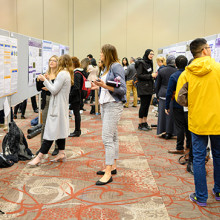
Above: Participants engaging in poster presentations at LHRD 2019
“I love that LHRD brings trainees of all disciplines together to present our work, allowing us to become familiar with the research that is being performed outside of our respective areas. Being recognized with an award for my platform talk made the day even more rewarding,” said Shelby Oke, a PhD candidate working with Dr. Dan Hardy, Scientist at Lawson and Associate Professor at Schulich Medicine & Dentistry. Oke is conducting research to determine how maternal insults during pregnancy, such as a low protein diet, influence fetal growth and development.
This year’s LHRD keynote speaker, Timothy Caulfield, highlighted how science communication is particularly important in the age of misinformation. Caulfield, author of the bestseller Is Gwyneth Paltrow Wrong About Everything ?: When Celebrity Culture and Science Clash and host of the documentary TV series A User’s Guide to Cheating Death, presented as part of The Lucille & Norton Wolf Health Research Lecture Series. His talk, titled “Science vs. Celebrity: A Battle We Must Win,” focused on the important role scientists play in the battle against pseudoscience.
“London Health Research Day is an amazing event. It brings together a unique, engaged and highly interdisciplinary community,” noted Caulfield. “Great energy. Great discussion. Great research. What more do you need? It was an honour to be involved."
Image
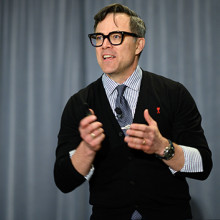
Above: Timothy Caulfield
Caulfield also participated in a panel discussion on science communication alongside local science communicators Ramina Adam, Dr. Lorelei Lingard, Dr. David Palma and Dr. Matthew Teeter. The panel was moderated by Carly Weeks, Health Reporter at The Globe and Mail, and focused on the importance of communicating science effectively and responsibly.
“The panel created an incredible opportunity to discuss science communication. I think that it was a great starting point to encourage trainees to get more involved in outreach efforts,” said Ramina Adam, a PhD candidate at Schulich Medicine & Dentistry. “Having that in-depth discussion about the importance of science outreach was a great follow-up to Timothy Caulfield’s keynote presentation and very encouraging for trainees who are passionate about the topic.”
Image
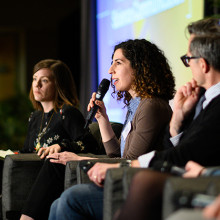
Above: Ramina Adam shares her perspectives as part of the LHRD panel discussion on science communication.
From the presentation of research projects to the panel discussion, LHRD 2019 was an engaging day of networking and professional development that highlighted the scope of health science in London, Ontario.
For a full list of this year’s award recipients and to see the photo gallery, please visit the LHRD website.