


Search
Search
1347 Search Results:
… Patient Satisfaction Surveys Location of Files: Various areas within St. Joseph’s Health Care London depending on … Patient Satisfaction Surveys Location of Files: Various areas within St. Joseph’s Health Care London depending on …
Personal Information Bank (PIB) Details Title: Patient Satisfaction Surveys Location of Files: Various areas within St. Josephs Health Care London depending on what area the feedback pertains to and Quality Management and Clinical Decision Support. Description: A survey sent to recent patients of St...
… through regular reporting of our performance in areas such as: hospital acquired infections, surgical … medical equipment. Please use your cell phone in designated areas only. The use of cell phones or other devices for … directions to Admitting visit https://www.sjhc.london.on.ca/areas-of-care/pre-surgical-screening-unit . There is also a …
Oct 2020 Please note the information in this booklet may not be completely up to date due to the COVID-19 pandemic. Please refer to our website: www.sjhc.london.on.ca for more information including screening information and visiting restrictions. http://www.sjhc.london.on.ca/ A guide to surgery at S...
… manner. How would you rate the facility in these areas? 29. E E E E E EExcellent Very Good Good Fair Poor … manner. How would you rate the facility in these areas? 29. E E E E E EExcellent Very Good Good Fair Poor …
B B B 0060421*001AMD14**001AMD14* *0* LIVING ENVIRONMENT The following questions ask about the facility's living enviroment. Does your family member's room meet his/her specific needs?1. E E E E Yes Somewhat No Don't know/ N/A Does the layout of the facility meet your family member's needs?2. E E E ...
… the living area, food, activities, and also more sensitive areas such as staff, dignity, and independence. Every … Thank you Mr/Mrs. Now I am going to ask you about different areas of life at Alpha Hospital. B B B … the living area, food, activities, and also more sensitive areas such as staff, dignity, and independence. Every …
B B B 0060421*001AMD14**001AMD14* *00* ABC Agency Alpha Hospital *12345 123ABC We are doing a survey where we ask some questions about life at Alpha Hospital. The survey has questions about all aspects of life here such as the living area, food, activities, and also more sensitive areas such as staf...
… Page 12 of 22 Complex Continuing Care Resident Satisfaction-Areas for Improvement St. Joseph's Health Care London - … Page 12 of 22 Complex Continuing Care Resident Satisfaction-Areas for Improvement St. Joseph's Health Care London - WCW … & Treatment Additional Questions Response Rate Strengths Areas for Improvement Priority Matrix Would Recommend …
April 09, 2012 Page 1 of 22 Complex Continuing Care Resident Satisfaction-All Domains and Overall Ratings St. Joseph's Health Care London - Veteran's Care B Pod & Complex Care October 2011 (Update March 2012) (n=71) 0.0 10.0 20.0 30.0 40.0 50.0 60.0 70.0 80.0 90.0 100.0 Overall quality of care/servi...
… manner. How would you rate the facility in these areas? 25. E E E E E E EExcellent Very Good Good Fair Poor … manner. How would you rate the facility in these areas? 25. E E E E E E EExcellent Very Good Good Fair Poor …
B B B 0060421*001AMD14**001AMD14* *00* Please fill in the circle that best describes how you feel about the care and services that your family member receives at Regional Mental Health Care. Please focus on the most recent or current inpatient stay when answering the questions. If your family member...
… manner. How would you rate the facility in these areas? 29. E E E E E EExcellent Very Good Good Fair Poor … manner. How would you rate the facility in these areas? 29. E E E E E EExcellent Very Good Good Fair Poor …
B B B 0060421*001AMD14**001AMD14* *0* LIVING ENVIRONMENT The following questions ask about the facility's living enviroment. Does your family member's room meet his/her specific needs?1. E E E E Yes Somewhat No Don't know/ N/A Does the layout of the facility meet your family member's needs?2. E E E ...
… 05, 2011 Page 12 of 22 LTC Resident Experience of Care-Areas for Improvement Mount Hope Centre for Long Term Care - … & Treatment Additional Questions Final Outcome Strengths Areas for Improvement Priority Matrix Would Recommend … 05, 2011 Page 12 of 22 LTC Resident Experience of Care-Areas for Improvement Mount Hope Centre for Long Term Care - …
December 05, 2011 Page 1 of 22 LTC Resident Experience of Care-All Domains and Overall Ratings Mount Hope Centre for Long Term Care - Corporate October 2011 (n=312) 0.0 10.0 20.0 30.0 40.0 50.0 60.0 70.0 80.0 90.0 100.0 Overall quality of care/services (RES) % Positive Score Mar '06 Oct '09 Current ...
… the living area, food, activities, and also more sensitive areas such as staff, dignity, and independence. Every … Thank you Mr/Mrs. Now I am going to ask you about different areas of life at Alpha Hospital. B B B … the living area, food, activities, and also more sensitive areas such as staff, dignity, and independence. Every …
B B B 0060421*001AMD14**001AMD14* *00* ABC Agency Alpha Hospital *12345 123ABC We are doing a survey where we ask some questions about life at Alpha Hospital. The survey has questions about all aspects of life here such as the living area, food, activities, and also more sensitive areas such as staf...
… Doesn't Apply I was kept well-informed about my progress in areas that were important to me.15. E E E E E E Strongly … Doesn't Apply I was kept well-informed about my progress in areas that were important to me.15. E E E E E E Strongly …
B B B 0107077*002AMD15**002AMD15* *00* CLIENT PERSPECTIVES OF REHABILITATION SERVICES (CPRS) QUESTIONNAIRE Instructions: Please think about your experience as a rehabilitation inpatient. The program staff includes all of the nursing staff, therapists, and physicians working in your inpatient rehabil...
… of Rehabilitation Services-Lowest Percent Positive (Areas for Improvement) St Joseph's Health Care London … Percent Positive (Strengths) Lowest Percent Positive (Areas for Improvement) Priority Matrix Overall Impressions … of Rehabilitation Services-Lowest Percent Positive (Areas for Improvement) St Joseph's Health Care London …
October 11, 2012 Page 1 of 26 Client Perspectives of Rehabilitation Services-All Dimensions and Overall Ratings St Joseph's Health Care London Corporate Apr 1, 2012 - Jun 30, 2012 (n=117, Response Rate= 47.8%) 0.0 10.0 20.0 30.0 40.0 50.0 60.0 70.0 80.0 90.0 100.0 Quality of care/services received (...
… Department Patient Experience-Lowest Percent Positive (Areas for Improvement) St. Joseph's Health Care London … Percent Positive (Strengths) Lowest Percent Positive (Areas for Improvement) Priority Matrix Overall Impressions … Department Patient Experience-Lowest Percent Positive (Areas for Improvement) St. Joseph's Health Care London …
October 23, 2012 Page 1 of 19 Emergency Department Patient Experience-All Dimensions and Overall Ratings St. Joseph's Health Care London Corporate Apr 1, 2012 - Jun 30, 2012 (n=111, Response Rate= 27.9%) 0.0 10.0 20.0 30.0 40.0 50.0 60.0 70.0 80.0 90.0 100.0 Overall quality of ED care % Positive Sco...
… Department Patient Experience-Lowest Percent Positive (Areas for Improvement) St. Joseph's Health Care London … Percent Positive (Strengths) Lowest Percent Positive (Areas for Improvement) Priority Matrix Overall Impressions … Department Patient Experience-Lowest Percent Positive (Areas for Improvement) St. Joseph's Health Care London …
March 21, 2013 Page 1 of 19 Emergency Department Patient Experience-All Dimensions and Overall Ratings St. Joseph's Health Care London Corporate Jul 1, 2012 - Sep 30, 2012 (n=99, Response Rate= 25.1%) 0.0 10.0 20.0 30.0 40.0 50.0 60.0 70.0 80.0 90.0 100.0 Overall quality of ED care % Positive Score ...
PAYROLL DOCUMENTATION Welcome to St. Josephs Health Care London. What is Required for Payroll Documentation: Proof of banking information (i.e. void cheque or direct deposit form) Signed Acceptance Form Completed Employee Information Form Completed Provincial Tax Form (TD1ON) Completed Federal ...
People experiencing homelessness more likely to develop dementia at younger ages, study finds
Dementia in unhoused people was 1.9 times greater than the general population, with a higher prevalence for age groups younger than 85 years, according to new research from Lawson Health Research Institute and ICES.
In one of the first population-based studies of its kind and published in The Lancet Public Health, researchers compared dementia prevalence in people experiencing homeless with the general population and people living in low-income neighbourhoods in Ontario, Canada.
“Not only did we find that dementia was more common among unhoused individuals, but the difference was greatest between the ages of 55 to 64 years,” says lead author Dr. Richard Booth, Scientist at ICES and Lawson Health Research Institute, and Associate Professor and Arthur Labatt Family Research Chair in Nursing at Western University.
“There’s a strong link between homelessness and accelerated ageing, which may be one of the reasons people experience an earlier onset of the disease,” says Dr. Booth.
Using a prevalence ratio, the researchers found that within the ages of 55-74 years rates of dementia were 4 to 5 times higher than the general population and 3 to 3.5 times higher than the low-income group. There was a higher dementia prevalence in all age groups younger than 85 years among people experiencing homelessness in both males and females.
Unhoused people were younger on average, less likely to be female, and less likely to live in rural areas compared to the other two groups. They also had higher rates of health conditions associated with dementia, such as head trauma, neurological conditions, HIV, and mental health and substance-use disorders.
After adjusting for factors such as age, sex, residential area, and health conditions, the prevalence ratio for people experiencing homelessness was 1.7 times higher compared to the low-income group, and 1.9 times higher compared to the general population.
“Other research has outlined that the rates of homelessness in older adults are expected to double by 2030, which means that the number of people living with dementia could rise substantially,” says Dr. Booth. “Our findings suggest that unhoused individuals should be screened for dementia at younger ages, rather than waiting until age 65 as many guidelines suggest.”
The researchers also note the complexity of diagnosing dementia in an individual experiencing multiple, chronic health conditions, as cognitive symptoms can overlap. Because of the difficulty in obtaining a medical history and diagnosis in this population, the study could have underestimated the true prevalence of dementia.
“We hope this work serves to enhance the awareness of policy makers and practitioners of the increasing prevalence of dementia among people experiencing homelessness,” says study author Salimah Shariff, Staff Scientist with the Populations & Public Health Research Program at ICES, Associate Director of research operations and strategic partnerships at ICES Western, and Associate Scientist at Lawson. “As housing is a core determinant of health and essential to the sustainment of individuals’ health and wellbeing, access to permanent, supportive housing structures for people experiencing homelessness is also critical in preventing and slowing the progression of dementia in this population.”
This study was funded by the Public Health Agency of Canada.
FOR FURTHER INFORMATION PLEASE CONTACT:
Misty Pratt
Senior Communications Associate, ICES
@email 613-882-7065
… “…a significant fraction (perhaps 20 to 50 percent in some areas) of radiological examinations may be inappropriate.” … “…a significant fraction (perhaps 20 to 50 percent in some areas) of radiological examinations may be inappropriate.” …
Radiology On Call A Primer for New Residents Jonathan Chung, MD, FRCPC Interventional Radiologist Radiology Undergraduate Medical Education Director Interventional Radiology Fellowship Director Goals 1. Put a face to a name 2. Provide a residents point of view 3. Offer a basic framework of issues to...
Pinpointing the role of language disruptions in psychosis
LONDON, ON - The ability of humans to use language may also be what puts us at the unique risk of developing psychosis, a subset of mental illness characterized by changes in emotions, impaired functioning, and a disconnection from reality.
Difficulties with communication – both the ability to use language and to comprehend what others are saying – are some of the earliest symptoms. New research from Western University and Lawson Health Research Institute has shown that this may be because in patients with psychosis parts of the brain not meant to process language are trying to perform this complex job. Like a small airport trying to handle all the air traffic from a big hub like Pearson International Airport, some brain regions may be overloaded in psychosis.
“The language system seems to be key to understanding this illness,” said Dr. Lena Palaniyappan, the Tanna Schulich Chair in Neuroscience and Mental Health at Western’s Schulich School of Medicine & Dentistry and Scientist at Lawson and Robarts Research Institute. “We don’t yet fully understand how the disorganization of language takes place in patients affected by psychosis.”
Embarking on a mission to find out, Dr. Palaniyappan worked with a team of imaging scientists at Robarts to perform MRI scans on the brains of patients with acute psychosis. Patients were recruited from the Prevention and Early Intervention Program for Psychoses (PEPP) at London Health Sciences Centre, a flagship clinic that supports young individuals from a very early stage of psychosis.
The team divided the patients into two groups – those with severe language disturbances, and those whose language symptoms were less pronounced. They found that both groups had weakening of connectivity, or ‘hubness,’ in the part of the brain generally associated with language -- the superior temporal area. The group with more severe language symptoms also showed an emergence of higher hubness in some unexpected regions of the brain that may be compensating for some of the lost connectivity elsewhere.
“This finding led us to believe that the language problems may occur because the main hubs that are supposed to conduct language are now retired, and so these peripheral hubs, which have no business of orchestrating language as their main function, are picking up the job and aren’t doing it very well,” said Dr. Palaniyappan.
The researchers hope that by understanding how language becomes disorganized in psychosis, the data can inform new interventions to focus on strengthening the language systems in the brain to reduce or delay psychotic symptoms.
Using ultra-high-field magnetic resonance imaging at Robarts Research Institute, they were able to look at the entire brain of patients with acute psychosis. Instead of homing in on one specific area, the team looked at 3-D pixels of the brain (voxels) to get a full picture of what was happening in the whole brain and how different areas were interacting.
Using the airport analogy, Palaniyappan said that if they had only looked at the language area it would have been like only walking into one airport, and not understanding how the reduced traffic in that airport was influencing the air traffic at other surrounding airports.
“We went in without any expectations, and searched the whole brain,” said Palaniyappan. “This unique approach allowed us to get a picture of the forest rather than a picture of the tree.”
The study was funded through an early-career foundation grant from the Canadian Institutes of Health Research and was supported by PEPP.
-30-
About Lawson Health Research Institute
Lawson Health Research Institute is one of Canada’s top hospital-based research institutes, tackling the most pressing challenges in health care. As the research institute of London Health Sciences Centre and St. Joseph’s Health Care London, our innovation happens where care is delivered. Lawson research teams are at the leading-edge of science with the goal of improving health and the delivery of care for patients. Working in partnership with Western University, our researchers are encouraged to pursue their curiosity, collaborate often and share their discoveries widely. Research conducted through Lawson makes a difference in the lives of patients, families and communities around the world. To learn more, visit www.lawsonresearch.ca.
About Western
Western delivers an academic experience second to none. Since 1878, The Western Experience has combined academic excellence with life-long opportunities for intellectual, social and cultural growth in order to better serve our communities. Our research excellence expands knowledge and drives discovery with real-world application. Western attracts individuals with a broad worldview, seeking to study, influence and lead in the international community.
About The Schulich School of Medicine & Dentistry
The Schulich School of Medicine & Dentistry at Western University is one of Canada’s preeminent medical and dental schools. Established in 1881, it was one of the founding schools of Western University and is known for being the birthplace of family medicine in Canada. For more than 130 years, the School has demonstrated a commitment to academic excellence and a passion for scientific discovery.
Media Contacts
Celine Zadorsky
Senior Media Relations Consultant
Communications & Public Engagement
T: 519-685-8500 ext. 73502
Celine.zadorsky@lhsc.on.ca
… barriers to protect HCWs doing triage in reception areas (e.g. clinics and emergency departments) • Negative … signage to restrict people in the facility from accessing areas of heightened risk • respiratory protection program D. … barriers to protect HCWs doing triage in reception areas (e.g. clinics and emergency departments) • Negative …
Point of Care Risk Assessment for COVID-19 A risk assessment must be performed with every patient interaction to determine appropriate infection control measures. Risk Assessment with every patient/resident interaction includes: contamination of skin or clothing by microorganisms in the patient/res...
Poop in a pill helping advance cancer care
Lawson Research Institute scientists have perfected the delivery of fecal transplants via patient-friendly capsules now central in ground-breaking cancer treatment studies.
It’s one of the most exciting areas of research in cancer care.
Description
Making waves in scientific and health care circles worldwide, it holds the potent potential to “jazz up” cells that attack cancer and boost the body’s response to treatment.
So what is this powerful ally? It’s poop in a pill – home-grown right here at St. Joseph’s Health Care London and Lawson Research Institute.
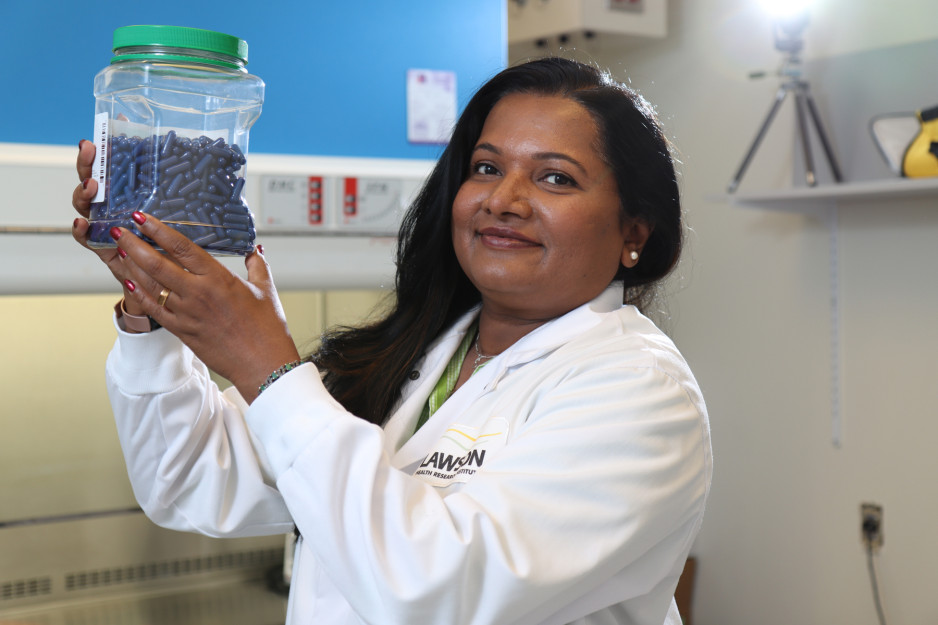
In fact, Lawson scientists Dr. Michael Silverman, Seema Nair Parvathy, PhD and their team are considered poop pill pioneers, having perfected the delivery of fecal transplantation by way of patient-friendly capsules that can be easily swallowed. These capsules contain healthy gut microbes that have become pivotal in many landmark cancer treatment studies.
Triggering an immune response
Understanding the role of poop in cancer treatment requires grasping the wonders of the human microbiome and its key role in influencing health and well-being.
The human microbiome consists of trillions of microorganisms that live inside and outside of the body, including bacteria, viruses and yeasts. While some bacteria are associated with disease, others are vital to the human immune system – the body’s main protective and disease-fighting tool – and many other aspects of health. Over the past decade, microbiome research has led to a revolution in medicine as scientists unravel just how an imbalance of these microorganisms interferes with many aspects of good health.
"(Fecal microbial transplants) allows us to harness the immune system to mount a stronger defence." Dr. Michael Silverman
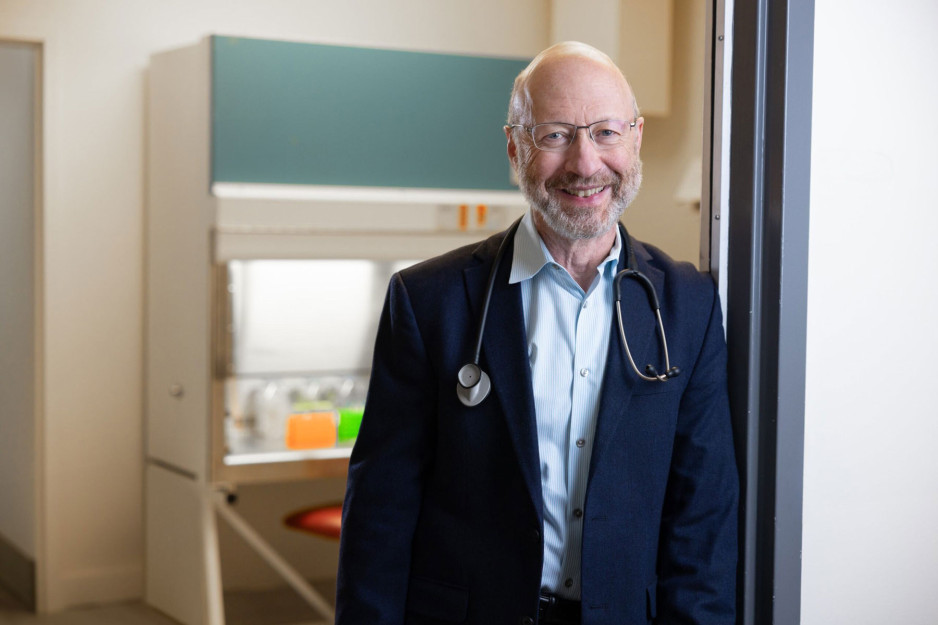
The goal of fecal microbiota transplants (FMT) is to transfer healthy gut microbes from donors into patients with cancer and other diseases so that healthy bacteria will colonize in the patient’s gut and improve the microbiome, explains Silverman, Medical Director of St. Joseph’s Infectious Diseases Care Program and citywide Chief of Infectious Diseases for London’s hospitals.
To do so, stools are collected from carefully screened healthy donors, prepared in a lab into capsule format, and introduced into a patient’s gastrointestinal tract.
“What is so exciting when it comes to cancer treatment is the evidence we now have showing how a healthy microbiome activates the immune response to tumours to make the treatment more effective,” Silverman adds. “It allows us to harness the immune system to mount a stronger defense.”
St. Joseph’s capsules are central to several significant studies currently underway aimed at improving treatment for lung, kidney, breast, renal, pancreatic and other cancers.
Among the most notable is the London team’s lead role in a ground-breaking national study – one of the world’s largest randomized controlled clinical trials using FMT to improve the effectiveness of the standard of care for advanced melanoma, a type of skin cancer.
Improving melanoma survival rates
About 11,300 Canadians will be diagnosed with melanoma in 2024 and, even with standard treatment, about half that number will experience disease progression and die.
The 16-site Canadian trial builds off the work of Silverman, Parvathy and their team, in partnership with Saman Maleki, PhD, and Dr. John Lenehan at London Health Sciences Centre. Together, they were the first to demonstrate the safety and therapeutic potential of using the capsules produced at St Joseph’s to influence a patient’s gut microbiota to enhance immunotherapy and increase the odds of surviving advanced melanoma.
“London is seen as having the most expertise in use of FMT in cancer care in the world and is a driving force in moving this forward,” says Silverman. “Immunotherapy is rapidly expanding the number of treatable cancers and our FMT therapy is helping to accelerate this progress.”
… has been identified. It is not necessary to complete areas within PART B that do not differ from PART A) … has been identified. It is not necessary to complete areas within PART B that do not differ from PART A) … has been identified. It is not necessary to complete areas within PART B that do not differ from PART A) Site MON …
Position Request / Candidate Review Impact Summary Form Please retain a copy of this form when you submit for a position request so that it can be used when submitting the candidate information. PART A POSITION REQUEST INFORMATION (Complete PART A when submitting a request for a position) PART B CAN...