


Search
Search
3186 Search Results:
… London Health Sciences Centre and St. Joseph’s Health Care Dr. Chris Watling, Associate Dean, Postgraduate Medical … names G-J 10:20 am London Hospital Information Critical Care Outreach Team - Dr. Haddara, and Susan Whitehouse … London Health Sciences Centre and St. Joseph’s Health Care Dr. Chris Watling, Associate Dean, Postgraduate Medical …
Special thanks to our sponsors for todays events. Please visit them at their booth located around Auditorium A Canadian Medical Association, MD Financial Management, Ontario Medical Association, London District Academy of Medicine, Schulich Distributed Education, Clinical Connect, LHSC Human Resourc...
… Schulich School of Medicine & Dentistry Professor, Critical Care Medicine Questioning Residency?! “Well, did I make the … you earned it! #2 Your wellness Matters! • Remember to take care of yourself or it’s hard to take care of others • Find a routine to take care of your …
Virtual Orientation 2022 Joining us Today: Dr. John Yoo, Dean Schulich School of Medicine Dr. Lois Champion, Associate Dean, PGME Schulich School of Medicine & Dentistry Dr. Larry Jacobs, Associate Dean, Windsor Campus Dr. William Sischek, Integrated Vice President Medical & Academic Affairs Dr...
… Schulich School of Medicine & Dentistry Professor, Critical Care Medicine Questioning Residency?! “Well, did I make the … you earned it! #2 Your wellness Matters! • Remember to take care of yourself or it’s hard to take care of others • Find a routine to take care of your …
Virtual Orientation 2022 Joining us Today: Dr. John Yoo, Dean Schulich School of Medicine Dr. Lois Champion, Associate Dean, PGME Schulich School of Medicine & Dentistry Dr. Larry Jacobs, Associate Dean, Windsor Campus Dr. William Sischek, Integrated Vice President Medical & Academic Affairs Dr...
… St. Joseph’s Health Care London ORTHOPTIST - IVEY EYE INSTITUTE 268 Grosvenor … NS0914 (Rev. 2010/01/25) St. Joseph’s Health Care London ORTHOPTIST - IVEY EYE INSTITUTE 268 Grosvenor … St. Joseph’s Health Care London ORTHOPTIST - IVEY EYE INSTITUTE 268 Grosvenor …
St. Josephs Health Care London ORTHOPTIST - IVEY EYE INSTITUTE 268 Grosvenor Street, Room B1-409 London, Ontario, Canada N6A 4V2 Telephone: 519 646-6018 Fax: 519 646-6056 REQUEST FOR ORTHOPTIC ASSESSMENT PATIENT: _________________________________________________________________________ DATE OF APPO...
… your appointment Bring a list of your current health care providers Bring an up-to-date list of the medications … A full report is also sent to the referral source, primary care provider (such as your family doctor) and community … your appointment Bring a list of your current health care providers Bring an up-to-date list of the medications …
Operational Stress Injury Clinic: Frequently Asked Questions Who assesses clients for OSI? Assessments are completed by psychologists and psychiatrists. How does someone qualify for assessment? Clients are referred for assessments by Veterans Affairs Canada, the Department of National Defence or the...
… London Health Sciences Centre And St. Joseph’s Health Care London April 2016 Delineation of Procedural Privileges … London Health Sciences Centre And St. Joseph’s Health Care London April 2016 Delineation of Procedural Privileges …
London Health Sciences Centre And St. Josephs Health Care London April 2016 Delineation of Procedural Privileges Department of Otolaryngology Head & Neck Surgery Category Privileges Educational/Experience Requirements A All activities and procedures generally performed by surgeons certified in Otol...
… about pain management, and work alongside other health care professionals towards improved quality of life and … for this person’s nerve pain. I knew a lot of health care providers struggled to help manage painful conditions. … treatment plan look like? Dr. B: I believe that ideal pain care comes from helping people develop strategies that …
Our approach to treating chronic pain Dr. Geoff Bellingham, Clinical Director of the Pain Management Program and Dr. Marilyn Hill, psychologist, share their thoughts on treating chronic pain through the Q&A below. Dr. Hill: Dr. Bellingham, if we met on an elevator, and I asked you to describe your w...
… 1, 2018 to March 31, 2019 Roy Butler Vice President Patient Care and Risk Management Lori Higgs Vice President Clinical … Chief Executive Officer Dr. Gillian Kernaghan VP Patient Care & Chief Nurse Executive Howard Rundle Vice Chair, Board … TORONTO Total 1,480.52$ Jodi Younger Vice President Patient Care and Quality Dr. Robin Walker Integrated Vice President …
Page 1 of 4 Name: Title Invoice Date Amount Expense Category Description 10/31/2018 76.28$ TRAVEL OTHER TRANSPORTATION TRAIN BUS TAXI CONFERENCE TORONTO 10/31/2018 25.00$ TRAVEL OTHER TRANSPORTATION TRAIN BUS TAXI CONFERENCE TORONTO 10/31/2018 269.12$ TRAVEL ACCOMMODATIONS CONFERENCE TORONTO 10/31/2...
… 30, 2016 Name: Title: Roy Butler Vice President Patient Care and Risk Management Invoice Date Amount Expense … $ 2,280.79 Name: Title: Karen Perkin Vice President Patient Care and Chief Nurse Executive Invoice Date Amount Expense … $ 732.69 Name: Title: Karima Velji Vice President Patient Care and Quality Invoice Date Amount Expense Category …
Executive Expense Reporting For the Period April 1, 2016 to September 30, 2016 Name: Title: Roy Butler Vice President Patient Care and Risk Management Invoice Date Amount Expense Category Description 05/04/2016 05/04/2016 05/04/2016 05/25/2016 05/25/2016 05/25/2016 05/25/2016 07/07/2016 07/07/2016 ...
… Vice President Complex, Specialty Aging and Rehabilitative Care Invoice Date Amount Expense Category Description … October 1, 2012 to March 31, 2013 St. Joseph's Health Care London Page 1 of 3 Executive Expense Reporting For the … October 1, 2012 to March 31, 2013 St. Joseph's Health Care London Name: Glen Kearns Title: Integrated Vice …
Name: Kathy Burrill Title: Vice President Communication & Public Affairs Invoice Date Amount Expense Category Description 11/07/2012 79.10$ TRAVEL PARKING CONFERENCE TORONTO 11/07/2012 418.10$ TRAVEL ACCOMMODATIONS CONFERENCE TORONTO 11/07/2012 50.00$ TRAVEL MEALS CONFERENCE TORONTO 11/07/2012 160.0...
… March, 2012 St. Joseph’s Health Care London Progress on Quality Improvement Plan from 2011/12 St. Joseph’s Health Care London Progress on Quality Improvement Plan from … rate by 50% in 2012-13. March, 2012 St. Joseph’s Health Care London Progress on Quality Improvement Plan from …
March, 2012 St. Josephs Health Care London Progress on Quality Improvement Plan from 2011/12 St. Josephs Health Care London Progress on Quality Improvement Plan from 2011/12 Priority Indicators for 2011-2012 Baseline performance March 2011 Goal for 2011-2012 Progress to date Comments Hand Hygiene co...
… Improvement Plan (QIP) Narrative for St. Joseph’s Health Care London 3/31/2014 2 Overview “Being a National Leader in … Patient Safety” is a strategic goal for St. Joseph’s Health Care London (St. Joseph’s). In pursuit of this goal we are … among all Ontario Teaching Hospitals for acute inpatient care. Despite these accomplishments, St. Joseph’s continues …
1 Quality Improvement Plan (QIP) Narrative for St. Josephs Health Care London 3/31/2014 2 Overview Being a National Leader in Quality and Patient Safety is a strategic goal for St. Josephs Health Care London (St. Josephs). In pursuit of this goal we are proud to have received the highest Accreditati...
… March 2014 St. Joseph’s Health Care London Excellent Care for All Quality Improvement Plans (QIP): Progress Report for 2013-2014 St. Joseph’s Health Care London Priority Indicator (2013-2014 QIP) Performance … March 2014 St. Joseph’s Health Care London Excellent Care for All Quality Improvement Plans …
March 2014 St. Josephs Health Care London Excellent Care for All Quality Improvement Plans (QIP): Progress Report for 2013-2014 St. Josephs Health Care London Priority Indicator (2013-2014 QIP) Performance in 2012-2013 Performance Goal for 2013-2014 Progress to date Comments Hand hygiene compliance ...
Over $10 million in funding announced from CIHR
Health researchers from across London were awarded more than $10 million from Canadian Institutes of Health Research (CIHR), with $2.8 million through Lawson Health Research Institute and $7.3 million through Schulich Medicine & Dentistry. A total of 15 projects were funded.
CIHR’s Project Grant program is designed to capture ideas with the greatest potential for important advances resulting in the creation of new knowledge and its translation into improved health and health care for Canadians.
Congratulations to all of the successful applicants!
Projects through Lawson Health Research Institute:
Karen Bosma, and Laurent Brochard: “Proportional Assist Ventilation for Minimizing the Duration of Mechanical Ventilation: The PROMIZING Study.”
Critically ill patients frequently require the life-sustaining technology of mechanical ventilation, but prolonged use can place patients at risk for long-term functional impairment and increased mortality, and is also costly to the health care system.
The PROMIZING Study is an international, multi-centre randomized clinical trial that will identify ways to reduce the duration of mechanical ventilation for patients at greatest risk and to determine whether a novel mode of ventilation developed in Canada could replace the standard of care.
“It is vital that Canada continue to invest in high impact, hospital-based research such as the PROMIZING study which enable researchers to develop and test treatments, technologies, and procedures that will improve clinically relevant, patient-important outcomes while also improving the efficiency of our healthcare system.” – Dr. Karen Bosma
Diane Bryant, and Alan Getgood: “Anterior Cruciate Ligament Reconstruction using Bone Patellar Bone or Quad Tendon Autograft with or without Lateral Extra Articular Tenodesis in Individuals who are at High Risk of Graft Failure (STABILITY II)”
Anterior cruciate ligament reconstruction (ACLR) is complicated by high failure rates in young active individuals, which is associated with worse outcomes and higher rates of osteoarthritis.
Currently, there are different types of grafts being used to rebuild a torn ACL. There is a need to evaluate whether one method is better at reducing failure, minimizing complications and creating better outcomes in terms of functional performance. This study will determine the best graft choice for young patients at risk of ACLR failure which will ultimately lead to positive effects on activity and quality of life.
Patrick Luke and Rabindra Bhattacharjee: “Therapeutic potential of bloodless oxygenated perfusion of donor kidneys for prolonged storage and protection for transplantation.”
Kidney failure among Canadians has tripled over the last 20 years. Transplantation improves the quality of life and survival of patients at a much lower cost than dialysis. However, only 40 per cent of patients receive functional kidneys due to lack of living organ donors.
To increase the number of kidneys available for transplantation, surgeons are accepting orgrans from deceased donors. Currently, during storage, the organs can suffer injuries from a lack of oxygen as well as cold temperatures and the conditions are not conducive to use drugs that can prevent damage.
The study is looking at the effects of a bloodless oxygen carrying perfusion liquid that will allow the storage of human donor kidneys for long periods of time at room temperature, and will also evaluate if certain drugs can maximize the preservation of these organs.
“Hospital-based research institutes are uniquely positioned to conduct patient-centred research. Investment through CIHR supports the physicians and researchers who are committed to improving treatments for patients at the front line of care.” – Dr. Patrick Luke
Emil Schemitsch: “The DECIPHER Study: DEterminants of Function and Clinically Important outcomes in Proximal Humerus Fractures in the Elder Population: A National CohoRt.”
Shoulder fractures are becoming increasingly common for older adults and cause considerable limitations and impacts for their daily life. While different approaches are taken to treat shoulder fractures, there is a lack of knowledge and evidence to show which of those methods are the most effective and for which patients.
The DECIPHER study will seek to answer important questions about which treatment and rehabilitation strategies are best for different patients, strengthening the clinical strategy for managing these difficult and prevalent injuries. It will also provide an economic analysis to understand the impact for healthcare system costs.
“Such an analysis has the potential to significantly affect patient care and Canadian practice patterns, as well as inform the development of future pivotal clinical trials. DECIPHER will have an important impact on patient care, health system costs and future research directions locally, nationally and internationally.” - Dr. Emil Schemitsch.
Projects through Schulich Medicine & Dentistry:
Subrata Chakrabarti, with collaborators Bekim Sadikovic, Krishna Singh, and Stephanie Frisbee: “Novel mechanisms in diabetic cardiomyopathy.”
Peter Chidiac and Jeffrey Dixon: “Allosteric regulation of GPCR signaling by extracellular nucleotides.”
Bryan Heit: “Role of ELKS1 and Rab17 in Differential Antigen Sorting and MHC II Trafficking Following Efferocytosis and Phagocytosis.”
Marlys Koschinsky and Michael Boffa: “B Apo(a):apoB100 interactions as key determinants of Lp(a) biosynthesis.”
Shawn Li: “Novel anticancer immunotherapy targeting the molecular mechanisms of T cell suppression by immune checkpoints.”
Julio Martinez‐Trujillo and Michael Poulter: “Reverse engineering working memory circuits in the primate brain: Implications for the study of memory deficits.”
Maria Mathews and Jennifer Shea with collaborators, Ivy Bourgeault, Emily Marshall, Amy Bombay, Nicole Doria, Julia Lukewich, and Amanda Myers: “Increasing Indigenous Participation in the Physician Workforce.”
Charles McKenzie, and Timothy Regnault: “Hyperpolarised 13C MRI of Placental Metabolism in Intrauterine Growth Restriction.”
Marco Prado: “A Regulation of chaperone‐mediated proteostasis by STI1.”
Lloy Wylie and Lana Ray with collaborators Christopher Mushquash, Victoria Smye, Nadine Wathen, Cheryl Forchuk, and Brock Pitawanakwat: “Educating for Equity: Building Culturally Safe Care through Indigenous Narratives.”
Xiufen Zheng: “The role of circular RNA in heart transplantation”
Over $2 million in federal funding to advance discoveries in health research
Last week, the Honourable Kirsty Duncan, Minister of Science and Sport, announced an unprecedented investment of more than $588 million through the Natural Sciences and Engineering Research Council of Canada’s (NSERC) Discovery Grants program.
The successful applications in London include 12 projects funded for Lawson Health Research Institute scientists, through Western University. In total, they will receive $2.3 million in funding over five years.
“The funding demonstrates our strong and enduring commitment to science and researchers. Since taking office, our government has worked hard to bring science and research back to their rightful place and this historic investment in the discoveries of tomorrow is just one example of how we are achieving this goal,” says The Honourable Kirsty Duncan, Minister of Science and Sport.
Across Canada, this funding will go to more than 4,850 researchers and students as they pursue their world-leading discovery work. It also includes support for nearly 500 early-career researchers who will bring a diversity of new voices and new insights to their fields.
Local research highlights
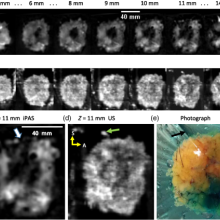
Dr. Jeffrey Carson is exploring the role of photoacoustic imaging as a method for detecting breast cancer. Currently, during the procedure the breast must be submerged in a tank of water to enhance the transmission of photoacoustic waves from the breast to the sensors.
“The water tank is cumbersome and impractical,” notes Dr. Carson. “Our goal is to eliminate the need for the water tank by detecting the photoacoustic waves through the air without making contact with the breast.” Their hope is that the project leads to the development of a non-contact photoacoustic scanner offering women the opportunity to sit or stand comfortably during breast imaging. “This simple improvement could greatly accelerate the adoption of photoacoustic imaging for breast cancer screening.”
Dr. Carson adds that funding like this provides graduate student trainees opportunities to develop knowledge and skills in engineering, mathematics, and biophysics. “They bring innovative new ideas to the Canadian medical device industry through employment and entrepreneurship.”
Image
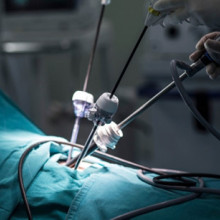
Dr. Rajnikant Patel is developing advanced robotic and intelligent systems for the next generation of systems and devices for minimally invasive surgery and therapy. These reduce trauma and costs while enhancing efficiency and reliability.
“For us, this funding opportunity is unique because it supports a program of research rather than a project,” says Dr. Patel. “We can explore new areas and directions that will lead to research projects and medical applications. A program that investigates novel robotic and AI technologies fits well with NSERC’s mandate.”
Image
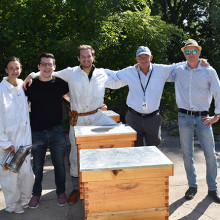
Dr. Gregor Reid is leading a revolutionary project that could save the world’s honeys bees, insects that are vital to human survival.
The intent is to develop an understanding of how lactobacilli strains can counter the most widely used pesticides that are wiping out nature's critically important pollinators. The lactobacilli appear to potentially degrade some of these toxic chemicals and improve the ability of honey bees to fight off early death.
“NSERC funding gives ideas like this a chance and even though the funding amount is relatively small, it allows graduate students to apply for their own awards and work on the project,” explains Dr. Reid. Students Brendan Daisley and Johnny Chmiel have been awarded NSERC scholarships to work on this important research.
Image
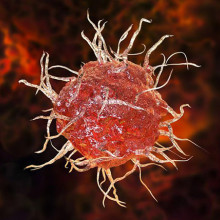
Dr. Xiugen Zheng’s project is investigating the role of circular RNA AEBP in the development and function of dendritic cells which are very important immune cells in the immune system. This will provide insights into new molecular and gene regulators, and their impact on the immune system and overall health.
“NSERC research funding greatly supports us to study the basic scientific questions that are critical for better understanding health problems and developing treatment for diseases,” says Dr. Zheng.
Image
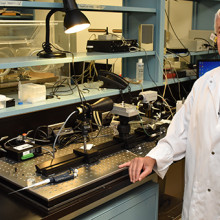
Dr. Rudolf Veldhuizen’s laboratory aims to understand how surfactant performs its function at a molecular and biophysical level. Pulmonary surfactant is a material in the lung that allows people and other mammals to breath with minimal effort. You can see this in babies who are born prematurely and have trouble breathing due to the lack of surfactant.
“Previous work has established a generalized model of how surfactant improves lung function under standardized conditions. This, however, does not explain how surfactant functions in extreme conditions,” says Dr. Veldhuizen. “By exploring conditions in comparative, mechanistic studies we will be able to establish a more universal understanding of surfactant function.”
This funded work provides a foundation for clinically relevant studies to further explore the role of alterations to surfactant in lung injuries and the opportunities for therapeutic interventions.
Image
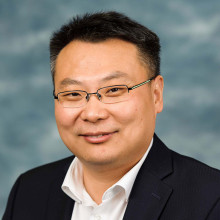
Dr. Shou Li is developing state-of-the-art machine learning system able to analyze huge amounts of clinical data and provide human level intelligent analysis. This work will enable the prediction of disease onset, progression and prognosis. “It is added value that will lead to more effective and efficient health care,” explains Dr. Li.
He adds that this funding is supporting a multi-disciplinary research program that combines the strength of multiple teams. “We will look at both the fundamental side of machine learning systems and clinical applications. In this way, we connect basic science with clinical science.”
Image
Congratulations to all the Lawson scientists who received funding:
- Dr. Dean Betts for Metabolic reprogramming to enhance the generation of canine induced pluripotent stem cells (Physiology and Pharmacology)
- Dr. Jeffrey Carson for Development of non-contact photoacoustic tomography (Medical Biophysics)
- Dr. Louis Ferreira for Multi-Directional Mechanical Testing of Bone using CTCompatible Loading Mechanisms (Mechanical and Materials Engineering)
- Dr. Shuo Li for Innovative Machine Learning for Medical Data Analytics (Medical Imaging)
- Dr. Penny MacDonald for Investigating cognitive functions mediated by ventral and dorsal striatum (Clinical Neurological Sciences)
- Dr. Charles McKenzie for Fetoplacental Molecular and Metabolic Magnetic Resonance Imaging; instalment (Medical Biophysics)
- Dr. Rajnikant Patel for Design and Control of Robotic Systems and Devices for Medical Applications (Electrical and Computer Engineering)
- Dr. Gregor Reid for Detoxification functionality of lactic acid bacteria (Microbiology and Immunology)
- Dr. Rudolf Veldhuizen for Mechanisms of surface tension reduction by pulmonary surfactant (Physiology and Pharmacology)
- Dr. Aaron Ward for Machine learning-based quantitative image, tissue, and clinical data analysis for lesion detection and characterization on prostate cancer imaging (Medical Biophysics)
- Dr. Eugene Wong for Optimization of spatiotemporal-modulated electric fields and fabrication of organs-on-chips for applications in Medical Physics (Physics and Astronomy)
- Dr. Xiufen Zheng for The role of circular RNA AEBP2 in dendritic cells (Pathology)
Scientist
… BODY, MIND & SPIRIT SINCE 1869 Renowned for compassionate care, St. Joseph's is one of the best academic health care organizations in Canada dedicated to helping people … of injury, disease and disability through excellence in care, teaching and research. \~ SIJOSEPHs H EALT H CA RE …
CARING FOR THE BODY, MIND & SPIRIT SINCE 1869 Renowned for compassionate care, St. Joseph's is one of the best academic health care organizations in Canada dedicated to helping people live to their fullest by minimizing the effects of injury, disease and disability through excellence in care, teachi...
… London Health Sciences Centre And St. Joseph’s Health Care London April 2016 Delineation of Procedural Privileges … may work and admit patients to the Neonatal Intensive Care Unit. Patient admission to the Paediatric Critical Care Unit requires consultation with the PCCU attending …
London Health Sciences Centre And St. Josephs Health Care London April 2016 Delineation of Procedural Privileges Department of Paediatrics Only members of the Division of Neonatal/Perinatal Medicine within the UWO Department of Paediatrics may work and admit patients to the Neonatal Intensive Care U...
… London Health Sciences Centre And St. Joseph’s Health Care London January 2017 Delineation of Procedural … may work and admit patients to the Neonatal Intensive Care Unit. Patient admission to the Paediatric Critical Care Unit requires consultation with the PCCU attending …
London Health Sciences Centre And St. Josephs Health Care London January 2017 Delineation of Procedural Privileges Department of Paediatrics Only members of the Division of Neonatal/Perinatal Medicine within the UWO Department of Paediatrics may work and admit patients to the Neonatal Intensive Care...
… sive Care Unit. Patient admission to the Paediatric Critical Care Unit … al Staff providing coverage in a level 3 Paediatric Critical Care Unit (as defined by the Critical Care … all appointments providing coverage in a level 3 Critical Care Unit. Delineation Privileges Educational and …
ApprovedbyDepartmentChief,CWCCandMACJanuary2019 Delineation of Procedural Privileges Department of Paediatrics OnlymembersoftheDivisionofNeonatal/PerinatalMedicinewithintheUWODepartmentofPaediatricsmay workandadmitpatientstotheNeonatalIntensiveCareUnit.PatientadmissiontothePaediatricCriticalCare...
… my individual needs into consideration when planning my care.2. E E E E E E Strongly Agree Agree Neutral Disagree … Disagree Doesn't Apply I had difficulty getting the health care information I need.7. E E E E E E Strongly Agree Agree … family/friends received information to assist in providing care for me at home.21. E E E E E E Strongly Agree Agree …
B B B 0060421*001AMD14**001AMD14* *00* CLIENT PERSPECTIVES OF REHABILITATION SERVICES (CPRS) QUESTIONNAIRE Instructions: Please think about your experience as a rehabilitation inpatient. The program staff includes all of the nursing staff, therapists, and physicians working in your inpatient rehabil...