


Search
Search
3186 Search Results:
… STJOSEPH_~ HEALTH CARE LONDON Office of the Chair, Board of Directors 268 … President and Chief Executive Officer St. Joseph's Health Care London Dear Dr. Kernaghan: In accordance with the terms … consent, the Board of Directors, St. Joseph's Health Care, London approved the recommendation of the Executive …
STJOSEPH_~ HEALTH CARE LONDON Office of the Chair, Board of Directors 268 Grosvenor St, PO Box 5777 London, ON N6A 4V2 T: 519 646-6100 ext 64202 June 5, 2015 Dr. Gillian Kernaghan President and Chief Executive Officer St. Joseph's Health Care London Dear Dr. Kernaghan: In accordance with the terms a...
… & Chief Executive Officer (CEO) and St. Joseph’s Health Care, London, the CEO is eligible to earn variable … of the Quality Improvement Plan as per Ontario’s Excellent Care for All Act 25% 3. Collaboration and integration … & Chief Executive Officer (CEO) and St. Joseph’s Health Care, London, the CEO is eligible to earn variable …
President & CEO Performance Evaluation 2014/15 According to the terms of the compensation plan prescribed in the contract of employment between the President & Chief Executive Officer (CEO) and St. Josephs Health Care, London, the CEO is eligible to earn variable compensation up to 20% of her/his a...
… f\s··,:;~ STJOSEPHs HEALTH CARE . LONDON May 30, 2017 Dr. Gillian Kernaghan President and Chief Executive Officer St. Joseph's Health Care London Dear Dr. Kernaghan: Office of the Chair, Board … consent, the Board of Directors, St. Joseph's Health Care London approved the recommendation of the Executive …
f\s,:;~ STJOSEPHs HEALTH CARE . LONDON May 30, 2017 Dr. Gillian Kernaghan President and Chief Executive Officer St. Joseph's Health Care London Dear Dr. Kernaghan: Office of the Chair, Board of Directors PO Box sm, Stn B London, ON N6A4V2 T: 519 646-6100 ext 64202 In accordance with the terms and co...
Preventing infertility in men who undergo lymph node removal surgery for testicular cancer
When patients with testicular cancer undergo lymph node removal surgery there is a risk that their fertility will be affected if proper nerve sparing techniques are not used. Up to 75 per cent of men will not be able to father children if they receive the surgery without these techniques.
Lawson’s Internal Research Fund (IRF) has awarded a grant to Dr. Nicholas Power, a researcher at Lawson and urologic oncologist at London Health Sciences Centre (LHSC), who is leading a study to identify the nerves involved in fertility that are affected in lymph node removal surgery for testicular cancer.
“Sometimes patients go through a lot to be cured of testicular cancer only to be left dealing with long-term survivorship issues such as fertility. We hope to gain new insights into how fertility can be preserved after these men receive lymph node removal surgery,” says Dr. Power, who is also an assistant professor at Western University’s Schulich School of Medicine & Dentistry.
In collaboration with Schulich assistant professors Dr. Marjorie Johnson and Dr. Brian Allman, and PhD candidate Tyler Beveridge, Dr. Power published initial results in The Journal of Urology announcing their discovery of a brand new anatomic structure, the pre-hypogastric ganglion, which needs to be spared in surgery to maintain fertility. They were also able to describe the first roadmap of retroperitoneal neuroanatomy – the anatomy of nerves in the space where surgeons locate lymph nodes most commonly affected by testicular cancer that has spread.
“There has never been a definitive anatomic study of the nerves of the retroperitoneum so it was our goal to provide the first comprehensive study of the nerves as they relate directly to patients who have testicular cancer,” explains Dr. Power. “After we published the initial results we were approached by textbook authors to use our data in upcoming editions of anatomy and surgical atlases. This will help to provide insight into nerve sparing techniques for surgeons who have not been trained at high-volume centers and ultimately improve the quality of care in testicular cancer patients overall.”
Already Dr. Power has found that using this knowledge when he performs lymph node removal surgery for testicular cancer has led to a 95 per cent success rate of preserving fertility.
The IRF will go towards their research to further investigate the actual function and physiology of the retroperitoneal neuroanatomy using a pig model.
“Lawson’s IRF provides incredible support for a field of study such as ours that is not yet at the stage of applying for a large grant. Receiving the funding gives us the independence to test out novel yet important hypotheses that will then lead us to further grants,” says Dr. Power.
Image
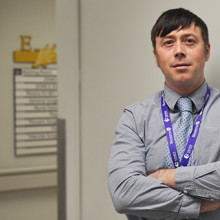
Above: Dr. Nicholas Power
The IRF is designed to provide Lawson scientists and students the opportunity to obtain start-up funds for new projects with the potential to obtain larger funding, be published in a high-impact journal, or provide a clinical benefit to patients. Funding is provided by the clinical departments of London Health Sciences Centre and St. Joseph’s Health Care London, as well as the hospital foundations (London Health Sciences Foundation and St. Joseph's Health Care Foundation).
Prevention and Awareness: Delirium
8:00pm - 9:00pm
You are invited to the first in a series of Research Bites,. These informative and interactive talks will focus on specific illnesses, their prevention and related research being conducted by researchers in London, Ontario.
Topic: Prevention and Awareness: Delirium
Image

Dr. O'Regan will share about delirium and what it means, and provide highlights of her ongoing research happening locally. She will also be speaking about how to recognize delirium in a loved one and what to do in this scenario, as well as the steps you can take to help prevent it.
Date: Thursday, January 24, 2019
Time: 4 - 5 pm
Location: Parkwood Institute, Mental Health Building, Auditorium (F2-235)
550 Wellington Road South
London, Ontario N6C 0A7
Maps and Directions for Parkwood Institute.
Parking: The lot rate is $4.00 when you enter. $1 and $2 coins and credit card accepted (press the start button then insert payment)
Registration is required and spots will fill up quickly.
Click here to register.
These talks are hosted by Parkwood Institute Research, a program of Lawson Health Research Institute.
… Primary Care Diabetes Support Program Referral Form …
… Primary Care Diabetes Support Program: What health care professionals can expect Effective diabetes management … that patients have access to an ongoing course of self- care support, which is critical to enable them to … Primary Care Diabetes Support Program: What health care …
Primary Care Diabetes Support Program: What health care professionals can expect Effective diabetes management requires that patients have access to an ongoing course of self- care support, which is critical to enable them to effectively manage their disease and prevent its devastating complications...
Prime Minister announces support for health research
Health researchers in London and across Canada welcomed news that the federal government will provide urgently-needed financial support for research teams whose work has been largely shut down by the COVID-19 pandemic.
Prime Minister Justin Trudeau has announced $450 million in new funding to help Canada’s academic research community during the COVID-19 pandemic.
“Research staff in Canada are the source of new innovations and ideas that help keep us healthy, protect our environment, and drive our economy. We are fortunate to have some of the world’s brightest minds. We are making sure Canadian universities and health research institutes have the support they need to sustain their research capacity through this difficult situation, and continue to attract and retain talent, for the benefit of all Canadians,” says The Rt. Hon. Justin Trudeau, Prime Minister of Canada.
The investment will:
- Provide wage supports to universities and health research institutes, so they can retain their research staff who are funded from industry or philanthropic sources and are unable to access some of the government’s existing COVID-19 support measures. This would apply even if their work has been temporarily suspended. The government will provide up to 75 per cent per individual, with a maximum of $847 per week.
- Support universities and health research institutes to maintain essential research-related activities during the crisis, and to ramp back up to full research operations once physical distancing measures are lifted. This will cover up to 75 per cent of total eligible costs, and will support activities such as the safe storage of dangerous substances and restarting data sets that were interrupted during the pandemic.
“Research personnel in our universities and health research institutes are significant drivers of science, discovery, and innovation in Canada. By providing these institutions with immediate support, we continue to nurture Canada’s talent pipeline and sustain our innovation capacity, while helping to mitigate the negative impacts of COVID-19 on the research community,” says The Hon. Navdeep Bains, Minister of Innovation, Science and Industry.
This announcement follows a tremendous effort by organizations and individuals across Canada over the course of this pandemic to secure support for hospital-based research. From outreach and meetings to letters and media interviews, many advocacy-based initiatives were undertaken to bring this important issue to the attention of key decision-makers. HealthCareCAN spearheaded these efforts, working tirelessly on behalf of the national health research community.
Lawson is extremely thankful to the federal government for recognizing the critical importance of protecting Canada’s research enterprise and providing urgently-needed financial support. “While we know financial pressure remains, this will help to keep research teams intact while research has been interrupted and provide assistance for when research activities gradually resume,” says Dr. David Hill, Lawson Scientific Director.
A special thank you to local MP Peter Fragiskatos for London North Centre who took up this issue in Ottawa. His strong leadership and representation made the key difference in successfully securing this new funding.
“Tackling the COVID-19 crisis in Canada has required an all-hands on deck approach and Canada’s health researchers have answered the call by suspending all other crucial hospital-based research to meet the challenge,” adds Dr. David Hill. “With this federal support we can now work to ensure that we can maintain other critically needed research on other diseases even as we pursue what promises to be a lengthy battle against COVID-19.”
Background:
- Canadian healthcare-based research is a $3 billion annual sector of the economy and employs 50,000 highly skilled researchers and other staff across the country.
- Health research is one of Canada’s great national achievements and biomedical research conducted in Canada is at the forefront of current essential research and clinical trials around COVID-19.
- This work is fundamental to life in a society and a key driver for progress, innovation and the economy. Canada’s health researchers are global leaders in driving improvements in disease prevention, diagnosis, treatment and care.
- Ontario’s research hospitals have long been the engines of health invention and discovery in provincial and national innovation. From Ottawa, London, Toronto, Kingston, Sudbury and Thunder bay, the more than 20,000 researchers and staff at these hospitals are driven by their passion to improve health.
See also:
- Prime Minister announces support for research staff in Canada – Government news release
- Canada’s health research enterprise welcomes federal support – HealthCareCAN media release
- OHA Media Statement re: Federal Government Supporting Ontario’s Hospital-Based Research Enterprise
Scientist
… 1. We will drive decisions based on evolving patient-care needs of the communities we serve, understanding that … will establish partnerships to enable a network of health care providers that ensures comprehensive, seamless patient-centered care. 3. We will participate in the creation of a shared …
ICL Doc #020825 Principles for the Relationship of Londons Hospitals 1. We will drive decisions based on evolving patient-care needs of the communities we serve, understanding that community includes not only London but the Southwestern Ontario region and a more extensive specialty referral populati...
… Referral Event Date (YYYY/MM/DD): c St. Joseph’s Health Care London 519-667-6532 c Alexandra Hospital c Bluewater … Referral Event Date (YYYY/MM/DD): c St. Joseph’s Health Care London 519-667-6532 c Alexandra Hospital c Bluewater …
Referral to: CARDIAC REHABILITATION & SECONDARY PREVENTION PROGRAM 268 Grosvenor Street, Room B3-689, London, ON N6A 4V2 Telephone: 519-667-6704 / Fax: 519-667-6532 POINT OF REFERRAL: REFERRING CLINICIAN: REFERRAL EVENT: PLEASE INDICATE THE CARDIAC REHABILITATION SITE: 200675 (2013/03/27) NAME: ADDR...
… PRIVACY AND CONFIDENTIALITY AGREEMENT St. Joseph’s Health Care London All residents, patients and clients under the care of St Joseph's Health Care London and all staff and affiliates have a fundamental … PRIVACY AND CONFIDENTIALITY AGREEMENT St. Joseph’s Health Care London All residents, patients and clients under the …
Version Date: 2015-09-21 PRIVACY AND CONFIDENTIALITY AGREEMENT St. Josephs Health Care London All residents, patients and clients under the care of St Joseph's Health Care London and all staff and affiliates have a fundamental right to have their personal health information/personal information trea...
… PRIVACY AND CONFIDENTIALITY AGREEMENT St. Joseph’s Health Care London All residents/patients/clients under the care of St Joseph's Health Care London and all staff and affiliates have a fundamental … PRIVACY AND CONFIDENTIALITY AGREEMENT St. Joseph’s Health Care London All residents/patients/clients under the care of …
PRIVACY AND CONFIDENTIALITY AGREEMENT St. Josephs Health Care London All residents/patients/clients under the care of St Joseph's Health Care London and all staff and affiliates have a fundamental right to have their health/medical/personal information treated in confidence. This statement confirms ...
Probiotics for respiratory tract infections could save Canada nearly $100 million a year
A recent study suggests the use of probiotics to prevent respiratory tract infections in Canada could result in nearly $100 million per year in savings.
There is growing evidence that probiotics can reduce the risk of respiratory tract infections and lower their frequency, as well as reduce the duration of an infection, antibiotic use and absences from work. Replicating a research model used in France, researchers examined the potential clinical and economic impacts in Canada.
Sponsored by The Alliance for Education on Probiotics, the study included researchers from Lawson Health Research Institute (Lawson), Western University, Laval University and Utrecht University. It incorporated two separate scenarios from two meta-analyses. A meta-analysis combines data from multiple studies using a statistical approach.
Results from the study showed that regular probiotic use could eliminate between 573,000 to 2.3 million days per year of respiratory tract infections, resulting in 330,000 to 500,000 fewer sick days for Canadians and 52,000 to 84,000 fewer antibiotic prescriptions. This would translate to $1.3 to $8.9 million in health system savings. When accounting for productivity losses due to illness, it could save $61.2 to $99.7 million.
Respiratory tract infections are highly contagious infections of the sinus, throat or airways, including influenza or ‘the flu.’ Currently, 5 to 20 per cent of the Canadian population experience at least one respiratory tract infection per year. It’s estimated that respiratory tract infections represent 2.9 per cent of all health care costs in Canada.
“If we could reduce the burden of respiratory tract infections, it would benefit both patients and Canadian taxpayers,” says Dr. Gregor Reid, Director for the Canadian Centre for Human Microbiome and Probiotic Research at Lawson, and Professor at Western’s Schulich School of Medicine & Dentistry.
The research showed that children under the age of 10, individuals living in a community setting (including office work in open spaces) and those not vaccinated against influenza would benefit the most.
Respiratory tract infections are typically viral in nature. Existing treatments rely on symptom control while an estimated 26 per cent of patients are also prescribed antibiotics. These antibiotics are largely unnecessary since antibiotics are not effective against viruses. “Antibiotics are often prescribed even when an infection is likely to be viral. Antibiotics can have serious side effects like destroying many beneficial bacteria in the human body,” says Dr. Reid.
Probiotics are defined as “live microorganisms that, when administered in adequate amounts, confer a health benefit on the host.”
“People are increasingly making probiotics a part of their daily diet or dietary supplements for their proven health benefits,” explains Dr. Reid “The fact that probiotics can also be used to prevent respiratory tract infections makes them even more important.”
Dr. Reid notes that several probiotic products can be effective in preventing respiratory tract infections, as outlined in the Clinical Guide to Probiotic Supplements. These include probiotic yogurts and oral capsules.
The study, “The Clinical and Economic Impact of Probiotics Consumption on Respiratory Tract Infections: Projections for Canada,” is published on PLoS One.
Image
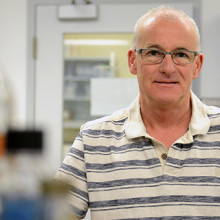
Above: Dr. Gregor Reid (Photo credit: Schulich School of Medicine & Dentistry)
Scientist
Probiotics to the rescue
As the world’s most important single species of pollinators, honey bees perform many ecosystem functions. They are critical to the global food supply.
Honey bee populations are declining at alarmingly high rates here in Ontario and around the world.
“If the bees disappear, humanity is in big trouble” states Dr. Gregor Reid, Lawson researcher and professor at Western. He is also the leading scientist for the study. “Imagine walking into the grocery store and a third of the food wasn’t there. That is what would happen.”
Pesticide exposure, infection and habitat loss are the main factors suspected to be causing the decline in honey bee populations. Pesticides in particular make infections more severe and exacerbate the consequences of nutritional deficiencies in habitat loss – making those problems even worse.
Image
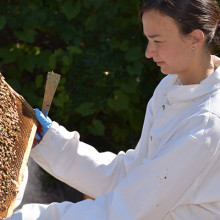
Since current industrialized agricultural practice rely on pesticides to maintain high crop volume, their complete removal from the equation is not currently feasible.
“We need an alternative solution that interferes with this process where high level of pesticides cause issues like infections and habitat loss to have more severe consequences for the honey bees,” says Dr. Reid. “Supplementing honey bees with probiotic bacteria is that solution, we believe.”
“It may sound overly dramatic to state the research will ‘save the world’s honey bees’, but that is the goal, and other groups around the world are trying to follow this lead.”
The group of researchers from Lawson Health Research Institute and Western University are supplementing honey bees with a nutritional food item containing three carefully chosen strains of beneficial or probiotic bacteria to improve the overall health of the hive and specifically address infection and nutritional needs.
Image
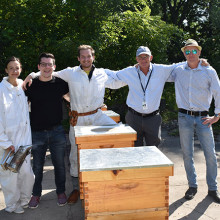
From left: Graduate students Anna Chernyshova, John Antonio Chmiel and Brendan Daisley are working on the honey bee probiotics project with Drs. Gregor Reid and Graham Thompson.
“We are creating what we call a BioPatty. In addition to normal nutrient substances, we infuse it with a select recipe of probiotics,” explains Dr. Graham Thompson, the regional bee expert and professor at Western University who helped set up the field-testing site and manages of the honey bee hives. “Our goal is to make the bees healthier and their immune system more vigorous. This helps them stay efficient and do their important jobs, and not be so vulnerable to the stressors of living in an urban and industrial world.”
The team’s previous scientific findings in a fly model, showed that these bacterial strains could reduce the toxic effects of pesticides and increase resistance towards infection. In May 2018, they moved their research from the lab and into the field thanks to OMAFRA funding, and started to test their BioPatties in a local apiary.
American Foulbrood caused by the pathogen Paenibacillus larvae, attacked the hives. This is one of the most serious honey bee diseases. Infection outbreaks nearly always lead to complete colony collapse and loss of the hive. “But the hives that were given the probiotics were the only ones not to be destroyed, so that was an encouraging early result,” says Brendan Daisley, a PhD student with Dr. Reid who was involved with the development of the research and coordinates sample processing and data collection.
“These results have far-reaching implications as American Foulbrood, despite its geographically-suggestive name, infects honey bees worldwide. It causes a tremendous financial burden to apiary owners and famers alike, who rely on honey bees directly or indirectly as a means of livelihood,” explains Daisley.
The probiotic approach might reduce the need for antibiotics that are so commonly used in many apiaries.
This work is taking place in London, Ontario and the study will continue over the next three years. Going forward, the researchers are planning to work with collaborators in a number of other countries around the world to determine the feasibility of large-scale implementation of probiotics for honey bees.
Related stories
Scientist
… form: The request form is found on the St. Joseph's Health Care, London Internet: Enter as much information on the form … form: The request form is found on the St. Joseph's Health Care, London Internet: Enter as much information on the form …
Health Information & Privacy Citywide and Region Departmental Policy Department Health Record Services Section Reports Procedure Proposal for Report Version Jan 2008 Proposal for Report: When requesting either a new report, revised report or an urgent report from either Gateway or the Explorer menu...
… Office – (exception: instructors at a mental health care site must obtain their items on first day) Monday to … Office – (exception: instructors at a mental health care site must obtain their items on first day) Monday to …
Student Affairs completes spreadsheet information related to student placements (this includes the assignment of packages) Instructor of Student Groups/Preceptor and Student Assignment of Security Items During Clinical Placements, January 2018 Is this a group placement or a 1:1 placement? 1:1 Placem...
… Fellowships and for PS new to the Ontario healthcare system • Voluntary participation/selective options for … format where possible new to the Ontario healthcare system No. Date Room Title Time Objectives Topics … Patient Experience Office Co-ordinated and comprehensive care 10:45-11:30am Patient Experience Patient Relations …
Structure Mandatory for all new Professional Staff (PS) entering from Residency/Clinical Fellowships and for PS new to the Ontario healthcare system Voluntary participation/selective options for experienced PS transferring from another Ontario hospital Sessions will be held at alternating sites ...
… challenge others to actualize the core values of the healthcare system and achieve higher goals. Required Required … core core core Participates in a team approach to care, education and research within the health centres, … strategic partnerships with external agencies to support care, education and research. required Promotes community …
Professional Staff Leadership Competencies 1 1. Self-Awareness and Emotional Intelligence The ability to develop and maintain a sense of presence and emotional Foundational Leadership Enhanced Leadership Strategic Leadership maturity that is anchored in: an accurate awareness of ones strengths and...
Prostate cancer imaging research could bring big benefits
LONDON, ON – With newly announced studies, Lawson Health Research Institute continues to lead the way in advancing prostate cancer imaging.
Scientists at Lawson are at the forefront of research that uses imaging agents that bind to a protein on the surface of prostate cancer cells called prostate specific membrane antigen (PSMA). Advanced imaging technology called PET/CT (positron emission tomography/computed tomography) and PET/MRI (magnetic resonance imaging) is then used to capture clear images of the location and extent of the cancer.
The first scan of its kind in Canada was captured at St. Joseph’s Health Care London in 2016 by Dr. Glenn Bauman, a Radiation Oncologist at the London Regional Cancer Program at London Health Sciences Centre and Scientist with Lawson.
“We started out with mainly MRI imaging but we've developed this very rigorous pipeline that allows us to put the imaging and digitized pathology together,” explains Dr. Bauman.
Early evidence indicates that PSMA PET scans have changed how prostate cancer is being treated, but more work is underway to understand the impact of those treatment changes. Working with imaging specialists there is hope that registries of these scans that are in development could even lead to automated detection of prostate cancer.
The Canadian Cancer Society recently committed $125,000 in funding for the creation of a database of PET/CT prostate cancer scans. Led by Dr. Katherine Zukotynski, an Adjunct Scientist at Lawson, the idea is to make annotated findings accessible to a wider community of medical and research professionals.
“If you have an idea of the amount of disease detected, correlated with what kind of prognosis, then this could be very helpful. It would allow oncologists to compare patients with similar cases, which may help determine the best therapies to try,” Dr. Zukotynski says.
![MRI and [18F]-DCFPyL PET images of six trial participants with prostate cancer.](/sites/default/files/research/inline-images/1920_PET_MRI_18F-DCFPyL_prostate_cancer_imaging.jpg)
Lawson has also become the first in Canada to enter a sublicense agreement to produce a new PET imaging agent called PSMA-1007 - that may produce even clearer images, especially when there’s a recurrence of cancer.
“PSMA-1007 allows us to detect where the cancer is a lot sooner and take action, whether that’s through surgery or delivering radiation to exactly where the cancer is located,” says Dr. Michael Kovacs, Director of the Lawson Cyclotron & PET Radiochemistry Facility.
Clinical trials have already begun to test PSMA-1007’s efficacy with an ultimate goal of obtaining Health Canada approval.
A three-part series on prostate cancer imaging at Lawson is also available:
About Lawson Health Research Institute
Lawson Health Research Institute is one of Canada’s top hospital-based research institutes, tackling the most pressing challenges in health care. As the research institute of London Health Sciences Centre and St. Joseph’s Health Care London, our innovation happens where care is delivered. Lawson research teams are at the leading-edge of science with the goal of improving health and the delivery of care for patients. Working in partnership with Western University, our researchers are encouraged to pursue their curiosity, collaborate often and share their discoveries widely. Research conducted through Lawson makes a difference in the lives of patients, families and communities around the world. To learn more, visit www.lawsonresearch.ca.
Media Contacts
Amanda Taccone
Communications Consultant & External Relations
Lawson Health Research Institute
T: 519-685-8500 ext. ext. 64059
C: 226-919-4748
@email
… the suggestions and recommendations provided to you by your care team. Who will be involved in my care? A nurse navigator and a urologist will be part of your … team. They will help you to be involved and understand your care plan. What can I expect during my visit? You will be …
What is the Prostate Diagnostic Assessment Program? The prostate DAP Program will streamline diagnostic testing for patients suspected of having prostate cancer and if needed, refer a patient for treatment. Where is the Prostate Diagnostic Assessment Program located? The program is located at St. Jo...