


Search
Search
249 Search Results:
A publication of St. Joseph s Health Care London FALL 2020 | ISSUE 02 NEW OPTIONS IN AN OLD BATTLE Pain specialists at St. Joseph's Health Care London are part of a new, collaborative approach to improve care for a growing number of people living with sickle cell disease. 1 ~ ~ OSEPH'S n Cl A public...
ST::JOSEPH'S A publication of St. Josephs Health Care London FALL 2021 | ISSUE 04 A LITTLE FALL TO A BIG CLIMB With help from her care team at Parkwood Institute, Miranda Scott was able to reach great heights fguratively and literally by incorporating wall climbing into her recovery. 1 2 V,l~ OSEP...
National award honours innovator Frank Prato’s excellence in medical physics
Dr. Frank Prato is a man of many firsts:
First in Canada to conduct magnetic resonance brain imaging. A pioneer in magnetic resonance cardiac imaging. Driving force behind the installation of Canada’s first PET/MR scanner. Founder of the Canadian Organization of Medical Physicists (COMP) while president of the Canadian College of Medical Physicists.
And while Dr. Prato admits to a competitive streak that constantly propels him to break new ground in medical physics, the renowned, prolific researcher is keen to note these innovations have been part of a larger team effort.
“My career has been filled with opportunities to work with and train some spectacular scientists who have made major contributions across Canada and around the world,” he says. “I’m proud of the whole group that has developed over the years and the support St. Joseph’s has provided.”
Chief Medical Physicist at St. Joseph’s Health Care London (St. Joseph’s), Dr. Prato has been awarded the 2024 COMP Gold Medal, the organization’s highest award for outstanding career achievement.
“Dr. Prato’s ground-breaking work in the field of medical physics has not only advanced the scientific community but also significantly impacted patient care in Canada and beyond,” says COMP President Boyd McCurdy, “His pursuit of innovation and excellence exemplifies the highest standards of our profession, and we celebrate his outstanding contributions to medical physics with admiration and gratitude.”
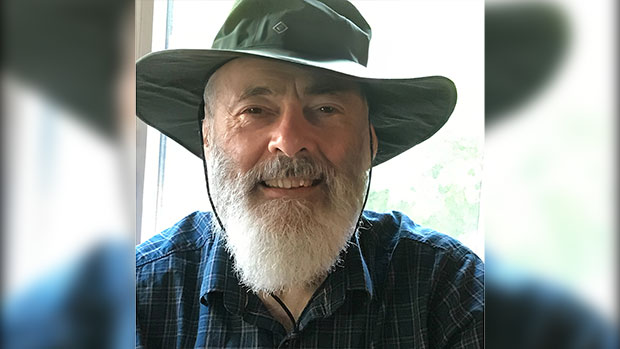
Dr. Prato is also Assistant Scientific Director and Imaging Program Leader at Lawson Health Research Institute (Lawson) and professor of medical imaging and medical biophysics at Western University.
“I have worked with Frank for 36 years now and have come to recognize him as one of the finest people I know,” says Dr. Ting-Yim Lee, Director of PET/CT Research at Lawson, medical physicist at St. Joseph’s Hospital, and one of the nominators of Dr. Prato for the award.
“Frank is unfailingly helpful and authentic, a great listener and a tenacious problem-solver. He demonstrates excellence and professionalism in medical physics locally, nationally and internationally.”
Dr. Lee cites Dr. Prato’s leadership in being “at the forefront of numerous international innovations in nuclear medicine and diagnostic radiology.”
Throughout his 48 years as a medical physicist, Dr. Prato has been inspired by the potential of technology’s reach into human health.
“I’ve always wanted to work in an area where we can do research, with a vision of what’s going to be important in patient health. I get excited about being on the leading edge of discovery that’s embedded in patient care.”
Critical advancements in nuclear medicine and diagnostic radiology, thanks to the work of Dr. Prato and his St. Joseph’s/Lawson team, have included:
- Introducing the first bone mineral density imaging procedure on a patient in Canada, a tool now essential for managing osteoporosis.
- Performing the first magnetic resonance brain imaging in Canada, setting a national standard.
- Pioneering magnetic resonance cardiac imaging techniques, enhancing the understanding of myocardial scarring and blood flow assessment.
- Introducing the first PET/CT and PET/MR scanners in Canada, revolutionizing molecular imaging and proving the economic value of advanced imaging technologies.
- Imaging the brains of premature infants, a world first.
- Developing Canada’s first self-sustaining cyclotron infrastructure.
- Conducting the world’s first MRI-compatible, high-resolution brain PET scan.
- Early diagnosis and treatment of dementia, mental illness and prostate cancer.
Dr. Prato’s leadership extends beyond his technical achievements. As the founder of COMP, an organization that now includes more than 800 professionals, he played a crucial role in establishing the organization, advocating for medical physicists' independent voice and professional growth.
His tenure as President and board member of the Canadian College of Physicists in Medicine (CCPM) was marked by significant advancements, including enhancing certification processes and establishing reciprocity with the American Board of Medical Physics. Dr. Prato also received the Valuable Service Award from CCPM in 2002 and was named a Fellow of COMP in 2013.
Earlier this spring, Dr. Prato received a Dean’s Award of Excellence for Research Faculty from Western University’s Schulich School of Medicine & Dentistry. He is also the sole Canadian to have won the d'Arsonval Award, an international honour from the Bioelectromagnetics Society.
A dedicated mentor, Dr. Prato has guided more than 60 Masters of Science students, PhD students and Post-Doctoral Fellows, many of whom have won awards and secured prominent positions in the field. His mentorship has been instrumental in the success of numerous scientists within the Imaging Program at Lawson, contributing to a legacy of innovation for years to come.
“At 78 years old,” he says, “I am pleased to say I have achieved things at St. Joseph’s that will far outlast me.”
Notification of Intent to Retire Planning Form for Credentialed Professional Staff Members Credentialed Professional Staff may be asked to complete the Notification of Intent to Retire Planning Form at the discretion of the Division/Department Chair/Chief. This process is a component of the Career D...
Order of Canada honour for mental health researcher Cheryl Forchuk
Lawson Research Institute scientist Cheryl Forchuk focuses on ‘giving value and voice’
Renowned mental health and homelessness researcher Cheryl Forchuk, a Lawson Research Institute scientist and Distinguished University Professor, has been appointed an officer of the Order of Canada.
The award, one of Canada’s highest honours, was announced June 30 by Governor-General Mary Simon.
Forchuk has dedicated her career to driving change on complex issues, including addiction, homelessness and mental health challenges, emphasizing relationships and participation from the populations she studies.
“We’re talking about people that generally experience a lot of discrimination in society. When I started working in this field, it was really hard to get things funded because the groups themselves were not valued. Their opinion was not valued. A lot of my work is trying to give value and voice to these populations,” Forchuk said.
She said she was surprised and humbled by the appointment to the Order of Canada.
“I feel humbled, because all the research I do is part of a team effort. I have always had great support from community partners, people with lived experience, other researchers and my staff at the office.”
In addition to her role as Lawson scientist, Forchuk is a Distinguished University Professor in the Arthur Labatt Family School of Nursing in Western's Faculty of Health Sciences, with a cross-appointment in the department of psychiatry at Schulich School of Medicine & Dentistry.
Forchuk has published 200 articles and 12 books, delivered more than 600 conference presentations or workshops and supervised more than 60 graduate students.
Forchuk is known nationally and internationally for her work improving systems of recovery and community integration. Her team created the “transitional discharge model” to ensure people released from hospital maintain connections with service providers in hospital or in the community while receiving peer support from someone with lived experience. It was repeatedly shown to reduce the length of hospital stays while improving outcomes for patients.
The model has since been adopted in parts of Canada, the U.S. and Europe and was included as an example of mental health practice by the World Health Organization in its guidance on mental health services that respect human rights. Forchuk is currently conducting research on women veterans experiencing homelessness.
“A trailblazer in mental health and homelessness research, Dr. Forchuk has spent more than four decades advancing our understanding of these complex issues and shaping policies that have improved the lives of the unhoused,” said Jayne Garland, former dean of the Faculty of Health Sciences, and Forchuk’s nominator for the Order of Canada.
“She is a respected researcher, an influential leader and a passionate advocate for some of the most vulnerable members of our society. This recognition reflects the profound and lasting impact of her work.”
Forchuk’s studies have reduced crises and improved quality of life for hundreds of people, saving millions of dollars in health care and social service spending as a result.
“Dr. Forchuk is an innovative, forward-thinking leader in mental health, housing and homelessness,” said Victoria Smye, director of the Arthur Labatt Family School of Nursing.
“Her contributions in Canada and beyond to the mental well-being of some of the most vulnerable people in our society – people who have been highly marginalized by inequity – have made a real impact. She has truly changed lives.”
Forchuk said her appointment to the Order of Canada is meaningful, but not because of the personal or reputational benefits.
“Receiving this honour shows me there’s a recognition that these are important issues and these approaches to finding solutions – including people who are the experts, people with lived experience and those working on the frontlines – are valued,” Forchuk said.
“It tells me to keep going, and that it’s working, which we know. It solidifies that this is the right approach to address very complex societal issues, and to make sure we include the right voices.”
Those invested into the Order of Canada fall into three levels. Members of the Order of Canada are recognized for their service to a particular community or field, officers are appointed for their high degree of achievement or merit, especially for service to the entire country or humanity at large, and companions of the Order of Canada – the highest recognition – are those deemed to have made contributions of the highest degree to Canada or the world.
Over $2 million in federal funding to advance discoveries in health research
Last week, the Honourable Kirsty Duncan, Minister of Science and Sport, announced an unprecedented investment of more than $588 million through the Natural Sciences and Engineering Research Council of Canada’s (NSERC) Discovery Grants program.
The successful applications in London include 12 projects funded for Lawson Health Research Institute scientists, through Western University. In total, they will receive $2.3 million in funding over five years.
“The funding demonstrates our strong and enduring commitment to science and researchers. Since taking office, our government has worked hard to bring science and research back to their rightful place and this historic investment in the discoveries of tomorrow is just one example of how we are achieving this goal,” says The Honourable Kirsty Duncan, Minister of Science and Sport.
Across Canada, this funding will go to more than 4,850 researchers and students as they pursue their world-leading discovery work. It also includes support for nearly 500 early-career researchers who will bring a diversity of new voices and new insights to their fields.
Local research highlights
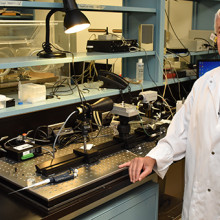
Dr. Jeffrey Carson is exploring the role of photoacoustic imaging as a method for detecting breast cancer. Currently, during the procedure the breast must be submerged in a tank of water to enhance the transmission of photoacoustic waves from the breast to the sensors.
“The water tank is cumbersome and impractical,” notes Dr. Carson. “Our goal is to eliminate the need for the water tank by detecting the photoacoustic waves through the air without making contact with the breast.” Their hope is that the project leads to the development of a non-contact photoacoustic scanner offering women the opportunity to sit or stand comfortably during breast imaging. “This simple improvement could greatly accelerate the adoption of photoacoustic imaging for breast cancer screening.”
Dr. Carson adds that funding like this provides graduate student trainees opportunities to develop knowledge and skills in engineering, mathematics, and biophysics. “They bring innovative new ideas to the Canadian medical device industry through employment and entrepreneurship.”
Image
Dr. Rajnikant Patel is developing advanced robotic and intelligent systems for the next generation of systems and devices for minimally invasive surgery and therapy. These reduce trauma and costs while enhancing efficiency and reliability.
“For us, this funding opportunity is unique because it supports a program of research rather than a project,” says Dr. Patel. “We can explore new areas and directions that will lead to research projects and medical applications. A program that investigates novel robotic and AI technologies fits well with NSERC’s mandate.”
Image
Dr. Gregor Reid is leading a revolutionary project that could save the world’s honeys bees, insects that are vital to human survival.
The intent is to develop an understanding of how lactobacilli strains can counter the most widely used pesticides that are wiping out nature's critically important pollinators. The lactobacilli appear to potentially degrade some of these toxic chemicals and improve the ability of honey bees to fight off early death.
“NSERC funding gives ideas like this a chance and even though the funding amount is relatively small, it allows graduate students to apply for their own awards and work on the project,” explains Dr. Reid. Students Brendan Daisley and Johnny Chmiel have been awarded NSERC scholarships to work on this important research.
Image
Dr. Xiugen Zheng’s project is investigating the role of circular RNA AEBP in the development and function of dendritic cells which are very important immune cells in the immune system. This will provide insights into new molecular and gene regulators, and their impact on the immune system and overall health.
“NSERC research funding greatly supports us to study the basic scientific questions that are critical for better understanding health problems and developing treatment for diseases,” says Dr. Zheng.
Image
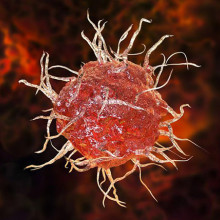
Dr. Rudolf Veldhuizen’s laboratory aims to understand how surfactant performs its function at a molecular and biophysical level. Pulmonary surfactant is a material in the lung that allows people and other mammals to breath with minimal effort. You can see this in babies who are born prematurely and have trouble breathing due to the lack of surfactant.
“Previous work has established a generalized model of how surfactant improves lung function under standardized conditions. This, however, does not explain how surfactant functions in extreme conditions,” says Dr. Veldhuizen. “By exploring conditions in comparative, mechanistic studies we will be able to establish a more universal understanding of surfactant function.”
This funded work provides a foundation for clinically relevant studies to further explore the role of alterations to surfactant in lung injuries and the opportunities for therapeutic interventions.
Image
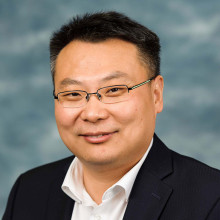
Dr. Shou Li is developing state-of-the-art machine learning system able to analyze huge amounts of clinical data and provide human level intelligent analysis. This work will enable the prediction of disease onset, progression and prognosis. “It is added value that will lead to more effective and efficient health care,” explains Dr. Li.
He adds that this funding is supporting a multi-disciplinary research program that combines the strength of multiple teams. “We will look at both the fundamental side of machine learning systems and clinical applications. In this way, we connect basic science with clinical science.”
Image
Congratulations to all the Lawson scientists who received funding:
- Dr. Dean Betts for Metabolic reprogramming to enhance the generation of canine induced pluripotent stem cells (Physiology and Pharmacology)
- Dr. Jeffrey Carson for Development of non-contact photoacoustic tomography (Medical Biophysics)
- Dr. Louis Ferreira for Multi-Directional Mechanical Testing of Bone using CTCompatible Loading Mechanisms (Mechanical and Materials Engineering)
- Dr. Shuo Li for Innovative Machine Learning for Medical Data Analytics (Medical Imaging)
- Dr. Penny MacDonald for Investigating cognitive functions mediated by ventral and dorsal striatum (Clinical Neurological Sciences)
- Dr. Charles McKenzie for Fetoplacental Molecular and Metabolic Magnetic Resonance Imaging; instalment (Medical Biophysics)
- Dr. Rajnikant Patel for Design and Control of Robotic Systems and Devices for Medical Applications (Electrical and Computer Engineering)
- Dr. Gregor Reid for Detoxification functionality of lactic acid bacteria (Microbiology and Immunology)
- Dr. Rudolf Veldhuizen for Mechanisms of surface tension reduction by pulmonary surfactant (Physiology and Pharmacology)
- Dr. Aaron Ward for Machine learning-based quantitative image, tissue, and clinical data analysis for lesion detection and characterization on prostate cancer imaging (Medical Biophysics)
- Dr. Eugene Wong for Optimization of spatiotemporal-modulated electric fields and fabrication of organs-on-chips for applications in Medical Physics (Physics and Astronomy)
- Dr. Xiufen Zheng for The role of circular RNA AEBP2 in dendritic cells (Pathology)
Scientist
Professional Development for New Professional Staff 2021-2022 Registration can be done at: Through ME(MyEducation) https://ilearn.lhsc.on.ca Dates are tentative and may change due to speaker availability. Invites will go to out 4-6 weeks prior to the event. Structure Mandatory for all new Professio...
Personal Information Bank (PIB) Details Title: Performance Review, Staff (excluding leaders) Location of Records: Learning Management System (Organizational Development and Learning Services) departmental leader files Description: Records relating to the performance management for hospital employees...
Pinpointing the role of language disruptions in psychosis
LONDON, ON - The ability of humans to use language may also be what puts us at the unique risk of developing psychosis, a subset of mental illness characterized by changes in emotions, impaired functioning, and a disconnection from reality.
Difficulties with communication – both the ability to use language and to comprehend what others are saying – are some of the earliest symptoms. New research from Western University and Lawson Health Research Institute has shown that this may be because in patients with psychosis parts of the brain not meant to process language are trying to perform this complex job. Like a small airport trying to handle all the air traffic from a big hub like Pearson International Airport, some brain regions may be overloaded in psychosis.
“The language system seems to be key to understanding this illness,” said Dr. Lena Palaniyappan, the Tanna Schulich Chair in Neuroscience and Mental Health at Western’s Schulich School of Medicine & Dentistry and Scientist at Lawson and Robarts Research Institute. “We don’t yet fully understand how the disorganization of language takes place in patients affected by psychosis.”
Embarking on a mission to find out, Dr. Palaniyappan worked with a team of imaging scientists at Robarts to perform MRI scans on the brains of patients with acute psychosis. Patients were recruited from the Prevention and Early Intervention Program for Psychoses (PEPP) at London Health Sciences Centre, a flagship clinic that supports young individuals from a very early stage of psychosis.
The team divided the patients into two groups – those with severe language disturbances, and those whose language symptoms were less pronounced. They found that both groups had weakening of connectivity, or ‘hubness,’ in the part of the brain generally associated with language -- the superior temporal area. The group with more severe language symptoms also showed an emergence of higher hubness in some unexpected regions of the brain that may be compensating for some of the lost connectivity elsewhere.
“This finding led us to believe that the language problems may occur because the main hubs that are supposed to conduct language are now retired, and so these peripheral hubs, which have no business of orchestrating language as their main function, are picking up the job and aren’t doing it very well,” said Dr. Palaniyappan.
The researchers hope that by understanding how language becomes disorganized in psychosis, the data can inform new interventions to focus on strengthening the language systems in the brain to reduce or delay psychotic symptoms.
Using ultra-high-field magnetic resonance imaging at Robarts Research Institute, they were able to look at the entire brain of patients with acute psychosis. Instead of homing in on one specific area, the team looked at 3-D pixels of the brain (voxels) to get a full picture of what was happening in the whole brain and how different areas were interacting.
Using the airport analogy, Palaniyappan said that if they had only looked at the language area it would have been like only walking into one airport, and not understanding how the reduced traffic in that airport was influencing the air traffic at other surrounding airports.
“We went in without any expectations, and searched the whole brain,” said Palaniyappan. “This unique approach allowed us to get a picture of the forest rather than a picture of the tree.”
The study was funded through an early-career foundation grant from the Canadian Institutes of Health Research and was supported by PEPP.
-30-
About Lawson Health Research Institute
Lawson Health Research Institute is one of Canada’s top hospital-based research institutes, tackling the most pressing challenges in health care. As the research institute of London Health Sciences Centre and St. Joseph’s Health Care London, our innovation happens where care is delivered. Lawson research teams are at the leading-edge of science with the goal of improving health and the delivery of care for patients. Working in partnership with Western University, our researchers are encouraged to pursue their curiosity, collaborate often and share their discoveries widely. Research conducted through Lawson makes a difference in the lives of patients, families and communities around the world. To learn more, visit www.lawsonresearch.ca.
About Western
Western delivers an academic experience second to none. Since 1878, The Western Experience has combined academic excellence with life-long opportunities for intellectual, social and cultural growth in order to better serve our communities. Our research excellence expands knowledge and drives discovery with real-world application. Western attracts individuals with a broad worldview, seeking to study, influence and lead in the international community.
About The Schulich School of Medicine & Dentistry
The Schulich School of Medicine & Dentistry at Western University is one of Canada’s preeminent medical and dental schools. Established in 1881, it was one of the founding schools of Western University and is known for being the birthplace of family medicine in Canada. For more than 130 years, the School has demonstrated a commitment to academic excellence and a passion for scientific discovery.
Media Contacts
Celine Zadorsky
Senior Media Relations Consultant
Communications & Public Engagement
T: 519-685-8500 ext. 73502
Celine.zadorsky@lhsc.on.ca
… to the training of students for counselling/clinical careers is evident in our long history of providing … to the training of students for counselling/clinical careers is evident in our long history of providing …
CPA Accredited Member of APPIC & CCPPP Clinical Psychology Residency CONSORTIUM Predoctoral Residency in Clinical Psychology 20222023 Your guide to predoctoral training in clinical psychology within one of Canadas leading CPA accredited residency programs Clinical Psychology Residency CONSORTIUM Lon...
Structure Mandatory for all new Professional Staff (PS) entering from Residency/Clinical Fellowships and for PS new to the Ontario healthcare system Voluntary participation/selective options for experienced PS transferring from another Ontario hospital Sessions will be held at alternating sites ...
Personal Information Bank (PIB) Details Title: Record of Education from the Learning Management System (LMS) Location of Records: Learning Management System (Organizational Development and Learning Services) Description: Records relating to hospital employees' education history. Education stored in ...
… on the OFR web site: https://www.uwo.ca/facultyrelations/careers/ clinical.html) All other cases see below: … on the OFR web site: https://www.uwo.ca/facultyrelations/careers/ clinical.html) All other cases see below: …
Canadian Trained Professional Staff in an Academic Appointment New positions requires that Part A of the Position/Candidate Impact Summary Form be completed and request form submitted by Department to Medical Affairs for the Joint Professional Staff Human Resource Committee (JPSHRC) to Review. The A...
Non-Canadian Trained Professional Staff in an Academic Appointment New positions requires that Part A of the Position/Candidate Impact Summary Form be completed and request form submitted by Department to Medical Affairs for the Joint Professional Staff Human Resource Committee (JPSHRC) to Review. T...
The Resident & Fellow Handbook This handbook is the property of: Dr. _____________________________ Resident / Clinical Fellow in the Department of: ________________________________ If found, please return to the Security office or notify me by email at: ________________________________ Preface Th...
Responding to the call for action during the COVID-19 pandemic
Quickly after the COVID-19 pandemic began to grip the world, Lawson Health Research Institute responded with action. Lawson is the research arm of London Health Sciences Centre (LHSC) and St. Joseph’s Health Care London. With hospitals focused on providing excellent patient care in the face of an unknown virus, hospital researchers in London, Ontario began critical COVID-19 studies.
“A lot was unknown during the first wave of the pandemic. Any research that wasn’t essential was put on hold. At the same time, we had people with different expertise coming together with different perspectives to see how we could better understand the SARS-CoV-2 virus and the COVID-19 infection,” explains Dr. David Hill, Lawson Scientific Director and VP, Research at LHSC and. St. Joseph's. “Our hospital researchers formulated ideas and very quickly came up with research proposals. These were fast tracked through our processes and within two months we approved over 50 new studies surrounding COVID-19.”
Image
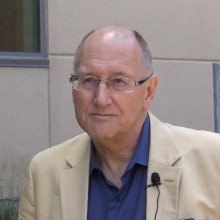
Dr. David Hill, Lawson Scientific Director and VP, Research at LHSC and. St. Joseph's
Some of these studies were clinical trials, which are research studies performed with people. Many patients from London hospitals get involved as patient participants and when COVID-19 hit, many agreed to be a part of this important research.
“We saw the pandemic happening across the world, and suddenly it was happening here in London. This has probably been the biggest challenge of my career,” says Carol Young-Ritchie, Executive Vice President at LHSC. “We had to look at many of our processes and how we were doing things, and adjust appropriately and nimbly.”
Young-Ritchie adds that as the hospital continued to admit a growing number of COVID-19 patients, a strong focus on research was needed. “It was absolutely critical and important for LHSC as a leader and academic centre to contribute to our collective knowledge. We needed to keep that research going and although it has been challenging, it has also taught us to be innovative.”
Image
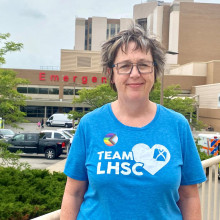
Carol Young-Ritchie, Executive Vice President at LHSC
The same focus was happening at St. Joseph’s Health Care London, with health care providers and researchers finding ways to improve care and outcomes for patients who had contracted the virus. “COVID-19 research through the hospital has been incredibly important,” says Karen Perkin, Vice President of Patient Care at St. Joseph’s. “We had researchers busy looking at the impacts of COVID-19. We had patients on ventilators and we were trying to understand that more. We also had research looking at the impacts for staff members looking after patients. All important, helpful knowledge as we move forward.”
Image
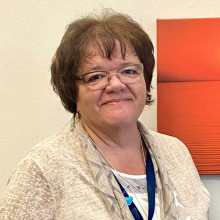
Karen Perkin, Vice President of Patient Care at St. Joseph’s
Hospital research in London through Lawson is proudly affiliated with Western University. At Western’s Schulich School of Medicine & Dentistry, the new state-of-the-art Imaging Pathogens for Knowledge Translation (ImPaKT) Facility was the perfect environment to conduct COVID-19 research.
“ImPaKT is a special containment facility where research on viruses like SARS-CoV-2 can be done safely,” says Dr. David Litchfield, Vice Dean of Research and Innovation at Schulich Medicine & Dentistry. “It has become a focal point for dozens of studies involving research through Schulich Medicine & Dentistry, as well as partners from the hospitals and other academic institutions and industries.”
Image
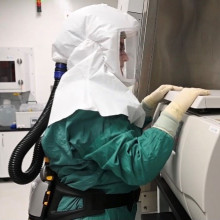
Dr. Litchfield adds that collaboration between hospital partners and scientists has been the key to successful COVID-19 research. “This collaboration has enabled advances leading to new diagnostic testing for COVID-19, as well as studies using MRI or related imaging tools to investigate long-term impacts of the infection on individuals.”
The rapid research response to COVID-19 couldn’t have happened without community and foundation financial support. “Funding support from our hospital Foundation is something we are so grateful for,” says Perkin, referring to St. Joseph’s Health Care Foundation. “They came right out at the beginning and asked how they could help, as did our donors.”
LHSC’s London Health Sciences Foundation and Children’s Health Foundation were also pivotal in research funding during the pandemic. “Funding is a crucial part to how we do hospital research and the Foundations have been important partners in making sure our research continued,” says Young-Ritchie.
As the pandemic continues, so does the research within our community. Hospital research has already improved diagnostics, treatments and patient outcomes related to COVID-19 and helped people all around the world.
“If you look at some of the achievements that have occurred in just a little more than a year, we have had a number of landmark publications on ways to diagnose COVID-19 compared to other respiratory disorders,” notes Dr. Hill. “We have had many rapid advances and it can take a crisis to bring out the best in people. Then things come together quickly, such as expertise, talent and money – and the job gets done.”
This is Part 1 in Lawson’s COVID-19 feature series. Visit Lawson’s website again to learn more about the research studies that helped us understand COVID-19, explore diagnosis and treatments, and show the impacts of the pandemic.
Revealing the culprit behind Parkinson’s disease
An estimated 55,000 Canadians are living with Parkinson’s disease. While researchers are advancing therapies to treat symptoms, such as tremors, there is currently no method to stop progression.
To begin addressing this problem, a team of scientists at Lawson Health Research Institute is developing an imaging tracer.
“There’s a protein in the brain called alpha-synuclein (α-syn) that scientists believe is a culprit in causing Parkinson’s disease. The protein forms in ‘clumps’ called Lewy bodies that kill brain cells and potentially lead to disease,” explains Dr. Justin Hicks, Lawson Imaging Scientist. “Unfortunately, we have no way to study it in human brains and this has limited our ability to test therapies against it.”
Efforts have been made to study the elusive protein through modern imaging techniques like positron-emitting tomography (PET). Scientists have attempted to develop a PET probe – a radioactive molecule that targets the specific protein in order to produce highly specific images or scans – but they have been unsuccessful.
Image
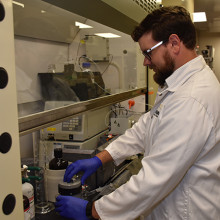
Above: Dr. Justin Hicks working in the Nordal Cyclotron & PET Radiochemistry Facility
“Unfortunately, the Lewy bodies caused by α-syn are hard to distinguish from protein clumps found in Alzheimer’s disease and other dementias. This makes it very difficult to know whether a PET probe has found clumps associated with Parkinson’s disease.”
Through a new study, Dr. Hicks and his team are working to find a solution. To do so, they will examine a different but related protein.
“There’s another protein called fatty acid binding protein 3 (FABP3) and one of its roles is to ‘chaperone’ the α-syn protein in human cells. Past studies have shown that levels FABP3 are higher in patients with Parkinson’s disease when compared to healthy controls,” explains Dr. Hicks. “This suggests that high concentrations of FABP3 can be used as an alternate measure of α-syn.”
They hope to measure levels of the FABP3 protein in place of the α-syn protein, and gain a better understanding of the role that both proteins play in the development and progression of Parkinson’s disease. To image Lewy bodies associated with Parkinson’s disease, the researchers are working to produce a PET probe that targets FABP3.
To accomplish this, they will be working in their lab to find a chemical that targets FABP3. Once found, they will attach a radioactive isotope to the chemical and produce a finished tracer. The tracer will then be tested in preclinical models.
Once injected, the PET probe will find and stick to FABP3. The PET isotope will emit a small amount of radioactivity and these emissions will show up as PET images.
“The ultimate goal is to develop a PET probe that can be used to distinguish Parkinson’s disease from other neurodegenerative diseases. The probe could also be used to assess new therapies that reduce levels of the α-syn protein,” says Dr. Hicks. “If successful, we hope this research will lead to a better understanding of the progression of Parkinson’s disease and ways to prevent it.”
Dr. Hicks and his team are being funded for this project through Lawson’s Internal Research Fund (IRF) competition. “Lawson’s IRF is extremely important for early career researchers. It allows us to generate data and publications to then apply for larger external funding. It also permits an added level of risk to pursue projects that may not reach their end goal but often spur new lines of research.”
Image
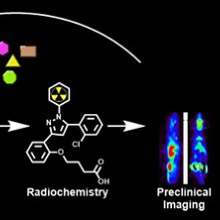
Above: A graphic depiction of this research project and its goals.
Lawson's IRF is designed to provide Lawson scientists the opportunity to obtain start-up funds for new projects with the potential to obtain larger funding, be published in a high-impact journal, or provide a clinical benefit to patients. Funding is provided by the clinical departments of London Health Sciences Centre and St. Joseph’s Health Care London, as well as the hospital foundations (London Health Sciences Foundation and St. Joseph’s Health Care Foundation).
Scientist
Robarts Research Institute presents 2016 Leaders in Innovation Dinner
9:30pm
Schulich School of Medicine & Dentistry is pleased to announce award-winning actor and director Alan Alda will be the featured guest at the 2016 Leaders in Innovation Dinner.
Alan Alda has enjoyed a 40-year career portraying some of the most memorable characters in television and film.
When not garnering accolades for his roles in front of and behind the camera, he is a visiting professor and a founding member of Stony Brook University’s Alan Alda Center for Communicating Science, where he develops innovative programs on how scientists communicate to the public.
Alan Alda will share a keynote presentation and take part in an engaging armchair discussion about his life, career and passion for communicating science.
Date: Thursday, November 10, 2016
Time: Reception - 5:30 p.m. | Dinner - 6:30 p.m.
Location: London Convention Centre, 300 York Street, London, ON
Ticket price: $250.00
Register by: Tuesday, November 1, 2016
To purchase tickets, please visit the event website.
See the Line: Concussion Research and Awareness - CME & Symposium
12:30pm
Learn the latest in sport related brain injury evaluation and treatment - presented by the Schulich School of Medicine & Dentistry. Once again this year, we will be offering a full-day CME inclusive of the afternoon See the Line Community Symposium that will educate you on the latest in concussion research - hearing from world-class medical experts, health care advocates and professional athletes through the following series of events:
Morning: Continuing Medical Education (CME)
Registration: Registration is required. Registration fees apply for physicians and allied health care professionals.
Confirmed speakers include Dr. Lisa Fischer and Dr. Jason Mihalik. More speakers and a formal agenda will be announced in the coming weeks. Keep checking back for more information.
Who Attends? Physicians, allied health care professionals, medical and nursing students, residents
CME Session Options:
Full-day CME (8:30 a.m. - 5:00 p.m.):
Morning session in Dental Science Building, Rm. 1002, Western University
Afternoon session in Natural Sciences Centre, Rm. 145, Western University
* $100 for physicians and allied health care professionals. Residents and medical students are free.
Morning CME only (8:30 a.m. - 12:00 p.m.):
Dental Science Building, Rm. 1002, Western University
* $100 for physicians and allied health care professionals. Residents and medical students are free.
Afternoon Symposium only (1:00 - 5:00 p.m.):
Natural Sciences Centre, Rm. 145, Western University
* Attend the complimentary Community Information Symposium and earn CME credits by registering for the afternoon Symposium through Continuing Professional Development (CPD).
* You must register through CPD to earn CME credits.
Afternoon: Community Information Symposium
Time: 1:00 - 5:00 p.m.
Location: Natural Sciences Centre, Rm. 145, Western University
Registration: Registration is required. Free for all to attend.
Learn the latest concussion news and research from an exciting lineup of world-class experts and researchers. You will also hear personal stories from a panel of professional athletes about the impact concussions have had on their careers and lives.
Confirmed speakers include Dr. Douglas Fraser, Dr. David Mulder and Ms. Lisa MacLeod, MPP. The 2016 line up of athletes will be announced in the coming weeks. Keep checking back for more information.
Who Attends? Coaches, athletes, teams, parents, educators, students, health care professionals and media
For more information, including event registration please visit the See the Line website.
SPRING 2023 A publication of St. Josephs Health Care London A Space to Call Home All faiths and spiritual practices are welcome in a new multi-faith room at Mount Hope Centre for Long Term Care. 2 A publication of St. Josephs Health Care London Spring 2023 | Issue 07 CONTRIBUTORS Dahlia Reich Alliso...